The tension between federal authority and state sovereignty has shaped American governance since the nation's founding. This enduring constitutional struggle influences how presidents exercise power, how policies are implemented across the country, and how citizens experience government in their daily lives. Understanding the federal vs state power debate is essential for anyone following presidential politics and the decisions that affect millions of Americans across all fifty states.
Constitutional Framework of Power Distribution
The United States Constitution established a federal system that deliberately divides governmental authority between national and state governments. The Founders designed this structure to prevent tyranny while maintaining effective governance across a diverse nation.
Article I, Section 8 enumerates specific powers granted to the federal government, including:
- Regulating interstate commerce
- Coining money and regulating currency
- Declaring war and maintaining armed forces
- Establishing post offices and roads
- Creating federal courts beneath the Supreme Court
The system of federalism defined in the Constitution balances these enumerated powers against rights reserved to states. Meanwhile, the Tenth Amendment reserves all powers not specifically delegated to the federal government for the states and the people, creating an ongoing constitutional dialogue about where federal authority ends and state sovereignty begins.
This framework has generated continuous debate throughout American history. Presidents from different eras have interpreted federal power differently based on their political philosophy, the challenges facing the nation, and the composition of Congress and the Supreme Court.
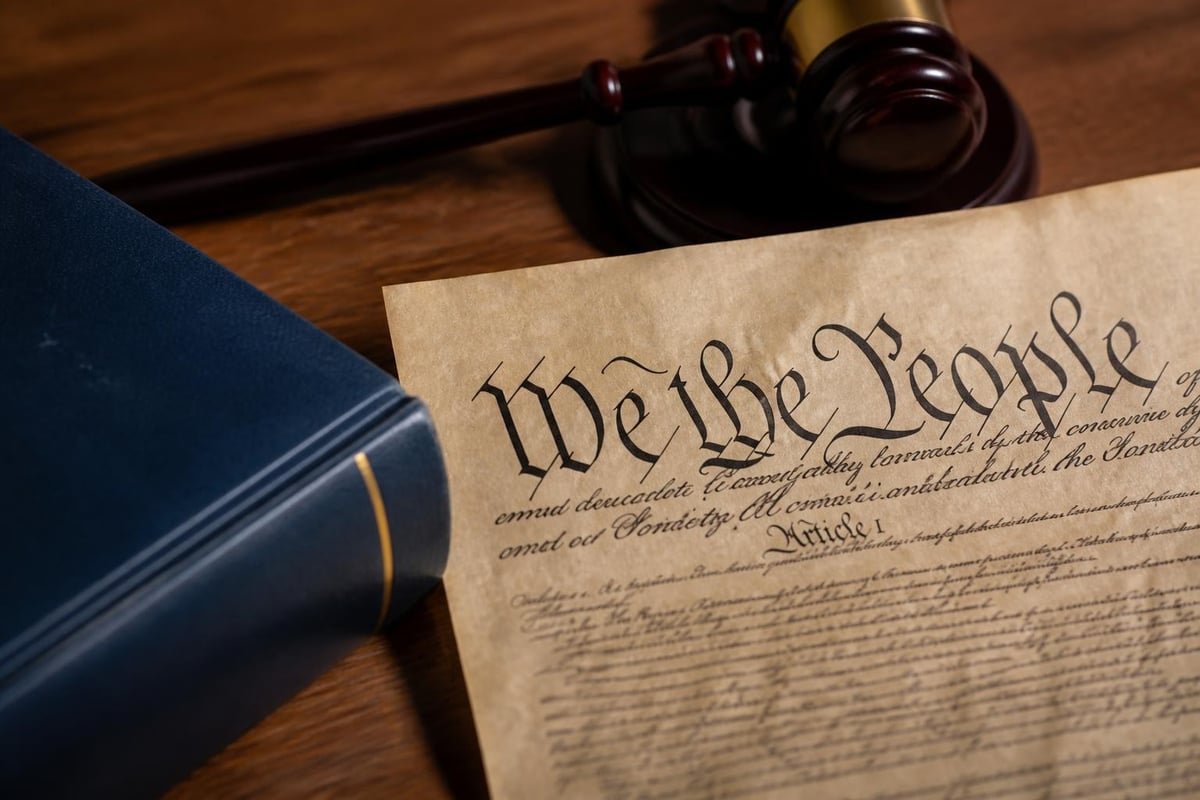
The Supremacy Clause and Federal Authority
Article VI, Clause 2 establishes federal law as "the supreme Law of the Land," creating a hierarchy when state and federal laws conflict. This Supremacy Clause gives presidents and Congress powerful tools to override state legislation when acting within constitutional bounds.
However, the federal vs state power debate intensifies when determining whether federal actions fall within legitimate constitutional authority. Presidents must navigate this tension carefully, especially when pursuing policies that states resist.
Presidential Power and Federalism Throughout History
Different administrations have approached the federal vs state power debate with varying philosophies. These perspectives have fundamentally shaped American domestic policy and the relationship between Washington and state capitals.
Early Republic Tensions
The earliest presidents grappled with defining federal authority. Alexander Hamilton advocated for broad federal powers, while Thomas Jefferson championed states' rights and limited federal intervention. This philosophical divide created the first major political parties and set the stage for centuries of debate.
President Andrew Jackson faced the Nullification Crisis in 1832, when South Carolina claimed the right to nullify federal tariff laws. Jackson's firm response established important precedents about federal supremacy while acknowledging legitimate state concerns about overreach.
Civil War and Reconstruction Era
The Civil War represented the most extreme manifestation of the federal vs state power debate. President Abraham Lincoln expanded federal authority dramatically to preserve the Union, suspending habeas corpus and asserting unprecedented presidential powers during wartime.
The Reconstruction amendments fundamentally altered federalism by granting the federal government new authority to protect civil rights. The Fourteenth Amendment's Equal Protection Clause gave future presidents and Congress tools to intervene in state matters previously considered beyond federal reach.
| Presidential Era | Federal Power Approach | Key Actions |
|---|---|---|
| Early Republic (1789-1820) | Establishing baseline authority | First Bank of the United States, federal court system |
| Jacksonian Period (1829-1837) | Federal supremacy with state deference | Nullification Crisis response |
| Civil War (1861-1865) | Maximum federal expansion | Military conscription, suspension of rights |
| Reconstruction (1865-1877) | Federal civil rights enforcement | Constitutional amendments, federal troops in South |
Progressive Era Through New Deal
Presidents Theodore Roosevelt and Woodrow Wilson expanded federal regulatory authority over business and commerce. The federal government began asserting control over areas previously managed by states, including labor conditions, food safety, and corporate practices.
Franklin D. Roosevelt's New Deal transformed the federal vs state power debate permanently. Programs like Social Security, federal labor protections, and agricultural subsidies dramatically increased Washington's role in American life. The Supreme Court initially resisted but eventually accepted this expansion under pressure.
Modern Presidential Approaches to Federal-State Relations
Contemporary presidents continue wrestling with federalism questions across numerous policy domains. Each administration must balance constitutional limits, political philosophy, and practical governance challenges.
Civil Rights and Federal Intervention
Presidents from both parties have used federal authority to protect civil rights when states failed to do so. President Dwight Eisenhower deployed federal troops to enforce school desegregation in Little Rock, Arkansas, establishing a precedent for federal intervention to protect constitutional rights.
Later administrations continued this pattern. The constitutional principles governing power distribution give presidents justification for overriding state policies that violate federal constitutional protections, though such actions always generate political controversy.
Healthcare Policy Conflicts
Healthcare exemplifies ongoing tensions in the federal vs state power debate. The Affordable Care Act under President Barack Obama represented a major federal expansion into an area traditionally regulated by states. Multiple states challenged this expansion in court, arguing federal overreach.
Presidents face difficult choices about whether to impose national standards or allow state experimentation. Some argue federal action ensures consistent protections nationwide, while others contend states serve as "laboratories of democracy" that innovate better than Washington bureaucrats.
Environmental Regulation
Environmental policy creates frequent federal-state conflicts. Presidents must decide whether to establish national standards or defer to state preferences. California has repeatedly clashed with federal administrations over emissions standards, with different presidents taking opposing positions on federal preemption.
Key environmental federalism questions include:
- Whether states can impose stricter standards than federal minimums
- Federal authority over interstate pollution
- National versus state control of public lands
- Climate change response coordination
The historical tensions between state and federal authority become especially visible when environmental protection conflicts with state economic interests or political preferences.
Contemporary Flashpoints in the Federal vs State Power Debate
Several policy areas generate particularly intense federalism disputes today, forcing presidents to take positions that satisfy some constituencies while alienating others.
Immigration Enforcement
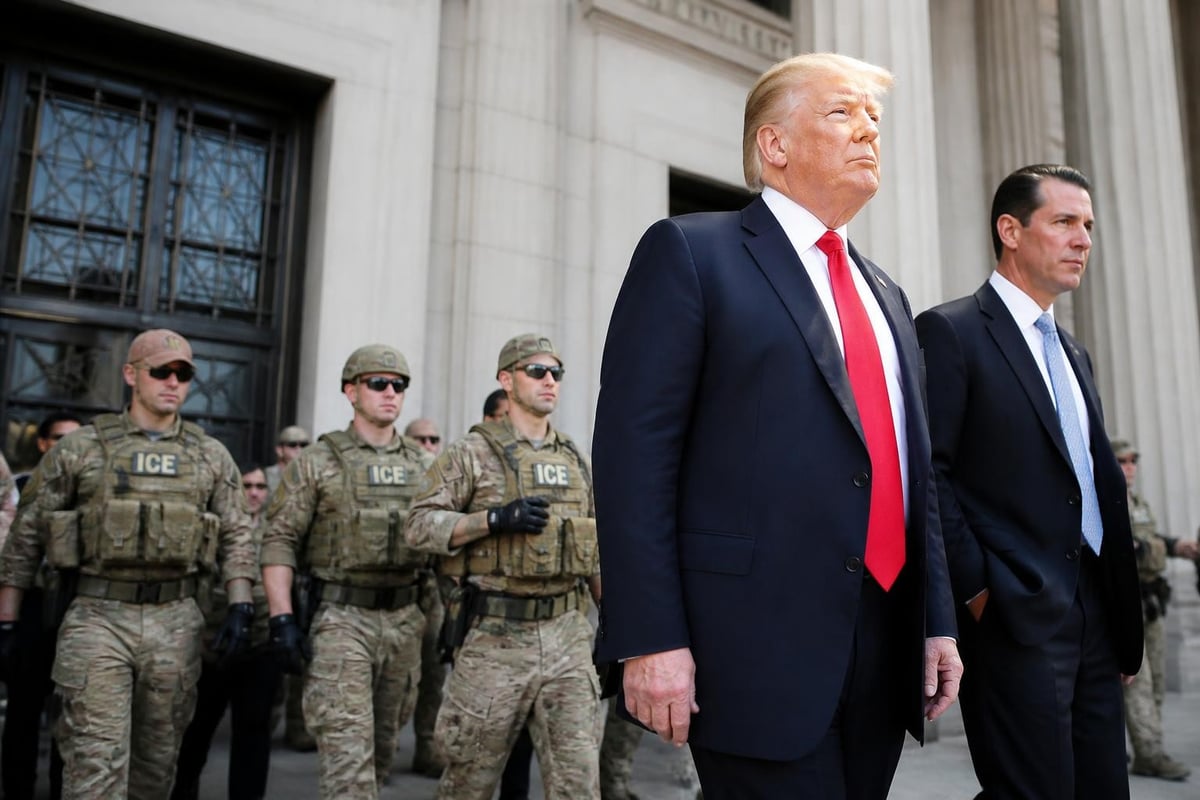
Immigration policy creates sharp divisions about federal versus state authority. The Constitution grants immigration control to the federal government, yet states bear many practical consequences of immigration policy decisions.
Some states have passed laws assisting federal immigration enforcement, while others have created "sanctuary" policies limiting cooperation with federal authorities. Presidents must decide whether to challenge state policies that conflict with federal priorities or accept state variation in this sensitive area.
Criminal Justice and Drug Policy
The federal vs state power debate intensifies around marijuana legalization. Multiple states have legalized marijuana despite federal prohibition under the Controlled Substances Act. Presidents must choose between strict federal enforcement and practical deference to state choices.
Criminal justice reform presents similar tensions. While states control most criminal prosecution, federal action can incentivize state reforms through grant programs and establish minimum standards for federal offenses.
Education Standards and Funding
Education traditionally falls under state control, yet federal funding gives presidents leverage over state policies. Programs like Race to the Top under the Obama administration used competitive grants to encourage states to adopt preferred reforms.
Critics argue such approaches coerce states into surrendering sovereignty for federal dollars. Defenders contend taxpayers deserve accountability for federal spending and that national standards improve educational equity.
| Policy Area | Primary Constitutional Authority | Common Conflicts |
|---|---|---|
| Immigration | Federal (enumerated power) | State cooperation requirements, sanctuary policies |
| Criminal Justice | Primarily state (police powers) | Federal sentencing standards, drug policy |
| Education | Primarily state (Tenth Amendment) | Federal funding conditions, curriculum standards |
| Healthcare | Mixed (commerce clause vs. police powers) | Insurance regulation, Medicaid expansion |
| Elections | State (Article I) with federal oversight | Voting requirements, district boundaries |
Election Administration
Elections for federal offices create unique federalism challenges. States control election administration under constitutional design, but federal law protects voting rights and prohibits discrimination. Presidents navigate this tension when responding to state voting laws they consider restrictive or insufficiently secure.
The role of the Tenth Amendment in reserving powers to states becomes especially contentious when federal officials criticize state election procedures while lacking clear constitutional authority to impose alternative systems.
Judicial Interpretation and Presidential Strategy
Supreme Court decisions shape how presidents approach the federal vs state power debate. Court compositions change over time, affecting which federal actions survive constitutional scrutiny and how aggressively presidents pursue contested policies.
Commerce Clause Evolution
The Commerce Clause has been stretched to justify vast federal authority. Presidents have relied on expansive interpretations to regulate activities with even tangential connections to interstate commerce. Recent Court decisions have imposed some limits, forcing presidents to craft policies that survive judicial review.
Understanding how constitutional experts view federal-state balance helps presidents anticipate which approaches courts will uphold and which face likely invalidation.
Executive Orders and State Preemption
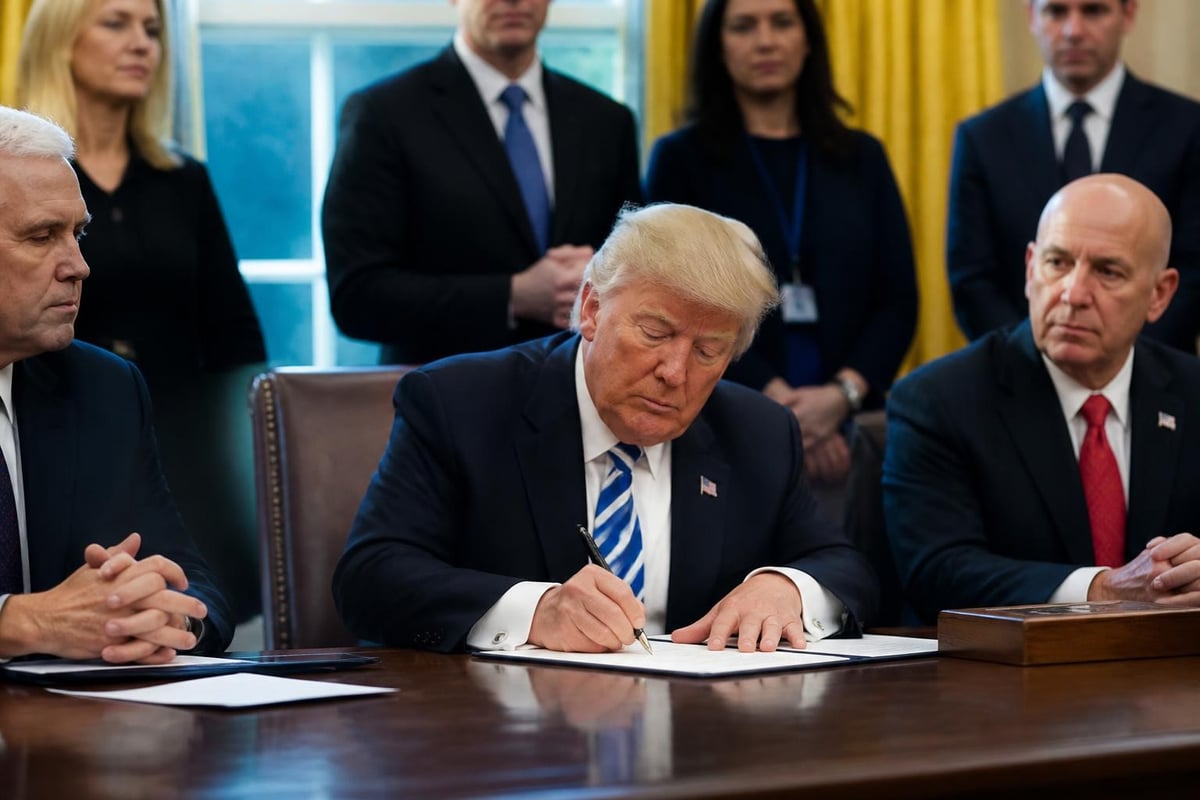
Presidents increasingly use executive orders to pursue policies without congressional approval. These orders sometimes preempt state laws or establish federal standards that override state preferences, generating legal challenges about presidential authority limits.
Successful presidential strategies include:
- Grounding executive action in clear statutory authority
- Building coalitions with supportive states
- Offering state flexibility through waivers or opt-outs
- Focusing federal action on genuinely interstate matters
- Respecting core state functions under traditional police powers
Political Dynamics and Party Positions
Political parties have not maintained consistent positions on federalism throughout history. Party stances often reflect whether they control the White House and whether federal or state governments advance their policy preferences at particular moments.
Party Flexibility on Federalism
Republicans traditionally championed states' rights and limited federal government. However, Republican presidents have not hesitated to assert federal authority when it serves their priorities, from drug enforcement to education standards to immigration control.
Democrats historically supported federal power to protect civil rights and establish national programs. Yet Democratic presidents increasingly embrace state authority when states pursue progressive policies that Congress blocks or when Republican administrations attempt federal preemption of state initiatives.
This flexibility reveals that the federal vs state power debate often involves political calculation as much as constitutional principle. Readers following presidential politics through U.S. Presidential Report can observe how different administrations shift federalism positions based on immediate priorities.
Coalition Building Across State Lines
Successful presidents build coalitions with governors and state legislatures to implement their agendas. These partnerships allow federal-state cooperation that advances shared goals while respecting constitutional boundaries.
Conversely, opposition governors can obstruct presidential initiatives by refusing cooperation or challenging federal actions in court. The responsibilities defined by the Constitution create multiple veto points where states can resist federal pressure.
Practical Governance Implications
The federal vs state power debate affects how policies actually reach citizens. Americans experience government primarily through state and local services, even when federal funding or mandates drive those services.
Implementation Challenges
Presidents cannot simply decree policies into existence. Implementation requires cooperation from state agencies, local governments, and millions of public employees who answer to state and local officials, not the White House.
Smart presidents recognize these practical constraints and design policies with implementation feasibility in mind. Policies that ignore state capacity or impose unrealistic burdens often fail regardless of legal authority.
Variation Across States
Federal systems inevitably produce variation in how citizens experience government services and protections. Some variation reflects legitimate state choices about priorities and methods. Other variation raises equity concerns about whether Americans should receive different treatment based on their state of residence.
Presidents must decide how much variation to tolerate and when to impose national uniformity. This balance affects everything from environmental quality to educational opportunity to healthcare access.
Emergency Powers and Crisis Response
National emergencies test federalism principles as presidents assert extraordinary authority. The COVID-19 pandemic illustrated these tensions, with federal officials and governors sometimes clashing over restrictions, resource allocation, and public health messaging.
The federal system’s structure means crisis response requires coordination between levels of government. Presidents who work effectively with governors achieve better outcomes than those who treat states as subordinates or obstacles.
Looking Forward: Federalism in the 21st Century
The federal vs state power debate will continue shaping American governance as new challenges emerge and political coalitions evolve. Future presidents will navigate federalism questions around technology regulation, climate change, artificial intelligence, and issues not yet foreseeable.
Technology and Jurisdictional Challenges
Digital technology creates unprecedented jurisdictional questions. When companies operate across all states and internationally, can individual states effectively regulate them? Should federal government establish national standards for data privacy, content moderation, and algorithmic transparency?
Presidents increasingly confront situations where state-by-state regulation proves impractical but federal authority remains contested. These novel circumstances require creative approaches to federalism that the Founders could not have anticipated.
Fiscal Federalism and Dependency
Federal grants to states have grown dramatically, creating financial dependencies that affect the federal vs state power debate. States rely on federal funding for Medicaid, transportation infrastructure, education, and countless other programs, giving Washington substantial leverage over state policies.
This fiscal federalism raises questions about whether states retain meaningful sovereignty when federal funding comes with extensive conditions. Presidents can use these funding relationships to advance priorities or adopt lighter touches that respect state autonomy.
Partisan Polarization Effects
Increasing geographic partisan sorting means federal and state governments often reflect opposite political coalitions. This dynamic intensifies federalism conflicts as each level of government pursues divergent policy goals.
Presidents face decisions about whether to seek compromise with opposition-controlled states or maximize federal authority to override state resistance. These choices affect both policy outcomes and the long-term health of American federalism.
The federal vs state power debate remains central to American governance, shaping how presidents exercise authority and how policies affect citizens across diverse states. This constitutional tension reflects deliberate design choices that balance effective national governance with respect for state sovereignty and local variation. For comprehensive coverage of how current and past presidents navigate these complex federalism questions, U.S. Presidential Report provides nonpartisan analysis of the ongoing evolution of federal-state relations in American political life.