Generation Z, comprising Americans born between 1997 and 2012, has emerged as a pivotal demographic force in U.S. presidential elections. Understanding gen z voting patterns explained requires examining not just their turnout numbers but also their unique policy priorities, media consumption habits, and the systemic barriers they face at the ballot box. As the oldest members of this generation reach their late twenties in 2026, their collective political voice continues to reshape campaign strategies and policy debates across the American political landscape. This comprehensive analysis draws on validated voter data, academic research, and demographic trends to provide clarity on how Gen Z engages with presidential politics.
The Demographic Profile of Gen Z Voters
Generation Z represents approximately 41 million eligible voters in 2026, making them a crucial constituency for any presidential campaign. This cohort stands apart from previous generations in several measurable ways that directly influence their electoral behavior.
Key demographic characteristics include:
- Highest levels of racial and ethnic diversity of any generation in American history
- Greater educational attainment than previous generations at similar ages
- Delayed traditional adult milestones such as homeownership and marriage
- Significantly higher rates of student loan debt burden
- Digital-native upbringing with constant access to information and social networks
The U.S. Census Bureau’s voting and registration data reveals distinct patterns in how different age cohorts participate in elections. Gen Z voters show particular sensitivity to registration barriers and voting access issues compared to older Americans who have established voting routines over decades.
Registration and Turnout Trends
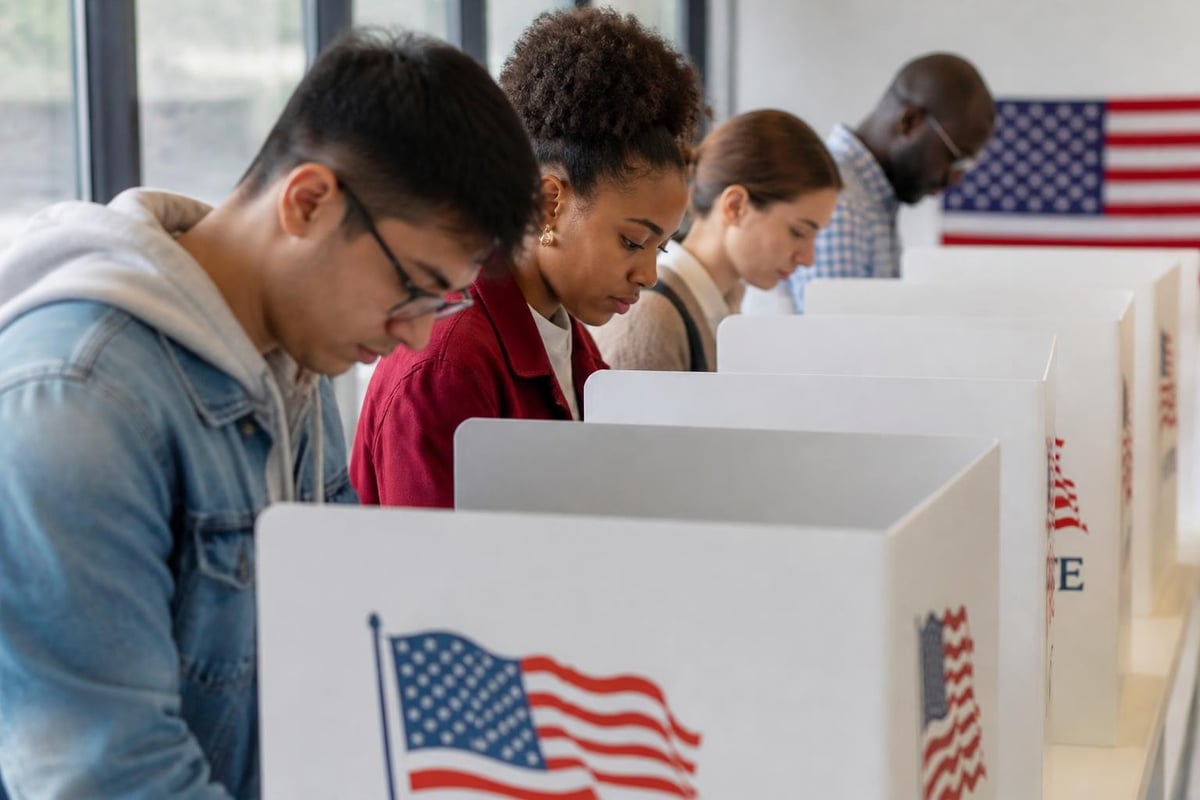
When gen z voting patterns explained are examined through turnout data, a complex picture emerges. According to Pew Research Center’s validated-voter analysis, Gen Z showed increased participation in the 2024 presidential election compared to 2020, though still below the rates of older cohorts.
| Age Group | 2020 Turnout | 2024 Turnout | Change |
|---|---|---|---|
| 18-29 (Gen Z/Young Millennial) | 48% | 52% | +4 points |
| 30-44 (Millennial/Gen X) | 58% | 61% | +3 points |
| 45-64 (Gen X/Boomer) | 67% | 68% | +1 point |
| 65+ (Boomer/Silent) | 71% | 72% | +1 point |
Research from CIRCLE at Tufts University demonstrates that young voter turnout varies dramatically by state, institution type, and local civic infrastructure. States with robust early voting options and same-day registration saw significantly higher youth participation rates.
Issue Priorities Driving Gen Z Electoral Decisions
Economic concerns dominate when gen z voting patterns explained center on policy motivation. The Brookings Institution’s analysis highlights how inflation, housing affordability, and employment prospects rank as top considerations for young voters evaluating presidential candidates.
Economic and Pocketbook Issues
Gen Z entered the workforce during unprecedented economic disruption. Many experienced their critical early career years during pandemic-related shutdowns, witnessed historic inflation rates, and face housing markets with affordability challenges unknown to previous generations at similar life stages.
Top economic concerns include:
- Housing affordability – Median home prices relative to entry-level wages have reached historic disparities
- Student debt – Average borrowers in this cohort carry $20,000-$40,000 in federal student loans
- Job market stability – Concerns about automation, gig economy precarity, and career pathway clarity
- Healthcare costs – Rising premiums and out-of-pocket expenses for young adults aging off parental coverage
Presidential candidates who address these kitchen-table issues with specific policy proposals tend to perform better among Gen Z voters. The U.S. Presidential Report tracks how different administrations have approached youth economic policy throughout election cycles.
Climate and Environmental Policy
Climate change represents a defining issue for Gen Z voters, with polling consistently showing higher prioritization than any previous generation. This cohort views climate policy not as an abstract environmental concern but as directly connected to their economic futures and quality of life.
The Survey Center on American Life research documents how formative experiences shape generational politics. For Gen Z, growing up amid increasing climate disasters, scientific consensus, and visible environmental changes creates distinctly different policy expectations than older voters formed in different contexts.
Social Media and Information Ecosystems
Understanding gen z voting patterns explained requires examining how this generation consumes political information. Unlike previous cohorts who relied primarily on television news or newspapers, Gen Z navigates a fragmented digital landscape of social platforms, influencers, and peer networks.

Platform-Specific Political Engagement
Different social platforms serve distinct functions in Gen Z political awareness and mobilization:
| Platform | Primary Use | Political Impact |
|---|---|---|
| TikTok | Short-form video discovery | Issue education, candidate messaging, peer mobilization |
| Visual storytelling, Stories | Campaign updates, activist organizing, infographics | |
| YouTube | Long-form content | Policy deep-dives, campaign speeches, political commentary |
| Twitter/X | Real-time discussion | Breaking news, direct candidate communication |
| Snapchat | Peer communication | Voter registration drives, election reminders |
CIRCLE’s media ecosystems research reveals how county-level information environments significantly affect youth civic engagement. Communities with robust local journalism, active civic organizations, and diverse information sources see measurably higher youth turnout than "news deserts" lacking these resources.
Misinformation and Digital Literacy Challenges
Gen Z faces unprecedented exposure to misinformation, deepfakes, and coordinated disinformation campaigns. Research from Harvard’s Berkman Klein Center documents how digital threats affect political behavior, particularly among younger voters still developing information evaluation skills.
Presidential campaigns increasingly deploy sophisticated digital strategies targeting Gen Z voters through native platform content rather than traditional political advertising. This evolution creates both opportunities for engagement and risks of manipulation that previous generations encountered in different forms.
Structural Barriers Affecting Gen Z Participation
When gen z voting patterns explained account for participation gaps, structural barriers emerge as significant factors beyond simple political interest or apathy. State-level voting laws disproportionately impact young voters who face distinct logistical challenges.
Student Voter Suppression
College students encounter unique obstacles that depress turnout among this subset of Gen Z voters:
- Residency requirements that create confusion about registration location
- Restrictive voter ID laws that don't accept student identification
- Limited polling locations on or near campus facilities
- Absentee ballot complications for out-of-state students
- Registration purges affecting students who move frequently
The Movement Advancement Project’s report documents these barriers comprehensively, showing how policy choices in certain states create measurable differences in college student participation rates.
The Brennan Center’s voting laws roundup tracks ongoing legislative changes affecting young voter access. In 2024-2025 alone, multiple states implemented new restrictions while others expanded access through automatic registration and extended early voting periods.
First-Time Voter Challenges
Gen Z voters participating in their first or second presidential election lack the established voting routines that older Americans develop over time. They must navigate registration deadlines, polling place identification, and ballot procedures without prior experience.
Common first-time voter obstacles:
- Missing registration deadlines due to lack of awareness
- Uncertainty about required identification documents
- Confusion about absentee vs. in-person voting procedures
- Difficulty finding accurate, non-partisan election information
- Transportation challenges to polling locations
Programs focused on civic education and voter registration assistance show measurable impacts on Gen Z participation. Universities, non-profits, and civic organizations that provide step-by-step guidance see higher registration and turnout rates among young people they serve.
Partisan Preferences and Ideological Trends
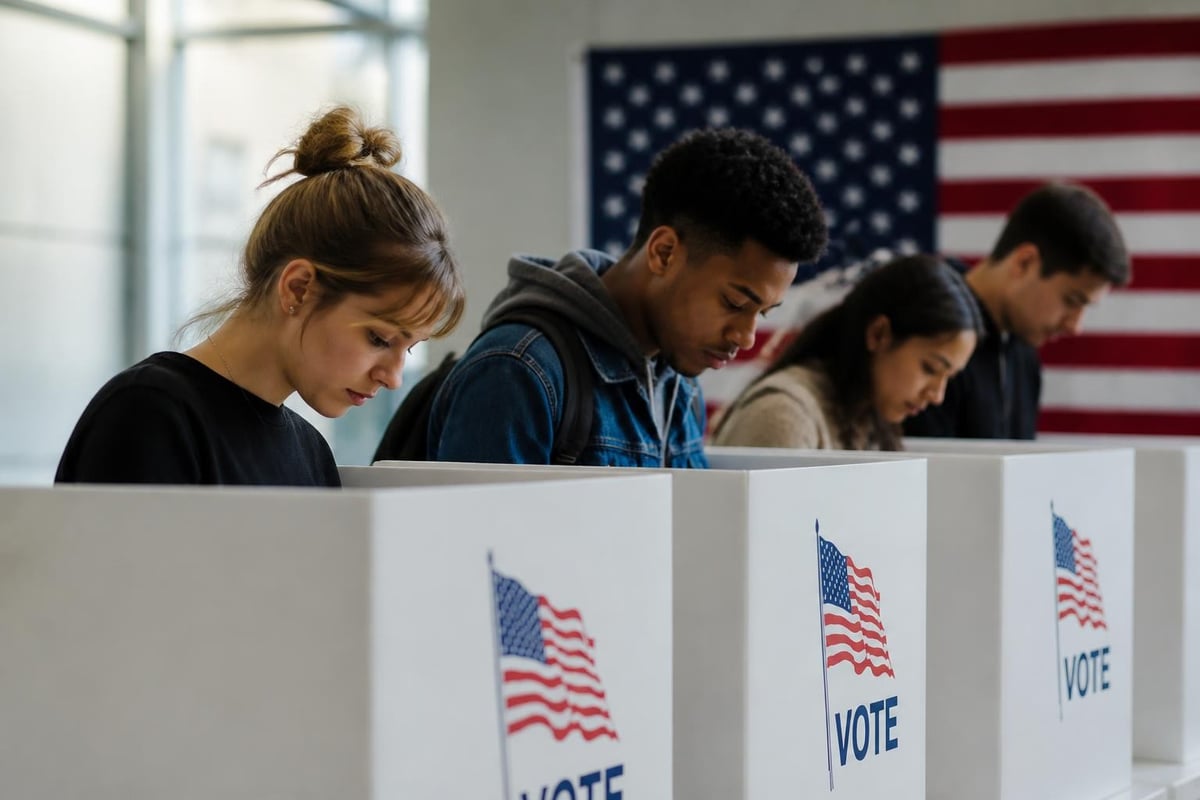
Gen z voting patterns explained through partisan lens reveal nuanced preferences that defy simple categorization. While aggregate data shows Gen Z leaning Democratic in recent presidential elections, significant variation exists within this cohort by race, gender, geography, and education level.
Gender Gaps Within Gen Z
One of the most striking patterns in recent elections involves diverging preferences between Gen Z men and women. Data from the Harvard Institute of Politics Youth Poll shows widening gender gaps on certain policy issues and candidate preferences within this generation.
Young women prioritize reproductive rights, healthcare access, and education policy at higher rates than their male peers. Young men show greater concern about economic opportunity, trade policy, and foreign policy approaches. These differences translate into measurably different candidate evaluations and voting patterns within the same generational cohort.
Geographic and Educational Divides
Gen Z voters in urban areas demonstrate distinctly different political preferences than their rural and small-town peers. Similarly, college-educated young voters diverge from those entering the workforce directly after high school.
Presidential candidates who recognize these internal divisions within Gen Z and craft targeted messaging accordingly show stronger performance across the full spectrum of young voters. Treating this generation as monolithic ignores meaningful variation that affects electoral outcomes in battleground states.
Impact on Presidential Campaign Strategy
Understanding gen z voting patterns explained transforms how campaigns allocate resources, craft messages, and deploy volunteers. Presidential operations in 2026 and beyond must adapt to this generation's preferences and behaviors.
Digital-First Campaign Tactics
Traditional campaign approaches centered on television advertising and door-knocking reach Gen Z voters less effectively than integrated digital strategies. Successful campaigns now prioritize:
- Authentic social media presence that feels native to platform culture rather than corporate
- Influencer partnerships with trusted content creators who already have Gen Z audiences
- Interactive digital experiences including voter registration tools, policy quizzes, and volunteer signup
- Peer-to-peer organizing that empowers young supporters to reach their own networks
- Mobile-optimized content designed for smartphone consumption rather than desktop viewing
The most effective presidential campaigns treat digital strategy not as supplement to traditional media but as the primary engagement channel for Gen Z outreach. Recent coverage at U.S. Presidential Report documents how different campaigns have adapted their approaches for younger demographics.
Volunteer Mobilization and Field Operations
Gen Z voters respond particularly well to peer-to-peer contact from other young people. Presidential campaigns that recruit, train, and deploy Gen Z volunteers see measurably higher engagement rates than those relying exclusively on professional staff or older volunteers.
This generation also expects campaign involvement to fit around existing commitments rather than requiring traditional time-intensive volunteer models. Flexible, short-duration volunteer opportunities with clear impact metrics attract more Gen Z participation than open-ended commitments.
State-Level Variations in Gen Z Voting Behavior
When gen z voting patterns explained account for geographic factors, significant state-to-state differences emerge based on local political culture, demographic composition, and voting access infrastructure.
States with highest Gen Z turnout (2024):
- Minnesota (robust civic education, same-day registration)
- Colorado (all-mail voting, automatic registration)
- Maine (same-day registration, ranked-choice voting)
- Oregon (all-mail voting, pre-registration for 16-17 year-olds)
- Wisconsin (strong campus organizing, competitive races)
States with lowest Gen Z turnout (2024):
- Arkansas (limited early voting, strict ID requirements)
- Oklahoma (limited campus polling locations, registration barriers)
- West Virginia (limited civic infrastructure, population decline)
- Mississippi (restrictive voting laws, limited youth organizing)
- Tennessee (student voter restrictions, limited early voting)
These differences underscore how state policy choices directly affect democratic participation. Presidential candidates must navigate this patchwork of regulations when building Gen Z outreach strategies across different battleground states.
The Role of Civic Education and Engagement
Long-term trends in gen z voting patterns explained must account for civic education quality and community engagement opportunities available to young people. Research consistently shows that high-quality civics instruction, service-learning opportunities, and community organizing experience predict higher lifetime political participation.
States that require robust civics education and provide service-learning opportunities see measurably higher youth voter registration and turnout. The effects persist across multiple election cycles as young people develop habits and skills that facilitate ongoing participation.
Presidential administrations that prioritize civic education funding, voting access expansion, and youth engagement programs potentially reshape gen z voting patterns for decades. These investments in democratic infrastructure yield returns far beyond single election cycles.
Looking Ahead to 2028 and Beyond
As Gen Z continues maturing into their peak voting years, their collective influence on presidential elections will only grow. By 2028, the oldest Gen Z voters will be 31, with full careers, families, and established civic identities shaping their political engagement.
Understanding gen z voting patterns explained helps campaigns, policymakers, and civic organizations meet this generation where they are rather than expecting them to conform to older models of political participation. The U.S. Presidential Report continues tracking how presidential candidates adapt their strategies to engage effectively with America's youngest voters.
Several trends appear likely to intensify:
- Continued importance of economic security and opportunity messaging
- Growing sophistication in digital campaign tactics and counter-disinformation efforts
- Ongoing state-level battles over voting access affecting young people
- Increased Gen Z representation in campaign leadership and candidate pools
- Evolution of social media platforms and information ecosystems
Presidential candidates who invest in understanding this generation's unique characteristics, policy priorities, and participation barriers position themselves for success in an electorate where Gen Z represents an increasingly decisive voting bloc.
Gen z voting patterns explained through data reveal a generation shaped by economic uncertainty, digital connectivity, and policy concerns distinct from their predecessors. As this cohort continues gaining electoral influence, their impact on presidential elections will only grow more significant. For comprehensive, non-partisan coverage of how current and future presidential campaigns engage with voters across all generations, U.S. Presidential Report provides authoritative analysis and breaking news to help you understand the evolving American political landscape.