The federal spending increase vs federal spending cuts debate represents one of the most enduring and consequential policy conflicts in American governance. Every presidential administration must navigate this fundamental tension, balancing constituent demands for robust government services against concerns about fiscal sustainability and national debt. In 2026, as the nation continues grappling with evolving economic challenges, this debate shapes everything from healthcare and infrastructure to defense and social programs. Understanding the competing arguments, historical patterns, and real-world impacts helps citizens evaluate presidential leadership and hold elected officials accountable for fiscal decisions.
The Historical Context of Federal Budget Battles
Presidential budget proposals have reflected dramatically different philosophies over the past five decades. According to historical budget data from the Office of Management and Budget, federal outlays have grown from roughly 17% of GDP in the 1960s to over 23% in recent years, with significant spikes during economic crises and wars.
Each administration brings distinct priorities to the federal spending increase vs federal spending cuts debate. Republican presidents traditionally advocate for smaller government footprints, emphasizing tax cuts and spending restraint in domestic programs while often maintaining or increasing defense budgets. Democratic presidents typically champion expanded social safety nets, infrastructure investments, and regulatory enforcement, arguing that strategic spending increases deliver long-term economic and social benefits.
Key Spending Categories That Drive the Debate
Federal spending divides into mandatory programs, discretionary spending, and debt service. Mandatory spending-including Social Security, Medicare, and Medicaid-consumes approximately two-thirds of the federal budget and operates on autopilot unless Congress changes underlying laws. Discretionary spending, which requires annual appropriations, covers defense, education, transportation, and other government operations.
Major federal spending categories include:
- Social Security and Medicare: Programs serving retirees and disabled Americans
- Medicaid and health subsidies: Healthcare for low-income populations
- Defense and national security: Military operations, personnel, and equipment
- Income security programs: Unemployment insurance, food assistance, housing support
- Transportation and infrastructure: Highways, bridges, transit systems, airports
- Education and training: Federal aid for schools, colleges, workforce development
- Interest on national debt: Payments to bondholders financing previous deficits
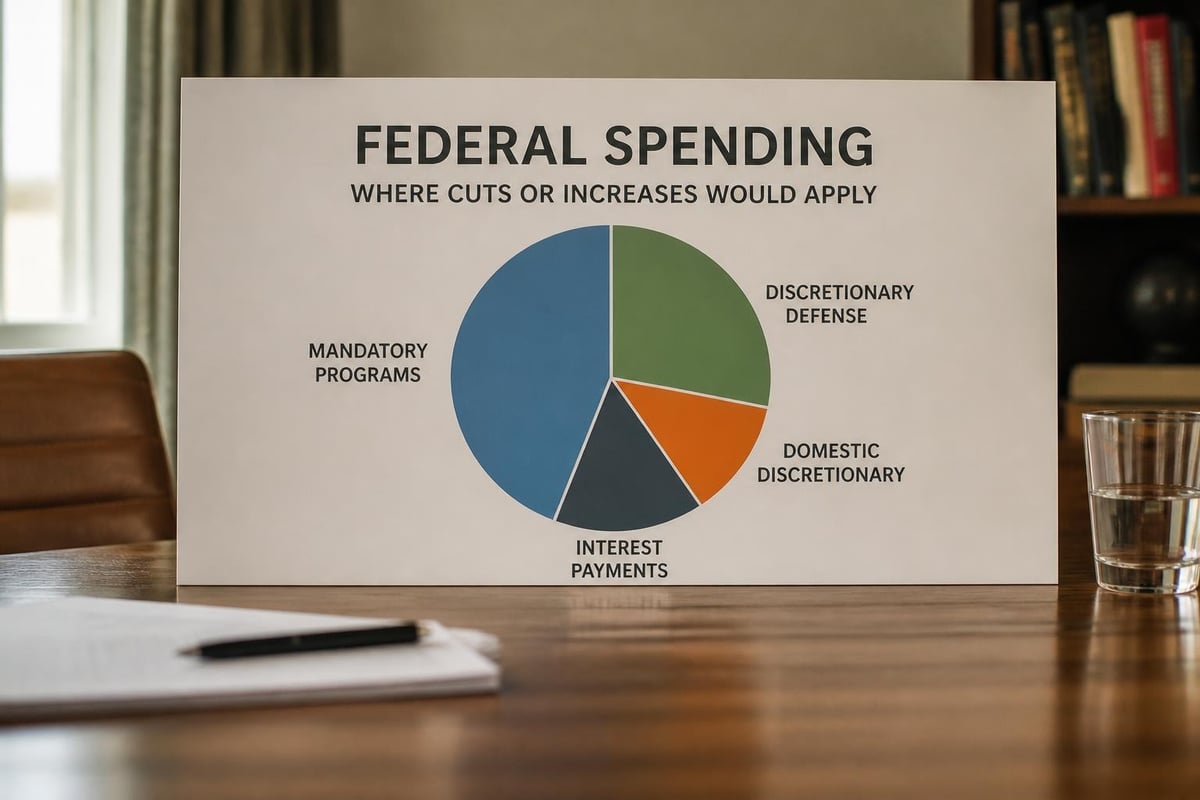
Understanding this composition explains why the federal spending increase vs federal spending cuts debate often generates more heat than light. Politicians can't easily cut the largest spending categories without legislative changes affecting millions of beneficiaries, making discretionary programs the primary battleground.
Arguments for Federal Spending Increases
Advocates for expanded federal spending emphasize government's unique role in addressing market failures, providing public goods, and ensuring broadly shared prosperity. These arguments have shaped presidential platforms and legislative agendas across multiple administrations.
Economic stimulus and countercyclical policy top the list of justifications. During recessions, government spending can replace collapsed private demand, preventing economic spirals. The 2020-2021 pandemic response demonstrated this principle, with massive federal outlays stabilizing household incomes and supporting businesses through unprecedented disruption.
Infrastructure investment represents another powerful argument for targeted spending increases. As detailed in Urban Institute research on federal infrastructure spending, decades of underinvestment have created a maintenance backlog affecting transportation networks, water systems, and energy grids. Proponents argue that infrastructure spending generates both immediate construction jobs and long-term productivity gains that boost economic growth.
Social Safety Net Expansion
Presidents advocating spending increases often emphasize moral obligations alongside economic rationales. Expanding Medicaid, increasing food assistance, or enhancing unemployment benefits addresses immediate human needs while potentially delivering downstream savings through improved health outcomes and economic stability.
The multiplier effect strengthens the economic case for certain spending increases. Money distributed through transfer payments or government contracts circulates through the economy multiple times, generating broader economic activity than the initial expenditure. This logic underpins arguments for infrastructure projects, education funding, and anti-poverty programs.
| Spending Increase Argument | Primary Benefit | Presidential Examples |
|---|---|---|
| Economic stimulus | Job creation, demand support | 2009 Recovery Act, 2021 American Rescue Plan |
| Infrastructure investment | Long-term productivity, modernization | 2021 Infrastructure Investment and Jobs Act |
| Safety net expansion | Poverty reduction, stability | Affordable Care Act, Child Tax Credit expansions |
| Defense modernization | National security preparedness | Various administration defense budgets |
| Research and development | Innovation, competitiveness | NIH, NSF, energy research funding |
Climate change mitigation has emerged as a contemporary rationale for federal spending increases. Presidents pursuing aggressive climate policies argue that government investment in clean energy, electric vehicle infrastructure, and climate resilience programs addresses existential threats while creating economic opportunities in emerging industries.
The Case for Federal Spending Cuts
Fiscal conservatives and deficit hawks emphasize the unsustainability of current spending trajectories. The Committee for a Responsible Federal Budget analysis consistently highlights the gap between projected revenues and outlays, warning that rising national debt threatens economic stability and constrains future policy options.
The crowding-out effect represents a central economic argument against sustained spending increases. When government borrowing absorbs available capital, private investment may decline as interest rates rise to attract lenders. This dynamic potentially reduces long-term economic growth, offsetting any short-term stimulus benefits from government spending.
Generational equity concerns animate many spending-cut advocates. Current deficits effectively transfer costs to future taxpayers who had no voice in today's spending decisions. This strikes many as fundamentally unfair, particularly when mandatory spending programs promise benefits that exceed projected revenues by trillions of dollars.
Efficiency and Government Waste
Presidents campaigning on spending restraint frequently cite government inefficiency and waste as justifications for cuts. Stories of bureaucratic excess, duplicative programs, and failed initiatives reinforce public skepticism about government's ability to spend money effectively. While identifying specific waste proves harder than campaign rhetoric suggests, the perception drives political support for budget reduction efforts.
Common targets for federal spending cuts include:
- Discretionary domestic programs: Reducing or eliminating agencies and initiatives
- Entitlement reform: Raising eligibility ages, means-testing benefits, adjusting formulas
- Defense efficiency: Reducing overseas commitments, eliminating outdated weapons systems
- Federal workforce reductions: Hiring freezes, buyouts, attrition strategies
- Grant and subsidy elimination: Ending programs deemed unnecessary or ineffective
Economic growth through smaller government represents the supply-side argument for spending cuts. By reducing government's claim on economic resources, this theory suggests, private sector dynamism can accelerate. Lower spending enables tax cuts that proponents believe stimulate investment, entrepreneurship, and job creation more effectively than government programs.
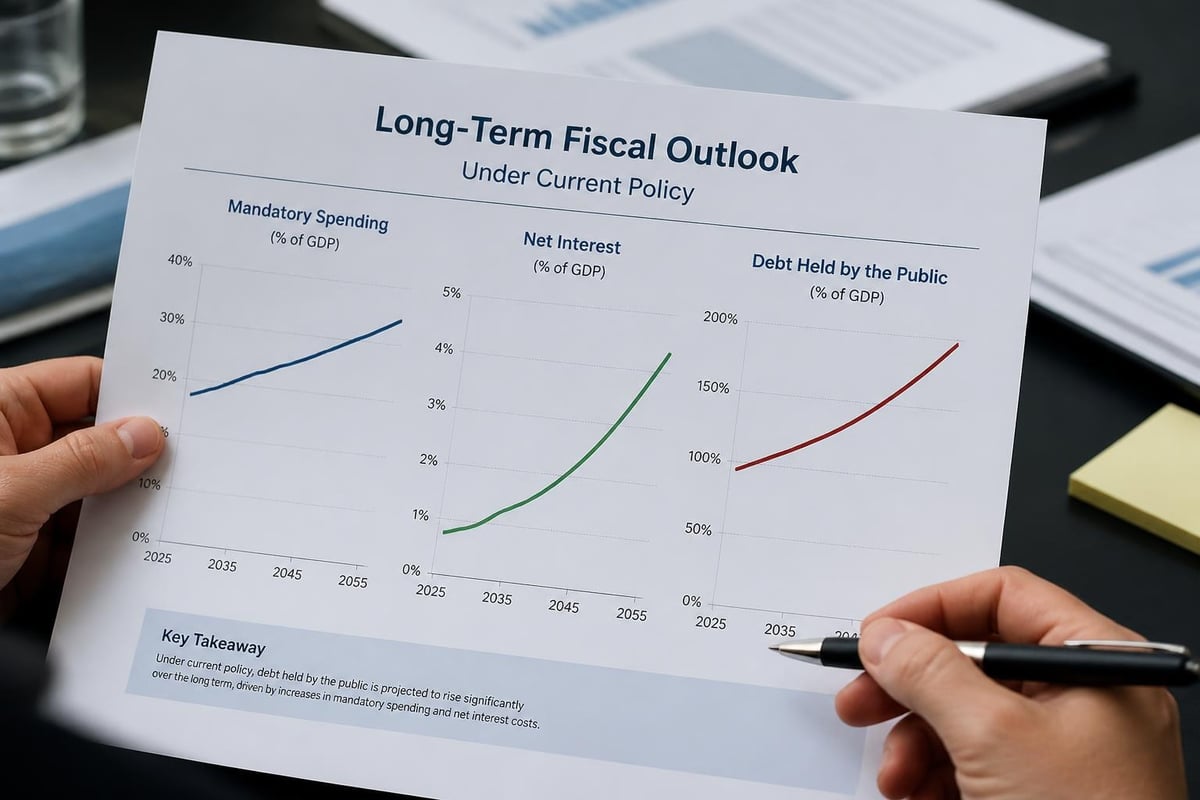
The federal spending increase vs federal spending cuts debate intensifies when mandatory spending growth consumes ever-larger budget shares. Without reforms to Social Security, Medicare, and Medicaid, these programs will drive deficits regardless of decisions about discretionary spending or tax policy.
Presidential Leadership and Budget Politics
Presidents approach the federal spending increase vs federal spending cuts debate with varying levels of political capital and strategic vision. First-term presidents often pursue ambitious agendas while still enjoying electoral mandates, whereas second-term presidents face lame-duck dynamics that complicate major fiscal initiatives.
Congressional composition dramatically affects presidential budget authority. Unified government-when the same party controls the White House and both chambers of Congress-enables more aggressive fiscal policy changes. Divided government typically produces gridlock or compromises that satisfy neither spending-increase advocates nor cut proponents.
Budget Reconciliation and Legislative Tactics
The reconciliation process allows certain budget-related legislation to pass the Senate with simple majorities, bypassing the usual 60-vote threshold for overcoming filibusters. Presidents have used reconciliation to advance both spending increases and tax cuts, though strict rules limit what provisions qualify for this expedited procedure.
Presidential priorities revealed through budget proposals don't always translate into enacted policy. Congress holds constitutional power over appropriations, meaning presidential budgets serve more as statements of priorities than binding blueprints. Still, presidents shape debates through proposals, veto threats, and public advocacy campaigns.
Presidential budget influence operates through multiple channels:
- Agenda setting: Defining what issues receive attention and debate
- Party leadership: Mobilizing congressional allies and coordinating strategy
- Public persuasion: Building popular support for specific fiscal priorities
-
- Veto authority: Blocking unacceptable appropriations or policy riders
- Executive discretion: Implementing spending laws with varying enthusiasm
The political consequences of budget decisions often extend beyond immediate policy impacts. Presidents who successfully navigate the federal spending increase vs federal spending cuts debate can strengthen their parties' electoral prospects, while miscalculations can undermine approval ratings and congressional majorities.
Real-World Impacts of Spending Decisions
Abstract budget debates translate into concrete consequences for American communities, businesses, and families. Understanding these impacts helps evaluate competing claims about optimal spending levels and priorities.
Infrastructure spending decisions illustrate these real-world effects clearly. Increased federal transportation funding accelerates road repairs, expands transit options, and reduces commute times-tangible improvements citizens experience daily. Conversely, spending cuts may defer maintenance, allowing infrastructure deterioration that eventually costs more to repair while degrading quality of life and economic productivity.
Program-Specific Consequences
Social safety net adjustments directly affect vulnerable populations. Presidential policy decisions regarding food assistance, housing support, or unemployment insurance determine whether struggling families receive help or fall through gaps in the social fabric. These decisions carry profound humanitarian implications alongside their fiscal effects.
Defense spending changes influence both national security capabilities and regional economies. Military installations, defense contractors, and veteran services represent major employers in many communities. Budget increases can modernize equipment and improve readiness, while cuts may reduce force size or delay weapons programs, affecting everything from global deterrence to local job markets.
| Policy Area | Spending Increase Impact | Spending Cut Impact |
|---|---|---|
| Healthcare | Expanded coverage, improved access | Reduced eligibility, higher out-of-pocket costs |
| Education | Lower class sizes, better facilities | Larger classes, program eliminations |
| Infrastructure | Faster project completion, job creation | Deferred maintenance, deterioration |
- Research funding | Scientific advances, innovation | Slower progress, brain drain |
| Environmental programs | Cleaner air/water, climate action | Increased pollution, delayed transitions |

Interest rates and economic growth respond to aggregate fiscal policy decisions. Large deficits driven by spending increases may eventually push interest rates higher, affecting mortgage costs, business borrowing, and government debt service. Alternatively, spending cuts implemented during economic weakness could deepen recessions by removing demand from struggling economies.
The Role of Independent Analysis
Nonpartisan research organizations provide crucial context for evaluating competing claims in the federal spending increase vs federal spending cuts debate. The Brookings Institution’s budget analyses offer detailed breakdowns of spending trends, revenue projections, and policy alternatives that help citizens move beyond partisan talking points.
These independent perspectives matter because presidential administrations naturally present budgets in the most favorable light possible. Spending increases become "investments in America's future" while cuts transform into "eliminating waste and fraud." Objective analysis helps separate rhetorical spin from substantive policy assessment.
Congressional budget processes incorporate multiple sources of independent expertise. The Congressional Budget Office provides nonpartisan cost estimates and economic projections that inform legislative deliberations. The Government Accountability Office audits federal programs and identifies inefficiencies. These institutions strengthen democratic accountability by giving lawmakers and citizens reliable information independent of executive branch preferences.
Media Coverage and Public Understanding
Presidential budget proposals receive extensive media attention, though coverage quality varies substantially. Sophisticated outlets provide detailed analysis of specific programs, distributional effects, and long-term fiscal implications. Other coverage focuses on political horse-racing or simplified narratives that may obscure important nuances.
Public opinion on the federal spending increase vs federal spending cuts debate reflects both principled ideological commitments and contradictory preferences. Polls consistently show Americans want deficit reduction alongside opposition to cutting most specific programs-a mathematical impossibility that complicates governance and enables political demagoguery from multiple directions.
Contemporary Challenges Shaping Budget Debates
The 2026 fiscal environment presents unique challenges that influence the federal spending increase vs federal spending cuts debate. Pandemic-era spending surges created baseline effects that make recent budgets appear inflated even as many emergency programs have expired. Inflation concerns complicate arguments about appropriate spending levels, as rising prices increase nominal outlays even when real program sizes remain constant.
Entitlement program solvency issues loom larger each year. Social Security's trust funds face depletion within the next decade without legislative action, forcing difficult choices between benefit cuts, tax increases, or some combination. Medicare confronts similar long-term pressures as healthcare costs outpace general inflation and baby boomers age into the program.
Emerging budget pressures include:
- Climate adaptation costs: Disaster response, infrastructure resilience
- Artificial intelligence and automation: Workforce transition support, displaced worker assistance
- Global competition: Research funding, industrial policy, strategic industries
- Public health preparedness: Pandemic prevention, medical countermeasures
- Cybersecurity threats: Defense systems, critical infrastructure protection
Presidential leadership on these challenges requires balancing immediate political incentives against long-term national interests. Electoral cycles encourage short-term thinking and can-kicking, while genuine solutions often demand political courage and bipartisan cooperation that prove elusive in polarized environments.
Evaluating Presidential Budget Proposals
Citizens assessing presidential performance should examine budget proposals through multiple lenses. Do spending priorities align with stated values and campaign promises? Are revenue projections realistic, or do they rely on optimistic growth assumptions? How do proposed policies affect different demographic groups and regions?
The relationship between presidential rhetoric and actual budget numbers reveals priorities more accurately than speeches or press releases. A president claiming to prioritize education while proposing funding cuts demonstrates that other considerations outweigh stated commitments. Conversely, presidents backing words with budgetary resources signal genuine intent.
Presidential election coverage increasingly scrutinizes candidates' fiscal proposals, recognizing that budget blueprints outline governing philosophies and policy ambitions. Voters can use these proposals to evaluate whether candidates' visions align with their own values and economic circumstances.
Transparency and honest accounting matter enormously in budget debates. Some presidential budgets employ gimmicks that disguise true costs or exaggerate savings. Moving items off-budget, using optimistic economic assumptions, or claiming unrealistic efficiencies all undermine democratic accountability. Independent analysis helps identify these manipulations.
Institutional Constraints and Reform Options
Constitutional separation of powers means presidents cannot unilaterally determine spending levels, though executive discretion over implementation provides significant influence. The appropriations process requires congressional action, creating multiple veto points where interests can block or reshape presidential proposals.
Budget rules and procedures established by law shape what's politically feasible. Pay-as-you-go requirements, spending caps, and debt ceiling negotiations all constrain presidential flexibility. Reforming these institutional arrangements represents another dimension of the federal spending increase vs federal spending cuts debate-not just how much to spend, but what rules should govern fiscal policymaking.
Some reformers advocate constitutional amendments requiring balanced budgets, arguing that legal constraints are necessary to overcome political incentives toward deficit spending. Opponents counter that rigid rules would prevent appropriate countercyclical policy during recessions and might force harmful cuts during economic downturns.
Multi-year budgeting represents one proposed reform that could improve fiscal policymaking. Rather than annual appropriations battles, longer budget horizons might encourage strategic thinking about program effectiveness and long-term fiscal sustainability. However, political realities often favor short-term flexibility over long-term commitment.
International Comparisons and Context
The federal spending increase vs federal spending cuts debate looks different when viewed through international comparisons. The United States spends less as a percentage of GDP than most European nations but achieves different outcomes in healthcare, education, and social welfare. Whether American arrangements are superior depends on values regarding individual responsibility, inequality tolerance, and government's proper role.
Military spending illustrates these differences starkly. U.S. defense outlays exceed the next several countries combined, reflecting global commitments and technological superiority that other nations don't attempt to match. Critics argue this spending could decline without harming national security, while defenders insist American leadership requires military dominance.
Healthcare spending comparisons reveal that the United States spends far more per capita than peer nations while covering fewer people and achieving mixed health outcomes. This suggests potential efficiency gains, though political obstacles to fundamental reform remain formidable regardless of which party controls the White House.
The Path Forward
Resolving the federal spending increase vs federal spending cuts debate requires acknowledging legitimate concerns on both sides. Fiscal sustainability matters, particularly as interest costs consume growing budget shares. Simultaneously, strategic investments in infrastructure, education, and research can boost long-term growth while addressing immediate needs.
Compromise possibilities exist around evidence-based policymaking. Rather than ideological commitments to always increasing or cutting spending, empirical assessment of program effectiveness could guide resource allocation. What initiatives actually achieve stated goals? Where do market solutions work better than government programs? These questions deserve attention beyond partisan talking points.
Presidential leadership in fostering such pragmatic approaches remains rare but valuable. Presidents who level with Americans about fiscal tradeoffs, acknowledge program failures alongside successes, and seek bipartisan solutions demonstrate statesmanship that transcends election-cycle posturing. Whether citizens reward such leadership with political support influences whether future presidents attempt similar approaches.
The federal spending increase vs federal spending cuts debate will continue shaping American governance for decades, with presidential administrations proposing dramatically different fiscal visions based on philosophical principles and political calculations. Understanding historical patterns, evaluating competing arguments, and examining real-world impacts enables citizens to participate meaningfully in these crucial policy discussions. For comprehensive, nonpartisan coverage of how current and past presidents approach budget priorities, fiscal policy, and the full spectrum of governance challenges, visit U.S. Presidential Report to stay informed about the decisions shaping America's fiscal future.