The distinction between affordability issues and inflation concerns has emerged as a critical fault line in American political discourse as we approach the final months of 2026. While these terms are often used interchangeably by pundits and politicians, voters themselves draw meaningful distinctions between the rising price levels measured by economic indicators and the lived experience of stretching household budgets to cover essential expenses. Understanding how affordability issues vs inflation concerns among voters influence electoral behavior requires examining not just the numbers, but the narratives Americans tell themselves about economic security and governmental responsibility.
The Economic Psychology Behind Voter Priorities
Voters consistently demonstrate a complex relationship with economic terminology that defies simple partisan categorization. When pollsters ask about "inflation," respondents often think about macroeconomic trends and Federal Reserve policy. When those same voters discuss "affordability," they reference concrete choices: whether to fill a prescription, how many groceries fit in the budget, or if homeownership remains achievable.
Research from the National Bureau of Economic Research reveals that public beliefs about inflation are shaped more by personal experience with specific price categories than by aggregate Consumer Price Index figures. This cognitive gap explains why presidents may tout declining inflation rates while voters remain deeply dissatisfied with economic conditions.
Measuring What Matters to Households
The Federal Reserve's annual Survey of Household Economics and Decisionmaking provides essential context for understanding affordability issues vs inflation concerns among voters. The 2025 report published in May 2026 documented a persistent disconnect: while some macroeconomic indicators showed improvement, household-level financial stress remained elevated across income brackets.
Key findings included:
- Housing cost burden: 38% of renters spent more than 30% of income on housing
- Emergency savings: 37% of adults could not cover a $400 emergency expense using cash or equivalents
- Healthcare access: 23% of adults forwent medical care due to cost concerns
- Food security: 17% of households experienced food insecurity at some point during 2025
These metrics capture the daily affordability pressures that voters experience regardless of whether headline inflation rates are rising or falling.

Housing as the Affordability Anchor
Housing costs have become the single most significant driver of affordability concerns among American voters, transcending traditional partisan divides. Brookings Institution analysis demonstrates how decades of insufficient housing supply created structural affordability problems that persist even when general inflation moderates.
The political salience of housing affordability differs fundamentally from inflation messaging. Voters understand that mortgage rates and home prices respond to different forces than grocery prices or gasoline costs. A presidential administration may successfully reduce inflation, yet voters still face housing markets where median home prices relative to median incomes remain near historic highs.
| Housing Metric | 2019 | 2023 | 2026 |
|---|---|---|---|
| Median home price to median income ratio | 4.1 | 5.8 | 5.4 |
| Percentage paying >30% income on housing | 31% | 37% | 36% |
| First-time homebuyer age (median) | 33 | 36 | 36 |
This table illustrates why affordability issues vs inflation concerns among voters often manifest as frustration with housing policy specifically. While the ratio has improved slightly from its 2023 peak, it remains well above historical norms, constraining household formation and wealth building for younger voters.
Regional Variations in Housing Affordability
Presidential candidates must navigate a complex electoral map where housing affordability varies dramatically by region. Coastal metropolitan areas face acute supply constraints and zoning restrictions, while many Sun Belt cities have experienced rapid price appreciation driven by migration patterns. Midwest and Rust Belt communities contend with different challenges: stagnant home values in some areas but rising costs that outpace local wage growth in others.
These geographic variations mean that a one-size-fits-all approach to addressing affordability issues vs inflation concerns among voters will inevitably fall short. Presidential policy proposals must balance national monetary policy, which addresses inflation broadly, with targeted interventions for housing supply, which addresses affordability in specific markets.
Healthcare Costs and Political Accountability
Healthcare expenses represent another domain where voters distinguish sharply between general inflation and specific affordability crises. The KFF Health Tracking Poll conducted throughout 2026 found that health-care costs ranked among the top three economic concerns for voters across partisan affiliations, with particular intensity among middle-income households who earn too much for subsidies but still struggle with premiums and out-of-pocket expenses.
Key healthcare affordability pain points identified by voters:
- Prescription drug costs, particularly for chronic conditions
- Health insurance premium increases that exceed wage growth
- High-deductible plans that create barriers to seeking care
- Surprise medical billing despite recent legislative reforms
- Dental and vision care excluded from many insurance plans
Presidential administrations face unique accountability pressures regarding healthcare affordability because voters attribute health costs to policy choices rather than market forces alone. Whether rightly or wrongly, presidents receive blame when insurance premiums rise or prescription drugs remain unaffordable, making this a politically volatile component of affordability issues vs inflation concerns among voters.

Partisan Lenses on Economic Challenges
Pew Research Center polling reveals striking partisan differences in how voters prioritize and interpret economic challenges. While majorities across party lines acknowledge affordability pressures, Democrats and Republicans diverge on root causes and appropriate remedies. This polarization complicates efforts by presidential candidates to build consensus around economic policy.
Republicans tend to emphasize inflation as the primary problem, attributing rising prices to excessive government spending and regulatory burdens. Democrats more frequently frame the issue as affordability driven by corporate pricing power, insufficient wage growth, and inadequate social programs. These competing narratives about affordability issues vs inflation concerns among voters reflect deeper ideological divisions about the proper role of government in managing the economy.
Independent Voters as the Swing Factor
Independent voters, who now constitute the largest electoral bloc in many swing states, demonstrate more pragmatic and less ideologically consistent views on economic issues. Gallup analysis shows that independents prioritize tangible household financial outcomes over abstract economic principles, making them responsive to whichever candidate offers more credible solutions to immediate affordability challenges.
For presidential campaigns, this creates both opportunity and risk. Independent voters may reward incumbents who demonstrably reduce costs for essentials like housing, healthcare, and childcare, even if overall inflation rates remain elevated. Conversely, they may punish presidents who tout macroeconomic improvements that voters do not experience in their daily lives.
The Expectation Gap and Presidential Politics
The Federal Reserve Bank of New York's research on inflation expectations highlights a crucial dynamic: voter expectations about future prices influence current political assessments. When households expect continued price increases, they express greater economic anxiety and dissatisfaction with presidential leadership, regardless of current inflation rates.
This expectation gap creates a challenging environment for incumbent presidents. Even successful efforts to reduce inflation may not translate into political credit if voters remain pessimistic about future affordability. Presidential communication strategies must therefore address both current conditions and future expectations, building confidence that affordability will improve over time.
Midterm Elections as an Affordability Referendum
The Brookings analysis of the 2026 midterm elections positioned affordability concerns as the central issue likely to determine control of Congress. This assessment proved largely accurate, as voters in competitive districts consistently cited cost-of-living pressures as their primary motivation, often overshadowing other policy considerations.
Presidential parties typically face headwinds in midterm elections, but the magnitude of these losses or gains often correlates with voter perceptions of economic management. When affordability issues vs inflation concerns among voters tilt heavily toward pessimism, the president's party faces steeper electoral challenges. Conversely, demonstrable progress on household affordability can mitigate traditional midterm losses.
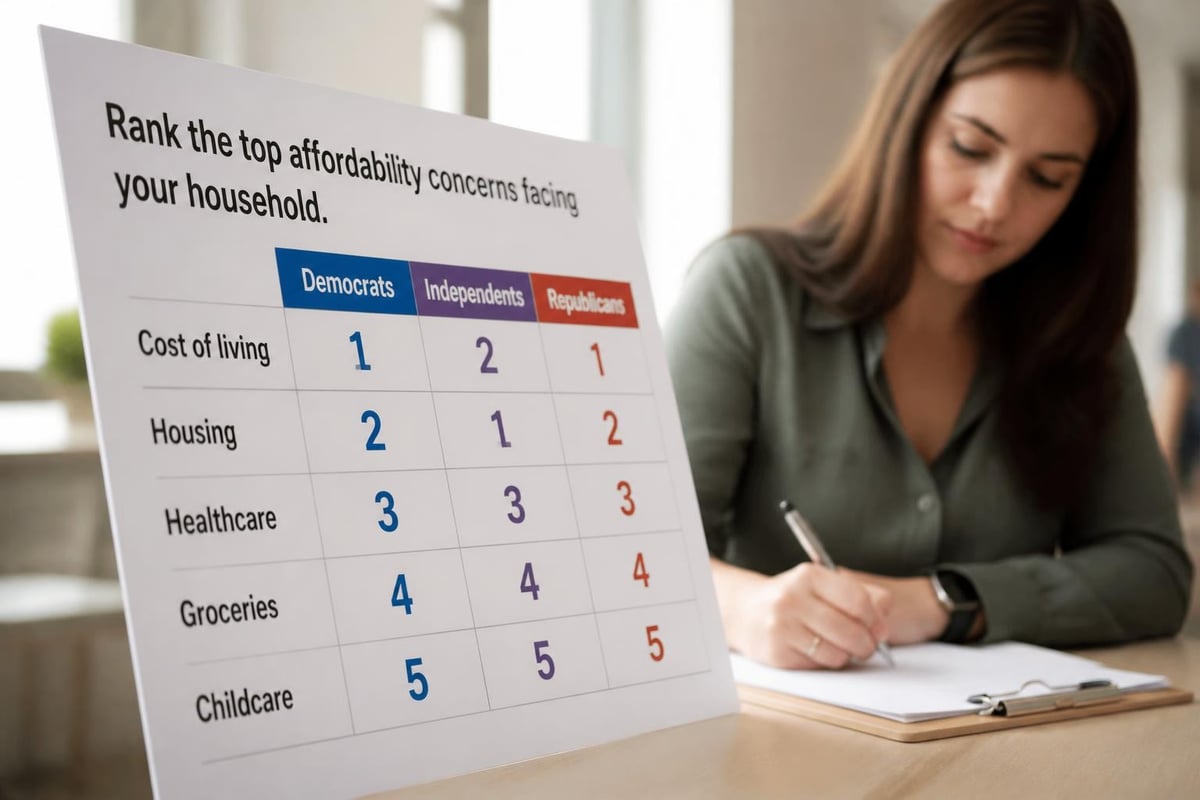
| Voter Priority | Percentage Citing as Top Concern | Partisan Gap |
|---|---|---|
| Overall cost of living | 64% | +3% Republican |
| Housing costs | 42% | +1% Democrat |
| Healthcare costs | 38% | +8% Democrat |
| Grocery prices | 51% | +5% Republican |
| Childcare costs | 29% | +12% Democrat |
This data illustrates how affordability issues vs inflation concerns among voters break down across specific categories, with partisan differences emerging most sharply on healthcare and childcare, where voters perceive greater government responsibility.
Presidential Policy Responses and Their Limitations
Presidents face significant constraints in addressing affordability challenges, as many levers for reducing household costs reside with Congress, state governments, or the independent Federal Reserve. Nevertheless, voters hold presidents accountable for economic outcomes, creating a mismatch between expectations and authority.
Executive actions presidents have employed to address affordability:
- Regulatory relief: Reducing compliance costs for businesses, theoretically lowering consumer prices
- Strategic petroleum reserve releases: Temporarily moderating gasoline prices during supply shocks
- Student loan payment adjustments: Providing relief on education debt burdens
- Medicare drug price negotiations: Leveraging federal purchasing power to reduce prescription costs
- Housing finance reforms: Adjusting mortgage lending standards and federal housing programs
Each of these interventions generates political debate about effectiveness, legality, and long-term consequences. Presidents who pursue aggressive executive action on affordability risk legal challenges and accusations of overreach, while those who rely primarily on legislative solutions may appear insufficiently responsive to urgent voter concerns about affordability issues vs inflation concerns among voters.
The Communication Challenge for Presidential Leadership
Modern presidents must navigate an increasingly complex media environment where economic messaging reaches voters through fragmented channels. Traditional metrics like the "misery index" (inflation plus unemployment) no longer capture the full spectrum of household economic stress, yet many voters still rely on simplified economic narratives promoted by partisan media outlets.
Presidential administrations struggle to claim credit for affordability improvements because price decreases are rare; "success" often means slower price growth rather than actual cost reductions. Explaining why 3% inflation represents progress when voters remember paying less for the same items five years ago requires sophisticated communication that often fails to penetrate public consciousness.
The U.S. Presidential Report provides non-partisan coverage of how different administrations have approached these communication challenges, documenting the gap between policy implementation and public perception. Presidential messaging on economic policy must balance technical accuracy with emotional resonance, acknowledging voter frustrations while highlighting incremental progress.
Looking Ahead to 2028 Presidential Politics
As the 2026 midterms recede and attention shifts toward the 2028 presidential election, affordability issues vs inflation concerns among voters will continue to evolve. The political party that most credibly addresses household economic security stands to gain significant electoral advantages, particularly in swing states where economic anxieties run deepest.
Presidential candidates will need to offer more than platitudes about "fighting for the middle class." Voters increasingly demand specific, credible proposals for reducing the cost burden of housing, healthcare, education, and childcare. Generic promises to "lower prices" or "grow the economy" no longer suffice in an environment where households feel squeezed despite aggregate economic growth.
The intersection of immigration policy and labor market dynamics also affects affordability concerns, as voters in different regions hold varying views about how immigration influences wages and housing costs. Presidential candidates must navigate these sensitivities carefully, avoiding simplistic narratives while addressing legitimate economic anxieties.
The Role of Local vs. National Affordability Factors
One underappreciated dimension of affordability issues vs inflation concerns among voters involves the distinction between national price trends and local cost pressures. A president may successfully reduce national inflation, but voters in high-cost metropolitan areas continue to face severe affordability challenges driven by local zoning laws, property taxes, and other factors beyond federal control.
This geographic fragmentation complicates presidential coalition-building. Policies that resonate with voters in affordable Sun Belt cities may seem inadequate to those in expensive coastal markets. Conversely, aggressive federal interventions in housing markets might alienate voters in regions where affordability remains manageable and property rights are valued highly.
Regional affordability variation requires nuanced policy approaches:
- Coastal metros: Focus on supply-side housing reforms and transit-oriented development
- Sun Belt growth cities: Emphasize infrastructure investment to support sustainable expansion
- Rust Belt communities: Address wage stagnation and industrial revitalization alongside cost pressures
- Rural areas: Target healthcare access and agricultural input costs affecting local economies
Presidential candidates who acknowledge these regional differences and tailor their affordability proposals accordingly demonstrate greater policy sophistication than those offering one-size-fits-all solutions.
The Inflation-Affordability Paradox in Presidential Campaigns
Perhaps the most interesting political dynamic involves what might be called the inflation-affordability paradox. Technical economists define inflation as the rate of price change, meaning that declining inflation simply indicates prices are rising more slowly. Voters, however, often interpret "reducing inflation" as lowering actual prices, creating unrealistic expectations that presidents cannot meet.
This semantic confusion allows political opponents to argue that a president has "failed" on affordability even when inflation has moderated substantially. If prices doubled during a supply shock and then stabilize, voters remember the doubling rather than celebrating the stabilization. Presidential campaigns must therefore manage expectations carefully, explaining that affordability improvements often come through wage growth outpacing prices rather than through absolute price reductions.
The challenge intensifies when considering intergenerational wealth effects. Younger voters face dramatically different affordability landscapes than their parents, particularly regarding housing and education. A 55-year-old homeowner who benefits from home equity appreciation may view the economy more favorably than a 28-year-old renter priced out of homeownership, even if both face identical grocery store inflation.
Understanding the nuanced ways that affordability issues vs inflation concerns among voters shape political preferences remains essential for anyone following presidential politics and economic policy debates. These economic anxieties will continue influencing electoral outcomes as long as household financial stress persists across diverse American communities. For comprehensive, non-partisan coverage of how current and future presidents address these critical challenges, U.S. Presidential Report delivers the context and analysis you need to stay informed about the policies that affect your economic future.