The United States government operates on a fundamental principle designed to prevent any single entity from wielding unchecked power. This system, embedded in the Constitution, ensures that the executive, legislative, and judicial branches maintain distinct responsibilities while simultaneously limiting one another's authority. Understanding how these mechanisms function remains essential for anyone following presidential politics and governmental operations, particularly as debates over executive power continue to shape modern American governance.
The Constitutional Foundation of Governmental Balance
The Framers of the Constitution deliberately constructed a framework that would prevent tyranny while enabling effective governance. After experiencing the concentrated authority of British monarchy, they recognized that power distribution across separate institutions would safeguard individual liberties and democratic principles.
Origins in Political Philosophy
The concept draws heavily from Enlightenment thinkers, particularly Montesquieu's writings on separation of powers. The Framers adapted these theoretical constructs to create a uniquely American system where each branch possesses specific constitutional authority that cannot be usurped by others.
This foundational structure has influenced democratic governments worldwide, though the American implementation remains distinctive in its rigorous application. The system addresses a critical challenge: how to create government strong enough to function effectively yet constrained enough to protect citizen freedoms.
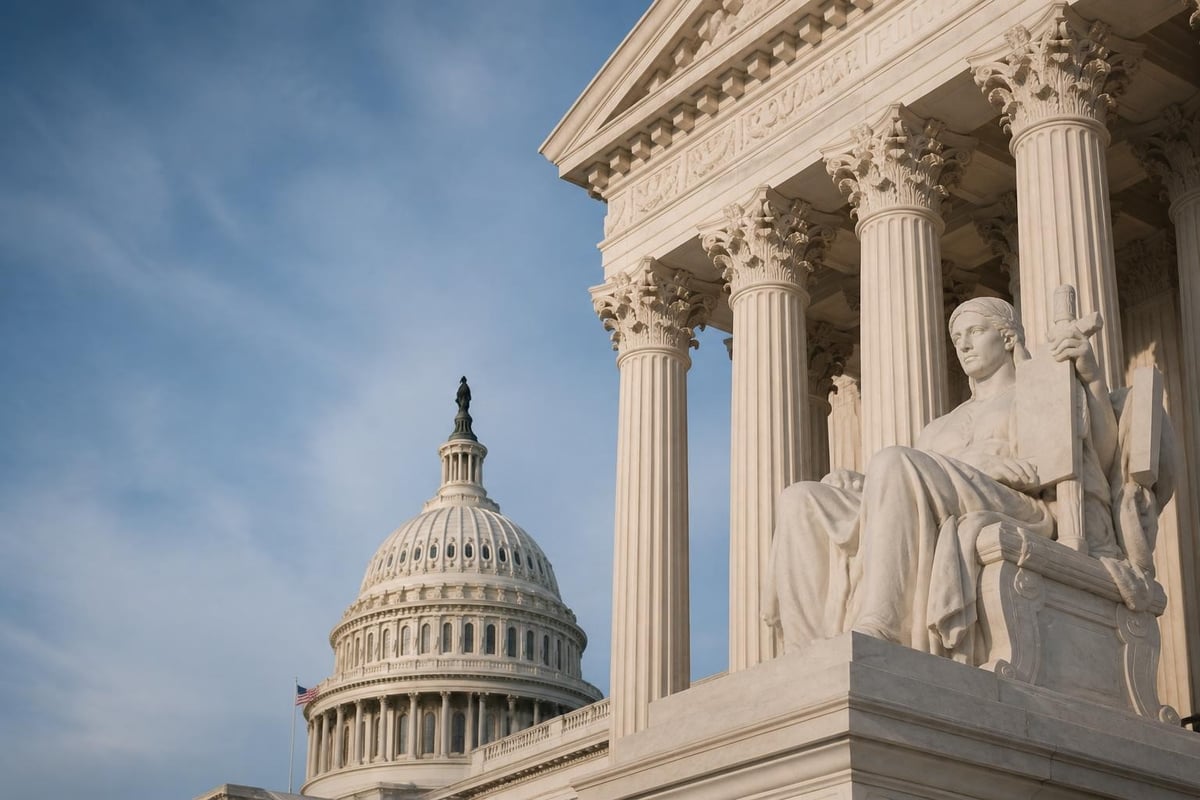
How the Legislative Branch Restrains Executive Power
Congress wields significant authority to restrict presidential actions through various constitutional mechanisms. These powers extend beyond simple legislation into areas of oversight, confirmation, and financial control.
Key Congressional Powers Over the Executive:
- Impeachment authority to remove presidents and federal officials for high crimes and misdemeanors
- Budget control requiring presidential spending proposals receive congressional approval
- Treaty ratification necessitating Senate consent for international agreements
- Appointment confirmation for cabinet members, federal judges, and ambassadors
- Veto override capability with two-thirds majority in both chambers
The Senate's confirmation process serves as a powerful check on presidential appointments. When a president nominates Supreme Court justices or cabinet secretaries, senators thoroughly examine qualifications, ideological positions, and potential conflicts of interest. This scrutiny has led to rejected nominations throughout American history, demonstrating Congress's willingness to block appointments deemed unsuitable.
Congressional investigations represent another vital oversight mechanism. Committees can subpoena documents, compel testimony, and expose executive branch misconduct. These investigations have uncovered everything from administrative inefficiencies to constitutional violations, as documented extensively on U.S. Presidential Report.
The Power of the Purse
Financial control gives Congress extraordinary leverage over presidential initiatives. No federal spending occurs without congressional appropriation, meaning even the most ambitious presidential agenda requires legislative cooperation.
This dynamic creates constant negotiation between branches. Presidents must build congressional coalitions to fund their priorities, whether those involve foreign policy initiatives or domestic programs. When Congress refuses funding, presidential plans stall regardless of executive determination.
Government shutdowns illustrate this tension dramatically. When Congress and the president cannot agree on spending bills, federal operations cease until compromise emerges. These standoffs demonstrate how checks and balances explained through constitutional design can produce gridlock alongside accountability.
Executive Checks on Congressional Authority
The presidency possesses substantial constitutional tools to constrain legislative overreach. These mechanisms ensure Congress cannot dominate governance or enact laws without executive input.
Presidential Veto Power
The veto stands as the president's most direct check on legislation. When Congress passes a bill, the president can reject it, forcing lawmakers to either revise the legislation or attempt an override requiring two-thirds support in both chambers.
| Veto Type | Description | Congressional Response |
|---|---|---|
| Regular Veto | President formally rejects bill and returns it to Congress | Override requires 2/3 vote in both chambers |
| Pocket Veto | President takes no action while Congress adjourns | Cannot be overridden |
| Line-Item Veto | Rejection of specific provisions (ruled unconstitutional in 1998) | Not currently available |
This authority forces congressional consideration of presidential priorities during the legislative drafting process. Lawmakers must anticipate potential vetoes and adjust bills accordingly, embedding executive preferences into legislation before formal passage.
Executive Orders and Administrative Action
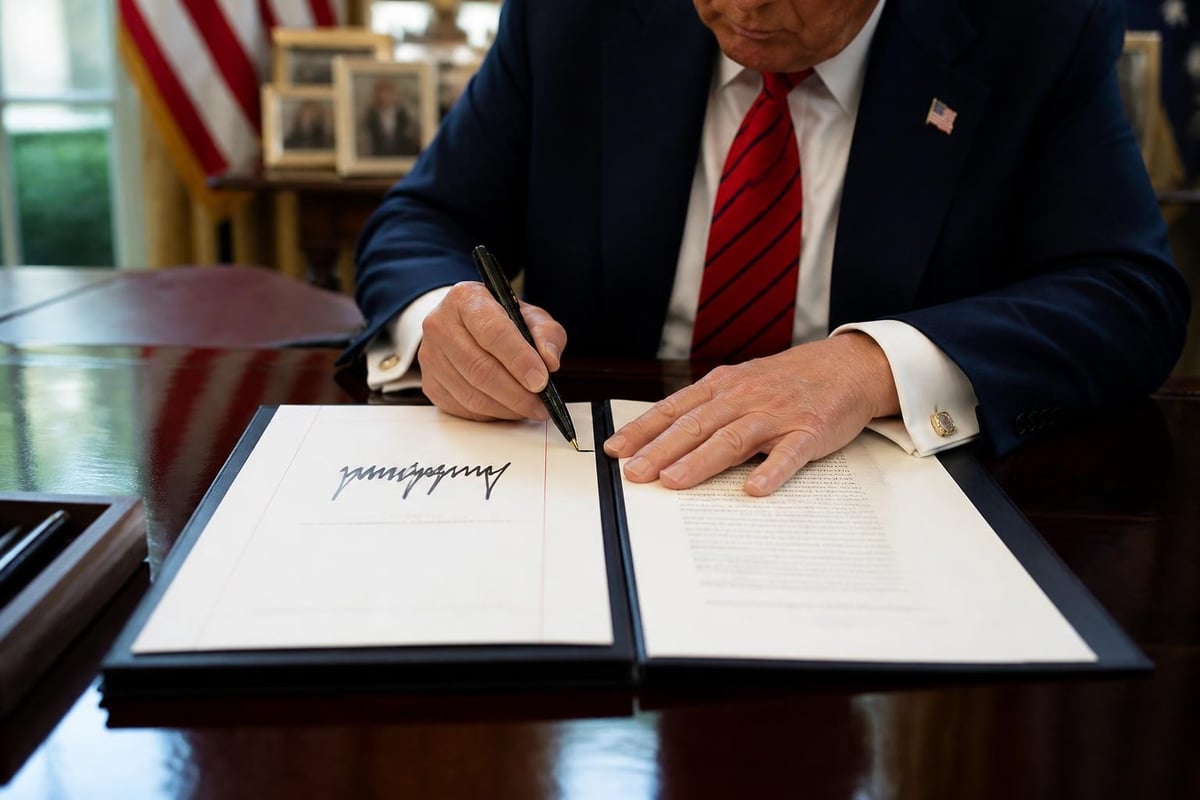
While not explicitly mentioned in the Constitution, executive orders allow presidents to direct federal agencies and implement policy within existing legal frameworks. These directives can significantly shape governance without requiring congressional approval.
However, this authority has limits. Executive orders cannot contradict existing statutes, create new spending obligations, or violate constitutional provisions. Courts frequently review these actions, and subsequent administrations can rescind previous orders, creating policy fluctuations across presidential transitions.
The appointment power also functions as an executive check. By selecting agency heads, federal prosecutors, and regulatory officials, presidents influence how laws get implemented and enforced. These appointees shape policy interpretation and enforcement priorities, affecting congressional intent even after legislation passes.
Judicial Review and Constitutional Interpretation
The judiciary maintains independence from both political branches while exercising profound influence over governmental operations. Federal courts, particularly the Supreme Court, determine whether actions by Congress or the president comply with constitutional requirements.
The Establishment of Judicial Review
Though not explicitly stated in the Constitution, judicial review emerged from the landmark 1803 case Marbury v. Madison. Chief Justice John Marshall established that courts possess authority to invalidate laws and executive actions conflicting with the Constitution.
This principle transformed American governance by creating a non-political mechanism for constitutional enforcement. When the principle of separation of powers faces threats from either political branch, courts can intervene to restore constitutional balance.
Major Areas of Judicial Oversight:
- Statutory interpretation determining congressional intent in ambiguous legislation
- Constitutional review assessing whether laws violate fundamental rights or structural provisions
- Executive action evaluation examining presidential orders and administrative decisions
- Federalism disputes resolving conflicts between state and federal authority
Courts have struck down presidential actions ranging from executive orders to military decisions when these exceeded constitutional authority. Similarly, congressional statutes on topics from civil rights to economic regulation have faced judicial invalidation when deemed unconstitutional.
Limitations on Judicial Power
The judiciary lacks enforcement mechanisms and depends on executive compliance with court orders. Presidents have occasionally resisted judicial directives, creating constitutional crises that tested governmental stability.
Congress can limit judicial authority through legislation adjusting court jurisdiction, though such actions face constitutional constraints. The legislative branch also controls judicial budgets and determines the number of federal judges, providing indirect influence over the judiciary.
Lifetime appointments for federal judges insulate them from political pressure but create generational ideological shifts. Presidential appointment of judges, particularly to the Supreme Court, represents a long-term check on judicial philosophy that extends far beyond any single administration.
Checks and Balances in Presidential Foreign Policy
Foreign affairs present unique challenges for checks and balances explained through constitutional text. The president serves as commander-in-chief and conducts diplomatic relations, yet Congress retains war declaration authority and treaty ratification power.
War Powers and Military Action
The Constitution grants Congress exclusive authority to declare war, yet presidents have committed troops to combat numerous times without formal declarations. This tension has generated ongoing debate about executive overreach in military matters, particularly regarding conflicts covered in our war coverage.
The War Powers Resolution of 1973 attempted to clarify these boundaries by requiring congressional notification within 48 hours of military deployment and limiting engagements to 60 days without congressional authorization. However, presidents from both parties have questioned its constitutionality, and enforcement remains inconsistent.
| Branch | Foreign Policy Powers | Limitations |
|---|---|---|
| Executive | Commander-in-chief, treaty negotiation, diplomatic recognition | Cannot declare war, requires Senate treaty approval |
| Legislative | War declaration, treaty ratification, military funding | Cannot conduct diplomacy, command military operations |
| Judicial | Interpret treaties, review executive agreements | Limited jurisdiction over political questions |
Treaty Negotiations and Executive Agreements
Presidents negotiate treaties but need two-thirds Senate approval for ratification. This requirement gives senators substantial leverage over international commitments, allowing them to reject or modify agreements negotiated by the executive branch.
To bypass this constraint, presidents increasingly use executive agreements that do not require Senate consent. While legally valid for many purposes, these agreements lack the permanence of treaties and can be reversed by subsequent administrations, as demonstrated through various policy shifts documented in presidential reports.
Modern Challenges to the Traditional Balance
Contemporary governance reveals stress points in the checks and balances system as technology, partisan polarization, and global complexity challenge eighteenth-century constitutional structures.
Executive Expansion and Administrative State Growth
The federal bureaucracy has expanded dramatically since the Constitution's ratification, creating vast administrative agencies that exercise quasi-legislative and quasi-judicial functions. These agencies, controlled by the executive branch, issue regulations affecting millions of Americans without direct congressional involvement.
Critics argue this represents excessive executive authority undermining legislative primacy. Defenders contend that complex modern governance requires specialized expertise and flexibility that traditional lawmaking cannot provide. Courts have developed doctrines limiting administrative power while recognizing agencies' necessary role.
Partisan Gridlock and Governmental Dysfunction
Intense political polarization has transformed checks and balances from mechanisms preventing tyranny into sources of governmental paralysis. When different parties control separate branches, compromise becomes difficult and basic governmental functions can stall.
Budget standoffs, nomination blockages, and legislative deadlock have become increasingly common. Some observers worry that checks and balances explained as protective mechanisms now prevent effective governance on urgent challenges requiring coordinated action.
Contemporary Balance Issues:
- Increased use of executive orders to bypass congressional opposition
- Senate filibuster rules creating supermajority requirements for most legislation
- Judicial confirmations becoming partisan battlegrounds affecting court composition
- Emergency powers invoked for extended periods without clear termination
- National security classifications limiting congressional oversight
Technology and Information Access
Digital communications and social media have altered how branches interact and how citizens monitor government. Presidents can directly address constituents without traditional media filters, potentially bypassing congressional intermediaries. Simultaneously, information leaks and transparency requirements provide unprecedented insight into executive branch operations.
Cybersecurity threats and digital surveillance capabilities raise novel questions about executive authority and judicial oversight. Traditional warrant requirements face challenges when applied to digital data collection, and congressional statutes struggle to address rapidly evolving technology.
Practical Applications in Presidential Administration
Understanding these mechanisms proves essential for interpreting current events and presidential actions. Every major policy initiative involves navigating checks and balances, whether through legislative compromise, executive action, or judicial validation.
Case Studies in Modern Governance
Recent administrations demonstrate how checks and balances function in practice. Healthcare reform required extensive congressional negotiation, producing legislation that survived judicial challenge but faced repeated repeal attempts. Immigration policy has oscillated between executive orders and congressional standoffs, with courts determining which actions exceed presidential authority.
Economic policy showcases budget power dynamics, as presidents propose spending priorities that Congress modifies through appropriations. Tax legislation requires congressional passage but reflects presidential influence through veto threats and public pressure.
The confirmation process for Supreme Court justices has become intensely partisan, with Senate majorities sometimes refusing to consider presidential nominees. These battles reflect recognition that judicial appointments represent long-term ideological influence extending decades beyond any president's term, as explained through comprehensive checks and balances definitions.
Congressional Oversight in Action
Committee hearings provide regular forums for examining executive branch activities. Cabinet secretaries testify about department operations, policy implementations, and spending decisions. These sessions can expose problems, force accountability, and shape public opinion about administration performance.
Inspector general reports, often mandated by Congress, provide independent assessments of agency operations. When these reviews identify misconduct or inefficiency, congressional committees use findings to justify legislation, budget adjustments, or political pressure for administrative changes.
Constitutional Amendments and Systemic Evolution
The amendment process itself represents a check on governmental power, requiring supermajority support in Congress and state ratification. This high threshold ensures fundamental changes reflect broad consensus rather than temporary political majorities.
Several amendments have modified the original checks and balances structure. The Seventeenth Amendment changed Senate selection from state legislative appointment to popular election, altering the balance between federal and state authority. The Twenty-Second Amendment limited presidents to two terms, preventing indefinite executive tenure that could accumulate excessive power.
Informal Changes Through Practice
Constitutional interpretation has evolved through practice and precedent without formal amendments. Presidential power has expanded in areas like foreign policy and emergency authority, while congressional delegation to agencies has grown substantially. These developments reflect practical governance needs but raise questions about whether current operations align with original constitutional design.
The role of political parties, though not mentioned in the Constitution, profoundly affects how checks and balances operate. Party loyalty sometimes supersedes institutional identity, with congressional members supporting their party's president even when institutional interests suggest restraint, as detailed in analyses from organizations studying governmental balance.
International Perspectives on Balanced Government
While checks and balances represent a distinctly American innovation, other democracies have adopted similar concepts with varying implementations. Parliamentary systems blend executive and legislative functions differently, while federal structures distribute power between national and regional governments.
Studying these international variations illuminates advantages and limitations of different approaches. Some systems emphasize governmental efficiency over separation, while others prioritize restraint over action. The American model's emphasis on institutional competition creates distinctive governance patterns that shape policy outcomes across administrations.
Comparative Constitutional Design
Presidential systems following the American model exist throughout the Americas and beyond, though adaptations reflect local contexts and historical experiences. Some grant presidents stronger decree powers, while others enhance legislative authority over executive actions.
These comparisons reveal that checks and balances explained through constitutional structure require cultural and political support to function effectively. Written provisions mean little without institutional willingness to assert authority and societal commitment to constitutional norms. When political actors prioritize partisan advantage over institutional integrity, even well-designed systems can falter.
Understanding the intricate system of governmental checks and balances remains essential for anyone following American presidential politics and policy development. These constitutional mechanisms shape every significant decision, from domestic economic policy to international affairs, influencing how presidents govern and how their actions face scrutiny from coordinate branches. For comprehensive, non-partisan coverage of how these principles apply to current and historical presidential administrations, explore the resources available at U.S. Presidential Report, where complex governmental processes are explained through clear, balanced reporting on the American presidency.