Ballot harvesting remains one of the most debated practices in American election administration, yet confusion persists about what it actually entails and how it operates. As presidential elections continue to see record numbers of mail-in and absentee ballots, understanding the mechanics, legality, and controversy surrounding third-party ballot collection becomes essential for voters and political observers alike. With ballot harvesting explained clearly, citizens can better navigate the intersection of voting rights, election integrity, and partisan debate that defines this practice in 2026.
What Is Ballot Harvesting
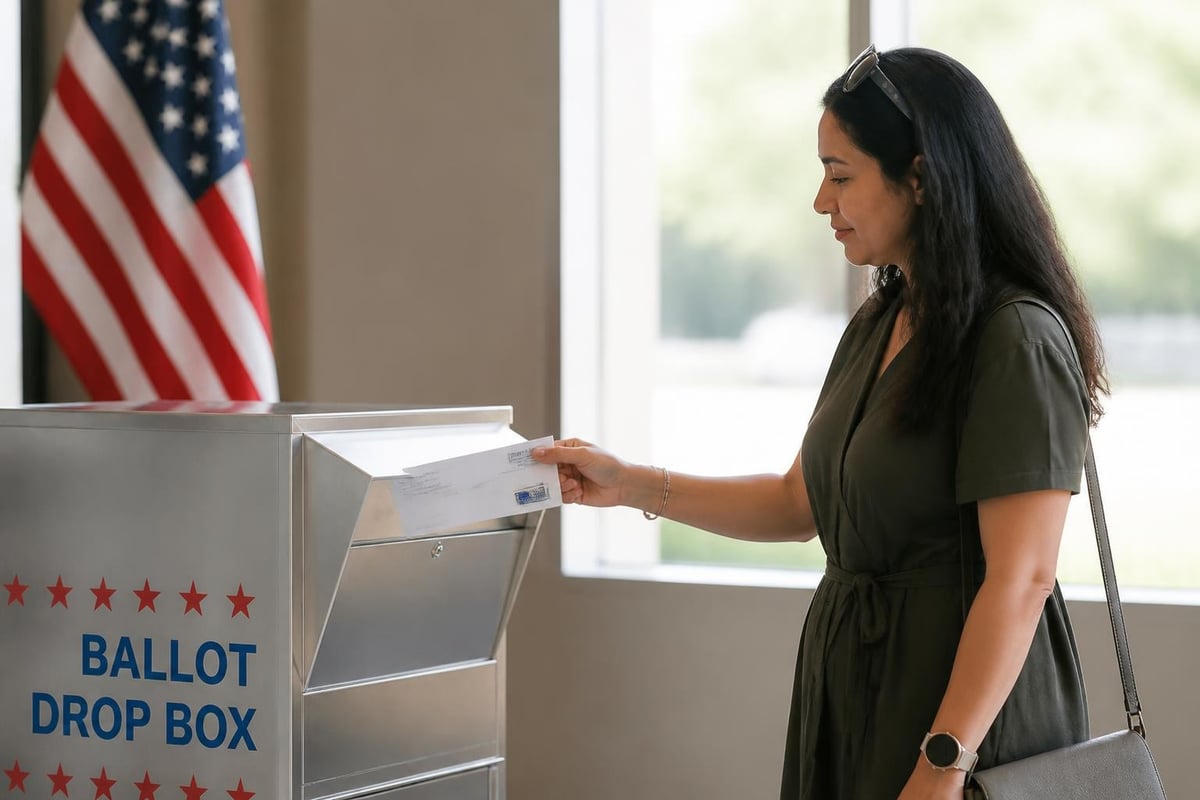
Ballot harvesting, formally known as third-party ballot collection or ballot assistance, refers to the practice of allowing someone other than the voter or an election official to return a completed mail-in or absentee ballot on behalf of the voter. This person, sometimes called a "ballot collector," takes physical possession of sealed ballots and delivers them to election offices or designated drop-off locations.
The practice serves multiple purposes in American elections. Voters with mobility challenges, those lacking transportation, elderly citizens, and individuals in remote areas often rely on trusted intermediaries to ensure their ballots reach election authorities on time. Community organizations, political campaigns, and civic groups have historically organized ballot collection drives to maximize voter participation.
Legal Framework Across States
State laws governing ballot harvesting vary dramatically across the country. This patchwork creates significant differences in how third-party collection operates:
Restrictive states limit who may return a ballot on someone else's behalf. Many permit only family members, household members, or caregivers to serve as collectors. Some impose strict limits on the number of ballots one person may collect.
Permissive states allow any designated person to collect and return ballots, sometimes without numerical limits. These jurisdictions emphasize voting access and argue that broad collection rights remove barriers to participation.
| State Approach | Characteristics | Examples of Restrictions |
|---|---|---|
| Highly Restrictive | Family/household only | Limit of 2-3 ballots per collector |
| Moderately Restrictive | Designated agents with registration | Must complete affidavit or form |
| Permissive | Any designated person allowed | Few or no numerical limits |
| Unrestricted | Voter discretion emphasized | Minimal regulatory framework |
The Brennan Center’s analysis of election myths highlights how legal variations create confusion and fuel misinformation about ballot collection practices.
Historical Development and Political Context
Third-party ballot assistance has existed throughout American electoral history, though the term "ballot harvesting" gained prominence in recent election cycles. Originally, the practice emerged to help voters with disabilities, the elderly, and rural populations overcome logistical barriers to voting.
The political debate intensified following the 2018 midterm elections in California, where extensive ballot collection operations contributed to unexpected Republican defeats in traditionally competitive districts. Conservative critics coined the term "ballot harvesting" to emphasize concerns about fraud potential, while progressive advocates prefer "community ballot collection" to highlight voting access benefits.
Presidential Elections and Ballot Collection
Presidential campaigns increasingly incorporate ballot collection strategies into their ground operations. The 2020 and 2024 elections demonstrated how candidates leverage third-party collection in states where legally permitted. Campaign workers, volunteers, and allied organizations coordinate sophisticated operations to collect ballots from supporters, particularly in communities with lower traditional turnout rates.
According to MIT Election Data & Science Lab research on 2024 voting methods, mail voting continued its upward trajectory, making ballot collection practices increasingly relevant to presidential outcomes. The study revealed that states with permissive collection laws saw higher mail ballot return rates among certain demographic groups.
Political parties have adapted their strategies accordingly:
- Democratic campaigns often emphasize ballot collection in urban areas, on college campuses, and in communities of color where voting access barriers persist
- Republican campaigns have increasingly adopted collection practices in permissive states while challenging the legality of broad collection in restrictive jurisdictions
- Independent and third-party efforts focus on underserved populations where traditional voting infrastructure remains limited
The partisan dimensions reflect broader debates about domestic policy and governance philosophy regarding election administration.
Legal Challenges and Court Battles
Ballot harvesting has generated extensive litigation across multiple jurisdictions, with cases challenging both restrictive and permissive state laws. These legal battles often invoke federal voting rights protections, state constitutional provisions, and competing interpretations of election integrity requirements.
Notable Legal Disputes
The ACLU’s litigation in Black Political Empowerment Project v. Schmidt exemplifies voting rights challenges to restrictive ballot collection laws. Plaintiffs argue that limitations on third-party collection disproportionately burden minority voters, elderly citizens, and individuals with disabilities, violating the Voting Rights Act and constitutional equal protection guarantees.
Courts have reached divergent conclusions based on specific state circumstances:
- Upholding restrictions: Some federal courts have validated state limits on ballot collection, finding legitimate government interests in chain-of-custody security and fraud prevention
- Striking down prohibitions: Other courts have invalidated overly restrictive laws that eliminate ballot collection entirely, particularly where plaintiffs demonstrate discriminatory impact
- Requiring accommodations: Certain rulings have mandated exceptions for voters with disabilities or those lacking reasonable alternatives
The California Department of Justice guidance provides detailed instructions on lawful collection practices, illustrating how permissive jurisdictions balance access with security through disclosure requirements and penalties for violations.
Arguments Supporting Ballot Harvesting
Proponents of permissive ballot collection laws advance several core arguments rooted in voting rights, practical accessibility, and democratic participation principles.
Voting access expansion represents the primary justification. Supporters emphasize that third-party collection removes barriers for citizens who face challenges returning ballots personally:
- Elderly voters in assisted living facilities
- Individuals with disabilities affecting mobility
- Rural residents located far from ballot drop sites
- Working-class voters with limited flexibility during business hours
- Native American communities on remote reservations
Civic engagement organizations argue that community-based collection drives increase turnout among historically marginalized populations. Trusted community members can educate voters about ballot completion, answer questions about candidates and issues, and ensure ballots reach officials on time.
Pew Research Center’s analysis of voting attitudes demonstrates that public support for expanded voting access remains strong, with majorities favoring policies that make participation easier rather than more restrictive.
Empirical Evidence on Fraud
Academic research consistently finds that voter fraud through ballot collection remains exceptionally rare. Studies examining millions of votes cast through mail and collected by third parties reveal fraud rates measured in hundredths of a percentage point.
Advocates note that existing safeguards provide robust protection:
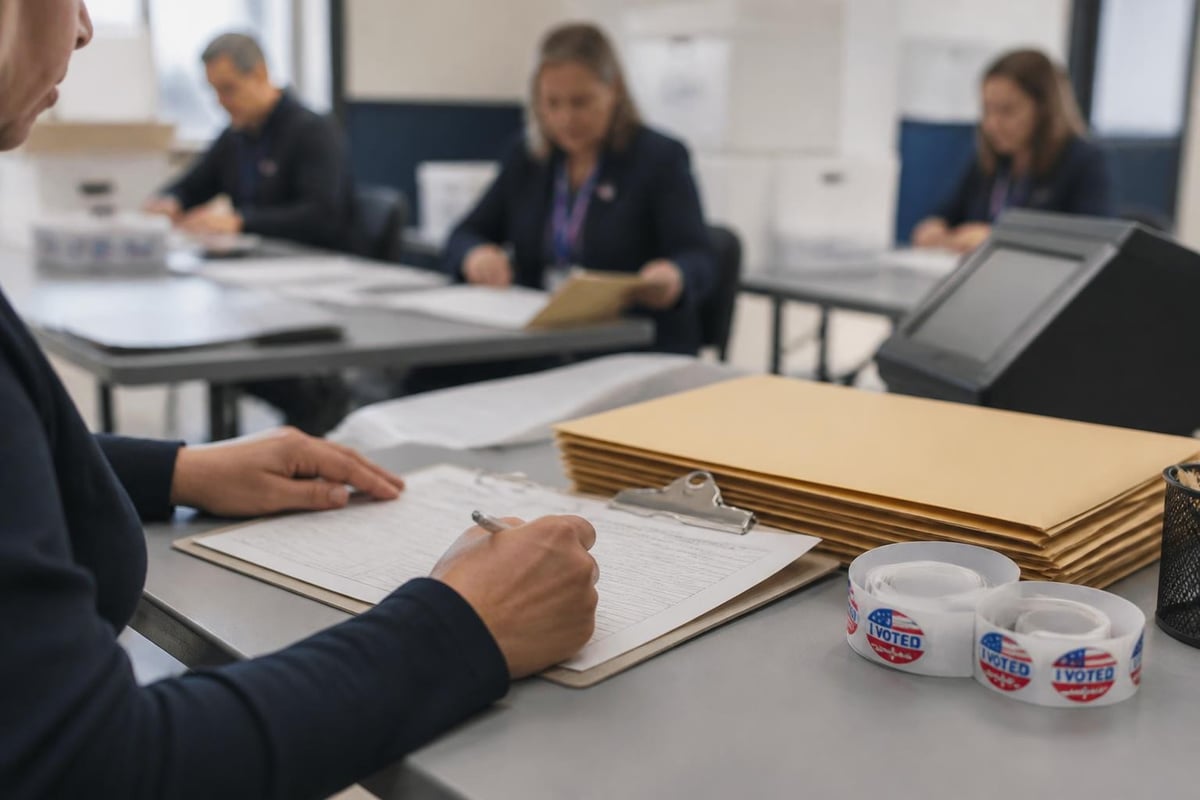
- Signature verification requirements on ballot envelopes
- Criminal penalties for tampering with or discarding ballots
- Chain-of-custody documentation in many jurisdictions
- Ballot tracking systems allowing voters to confirm receipt
Arguments Against Ballot Harvesting
Critics of permissive ballot collection raise substantial concerns about election security, voter coercion potential, and the integrity of the secret ballot. With ballot harvesting explained from this perspective, several risk factors become apparent.
Fraud vulnerability constitutes the central objection. Opponents argue that allowing unlimited third-party possession of ballots creates opportunities for:
- Ballot theft or intentional non-delivery of opposition voters' ballots
- Pressure on voters to complete ballots in preferred ways
- Potential for ballot alteration before submission
- Incentivizing vote-buying schemes
Chain-of-custody concerns focus on the gap between when voters relinquish their ballots and when election officials receive them. Unlike in-person voting or direct mail return, third-party collection introduces intermediaries whose handling cannot be continuously monitored.
Partisan Manipulation Risks
Political operatives could theoretically target collection efforts in favorable areas while ignoring opposition strongholds, creating turnout disparities. Critics point to anecdotal reports of collectors offering assistance selectively based on perceived partisan affiliation or only collecting ballots in neighborhoods likely to support particular candidates.
The congressional discussion documented in House reports reflects ongoing federal legislative efforts to standardize ballot collection rules or impose nationwide restrictions based on these integrity concerns.
Conservative policy organizations advocate for:
- Limiting collection to immediate family or household members
- Restricting the number of ballots any individual may collect
- Requiring registration of ballot collectors
- Mandating chain-of-custody documentation
- Increasing criminal penalties for violations
State-by-State Variations in Practice
Understanding ballot harvesting explained requires examining how specific states implement their distinct regulatory approaches. This diversity reflects federalism's role in election administration and competing philosophies about balancing access with security.
California's Permissive Model
California allows any person designated by the voter to return a mail ballot, with no numerical limit on how many ballots one collector may handle. Collectors must complete a section on the ballot envelope identifying themselves, creating a paper trail for verification purposes.
The state's large-scale collection operations have become sophisticated, with campaigns, labor unions, and community organizations coordinating extensive drives. California officials point to successful implementation without significant fraud as evidence that permissive collection can operate securely.
Arizona's Restrictions
Arizona prohibits ballot collection by anyone except family members, household members, or caregivers, with violations classified as felonies. The state's approach reflects concerns about ballot security in a politically competitive environment.
Legal challenges have contested these restrictions' impact on Native American voters in remote tribal lands where mail service remains unreliable and travel distances to ballot drop sites can exceed 100 miles.
Texas Requirements
Texas permits assistance for voters with disabilities or language barriers but generally restricts who may handle another person's ballot. The state requires specific justifications and documentation for third-party returns, emphasizing individual voter responsibility.
Implementation Challenges and Best Practices
Even with ballot harvesting explained thoroughly, practical implementation presents numerous challenges for election administrators, campaigns, and voters. The Election Assistance Commission’s guidance on ballot handling offers frameworks for managing collection processes while maintaining security.
Training and Oversight
Jurisdictions permitting ballot collection benefit from comprehensive training programs for authorized collectors. Best practices include:
- Registration systems requiring collectors to identify themselves and acknowledge legal responsibilities
- Educational materials explaining proper handling, storage, and timely delivery requirements
- Tracking mechanisms allowing voters to verify their ballots were received
- Audit procedures reviewing collected ballots for irregularities or patterns suggesting misconduct
Transparency measures help build public confidence. Some states publish data on collection volumes, geographic distribution, and organizational affiliations of major collectors.
Voter Education Initiatives
Clear communication with voters about their rights and options remains essential. Election officials must explain:
- Whether third-party collection is permitted in their jurisdiction
- Who may legally collect ballots on their behalf
- How to designate collectors properly
- Alternatives including direct mail return and drop boxes
- How to track ballot status after submission
Public awareness campaigns can address the partisan rhetoric surrounding ballot harvesting explained in neutral terms focused on legal requirements rather than political controversy.
Impact on Presidential Election Outcomes
The effect of ballot collection on presidential races depends heavily on state rules, campaign resources, and demographic factors. In permissive states, well-organized collection operations can measurably increase turnout among target populations.
Battleground states with permissive collection laws face particular scrutiny. When presidential elections are decided by narrow margins, even small turnout differences attributable to ballot collection can prove decisive.
Strategic Considerations for Campaigns
Presidential campaigns allocate significant resources to ballot collection where legally permitted:
- Targeting low-propensity voters who support the candidate but historically vote irregularly
- Focusing on communities with transportation challenges or limited access to postal services
- Coordinating with allied organizations that maintain trusted relationships in specific demographic groups
- Timing collection efforts to maximize returns before deadlines while avoiding premature collection that might allow voter persuasion by opponents
The 2024 presidential election demonstrated how both major parties had developed sophisticated ballot collection infrastructure in permissive states, largely equalizing previous advantages and making the practice a standard campaign component rather than a partisan edge.

Federal Reform Proposals and Future Outlook
Congressional debates about ballot collection reflect broader partisan divisions over election administration. Reform proposals range from nationwide prohibitions to federal protections for collection rights.
Conservative reform advocates propose federal legislation that would:
- Limit third-party collection to family and household members across all states
- Criminalize large-scale collection operations
- Require stricter chain-of-custody documentation
- Impose federal penalties for violations
Progressive reform advocates counter with proposals to:
- Establish a federal right to designate ballot collectors
- Prohibit overly restrictive state limits that burden voting access
- Require accommodations for voters with disabilities and those in remote areas
- Standardize security measures rather than prohibiting collection entirely
The constitutional tensions between federal authority and state control over election administration complicate legislative efforts. States have traditionally managed election mechanics, though federal voting rights laws impose certain requirements.
Practical Guidance for Voters
Citizens navigating ballot collection should understand their state's specific rules and exercise informed judgment about whether to use third-party collection services. For those interested in following election developments, U.S. Presidential Report provides non-partisan coverage of voting policies and their implications for presidential elections.
Questions to Consider
Before designating someone to collect your ballot:
- Do you trust this person completely with your sealed ballot?
- Does your state permit third-party collection, and does the collector meet legal requirements?
- Are there alternatives such as drop boxes, direct mail return, or in-person delivery that you prefer?
- Has the collector provided clear information about when and how they will deliver your ballot?
- Can you track your ballot after submission to verify receipt?
Voters should never allow collectors to observe ballot completion, provide unsolicited assistance with candidate selections, or pressure voting decisions. The secret ballot remains fundamental to American democracy regardless of delivery method.
Election integrity and voting access need not be mutually exclusive goals. With ballot harvesting explained accurately and implemented with appropriate safeguards, third-party collection can serve legitimate purposes while maintaining election security. The ongoing debate reflects deeper questions about democratic participation, the role of organized political activity, and balancing competing values in election administration.
Understanding the complexities of ballot collection helps voters and political observers navigate one of contemporary election administration's most contentious issues. For comprehensive, non-partisan coverage of presidential elections, voting policies, and how these practices affect politics at the highest level, U.S. Presidential Report delivers the balanced reporting Americans need to stay informed about the electoral process and presidential governance.