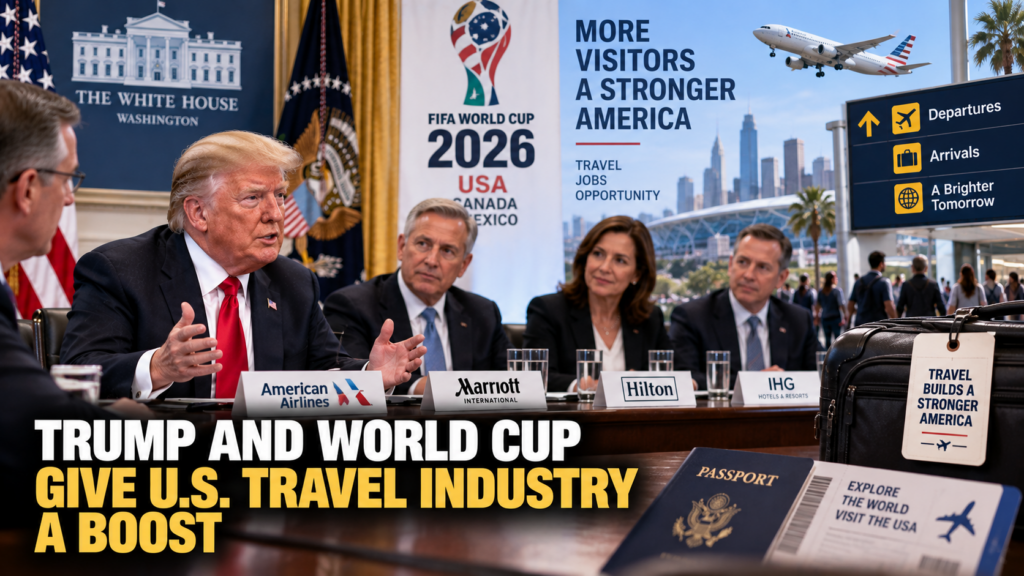
President Donald Trump met with major travel industry executives at the White House on September 2 as the administration highlighted a summer tourism surge tied in part to the 2026 FIFA World Cup. The World Cup travel boost has helped airlines, hotels and other tourism businesses, even as the broader U.S. international visitor market remains under pressure.
What Happened
Trump met with leaders from major airlines, hotel chains, casinos and travel companies, including American Airlines, Marriott International, MGM Resorts International, Carnival, Hilton, IHG Hotels & Resorts and Booking Holdings.
The meeting focused on how to sustain the momentum generated by the World Cup and other major events while attracting more international visitors to the United States.
According to a report by CNBC, the administration is seeking to build on the strong summer travel season and the economic activity generated by the tournament.
The 2026 World Cup brought millions of visitors to the United States, with matches held across 11 U.S. host cities. The tournament was also expected to provide a significant boost to restaurants, hotels, airlines and other local businesses.
Key Details
U.S. travel spending increased 6.2% year over year in June to $122.1 billion, its strongest monthly result in a year, according to reporting on the travel industry meeting. The increase came as World Cup matches drove additional demand in host cities.
Trump highlighted the tournament’s contribution to local economies, saying match-day spending at restaurants increased substantially across the host cities. The president also pointed to strong air travel and record visitor activity during the summer.
The administration has also promoted measures designed to make international travel easier. Trump said visa wait times had been reduced by 40%, while the government expanded efforts to improve international connections and modernize the country’s aviation infrastructure.
World Cup Travel Boost Comes With Challenges
Despite the stronger summer figures, the overall international tourism picture remains mixed.
International arrivals had fallen in 2025, with travel officials citing lengthy visa interview waits, stricter immigration policies, tariffs and travel restrictions affecting visitors from some countries.
The U.S. Travel Association has set an ambitious goal of attracting 100 million international visitors annually, making sustained growth beyond the World Cup an important challenge for the industry.
Economic Impact
The World Cup has given hotels, airlines, restaurants and other tourism businesses an unusually large source of demand. Research from the U.S. Travel Association also found that international World Cup visitors expected to spend more than $5,000 per person and that many planned to stay longer than two weeks.
The tournament’s impact extends beyond match venues. More than 80% of surveyed international fans said they were open to visiting destinations beyond the largest U.S. gateway cities, creating potential opportunities for communities across the country.
The administration is also looking ahead to the 2028 Los Angeles Olympics, another major international event that could generate additional demand for U.S. travel and hospitality businesses. Trump has presented the Olympics as the next major opportunity to build on the momentum from the World Cup.
What Happens Next
The key question for the U.S. travel industry is whether the World Cup’s temporary surge can translate into longer-term growth in international tourism.
Travel executives are pressing the administration to maintain efficient visa processing, improve transportation infrastructure and make the United States an attractive destination for overseas visitors. The World Cup travel boost demonstrated the economic potential of major international events, but sustained visitor growth will depend on whether that momentum continues after the tournament.
With the 2028 Los Angeles Olympics approaching, the United States has another opportunity to capitalize on global interest in American destinations. The challenge will be turning event-driven demand into a durable expansion of the country’s travel economy.
Related Reading
- Trump Administration Invests $3.15 Million in Rural Ohio Pharmacies
- Trump Sends Saudi Nuclear Deal to Congress for Review
The 2026 FIFA World Cup increased demand for flights, hotels, restaurants and other travel-related businesses across U.S. host cities.
The administration has highlighted faster visa processing, transportation improvements and efforts to attract more international visitors.