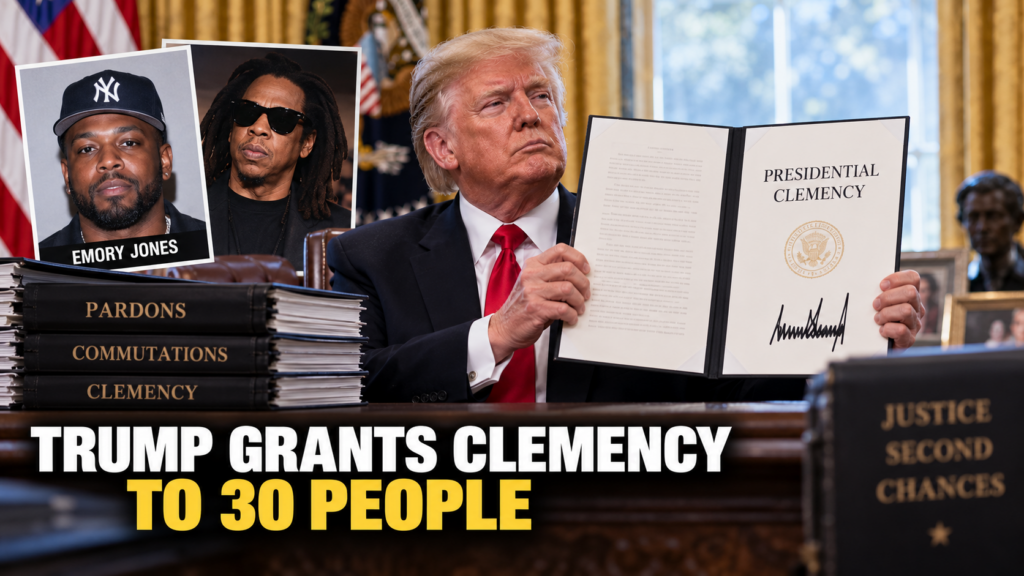
U.S. President Donald Trump granted clemency to 30 people this week, including Emory Jones, a longtime associate of rapper Jay-Z, as the White House continues its broad use of presidential pardon and commutation powers. The latest Trump clemency actions were announced by White House pardon czar Alice Marie Johnson on September 5.
According to a report by Reuters, Trump took the clemency action on Thursday, according to Johnson, the White House official overseeing the administration’s clemency efforts.
What Happened
Trump granted clemency to 30 people, according to Johnson, who announced the actions in a social media post on Friday.
Among the recipients was Emory Jones, who served nearly 16 years in federal prison on drug charges. Jones was released in 2010 after Jay-Z wrote to a judge seeking a reduction of his sentence.
Jones later worked as an executive at Jay-Z’s Roc Nation entertainment company and co-founded the Paper Planes clothing brand.
Key Details of the Clemency Actions
The latest group includes people with different criminal backgrounds. Reuters reported that recipients also included a former Philadelphia union boss convicted of bribery and a former Navy sailor who had been imprisoned for firearms offenses.
The actions illustrate the range of cases being considered as the Trump administration continues to exercise presidential clemency powers.
Clemency can take different forms, including pardons that forgive federal criminal convictions and commutations that shorten prison sentences. The White House has continued using both forms during Trump’s second term.
Trump’s Broader Clemency Record
The latest actions add to a much larger number of clemency decisions made since Trump returned to the White House in January 2025.
According to Reuters, Trump has granted pardons and commutations to more than 1,700 people since the beginning of his second presidential term.
The scale of the clemency program makes the latest 30 cases part of a broader administration policy rather than an isolated set of decisions.
Political and Legal Impact
Presidential clemency is one of the broadest powers available to a U.S. president in federal criminal matters. Trump’s continued use of the authority has made pardons and sentence commutations a significant part of his presidency.
The inclusion of people convicted of different offenses also highlights the varied circumstances involved in the administration’s clemency decisions.
For supporters, clemency can provide an opportunity to correct or reconsider individual sentences. Critics, meanwhile, have closely scrutinized presidential pardon decisions because of questions surrounding consistency, fairness and the circumstances of individual cases.
What Happens Next
The White House is expected to continue reviewing clemency requests as Johnson coordinates the administration’s efforts. The latest announcement also indicates that Trump’s use of presidential clemency remains an active component of his second-term agenda.
With more than 1,700 pardons and commutations already granted since January 2025, future decisions could continue to attract political and legal attention as Trump exercises one of the presidency’s most consequential constitutional powers.
Conclusion
Trump’s latest clemency decision involving 30 people adds to an unprecedentedly broad second-term record of pardons and sentence reductions. The cases range from drug and firearms offenses to public corruption, underscoring how the administration’s approach to clemency is shaping a major part of Trump’s presidential record.
Related Reading
Trump Administration Shuts Down 270 CDL Schools in Fraud Crackdown
Trump Nominates Heidi Overton to Lead FDA
Trump granted clemency to 30 people, including Emory Jones, a longtime associate of Jay-Z, along with other federal offenders.
Reuters reported that Trump has granted pardons and commutations to more than 1,700 people since beginning his second term.