The relationship between former President Donald Trump and the North Atlantic Treaty Organization has remained one of the most contentious foreign policy debates in modern American politics. As we navigate 2026, understanding the core arguments, historical context, and ongoing implications becomes increasingly important for anyone following U.S. presidential politics and international relations. The trump and nato debate explained requires examining defense spending requirements, collective security commitments, and the fundamental question of America's role in transatlantic security.
Understanding NATO's Founding Principles and Structure
NATO was established in 1949 as a collective defense alliance designed to counter Soviet expansion during the Cold War. The organization operates on the principle that an attack against one member constitutes an attack against all members, formalized in Article 5 of the NATO treaty.
The alliance currently includes 32 member nations spanning North America and Europe. Each member contributes to collective defense through military capabilities, financial contributions, and strategic commitments. The organization's budget covers shared infrastructure, operations, and administrative costs.
The 2% Defense Spending Guideline
In 2014, NATO members agreed that each nation should aim to spend at least 2% of its gross domestic product on defense by 2024. This guideline emerged from concerns about declining European military capabilities and increasing reliance on American military power.
Key aspects of the 2% commitment include:
- National defense budgets, not direct payments to NATO
- Gradual increases toward the target over time
- Flexibility in how nations allocate defense spending
- No formal enforcement mechanism for non-compliance
The spending guideline represents a recommendation rather than a binding obligation, which became a central point of contention in the trump and nato debate explained through various policy statements and diplomatic exchanges.
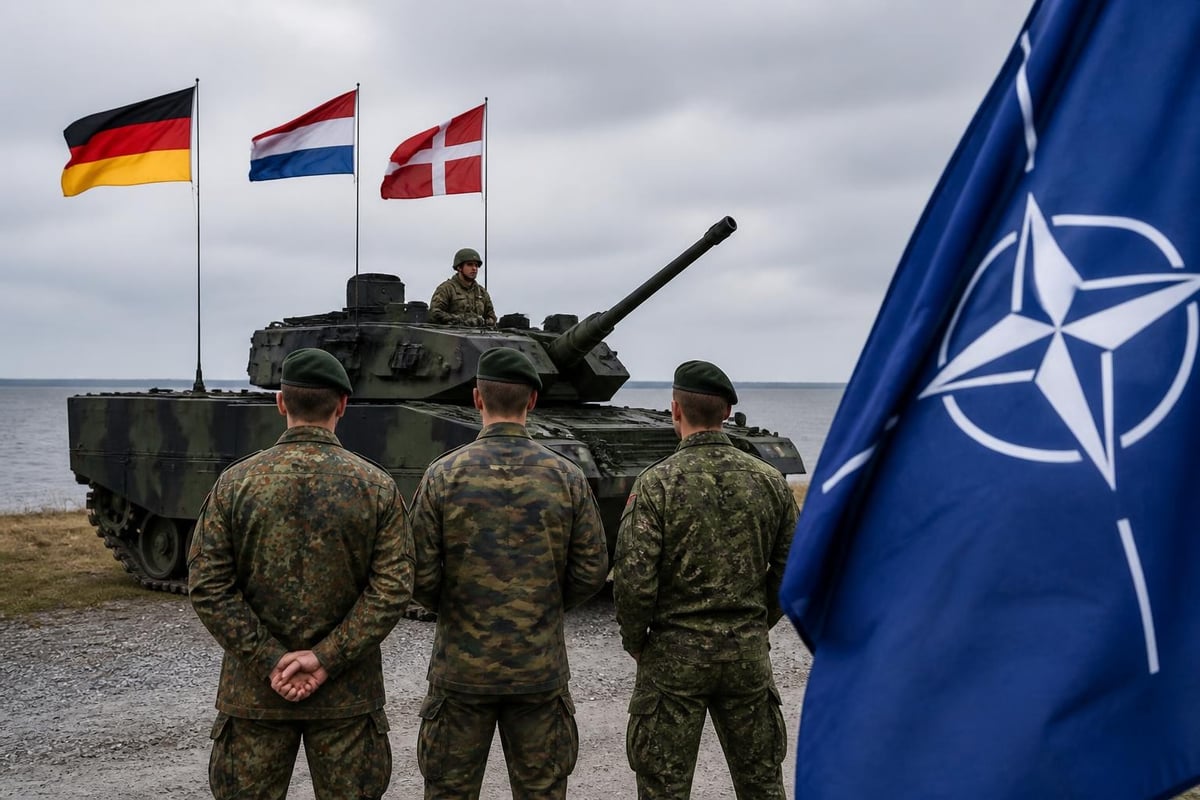
Trump's Core Arguments Against NATO
Donald Trump's criticism of NATO predates his presidency and has remained consistent throughout his political career. His arguments center on fairness, burden-sharing, and what he perceives as American taxpayers subsidizing European security.
Financial Burden and Free Riders
Trump has repeatedly argued that European nations exploit American military spending while failing to meet their own defense obligations. According to his perspective, the focus on NATO spending debates overlooks the fundamental imbalance in contributions between the United States and its European partners.
During his presidency and subsequent political activities, Trump emphasized that only a handful of NATO members consistently met the 2% target. He characterized this situation as unfair to American taxpayers who fund approximately 70% of NATO's collective defense capabilities.
| Year | U.S. Defense Spending (% GDP) | NATO Europe Average (% GDP) | Members Meeting 2% Target |
|---|---|---|---|
| 2016 | 3.6% | 1.47% | 5 of 29 |
| 2020 | 3.7% | 1.77% | 9 of 30 |
| 2024 | 3.4% | 1.98% | 18 of 32 |
| 2026 | 3.5% | 2.13% | 23 of 32 |
Questioning Article 5 Commitment
Perhaps the most controversial aspect of Trump's NATO stance involves his skepticism toward the Article 5 collective defense provision. He publicly questioned whether the United States should automatically defend smaller nations that don't meet their spending obligations.
In February 2024, Trump stated he would "encourage" Russia to do "whatever the hell they want" to NATO members that hadn't met their financial commitments. This statement sent shockwaves through the alliance and raised serious questions about American reliability as a security guarantor.
European Perspectives and Responses
European leaders have responded to Trump's NATO criticism with a mixture of increased defense spending, diplomatic reassurance efforts, and movement toward greater strategic autonomy. The evolving role of NATO reflects these changing dynamics within the alliance.
Increased Defense Commitments
Following Trump's initial criticisms during his first term, European NATO members significantly increased their defense budgets. By 2026, most European members either meet or exceed the 2% target, representing a dramatic shift from 2016.
Notable European defense increases include:
- Germany committing to a €100 billion special defense fund
- Poland reaching 4% of GDP in defense spending
- France maintaining consistent investment above 2%
- Nordic countries accelerating military modernization programs
The trump and nato debate explained through these spending increases demonstrates that Trump's pressure achieved tangible results, though critics question whether the confrontational approach damaged long-term alliance cohesion.
Strategic Autonomy Initiatives
European nations have simultaneously pursued greater independence from American military support. The European Union's Strategic Compass, enhanced defense cooperation agreements, and joint procurement initiatives reflect this shift toward self-reliance.
These developments create a paradox where Trump's criticism simultaneously strengthened NATO financially while potentially weakening it politically. European leaders recognize they cannot indefinitely rely on American security guarantees that may disappear with each election cycle.

Constitutional and Legal Dimensions
The trump and nato debate explained requires understanding the constitutional framework governing U.S. treaty obligations and presidential authority over foreign alliances. Legal analysis of Trump’s NATO stance reveals complex questions about executive power and congressional oversight.
Presidential Authority to Withdraw
Can a president unilaterally withdraw the United States from NATO? Legal scholars remain divided on this question. The treaty was ratified by the Senate, but the Constitution doesn't clearly specify the withdrawal process for international agreements.
Some argue that just as the Senate must approve treaties, it must also consent to withdrawal. Others contend the president possesses inherent executive authority over foreign policy decisions, including alliance participation. Congress attempted to address this uncertainty in 2019 by passing legislation requiring congressional approval for NATO withdrawal, though enforcement mechanisms remain unclear.
Article 5 Obligations
Article 5 doesn't automatically require military action-it states each member will assist the attacked party with "such action as it deems necessary." This language provides flexibility but also ambiguity about what constitutes fulfilling treaty obligations.
The provision has been invoked only once in NATO history, following the September 11, 2001 terrorist attacks against the United States. European allies contributed troops to Afghanistan and supported various counterterrorism operations, demonstrating the mutual defense principle in practice.
Strategic Implications for U.S. Interests
Beyond the financial arguments, analysts debate whether weakening NATO serves American strategic interests. The alliance provides forward military bases, intelligence sharing, interoperability with partner forces, and diplomatic influence across Europe.
Military Benefits of NATO Membership
The United States maintains approximately 100,000 troops stationed across European NATO countries. These forces provide rapid response capabilities for Middle Eastern operations, deterrence against Russian aggression, and strategic positioning for global contingencies.
NATO membership grants the U.S. military access to:
- Critical infrastructure including airbases and ports
- Integrated command and control systems
- Standardized equipment and training procedures
- Combined intelligence networks and early warning systems
- Burden-sharing for security operations worldwide
These tangible benefits don't appear on NATO budget spreadsheets but represent significant value for American strategic interests. The trump and nato debate explained through this lens reveals tensions between transactional approaches to alliance management and long-term strategic planning.
Geopolitical Competition with Russia and China
NATO serves as the primary institutional framework for countering Russian influence in Europe. Weakening or abandoning the alliance would create security vacuums that Moscow might exploit through pressure on Baltic states, Poland, or other vulnerable members.
Additionally, as the United States increasingly focuses on strategic competition with China in the Indo-Pacific region, a stable and self-sufficient European security architecture allows America to shift resources and attention eastward. The 2025 NATO Summit addressed these evolving priorities and the alliance's role in global security challenges beyond European borders.
The Ongoing Ukraine Conflict and NATO's Future
Russia's 2022 invasion of Ukraine and the continuing conflict fundamentally altered NATO dynamics and partially vindicated Trump's insistence that European nations take defense more seriously. The war demonstrated that security threats haven't disappeared and that European nations needed robust military capabilities.
How Ukraine Changed the Debate
The conflict prompted several previously neutral nations to seek NATO membership, with Finland and Sweden joining the alliance. European defense budgets surged as the theoretical threat became concrete reality.
However, the trump and nato debate explained in the Ukraine context reveals continued tensions. Questions persist about burden-sharing for Ukrainian military assistance, ammunition production capacity, and long-term commitments to post-war European security architecture.
| Contributor | Military Aid to Ukraine (2022-2026) | As % of GDP |
|---|---|---|
| United States | $112 billion | 0.47% |
| Germany | $28 billion | 0.72% |
| United Kingdom | $19 billion | 0.68% |
| Poland | $14 billion | 1.94% |
| European Union (collective) | $156 billion | 0.89% |
Alternative Perspectives on the Debate
Not all criticism of NATO aligns with Trump's positions, nor do all defenders of the alliance reject his concerns entirely. Diverse viewpoints range from libertarian skepticism about entangling alliances to progressive concerns about military spending priorities.
Libertarian and Non-Interventionist Views
Some critics argue that NATO represents Cold War thinking unsuited to 21st-century challenges. They contend that European nations possess sufficient economic strength to defend themselves without American subsidies and that U.S. resources would be better allocated to domestic needs.
This perspective shares Trump's criticism of European free-riding but arrives from different ideological premises about America's proper role in global affairs. These critics question whether any level of European spending justifies permanent U.S. military commitments to conflicts that don't directly threaten American security.
Progressive Alternative Approaches
Progressive critics of current NATO policy focus less on spending amounts and more on the alliance's mission, expansion history, and relationship with Russia. They argue that NATO enlargement contributed to Russian hostility and that diplomatic engagement might have prevented current tensions.
This viewpoint doesn't align with Trump's transactional approach but shares skepticism about unlimited security commitments. Progressive voices often advocate redirecting military spending toward climate change, infrastructure, or social programs rather than demanding European allies spend more on defense.
Political Consequences in American Domestic Politics
The trump and nato debate explained through domestic political lenses reveals deep partisan divisions about America's global role. These disagreements extend beyond Trump's individual positions to fundamental questions about internationalism, isolationism, and national priorities.
Republican Party Realignment
Traditional Republican foreign policy emphasized strong alliances, military preparedness, and robust international engagement. Trump's NATO skepticism represents a significant departure from this consensus, creating tensions within the party.
Some Republican leaders defend NATO as essential to American security while acknowledging legitimate concerns about burden-sharing. Others fully embrace Trump's transactional approach, viewing international institutions as constraints on American sovereignty rather than force multipliers for American power.
Democratic Party Positions
Democrats have largely defended NATO while acknowledging the need for increased European defense spending. They argue that alliances require patient diplomacy rather than public threats and that undermining NATO serves Russian interests.
However, some Democrats recognize Trump's pressure produced tangible results in European defense budgets. This creates uncomfortable acknowledgment that confrontational tactics sometimes achieve policy objectives, even when the approach seems diplomatically counterproductive. The debate connects to broader discussions about presidential leadership on foreign policy and how different administrations balance competing priorities.
Media Coverage and Public Opinion
Public understanding of NATO, defense spending, and alliance obligations remains limited, making the trump and nato debate explained particularly important for informed citizenship. Media coverage often focuses on dramatic statements rather than substantive policy details.
Polling data reveals complex public attitudes:
- 62% of Americans view NATO favorably (2026 data)
- 48% believe European nations should spend more on defense
- 53% oppose U.S. withdrawal from NATO
- 71% cannot accurately describe NATO's purpose or structure
These numbers suggest Americans simultaneously value the alliance while harboring concerns about fairness and burden-sharing. The disconnect between general support and specific knowledge creates opportunities for both informed debate and potential manipulation through simplified messaging.
Economic Dimensions Beyond Defense Budgets
The economic relationship between the United States and European NATO members extends far beyond military spending. Trade flows, investment patterns, and economic cooperation create interdependencies that defense budget comparisons overlook.
Transatlantic Economic Integration
European NATO members represent America's largest collective trading partner, with bilateral trade exceeding $1.3 trillion annually. American companies employ millions of Europeans, while European firms create millions of American jobs through direct investment.
Military alliances support this economic integration by providing stable security environments that encourage investment and commerce. Disrupting NATO could create economic uncertainty that damages American businesses and workers regardless of defense spending percentages.
Defense Industry Cooperation
American defense contractors benefit substantially from NATO standardization and interoperability requirements. European allies purchase American weapons systems, use American technology, and integrate with American military platforms.
This creates American jobs, supports domestic defense industries, and ensures technological leadership. The trump and nato debate explained through economic lenses reveals how military alliances generate economic returns that don't appear in simple budget comparisons.
Looking Forward: NATO's Trajectory Through 2026 and Beyond
As of August 2026, NATO faces an uncertain future shaped by American domestic politics, European strategic choices, and evolving global threats. The challenges maintaining U.S. commitment remain significant regardless of who occupies the White House.
Institutional Reforms and Adaptation
NATO continues adapting its structure, capabilities, and mission to address 21st-century challenges including cyber warfare, hybrid threats, and climate security. The alliance has expanded beyond traditional territorial defense to address terrorism, technological competition, and global stability.
These adaptations reflect attempts to demonstrate continued relevance and justify member investment. However, questions persist about whether Cold War institutions can effectively address fundamentally different contemporary challenges.
Potential Scenarios for U.S.-NATO Relations
Several plausible futures exist for the transatlantic alliance:
- Continued partnership with enhanced European capability – The U.S. remains committed while Europeans assume greater responsibility
- Gradual American disengagement – Reduced U.S. presence as Europe develops autonomous capabilities
- Alliance restructuring – Fundamental changes to NATO's structure, obligations, or membership
- Status quo maintenance – Continued debates without substantive changes to alliance operation
The path forward depends heavily on American electoral outcomes, European unity, Russian behavior, and unforeseen crises that test alliance cohesion. The trump and nato debate explained demonstrates how individual political leaders can significantly influence alliance dynamics through rhetorical choices and policy decisions.
Understanding the complexities behind the trump and nato debate explained helps citizens evaluate foreign policy positions and hold leaders accountable for strategic choices. Whether you're tracking current developments or researching historical presidential approaches to international alliances, staying informed about these critical issues matters for American democracy. U.S. Presidential Report provides non-partisan coverage of presidential policy decisions, helping readers navigate complex foreign policy debates with balanced analysis and comprehensive reporting.