The Republican youth movement represents a critical component of conservative political organizing in the United States, encompassing formal organizations, grassroots activists, and millions of young voters who identify with or lean toward the GOP. Understanding this movement requires examining its institutional framework, demographic composition, voting patterns, and evolving ideological character. As the 2024 presidential election demonstrated significant shifts in youth political alignment, the republican youth movement explained becomes essential for anyone tracking American political trends and presidential electoral dynamics.
Defining the Republican Youth Movement
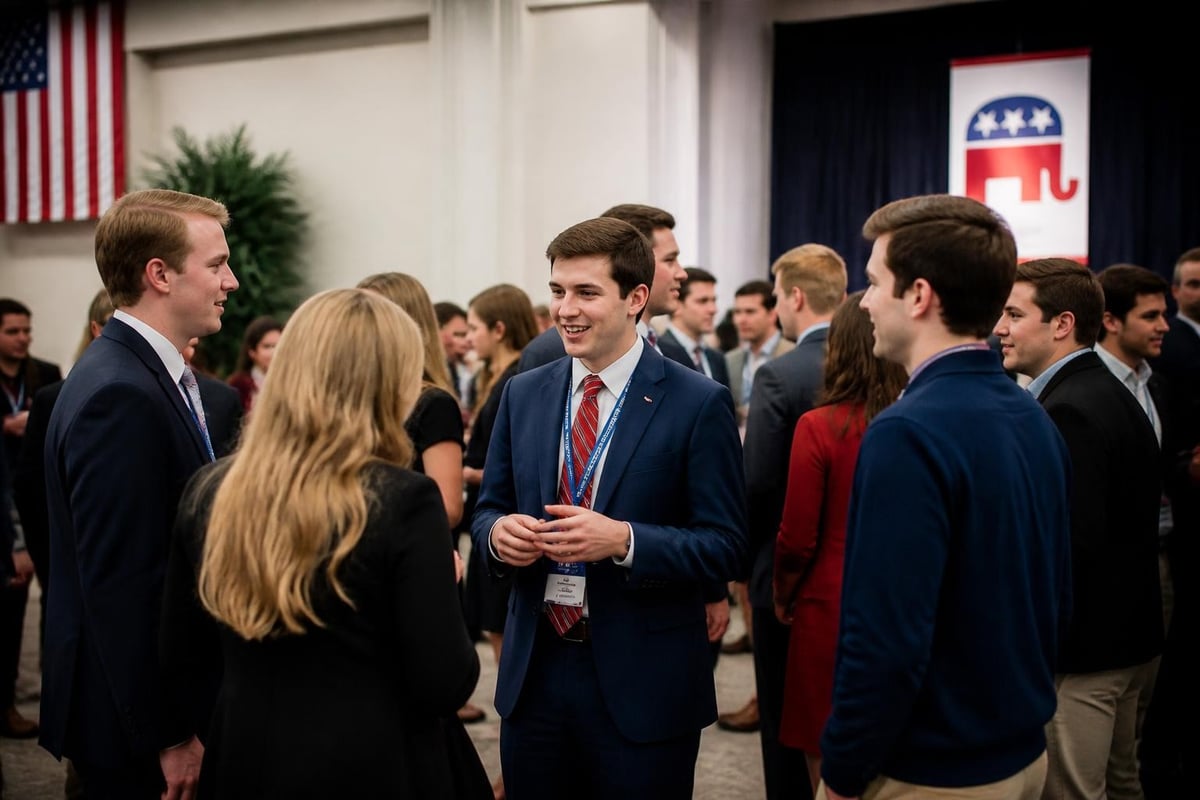
The republican youth movement explained encompasses multiple dimensions of conservative youth engagement. At its core, this movement includes formal organizations like the Young Republican National Federation (YRNF), College Republicans chapters across hundreds of campuses, and various conservative student groups. These institutional structures provide training, networking opportunities, and direct pathways into Republican political careers.
Beyond formal organizations, the movement includes millions of young Americans who identify as Republican or Republican-leaning independents. Research from Tufts CIRCLE reveals that Republican youth are numerous, politically active, and demonstrate distinct characteristics compared to their older partisan counterparts. This broader definition captures both organized activism and general youth affiliation with conservative politics.
Organizational Infrastructure
The institutional backbone of Republican youth organizing has deep historical roots. The Young Republican National Federation was established in 1931 and remains the official youth arm of the Republican National Committee. The organization operates in all 50 states, organizing young professionals and college students under age 40 into local clubs and state federations.
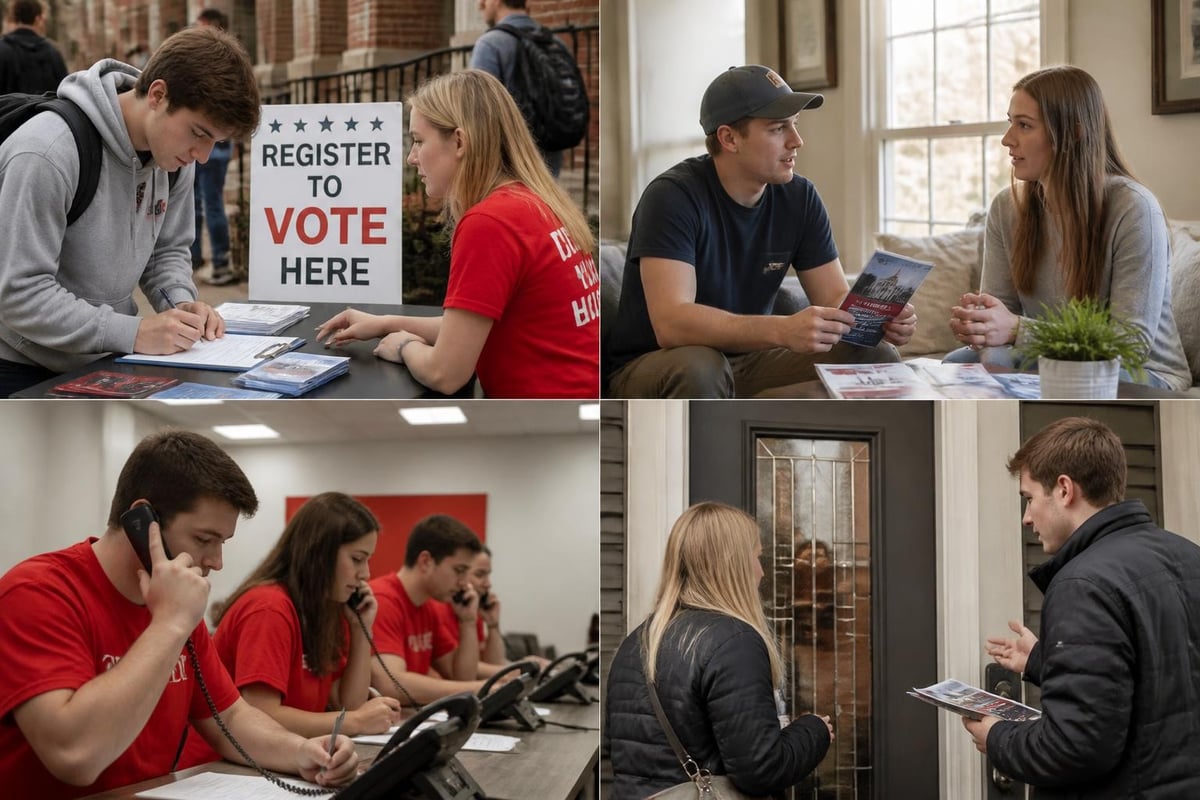
College Republican chapters function semi-independently, focusing specifically on campus organizing, voter registration drives, and support for Republican candidates in local and national elections. These chapters serve as crucial recruitment pipelines for future party leaders, campaign operatives, and elected officials. The Federal Election Commission maintains records documenting the financial activities and committee structures of these youth organizations, providing transparency into their fundraising and expenditure patterns.
Demographic Profile and Composition
Understanding the republican youth movement explained requires examining who young Republicans actually are. The demographic composition of Republican youth has evolved significantly over recent election cycles, with important implications for party strategy and presidential politics.
Key demographic characteristics include:
- Educational attainment patterns that increasingly show non-college youth trending Republican
- Geographic distribution concentrated in suburban, exurban, and rural areas
- Racial and ethnic composition that remains predominantly white but shows growth among Hispanic and Asian American youth
- Gender dynamics with young men showing stronger Republican identification than young women
Pew Research analysis of partisan coalitions demonstrates how educational polarization has reshaped youth partisanship. Young voters without four-year college degrees increasingly lean Republican, while college-educated youth trend Democratic. This educational divide represents one of the defining features of contemporary youth political alignment.
Gender and Generational Patterns
The gender gap among young voters represents perhaps the most striking demographic trend within the republican youth movement explained. PRRI research on partisanship and ideology reveals that young men may be trending more Republican without necessarily becoming more conservative on specific policy issues. This distinction matters significantly for understanding youth Republican identity.
Young Republican men often cite concerns about economic opportunity, opposition to what they perceive as excessive political correctness, and traditional views on certain social issues. Meanwhile, young Republican women tend to emphasize economic policy, national security, and fiscal conservatism while sometimes holding more moderate positions on social questions.
Voting Patterns and Electoral Behavior
The 2024 presidential election provided crucial new data on Republican youth voting behavior. Pew Research analysis of 2024 voting patterns documented notable shifts in how younger cohorts cast their ballots, with Republicans making gains among voters under 30 compared to previous cycles.
| Age Group | 2020 GOP Share | 2024 GOP Share | Change |
|---|---|---|---|
| 18-24 | 35% | 42% | +7 points |
| 25-29 | 38% | 44% | +6 points |
| 30-39 | 43% | 47% | +4 points |
These shifts, while significant, still left Democrats with an overall advantage among young voters. However, the trajectory matters enormously for future presidential elections and long-term party viability. Republican gains among young voters in 2024 contributed to competitive outcomes in crucial swing states.
Turnout and Mobilization
Republican youth turnout represents both an opportunity and challenge for the GOP. CIRCLE’s comprehensive analysis of the 2024 youth vote shows that while overall youth turnout remained relatively strong, Republican identification and enthusiasm among young voters improved compared to 2020 and 2022.
Factors influencing Republican youth turnout include:
- Campaign outreach and mobilization efforts specifically targeting young conservatives
- Issue salience, particularly economic concerns and immigration policy
- Candidate appeal and messaging that resonates with younger generations
- Social media engagement and digital organizing strategies
- Peer influence and social networks within conservative youth communities
The republican youth movement explained must account for how organizational infrastructure converts identification into actual votes. Campus chapters, youth federations, and digital organizing campaigns all play crucial roles in mobilization efforts during presidential election cycles.
Ideological Character and Policy Priorities
One of the most important aspects of the republican youth movement explained involves understanding the ideological positioning of young conservatives relative to older Republicans. Research consistently shows that Republican youth hold more moderate positions on several key issues while maintaining conservative principles on others.
Areas of Conservative Alignment
Young Republicans tend to align closely with older party members on:
- Fiscal conservatism: Support for lower taxes, reduced government spending, and free-market economics
- Second Amendment rights: Strong support for gun ownership rights and opposition to restrictive firearm regulations
- Foreign policy strength: Preference for robust national defense, though with varying views on military interventionism
- Individual liberty: Emphasis on personal freedom and limited government interference in private decisions
These core conservative commitments provide ideological coherence across generational lines within the Republican Party. They form the foundation for youth engagement in presidential policy debates and partisan organizing.
Areas of Moderation or Divergence
The republican youth movement explained reveals important generational differences on certain issues:
| Issue Area | Young Republican Position | Older Republican Position |
|---|---|---|
| Climate policy | More supportive of action | More skeptical of intervention |
| Social issues | More libertarian/moderate | More traditionally conservative |
| Criminal justice | Support for some reforms | Stronger law-and-order emphasis |
| Trade policy | Mixed views | Increasingly protectionist |
These differences don't necessarily indicate future party realignment, but they do suggest evolving conservative coalitions. Harvard’s analysis of the 2024 election’s effects on young voters notes that issue priorities among Republican youth reflect generational experiences and different media consumption patterns.
Campus Organizing and Intellectual Infrastructure
The college campus environment represents crucial terrain for the republican youth movement explained. Conservative students often describe feeling outnumbered or marginalized in predominantly liberal academic settings, which paradoxically strengthens organizational cohesion and activist identity among young Republicans.
The Hoover Institution’s examination of conservative students in liberal educational environments reveals how this experience shapes political development. Many young conservatives report that defending their views in challenging intellectual settings strengthens their convictions and rhetorical skills.
Key conservative campus organizations include:
- College Republican chapters at major universities
- Turning Point USA chapters focused on free markets and limited government
- Federalist Society law school chapters for conservative legal thought
- Young America's Foundation providing speakers and educational resources
- Independent conservative student newspapers and publications
These organizations create networks that extend beyond graduation, forming the social and professional infrastructure for future Republican political careers, including paths to presidential administration positions and policy development.
Digital Engagement and Social Media Strategy
The modern republican youth movement explained cannot ignore digital organizing and social media influence. Young Republicans engage political content differently than older generations, with platforms like Instagram, TikTok, and YouTube serving as primary information sources rather than traditional news media.
Conservative youth influencers have built substantial followings by creating content that combines political commentary with entertainment, lifestyle content, and cultural critique. This approach makes conservative ideas accessible to younger audiences who might not engage with traditional political messaging.
Information Ecosystems and Media Consumption
Young Republicans consume news and political information through diverse channels:
- Social media platforms: Instagram, TikTok, YouTube, and X (formerly Twitter) for real-time updates and commentary
- Podcast networks: Conservative-leaning shows hosted by younger personalities
- Alternative media outlets: Digital-first conservative news sources
- Traditional sources: Fox News, Wall Street Journal, though less exclusively than older Republicans
- Direct campaign communications: Email, text messaging, and app-based outreach
This fragmented media environment creates both opportunities and challenges for Republican youth organizing. Decentralized information flows make top-down messaging less effective but enable grassroots content creation and peer-to-peer persuasion.

Impact on Presidential Politics
The republican youth movement explained matters significantly for presidential electoral strategy. Candidates seeking the Republican nomination must navigate youth preferences while maintaining support from older, more reliable primary voters. Presidential campaigns invest substantial resources in youth outreach, recognizing that early political socialization shapes lifetime partisan loyalty.
Young Republican activists serve critical functions in presidential campaigns:
- Digital content creation: Producing social media content that reaches younger audiences
- Campus organizing: Mobilizing student voters in college towns and swing states
- Volunteer recruitment: Building field operation capacity through youth volunteer networks
- Message testing: Providing feedback on candidate messaging and policy proposals
The 2024 presidential cycle demonstrated renewed Republican competitiveness among young voters, partly attributable to economic concerns following inflation and housing affordability challenges. Presidential candidates who addressed these kitchen-table issues gained traction with economically anxious young voters.
Future Trends and Trajectory
Understanding the republican youth movement explained requires looking forward to likely developments in youth conservative organizing. Several trends appear poised to shape the movement's evolution through the 2028 presidential cycle and beyond.
Emerging patterns include:
- Continued educational polarization with non-college youth increasingly Republican
- Gender gap persistence with young men more Republican-leaning than young women
- Diversification of the youth Republican coalition, particularly among Hispanic voters
- Issue evolution as climate policy and technology regulation gain salience
- Organizational innovation in digital-first mobilization and peer-to-peer organizing
The durability of 2024 gains among young voters remains uncertain. Historical patterns show youth political preferences can shift significantly between elections based on economic conditions, candidate appeal, and issue salience. Republican success in maintaining and expanding youth support will depend on addressing concerns that resonate with younger generations while preserving core conservative principles.
Implications for Party Strategy
The republican youth movement explained carries important implications for GOP electoral strategy. The party faces competing pressures: maintaining appeal to younger, more moderate Republicans while energizing the older, more conservative base that dominates primary elections.
Successful navigation of this challenge requires:
- Economic messaging that addresses youth concerns about opportunity and affordability
- Technology and innovation policies relevant to digitally native generations
- Environmental approaches that acknowledge climate concerns without abandoning energy priorities
- Social policy positioning that respects diverse youth perspectives within conservative frameworks
- Leadership development pipelines that prepare young Republicans for future candidacies
Presidential candidates from both parties will continue studying youth voting patterns, recognizing that generational replacement makes youth outreach a long-term strategic imperative. The composition of partisan coalitions evolves continuously, making youth engagement essential for sustained political success.
Measuring Movement Success and Influence
Evaluating the republican youth movement explained requires examining multiple success metrics beyond simple vote counts. Movement vitality depends on organizational capacity, leadership development, ideological influence, and long-term sustainability.
Key indicators of movement health include:
- Membership growth in formal youth organizations
- Fundraising capacity and financial sustainability
- Leadership pipeline development and career advancement
- Policy influence on party platforms and candidate positions
- Electoral impact in competitive races and swing states
- Ideological coherence and unity across generational lines
These measures provide a more comprehensive picture than voting data alone. A robust youth movement builds infrastructure that persists between elections, creates pathways for new leaders, and shapes party direction on emerging issues. The institutional strength of organizations like the Young Republican National Federation and College Republicans contributes to long-term party competitiveness in presidential and down-ballot races.
The republican youth movement explained reveals a complex, evolving component of American conservative politics with significant implications for presidential elections and governance. As demographic shifts and generational replacement continue reshaping the electorate, understanding how young Republicans organize, vote, and influence party strategy becomes increasingly important. For comprehensive, non-partisan coverage of how youth movements impact presidential politics and policy, U.S. Presidential Report provides the balanced analysis and up-to-date information you need to stay informed about the forces shaping American governance.