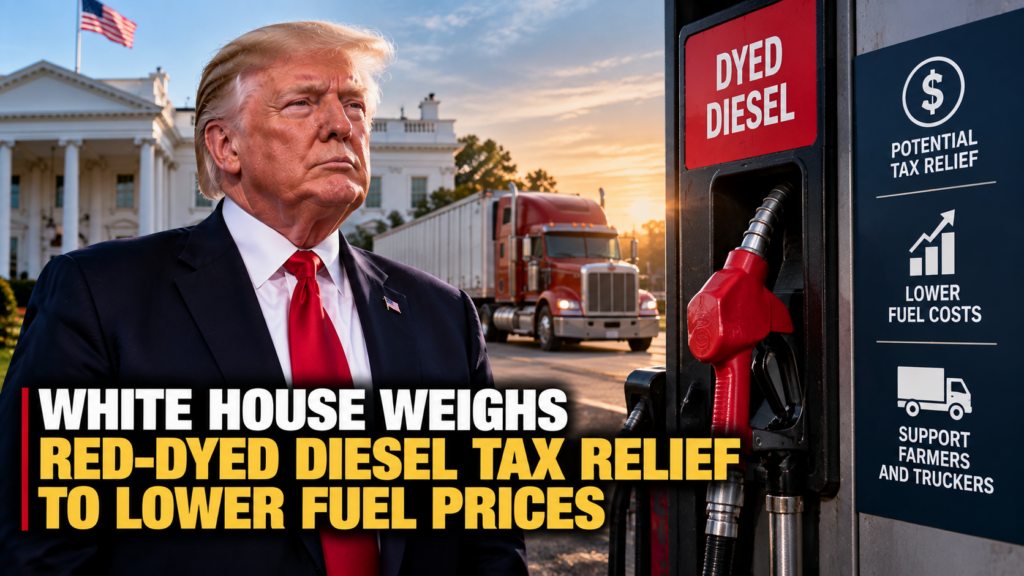
The White House is considering broader use of red-dyed diesel as officials look for ways to reduce soaring fuel costs. The proposal could allow some diesel buyers to avoid the federal highway fuel tax, but no final decision has been made.
According to a report by Reuters, the administration is weighing regulatory relief for red-dyed diesel alongside other measures to address record-high diesel prices.
What Happened
Red-dyed diesel, sometimes called red diesel, is generally used for off-road purposes such as farming and is exempt from most federal fuel taxes.
The White House is considering expanding the circumstances in which the fuel could be sold for broader use. Under the proposal, some buyers could avoid the federal highway diesel tax.
The federal tax on highway diesel is currently 24.4 cents per gallon. Dyed diesel remains subject to a 0.1-cent-per-gallon charge that supports the federal Leaking Underground Storage Tank Trust Fund.
The administration has not made a final decision.
Why Diesel Prices Are a Focus
The proposal comes as diesel prices have climbed sharply. The national average price has moved above $6 per gallon, increasing costs for industries that depend heavily on diesel, including agriculture and trucking.
The White House is also considering alternatives to a broader diesel export ban. President Donald Trump has previously backed restricting diesel exports as a possible way to increase domestic availability.
Reuters reported that administration officials have also been seeking voluntary commitments from major refiners to limit diesel exports. Energy Secretary Chris Wright has contacted refinery executives as officials evaluate different approaches.
Potential Impact of Red-Dyed Diesel Tax Relief
Expanding access to red-dyed diesel could lower the federal tax burden for eligible users. However, the effect on retail prices would depend on how the policy is structured and how much of any savings is passed through by fuel sellers.
The proposal has also drawn questions about whether it would address the underlying supply problems affecting diesel prices.
Patrick De Haan, head of petroleum analysis at GasBuddy, told Reuters that allowing broader use of dyed diesel would not increase overall diesel supplies or directly resolve supply imbalances.
The measure could nevertheless reduce fuel costs for some truckers and other users if they become eligible to purchase tax-exempt diesel.
Pressure on Farmers and Truckers
High diesel prices are particularly significant for farmers approaching harvest, when fuel represents a major operating expense.
Farm Belt lawmakers have been pressing the administration and Congress for relief. Iowa Republican Rep. Ashley Hinson, who is running for the Senate, has called for action on diesel exports and proposed measures aimed at supporting farmers and truckers.
Several states have also taken temporary steps involving dyed diesel as fuel prices have risen. Alabama, Louisiana and Nebraska have moved to broaden access or suspend certain penalties related to the fuel.
Texas separately announced on September 28 that it would temporarily expand the use of dyed diesel on public roads under a statewide disaster proclamation, although the underlying fuel tax was not waived.
What Happens Next
The White House is continuing to evaluate options for reducing diesel costs, including red-dyed diesel relief and potential limits on exports.
For now, the red-dyed diesel tax relief proposal remains under consideration. Any final policy would determine who could use the fuel, how federal tax treatment would change and whether the measure would provide meaningful savings for consumers and businesses.
The debate comes as the administration faces pressure to respond to elevated fuel costs while trying to avoid measures that could create additional disruptions in domestic or international fuel markets.
Related Reading
- Trump Announces All 50 States Joining Medicaid Drug Pricing Model
- US Clears Way for $24.3 Billion F-35 Sale to Saudi Arabia
Red-dyed diesel is generally used for off-road purposes such as farming and is exempt from most federal fuel taxes.
No. The administration is considering the proposal, but no final decision has been made.