The past 5 presidents of USA have shaped American politics and policy through periods of economic prosperity, national crises, technological transformation, and social change. From Bill Clinton's centrist approach in the 1990s through Joe Biden's current administration, these five leaders have navigated challenges ranging from terrorism and recession to pandemic response and climate action. Understanding their administrations provides essential context for current political debates and future governance. U.S. Presidential Report offers comprehensive coverage of these presidential legacies and their ongoing influence on American democracy.
Bill Clinton: Economic Prosperity and Political Division (1993-2001)
William Jefferson Clinton served as the 42nd President of the United States, bringing a new generation of Democratic leadership to the White House. His presidency marked a shift toward centrist politics, combining traditional liberal values with market-oriented economic policies that came to define "Third Way" governance.
Economic Achievements and Fiscal Policy
Clinton's economic record stands as one of his most significant accomplishments. His administration oversaw unprecedented economic expansion, with the following results:
- Budget surplus: First balanced budget since 1969, with surpluses totaling $559 billion
- Job creation: 22.7 million new jobs created during his two terms
- Unemployment: Dropped to 4.0%, the lowest rate in three decades
- Poverty reduction: 7.7 million Americans lifted out of poverty
The comprehensive biographies available through the White House Historical Association detail how Clinton worked with Treasury Secretary Robert Rubin to implement deficit reduction strategies that earned Wall Street confidence while maintaining Democratic social programs.

Legislative Accomplishments and Controversies
Clinton signed significant legislation that transformed American policy. The Family and Medical Leave Act provided job-protected leave for medical situations. Welfare reform through the Personal Responsibility and Work Opportunity Act fundamentally restructured social safety nets, though critics argued it left vulnerable populations at risk.
His administration also faced substantial controversy. The impeachment proceedings in 1998 over the Monica Lewinsky scandal divided the nation, though Clinton was acquitted by the Senate and maintained strong approval ratings.
George W. Bush: War on Terror and Economic Crisis (2001-2009)
George Walker Bush became the 43rd president following the contested 2000 election, decided ultimately by the Supreme Court. His presidency became defined by the September 11, 2001 terrorist attacks and the subsequent military and policy responses that reshaped American foreign and domestic policy.
National Security and Foreign Policy
The September 11 attacks transformed Bush's presidency from domestic focus to international crisis management. His administration launched:
| Initiative | Year | Scope |
|---|---|---|
| Afghanistan War | 2001 | Overthrow Taliban regime |
| Iraq War | 2003 | Remove Saddam Hussein |
| Patriot Act | 2001 | Expanded surveillance powers |
| Department of Homeland Security | 2002 | Cabinet-level security agency |
The domestic policy initiatives under Bush included the controversial No Child Left Behind Act, which mandated standardized testing and accountability measures for schools nationwide.
Economic Policies and the Financial Crisis
Bush pursued supply-side economics through substantial tax cuts in 2001 and 2003, reducing rates across income brackets. Supporters credited these cuts with economic growth, while critics argued they disproportionately benefited wealthy Americans and contributed to deficit expansion.
The 2007-2008 financial crisis dominated Bush's final year. The collapse of major financial institutions required unprecedented government intervention, including the $700 billion Troubled Asset Relief Program (TARP) to stabilize the banking system.
Barack Obama: Historic Presidency and Recovery (2009-2017)
Barack Hussein Obama made history as the first African American president, winning election during the worst economic crisis since the Great Depression. His presidency emphasized progressive policy reforms while navigating intense partisan opposition.
Economic Recovery and Healthcare Reform
Obama inherited an economy losing 800,000 jobs monthly. His administration's response included:
- American Recovery and Reinvestment Act: $831 billion stimulus package
- Auto industry bailout: Saved General Motors and Chrysler from bankruptcy
- Dodd-Frank Act: Comprehensive financial regulation reform
- Job growth: 11.6 million jobs created during his tenure
The economic policy decisions made during Obama’s administration remain subjects of analysis, with supporters crediting him for steady recovery and critics arguing growth remained sluggish compared to historical standards.

Affordable Care Act and Social Policy
The Affordable Care Act (ACA), signed in 2010, represented Obama's signature domestic achievement. The legislation expanded health insurance coverage to 20 million previously uninsured Americans through marketplace subsidies and Medicaid expansion. Ongoing debates about its effectiveness continue to shape healthcare policy discussions.
Obama also advanced LGBTQ rights, ending "Don't Ask, Don't Tell" military policy and supporting marriage equality. His administration emphasized climate action through the Paris Agreement and Clean Power Plan, though implementation faced legal challenges.
Donald Trump: Disruption and America First (2017-2021)
Donald John Trump brought an unprecedented political background to the presidency, entering office without prior governmental or military experience. His administration pursued nationalist economic policies, immigration restrictions, and judicial appointments that shifted federal courts rightward.
Economic Nationalism and Tax Reform
Trump's economic agenda centered on protectionism and deregulation. The Tax Cuts and Jobs Act of 2017 reduced the corporate tax rate from 35% to 21% and modified individual tax brackets. Key economic indicators during his pre-pandemic presidency included:
| Metric | Performance |
|---|---|
| Unemployment (Feb 2020) | 3.5% (50-year low) |
| Stock market growth | Dow Jones up 56% (2017-2020 peak) |
| GDP growth | Average 2.5% annually (2017-2019) |
| Trade deficit | Increased despite tariffs |
His administration imposed tariffs on Chinese goods, aluminum, and steel, arguing these measures protected American manufacturing. Economists debated whether these policies strengthened domestic production or raised consumer costs.
Immigration and Foreign Policy
Trump made immigration restriction central to his presidency, implementing travel bans on several majority-Muslim countries, separating families at the southern border, and pursuing border wall construction. These policies sparked intense controversy and legal challenges.
In foreign policy, Trump withdrew from the Iran nuclear deal, moved the U.S. embassy in Israel to Jerusalem, and conducted direct negotiations with North Korean leader Kim Jong Un. His "America First" approach questioned traditional alliances while pursuing bilateral trade agreements.
COVID-19 Pandemic Response
The coronavirus pandemic defined Trump's final year. His administration launched Operation Warp Speed, accelerating vaccine development that produced multiple vaccines within months. However, critics argued his public messaging downplayed the virus's severity and politicized public health measures. The pandemic resulted in over 400,000 American deaths during his presidency.
Joe Biden: Restoration and Challenges (2021-Present)
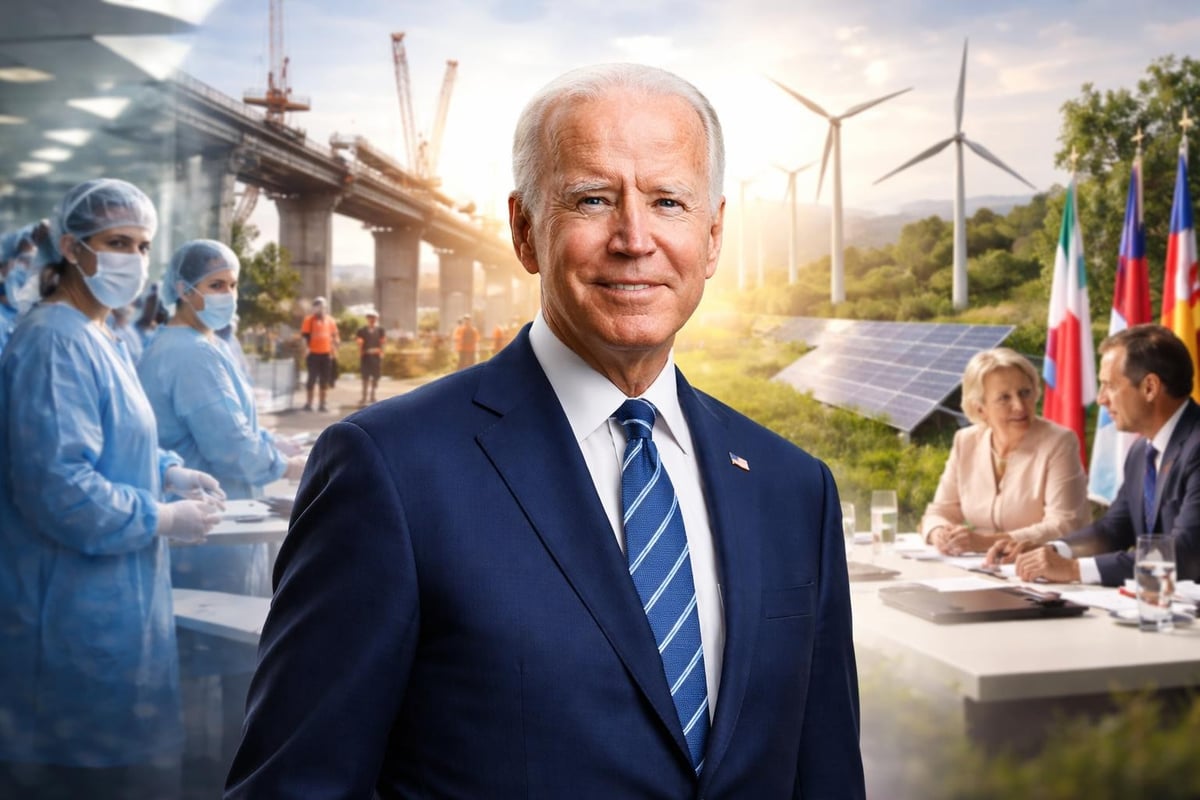
Joseph Robinette Biden Jr. became the 46th president at age 78, the oldest person to assume the office. His extensive political career included 36 years as a senator and eight years as vice president under Obama. His presidency emphasizes institutional restoration, infrastructure investment, and alliance rebuilding.
Infrastructure and Economic Legislation
Biden achieved significant legislative victories despite narrow congressional margins. The Infrastructure Investment and Jobs Act allocated $1.2 trillion for transportation, broadband, and utilities. The American Rescue Plan provided $1.9 trillion in pandemic relief, extending unemployment benefits and distributing stimulus payments.
His administration passed the Inflation Reduction Act, addressing prescription drug costs, climate investment, and tax policy. This legislation represented the largest climate investment in American history, allocating $369 billion toward clean energy and emissions reduction.
Foreign Policy and Democratic Values
Biden prioritized alliance restoration, particularly with NATO partners strained during the Trump administration. When Russia invaded Ukraine in February 2022, his administration coordinated international sanctions and military aid without direct American troop deployment.
The Afghanistan withdrawal in August 2021 proved controversial. While Biden fulfilled his commitment to end America's longest war, the chaotic evacuation and Taliban takeover drew bipartisan criticism regarding planning and execution.
Domestic Challenges and Judicial Appointments
Biden appointed Ketanji Brown Jackson as the first Black woman Supreme Court Justice, fulfilling a campaign promise. His administration addressed immigration policy challenges at the southern border, though critics from both parties questioned his approach.
Inflation emerged as a significant challenge, reaching 9.1% in June 2022 before declining to more moderate levels. The Federal Reserve's interest rate increases to combat inflation raised recession concerns and affected Biden's approval ratings.
Comparing Leadership Across Five Administrations
The past 5 presidents of USA demonstrate contrasting leadership styles and policy priorities shaped by their unique circumstances and political philosophies.
Economic Approaches and Results
Each president inherited different economic conditions that influenced their policy choices:
- Clinton benefited from technology boom expansion and pursued deficit reduction
- Bush implemented tax cuts before confronting financial crisis response
- Obama focused on recovery from the Great Recession through stimulus and regulation
- Trump emphasized deregulation and tax cuts before pandemic disruption
- Biden addressed pandemic recovery while combating inflation
These varying approaches reflect both ideological differences and situational demands. Past presidents in the news frequently discuss how their economic decisions shaped subsequent administrations.
Foreign Policy Evolution
Foreign policy priorities shifted dramatically across these five administrations. Clinton emphasized globalization and humanitarian intervention. Bush's War on Terror dominated international relations for nearly a decade. Obama pursued diplomatic engagement and multilateralism. Trump challenged traditional alliances while pursuing bilateral deals. Biden returned to alliance-based approaches while competing with China.
The National Park Service presidential biographies provide additional context on how each leader's background influenced their international perspectives.
Partisan Polarization and Governance
Political polarization intensified across these administrations. Clinton faced impeachment but maintained approval ratings. Bush saw initial unity after 9/11 dissolve into Iraq War divisions. Obama confronted Tea Party opposition and congressional gridlock. Trump's presidency deepened partisan divisions. Biden pledged unity but governed amid continued polarization.
This trend reflects broader American political realignment, where presidential politics increasingly occurs in environments of narrow majorities and intense ideological conflict.
Legacy and Historical Assessment
Historical evaluation of the past 5 presidents of USA continues to evolve as scholars gain perspective and new information emerges. Clinton's economic success competes with impeachment controversy in historical memory. Bush's terrorism response and Iraq War remain contentious. Obama's healthcare reform and recovery management define his legacy. Trump's presidency generates intense debate regarding institutional norms and populist politics. Biden's legacy remains in formation as his presidency continues.
Each president faced unique challenges that tested their leadership capabilities. Natural disasters, terrorist attacks, economic crises, and pandemics required rapid decision-making under uncertainty. Their responses revealed character, judgment, and adaptability that historians will analyze for generations.
Institutional Impact and Precedent
These presidents shaped institutional precedents that affect contemporary governance. Executive orders became increasingly important as legislative gridlock intensified. Presidential communication evolved from traditional press conferences to social media engagement. The balance between executive authority and congressional power shifted across administrations, reflecting both personality and circumstances.
Understanding how these five leaders approached presidential power provides essential context for current and future administrations. Their decisions on everything from climate change policy to Supreme Court appointments continue influencing American governance in 2026.
The past 5 presidents of USA represent diverse leadership approaches to governing during transformative periods in American history. Each administration contributed unique policies, confronted specific challenges, and left lasting impacts that continue shaping contemporary political debates. For comprehensive, non-partisan coverage of presidential news, policies, and historical analysis, U.S. Presidential Report provides the insights needed to understand both past leadership and current developments affecting American governance.