The 2000 presidential election stands as one of the most contentious moments in American political history, not because of policy debates or campaign strategies, but because of tiny pieces of paper. The hanging chad 2000 controversy transformed an ordinary voting mechanism into a national crisis, introducing Americans to arcane terminology about ballot technology and forcing the nation to confront fundamental questions about democracy, voting rights, and the integrity of electoral systems. What began as a close race between George W. Bush and Al Gore evolved into a 36-day legal battle that ultimately reached the Supreme Court, with the presidency hanging in the balance over perforated ballot cards and the interpretation of voter intent.
Understanding the Mechanics Behind the Crisis
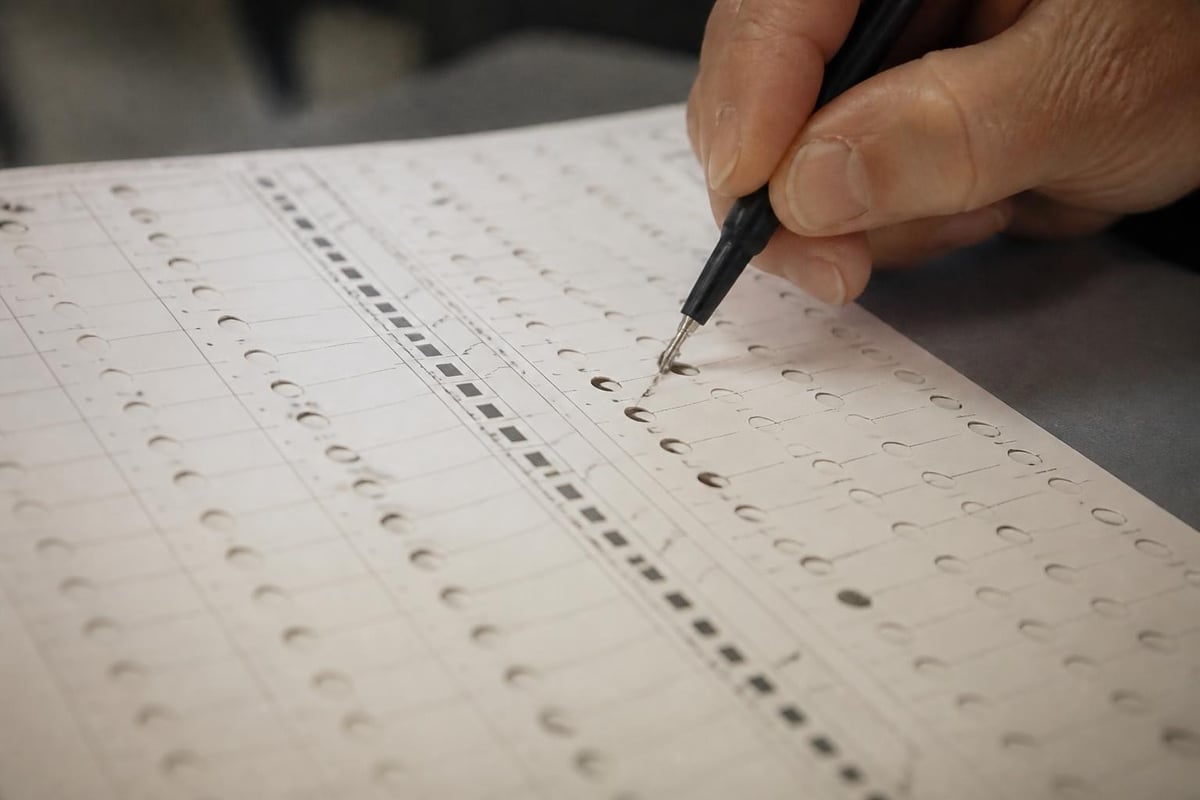
The punch-card voting system used throughout Florida in 2000 required voters to use a stylus to punch holes through pre-scored circles next to their chosen candidates' names. When functioning properly, this mechanical process created clean perforations, allowing vote-counting machines to read ballots accurately through light sensors.
However, the technical complexities of punch-card ballots created multiple failure points. The small rectangular pieces that were supposed to detach completely-known as chads-didn't always separate cleanly from the ballot card. This seemingly minor manufacturing detail became the focal point of American democracy in November and December 2000.
Types of Chad Irregularities
Election officials and legal teams identified several distinct categories of ballot imperfections during the Florida recount:
- Hanging chad: Attached by one corner, creating a flap
- Swinging chad: Attached by two corners, allowing movement
- Tri-chad: Connected by three corners with minimal detachment
- Pregnant or dimpled chad: Indented but not perforated
- Pierced chad: Punctured but not fully separated
Each variation presented unique challenges for determining voter intent, and the hanging chad 2000 situation specifically became emblematic of the broader controversy because these partially detached pieces could be clearly visible yet still prevent machine tabulation.
The Florida Recount Battle
Florida's 25 electoral votes represented the tipping point in an extraordinarily close national election. Initial returns showed Bush leading by approximately 1,784 votes out of nearly six million cast-a margin triggering an automatic machine recount under Florida law.
The machine recount narrowed Bush's lead to just 327 votes, setting the stage for the manual recounts that would dominate headlines for weeks. The Gore campaign requested hand recounts in four heavily Democratic counties: Miami-Dade, Broward, Palm Beach, and Volusia.
Manual Recount Procedures
County canvassing boards faced unprecedented scrutiny as they examined individual ballots under intense time pressure and media attention. The legal framework surrounding hanging chads provided little specific guidance, forcing local officials to develop standards on the fly.
| County | Initial Bush Lead | Recount Method | Primary Issue |
|---|---|---|---|
| Miami-Dade | 6,000+ votes | Partial manual | Stopped mid-count |
| Broward | 2,000+ votes | Full manual | Varying standards |
| Palm Beach | 3,000+ votes | Full manual | Butterfly ballot confusion |
| Volusia | Small margin | Full manual | Completed early |
Each county applied different standards for evaluating questionable ballots. Palm Beach County initially required two corners detached for a hanging chad to count, while Broward County took a more liberal interpretation of voter intent. This inconsistency became a central argument in subsequent legal challenges.
Legal Battles and Supreme Court Intervention
The hanging chad 2000 controversy spawned multiple lawsuits that raced through state and federal courts simultaneously. The Bush legal team, led by former Secretary of State James Baker, argued that varying recount standards violated equal protection principles. The Gore team, headed by former Secretary of State Warren Christopher, maintained that manual recounts represented the only way to discern true voter intent.
Key Legal Milestones:
- Florida Supreme Court orders statewide manual recount (December 8)
- U.S. Supreme Court issues stay halting recounts (December 9)
- Oral arguments heard in Bush v. Gore (December 11)
- Supreme Court issues final ruling (December 12)
- Gore concedes election (December 13)
The Supreme Court's 5-4 decision in Bush v. Gore effectively ended the recount process, citing equal protection concerns about inconsistent standards across counties. The majority opinion noted that creating uniform standards within Florida's certification deadline was impossible, while the dissent argued that state courts should resolve state election disputes.
Media Coverage and Public Perception
Television networks faced their own credibility crisis during the hanging chad 2000 episode. On election night, major networks called Florida for Gore, then retracted the call, then projected Bush as the winner, only to retract that projection as well. The presidency literally hung by a chad as news organizations struggled to report accurately on an unprecedented situation.
Images of election workers holding ballots up to light sources became iconic representations of the crisis. The American public received crash courses in electoral mechanics, learning terms like "overvote," "undervote," and "butterfly ballot" alongside the various chad classifications. Late-night comedians found endless material, yet the underlying constitutional questions carried serious implications for democratic governance.
The Partisan Divide
Public opinion split largely along partisan lines, with Republicans generally supporting the certification of initial results and Democrats advocating for complete manual recounts. This division reflected deeper questions about which values should take precedence: finality and adherence to deadlines, or thoroughness and accuracy regardless of time constraints.
Polling data from December 2000 showed Americans evenly divided on whether manual recounts should continue or cease. Trust in electoral systems declined across demographic groups, though the peaceful transfer of power ultimately proceeded according to constitutional requirements.
Long-Term Impact on Voting Technology
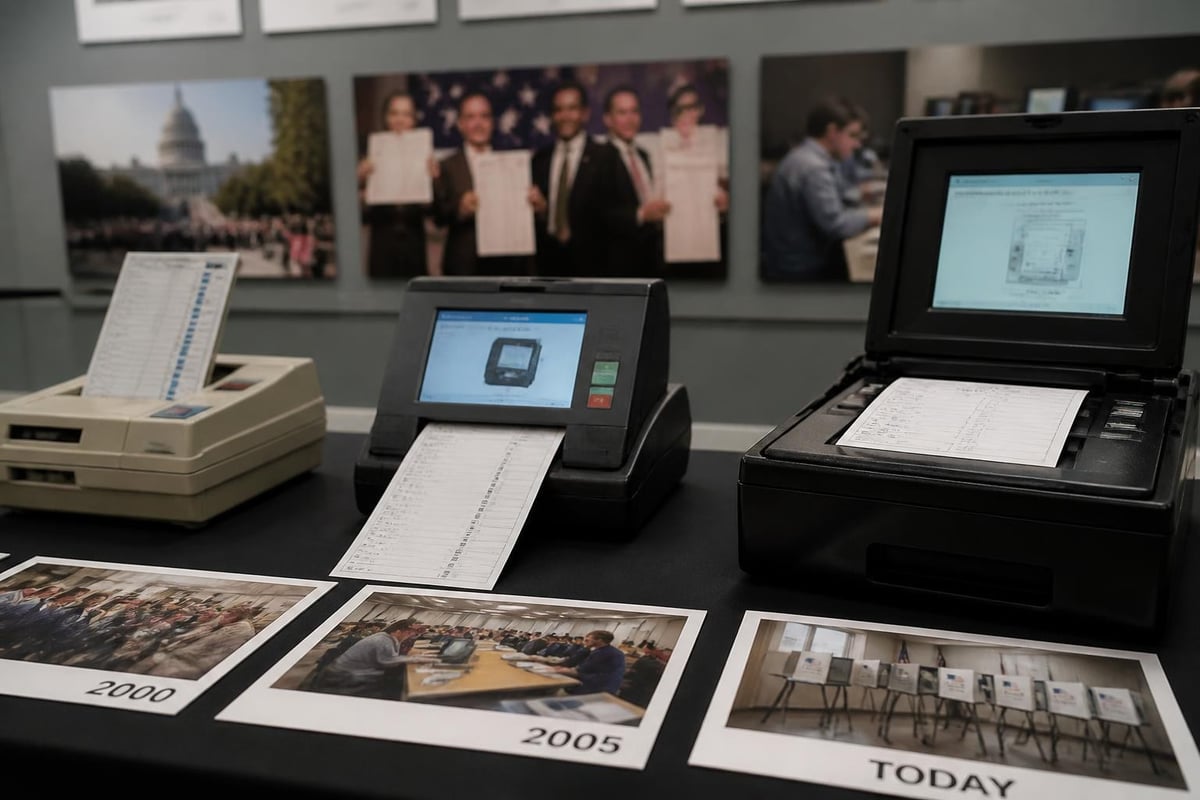
The hanging chad 2000 debacle prompted immediate and far-reaching reforms to American voting infrastructure. Congress passed the Help America Vote Act (HAVA) in 2002, authorizing billions in federal funding to replace outdated punch-card and lever voting machines.
Major HAVA Provisions:
- $3.9 billion allocated for voting system upgrades
- Minimum standards for voting equipment
- Statewide voter registration databases required
- Provisional ballot requirements established
- Creation of Election Assistance Commission
Florida itself moved quickly to eliminate punch-card systems, replacing them with optical scan technology that proved more reliable and easier to audit. By the 2004 presidential election, punch-card voting had largely disappeared from American elections, though the transition created new debates about touchscreen voting machines and their vulnerability to technical failures or manipulation.
Lessons for Electoral Integrity
The hanging chad 2000 crisis revealed systemic weaknesses in American electoral administration that extended beyond ballot technology. Counties with inadequate resources, poorly maintained equipment, and undertrained poll workers struggled most during the recount process. Wealthier jurisdictions had already transitioned to more modern systems, creating equity concerns about voting access and accuracy.
Administrative Reforms
Beyond equipment upgrades, election administrators implemented procedural improvements:
- Enhanced poll worker training programs
- Regular equipment testing and maintenance schedules
- Clearer chain-of-custody protocols for ballots
- Improved voter education materials
- Standardized recount procedures
These changes reflected recognition that ballot irregularities like hanging chads resulted not from isolated mechanical failures but from systemic underinvestment in electoral infrastructure. The 2000 experience demonstrated that democracy requires ongoing maintenance and resources, not just during presidential campaigns but through continuous improvement of election administration.
The Dimpled Chad Dilemma
Among the various chad classifications, dimpled chads presented particular interpretive challenges. Unlike hanging chads that clearly showed voter action, dimpled ballots showed only indentations without perforations. Did these represent voter intent or merely hesitation? Should boards count them if a pattern of dimpling appeared across the ballot, suggesting a malfunctioning stylus?
| Standard | Dimpled Chad Treatment | Hanging Chad Treatment | Rationale |
|---|---|---|---|
| Liberal | Count if intent clear | Always count | Voter intent paramount |
| Moderate | Count if pattern exists | Count if one corner detached | Balance intent and clarity |
| Strict | Do not count | Count only if two corners detached | Clear evidence required |
These varying interpretations highlighted fundamental tensions in election law between strict construction and liberal interpretation of voter intent. The hanging chad 2000 controversy forced a national conversation about these principles that continues to influence election disputes today.
Comparative Analysis with Modern Elections
While punch-card technology has vanished, debates over vote counting persist. The 2020 presidential election saw extensive litigation over mail-in ballot procedures, signature matching, and counting deadlines. Many arguments echoed themes from 2000: uniform standards versus local discretion, finality versus accuracy, and the appropriate role of courts in election disputes.
Contemporary election administration has learned from the hanging chad 2000 experience, yet new technologies create new vulnerabilities. Cybersecurity concerns, rather than mechanical failures, now dominate discussions of electoral integrity. The fundamental challenge remains unchanged: balancing accessibility, security, and public confidence in a decentralized system spanning thousands of jurisdictions.
Understanding past presidential election controversies provides essential context for evaluating current debates about voting procedures and electoral reforms.
County-Level Implementation Challenges
The decentralized nature of American election administration meant that Palm Beach County's butterfly ballot design-which may have caused thousands of voters to accidentally select Pat Buchanan instead of Al Gore-occurred independently of state oversight. Similarly, decisions about when to replace aging equipment fell to local officials balancing multiple budgetary priorities.
This fragmentation created the conditions for the hanging chad 2000 crisis, as counties using identical punch-card systems maintained them to varying degrees. Some jurisdictions cleaned their equipment regularly and replaced worn templates, while others operated with cards and readers that had deteriorated over years of use.
Factors Affecting Ballot Quality:
- Equipment age and maintenance history
- Card stock quality and storage conditions
- Stylus design and tip condition
- Template alignment and wear patterns
- Voter instruction clarity
Post-2000 reforms addressed some coordination issues through federal standards and state-level oversight, but America's commitment to local control of elections ensures ongoing variation in implementation quality.
Historical Precedents and Future Implications
The 1876 Hayes-Tilden election provided the closest historical parallel to 2000, with disputed returns from multiple states and an eventual congressional commission determining the outcome. However, that controversy involved allegations of fraud and voter suppression rather than ballot technology failures. The hanging chad 2000 situation was uniquely modern, arising from the interaction between aging mechanical systems and contemporary expectations for rapid, accurate results.
Looking forward, the crisis established precedents for acceptable judicial intervention in election disputes while simultaneously demonstrating the limits of court involvement. The Supreme Court's explicit statement that Bush v. Gore should not be considered precedent for other cases reflected discomfort with the Court's role as election arbiter, yet subsequent cases have cited the equal protection reasoning in various contexts.
Voter Confidence and Participation
Initial concerns that the hanging chad 2000 controversy would suppress voter turnout proved largely unfounded. Participation rates in 2004 actually increased compared to 2000, suggesting that Americans retained faith in electoral processes despite the recount chaos. However, partisan perceptions of election legitimacy became increasingly divergent, a trend accelerating in subsequent election cycles.
Exit polling and post-election surveys revealed that voters' primary concerns centered on whether their votes would be counted accurately rather than whether to participate at all. This distinction proved crucial for election administrators: citizens wanted assurance of accuracy and integrity more than they wanted speed or technological sophistication.
The legacy of the hanging chad 2000 episode thus includes both tangible improvements to voting infrastructure and more subtle shifts in public expectations about election administration. Transparency, auditability, and clear communication became recognized as essential components of electoral legitimacy, not merely technical considerations for specialists.
The hanging chad 2000 crisis fundamentally reshaped American election administration, driving technological modernization while revealing enduring tensions between different democratic values. These lessons remain relevant as each election cycle brings new challenges requiring balance between innovation and reliability. For comprehensive, non-partisan coverage of how presidential elections continue to evolve and the policies that shape American governance, U.S. Presidential Report delivers the authoritative analysis you need to stay informed about past and present White House developments.