As the 2028 presidential election cycle approaches, political observers and party strategists are already mapping out the issues that will dominate Democratic primary debates. With significant shifts in technology, global politics, and domestic challenges reshaping the American landscape, the democratic debate topics expected in 2028 will reflect both ongoing concerns and emerging priorities. Understanding these potential debate subjects provides valuable insight into the direction of the Democratic Party and the priorities that will shape candidate platforms over the next two years.
Artificial Intelligence and Technology Regulation
The rapid advancement of artificial intelligence has created unprecedented policy challenges that will demand significant attention in upcoming Democratic debates. According to analysis from the Council on Foreign Relations, AI policy is anticipated to become a pivotal issue in the 2028 presidential election, with candidates needing to articulate clear positions on regulation, job displacement, and ethical implementation.
AI's Impact on Employment and Labor
Democratic candidates will face pressure to address how artificial intelligence threatens traditional employment sectors while creating new economic opportunities. The debate will center on several critical questions:
- How should the government regulate AI deployment in industries that employ millions of Americans?
- What training programs and safety nets are necessary for workers displaced by automation?
- Should there be mandatory disclosure when AI systems make decisions affecting employment, housing, or credit?
- How can labor unions adapt to protect workers in an AI-driven economy?
Job retraining initiatives will likely become a cornerstone of many candidates' platforms, with proposals ranging from federal funding for community colleges to corporate responsibility requirements for companies implementing AI systems.
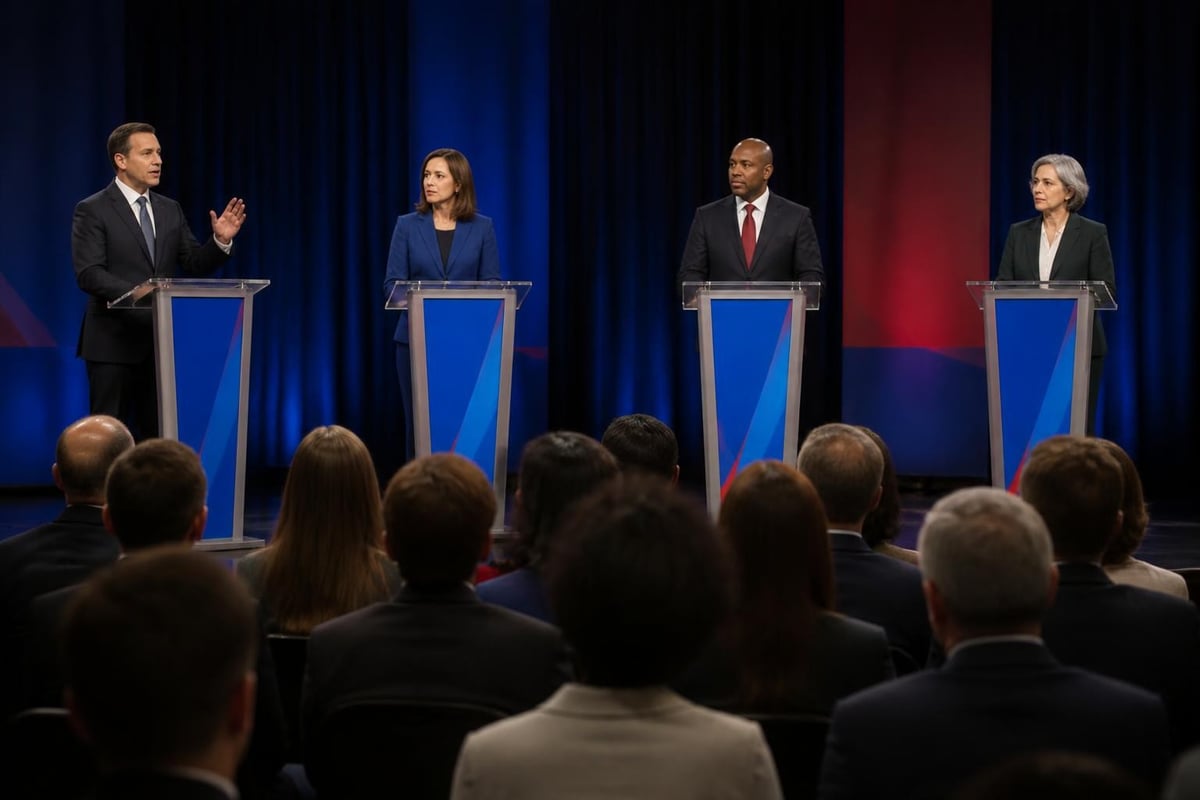
Data Privacy and Consumer Protection
The democratic debate topics expected in 2028 will include substantial discussion about protecting Americans from data exploitation and algorithmic bias. Candidates will need to differentiate their approaches to privacy legislation, potentially proposing comprehensive federal standards that supersede the current patchwork of state laws.
| Policy Area | Expected Debate Focus | Key Questions |
|---|---|---|
| Data Collection | Consumer consent requirements | Should citizens own their personal data? |
| Algorithmic Transparency | Public disclosure mandates | How transparent should AI decision-making be? |
| Corporate Accountability | Penalties for violations | What consequences for data breaches? |
Economic Inequality and Cost-of-Living Crisis
Economic concerns remain paramount for Democratic voters, and key issues for 2028 candidates prominently feature the cost-of-living crisis affecting American families. This economic focus will shape multiple dimensions of primary debate discussions.
Housing Affordability and Access
The housing crisis has reached critical levels in many American cities, making it impossible to ignore on the debate stage. Candidates will propose varying solutions to address:
Supply-side interventions including federal incentives for affordable housing construction, zoning reform to increase density, and restrictions on corporate ownership of single-family homes. Progressive candidates may advocate for more aggressive measures, while moderates might emphasize public-private partnerships.
Demand-side support through expanded rental assistance, first-time homebuyer programs, and tax credits targeted at middle-class families struggling with mortgage payments.
The intersection of economic policy and housing will generate substantive debate about the appropriate federal role in local housing markets.
Healthcare Costs and Access
Healthcare remains a defining issue for Democratic primary voters, with democratic debate topics expected in 2028 certain to include extensive discussion of insurance reform, prescription drug pricing, and the future of the Affordable Care Act.
Candidates will range from incrementalists proposing targeted improvements to existing systems to progressives advocating for comprehensive single-payer healthcare. The debate will focus on:
- Medicare expansion timelines and eligibility
- Pharmaceutical price negotiation mechanisms
- Mental health parity and coverage requirements
- Reproductive healthcare access in post-Roe America
Climate Action and Environmental Justice
Climate policy has evolved from a niche concern to a central Democratic priority, and 2028 debates will feature detailed discussions about implementation strategies rather than whether action is necessary.
Green Infrastructure and Jobs
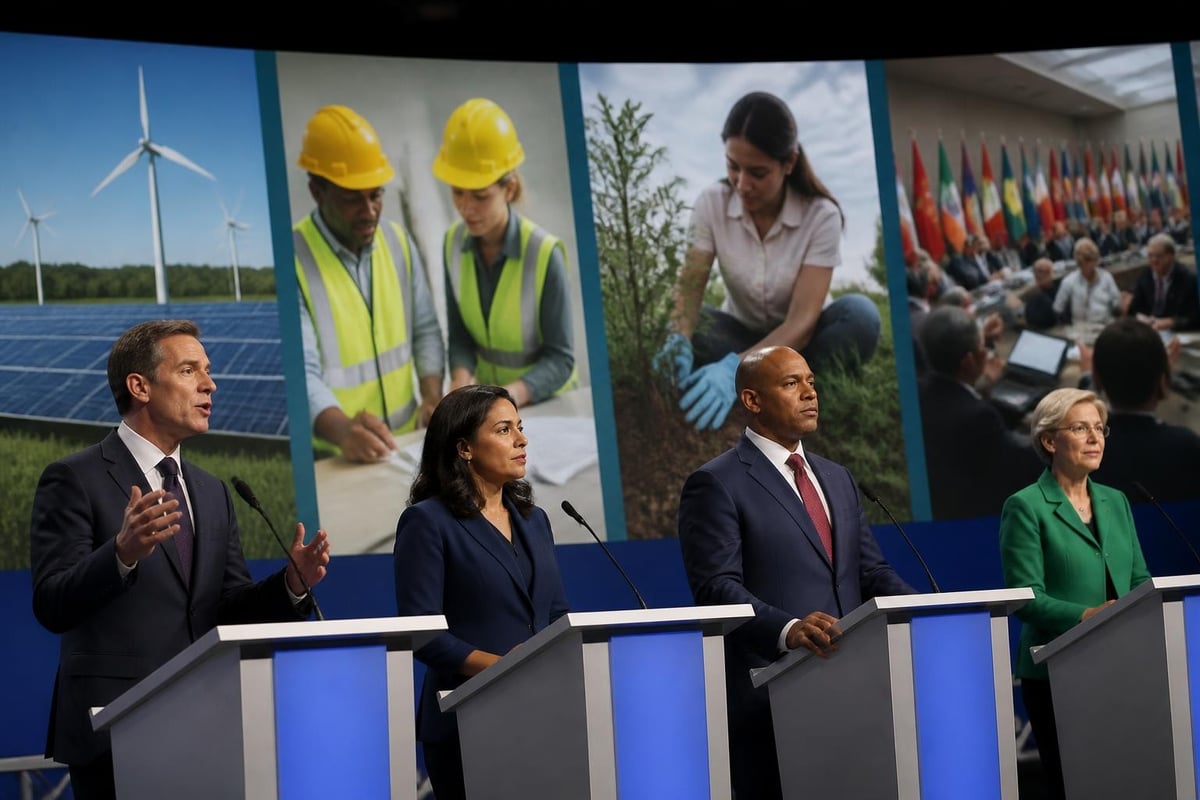
Candidates will compete to present the most compelling vision for clean energy transition, emphasizing job creation in renewable sectors and environmental remediation. The debate will address:
- Timeline for fossil fuel phase-out and the economic impact on communities dependent on traditional energy industries
- Investment levels required for grid modernization, renewable energy deployment, and climate resilience infrastructure
- International cooperation mechanisms to ensure American competitiveness in clean technology markets
- Environmental justice priorities to address disproportionate pollution impacts on minority communities
Agricultural Policy and Food Security
Climate change's impact on agriculture will drive debate about farm subsidies, sustainable farming practices, and food supply resilience. Candidates representing agricultural states may emphasize farmer support during the transition to sustainable practices, while others focus on corporate agricultural reform.
Democratic Institutions and Voting Rights
Following years of concerns about democratic principles, the protection of voting rights and governmental institutions will feature prominently in 2028 primary debates. Candidates will need to articulate comprehensive strategies for safeguarding democracy.
Electoral Reform Proposals
The democratic debate topics expected in 2028 will include various proposals to strengthen electoral systems:
- Automatic voter registration and expanded early voting access
- Voting Rights Act restoration and enhancement
- Campaign finance reform and Citizens United reversal strategies
- Electoral College abolition or modification proposals
- Ranked-choice voting and other alternative election methods
Judicial System and Court Reform
Supreme Court composition and federal judiciary appointments will remain contentious topics, with candidates proposing reforms ranging from term limits to court expansion. The debate will balance constitutional concerns with practical governance needs.
Foreign Policy and National Security
International relations continue to evolve rapidly, and Democratic candidates will need sophisticated positions on complex global challenges facing the United States. According to reporting on the Democratic Party’s evolving positions, foreign policy debates may see significant ideological diversity.
China Relations and Economic Competition
The U.S.-China relationship will demand nuanced debate positions addressing:
Economic interdependence versus security concerns, with candidates balancing trade policy, supply chain resilience, and technology competition. Some may advocate for aggressive decoupling while others propose strategic engagement.
Human rights concerns including positions on Taiwan, Hong Kong, and Xinjiang will test candidates' ability to articulate moral clarity while managing practical diplomatic relationships.
| Issue Area | Hawk Position | Dove Position | Moderate Position |
|---|---|---|---|
| Trade Policy | Aggressive tariffs | Engagement focus | Targeted restrictions |
| Military Posture | Increased presence | Diplomatic emphasis | Balanced deterrence |
| Technology Transfer | Complete restrictions | Case-by-case review | Strategic controls |
Middle East and Global Conflicts
Democratic candidates will face questioning about military commitments, humanitarian interventions, and the appropriate American role in regional conflicts. Discussion of U.S. foreign policy positions will reveal fundamental differences in how candidates view American power and responsibility.
Immigration Reform and Border Policy
Immigration remains one of the most divisive topics in American politics, and the democratic debate topics expected in 2028 will require candidates to balance humanitarian concerns with border security and rule of law considerations. The immigration policy landscape continues to evolve as demographic shifts reshape American communities.
Pathway to Citizenship and DACA Protection
Candidates will propose varying timelines and requirements for citizenship pathways, with progressives advocating for comprehensive reform and others proposing incremental approaches focused on specific populations like Dreamers.
Border Security and Asylum Processing
The debate will address infrastructure at the border, asylum processing capacity, and cooperation with Central American nations to address root causes of migration. Candidates must demonstrate both compassion and practical governance skills.
Education and Student Debt
Education policy will generate substantial debate time as candidates address both K-12 reform and higher education affordability. Student debt forgiveness proposals will range from universal cancellation to targeted relief based on income or public service.
Public School Investment and Teacher Support
Candidates will propose federal initiatives to:
- Increase teacher salaries and improve working conditions
- Expand early childhood education access
- Address disparities in school funding between wealthy and poor districts
- Modernize curriculum to include climate education and media literacy
Higher Education Access
The democratic debate topics expected in 2028 will feature competing visions for college affordability, from free public university tuition to expanded Pell Grant programs and income-based repayment improvements.
Primary Calendar and Debate Structure
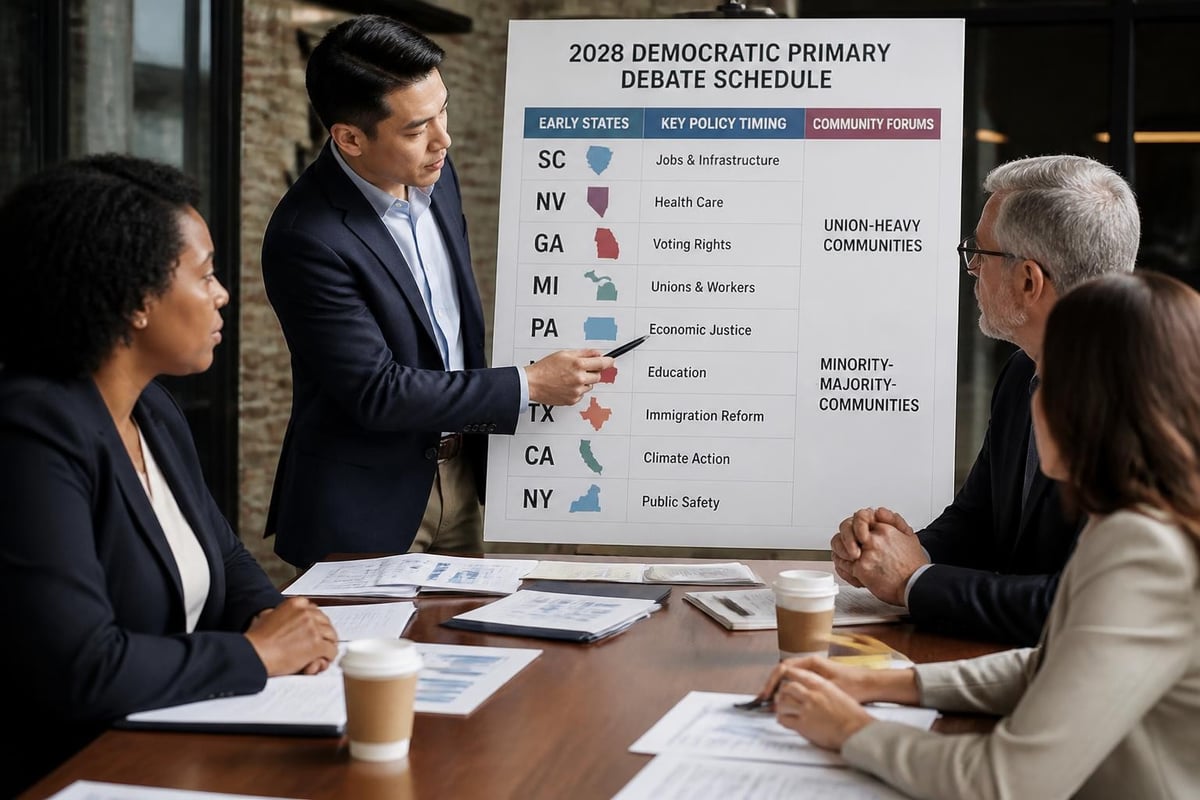
The Democratic Party has revised its 2028 primary calendar to emphasize early input from Black, Latino, and union voters, which will influence both debate scheduling and topic emphasis. This strategic shift recognizes that diverse constituencies have distinct policy priorities requiring substantive attention.
Candidate Field Dynamics
With multiple potential candidates already emerging and expectations of a large primary field, debate organizers face challenges in balancing comprehensive policy discussion with candidate differentiation. The anticipated complexities of managing numerous candidates will influence debate formats and qualification thresholds.
Early debates may feature multiple nights with randomized candidate selection, while later debates implement polling and fundraising thresholds to narrow the field. This progression will affect which democratic debate topics expected in 2028 receive the most attention at various stages.
Social Justice and Criminal Justice Reform
Racial justice and police reform will continue as central Democratic concerns, with candidates proposing federal standards for law enforcement, criminal justice system overhaul, and reparations discussions.
Policing Standards and Accountability
Debate will center on qualified immunity reform, federal use-of-force standards, and accountability mechanisms for police misconduct. Candidates will balance public safety concerns with civil rights protections.
Incarceration and Sentencing Reform
Progressive candidates may advocate for dramatic reductions in incarceration rates, while others propose targeted reforms addressing mandatory minimums, drug offenses, and rehabilitation programs.
Healthcare Beyond Insurance
While insurance coverage dominates healthcare discussions, the democratic debate topics expected in 2028 will expand to include:
- Mental health crisis response and addiction treatment
- Maternal mortality rates and pregnancy care disparities
- Prescription drug manufacturing and supply chain security
- Rural healthcare access and hospital closure prevention
Preventive care investment and addressing social determinants of health will emerge as sophisticated policy discussions distinguishing experienced candidates from newcomers.
Tax Policy and Revenue Generation
Candidates will propose varying approaches to taxation, from wealth taxes to corporate minimum taxes to capital gains reform. The debate will address both revenue generation for proposed programs and economic fairness.
Wealth Distribution and Inequality
Discussion of billionaire taxation, estate tax reform, and closing carried interest loopholes will reveal fundamental philosophical differences about appropriate wealth accumulation and redistribution mechanisms.
Technology and Democracy
Beyond AI regulation, candidates will address how social media platforms affect democratic discourse, misinformation spread, and foreign interference in elections. Proposals may include platform accountability requirements, content moderation standards, and digital literacy education initiatives.
Understanding these policy dimensions provides essential context for following the presidential politics landscape as it develops over the next two years.
The democratic debate topics expected in 2028 reflect both enduring American challenges and emerging issues demanding innovative policy solutions. As candidates begin positioning themselves for the primary, these subjects will evolve through public discourse and changing circumstances. For comprehensive, non-partisan coverage of how these debates unfold and what they mean for American governance, U.S. Presidential Report provides timely analysis and context to help you stay informed about the presidential race and the policies that will shape our nation's future.