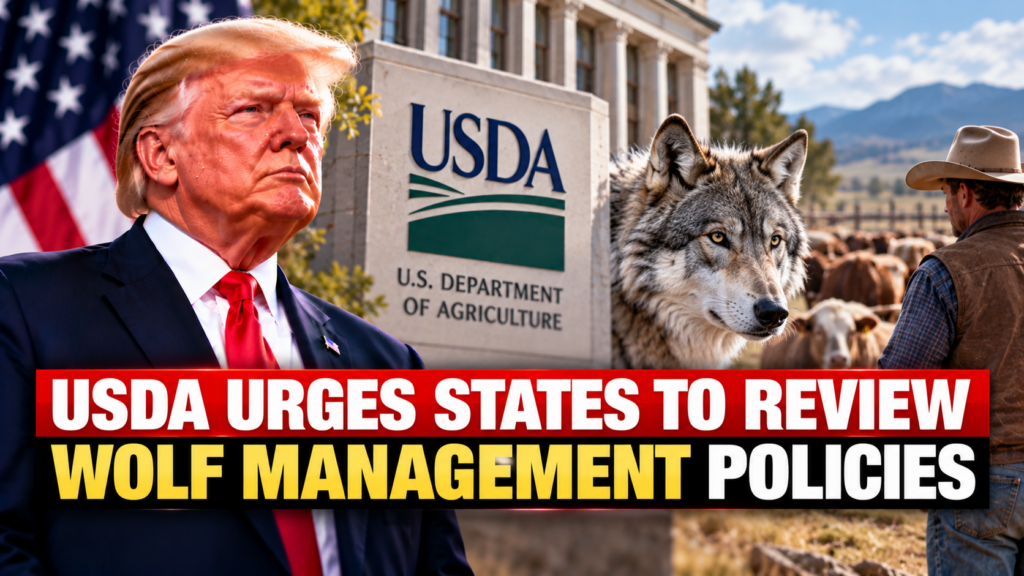
The U.S. Department of Agriculture (USDA) is urging states to review their wolf management policies and strengthen engagement with ranchers following President Donald Trump’s executive order on supporting America’s ranchers. The initiative aims to address livestock losses linked to wolf predation and improve coordination between state authorities, federal agencies, and livestock producers.
According to a report by U.S. Department of Agriculture, Agriculture Secretary Brooke L. Rollins called on state partners to assess their policies, help ranchers report suspected wolf attacks, and work with federal officials to address livestock losses.
What Happened
The USDA announcement follows President Trump’s Executive Order 14425, titled “Supporting America’s Ranchers.” The order directs federal officials to review the status of gray wolves and Mexican wolves under the Endangered Species Act and consider whether their protections should change if recovery criteria are met.
Rollins said wolf predation can threaten livestock, ranchers’ livelihoods, and family-run operations. The USDA is encouraging states to review their management approaches and improve communication with producers affected by wolf attacks.
The initiative does not automatically authorize ranchers to kill wolves. Any lethal removal must be requested by the appropriate authorities and comply with applicable state and federal laws.
Key Details of the USDA Wolf Management Initiative
States Urged to Strengthen Engagement With Ranchers
The USDA wants state agencies to make sure livestock producers understand how to report suspected wolf predation. Reports can be directed to relevant state agencies or the U.S. Fish and Wildlife Service.
Better reporting and coordination could help authorities assess livestock losses and determine whether management measures are appropriate.
Federal Wildlife Services Can Help Manage Wolf Damage
The USDA’s Animal and Plant Health Inspection Service (APHIS), through its Wildlife Services program, provides assistance with wolf damage management at the request of appropriate state or federal authorities.
The program operates under required agreements, environmental analyses, and applicable legal requirements. The USDA said APHIS currently supports state and federal partners through more than 40 agreements.
Compensation for Eligible Livestock Losses
The USDA also highlighted changes to the Livestock Indemnity Program under the Working Families Tax Cuts Act. The program’s payment rates for qualifying livestock losses caused by predation have increased to 100% of the determined market value.
Eligible livestock producers can contact their local USDA Farm Service Agency office to learn about requirements and apply for assistance.
Economic Impact on Ranchers
Wolf predation can create costs beyond the immediate loss of livestock. According to the USDA, these may include expenses associated with managing livestock, reduced animal weights, and other financial impacts on ranching operations.
For producers already facing operating costs, these losses can place additional pressure on farm and ranch businesses. The USDA’s approach combines state policy reviews, federal wildlife management support, and financial assistance for eligible losses.
The debate also involves balancing livestock protection with wildlife conservation. Changes to wolf management policies may affect ranching communities, state wildlife agencies, and conservation efforts, making coordination between these groups important.
Political and Environmental Implications
The USDA’s announcement is part of the Trump administration’s broader review of federal wolf protections.
Under Executive Order 14425, the Interior secretary is directed to determine whether gray wolves and Mexican wolves meet the criteria for delisting or downlisting under the Endangered Species Act. If the relevant criteria are met, the order directs officials to begin the applicable process.
The executive order also calls for recommendations on potential legislative action and engagement with states concerning wolf protections and management standards.
The policy has drawn attention because changes to federal protections could alter how wolf populations are managed. Ranchers and supporters of the initiative emphasize livestock losses and the need for local management flexibility, while wildlife conservation concerns center on maintaining protections for wolf populations.
What Happens Next?
States are being encouraged to review their wolf management policies, improve reporting processes, and work with livestock producers and federal agencies. The USDA’s Wildlife Services program can continue to provide assistance when requested by the appropriate authorities and when legal and procedural requirements are met.
Eligible ranchers experiencing qualifying predation losses can also contact their local Farm Service Agency office about Livestock Indemnity Program support.
The broader implications will depend on future federal determinations, state policy decisions, and how wildlife management measures are implemented. The central challenge will be addressing ranchers’ concerns while complying with legal protections and wildlife management requirements.
Related Reading
- Trump Announces $90 Medicare Payments for Seniors
- Trump Administration to Announce $150 Million for Alaska Power Lines
The USDA wants states to strengthen engagement with ranchers, improve reporting of suspected wolf predation, and coordinate with federal agencies to address livestock losses.
No. Lethal removal is not automatically authorized. It must be requested by appropriate authorities and comply with applicable state and federal laws.