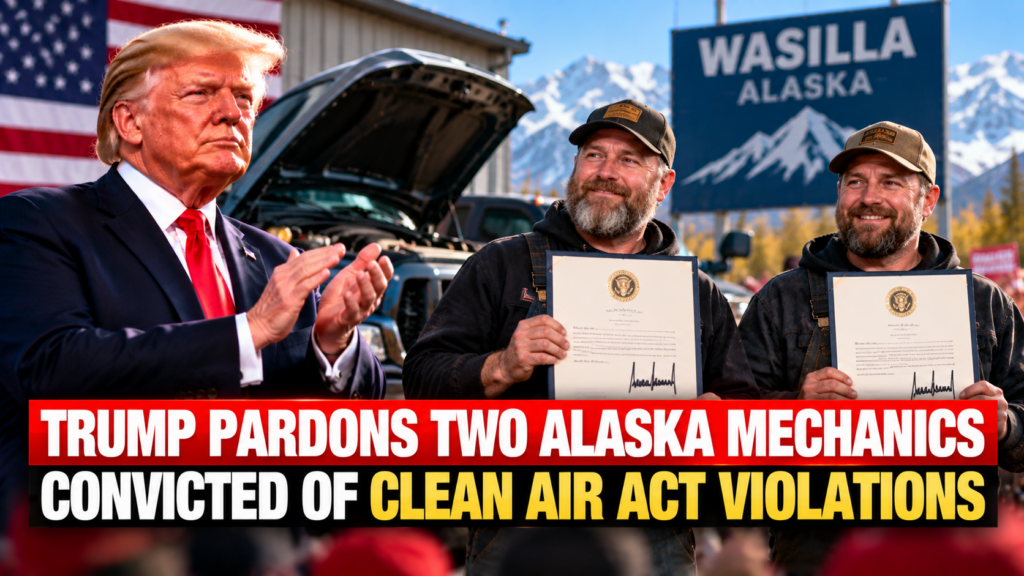
President Donald Trump pardoned two Alaska auto shop owners during a campaign rally in Wasilla on October 13, 2026, after they pleaded guilty to violating the Clean Air Act. The Trump Alaska pardons came as the president criticized the Biden-era Justice Department’s prosecution of the men, arguing that the case unfairly targeted people working on diesel vehicles.
According to a report by CBS News, the men, Zachary Czubak and Patrick Fleming, co-owned Arm Rippin Toys, an Anchorage auto shop specializing in diesel vehicles. Both had pleaded guilty in 2022 to conspiracy to violate the Clean Air Act and received probation, fines, and community service.
What Happened at Trump’s Alaska Rally?
During the rally in Wasilla, Trump invited Czubak and Fleming onto the stage and signed their presidential pardon documents in front of the audience.
Trump described the men as wrongly charged and criticized the previous administration’s handling of the case. He argued that the penalties were excessive for workers who modified vehicle engines.
The pardons were issued during a campaign event intended to support Republican candidates ahead of the November 2026 midterm elections, including Alaska Republican Sen. Dan Sullivan.
The public signing made the pardons a prominent part of the political rally and highlighted Trump’s use of presidential clemency to challenge prosecutions he considers unfair.
Why Were the Two Mechanics Convicted?
The Clean Air Act Case
Czubak and Fleming, along with a third co-owner, Michael Hanzuk, operated Arm Rippin Toys, a business specializing in diesel vehicles.
Federal prosecutors alleged that the business offered customers paid services to remove emissions-control systems and modify vehicle components to prevent diagnostic systems from detecting the changes. Prosecutors said the modifications caused vehicles to emit more pollutants.
All three men pleaded guilty in 2022 to conspiracy to violate the Clean Air Act. They were each sentenced to five years of probation, $66,000 in fines, and community service.
Hanzuk received a pardon in September 2026, before Trump pardoned Czubak and Fleming at the Alaska rally.
Trump’s Argument About the Prosecution
Trump characterized the case as an example of the Biden administration targeting Alaska’s way of life. During the rally, he questioned the severity of the potential prison sentence and framed the case as punishment for people working on vehicle engines.
The mechanics also defended their work publicly. Fleming told the crowd that the charges had severely affected the three business owners and said they wanted to help people who depended on diesel vehicles.
However, the pardons do not change the underlying facts of the case: all three men had pleaded guilty to the federal conspiracy charge.
How the Case Connects to Diesel Emissions Policy
The case reflects a wider debate over federal emissions rules, particularly in cold-weather states such as Alaska.
Supporters of the mechanics have argued that emissions-control systems can malfunction in extremely cold conditions, potentially affecting vehicle use. Sen. Dan Sullivan previously supported a pardon in a similar case involving diesel mechanic Mac Spurlock and called for consideration of Alaska’s climate conditions.
Earlier in 2026, Trump pardoned Spurlock, who had also faced a Clean Air Act case involving the removal of pollution-control equipment.
The Justice Department announced in January 2026 that it would no longer pursue criminal charges under the Clean Air Act based on allegations of tampering with onboard diagnostic devices. The policy change marked a shift in the federal government’s approach to these cases.
During the Biden administration, federal officials had defended emissions enforcement, warning that removing pollution-control systems could substantially increase air pollution from individual vehicles.
Political and Environmental Implications
Presidential Clemency and Federal Enforcement
The Trump Alaska pardons demonstrate how presidential clemency can become part of a broader political argument about federal law enforcement.
Trump has repeatedly used pardons to support people who argue that they were unfairly prosecuted. In this case, the public ceremony allowed him to criticize the previous administration’s approach to environmental enforcement while addressing concerns raised by some Alaskans.
The pardons also highlight the president’s constitutional power to grant clemency for federal offenses. They do not, by themselves, repeal the Clean Air Act or eliminate emissions requirements for other vehicle owners and repair businesses.
Environmental Concerns Remain
The case also raises questions about the balance between vehicle operation in extreme weather and compliance with emissions regulations.
Federal officials under the Biden administration argued that removing emissions-control equipment increases pollution and can threaten public health and the environment. The Trump administration has taken a different approach to several environmental regulations, including policies affecting vehicle emissions and fuel economy.
The broader policy implications will depend on how federal agencies implement their enforcement priorities and whether further regulatory changes are introduced.
What Happens Next?
Czubak and Fleming have received presidential pardons for their federal convictions. Hanzuk had already received a pardon the previous month, completing the clemency process for the three former co-owners in the case.
The development comes amid a broader shift in federal policy toward criminal enforcement of certain emissions-device tampering cases. However, the pardons do not establish a general exemption from emissions laws for diesel mechanics or vehicle owners.
The case illustrates the intersection of presidential clemency, environmental regulation, and election-year politics. Future changes to emissions enforcement will depend on federal policy decisions, while the debate over pollution controls and operating vehicles in extreme climates is likely to continue.
Related Reading
- Appeals Court Pauses Reinstatement of Fired Seattle Federal Prosecutor
- Biden DOJ Officials Warned Garland Memo Looked Like an “Anti-MAGA Task Force”
Trump pardoned Zachary Czubak and Patrick Fleming, co-owners of an Anchorage diesel vehicle repair shop who pleaded guilty to conspiracy to violate the Clean Air Act in 2022.
Federal prosecutors said the mechanics’ business offered services to remove emissions-control systems and modify diagnostic components on vehicles, increasing pollution. Both men pleaded guilty in 2022.