The 2024 presidential election marked a historic moment in American politics, with Donald Trump's successful campaign representing an unprecedented political comeback. After leaving office in 2021, Trump announced his candidacy in November 2022, setting the stage for a campaign that would reshape the Republican Party and ultimately lead to victory in November 2024. Understanding the dynamics of trumps 2024 campaign requires examining the comprehensive policy platform, strategic decisions, and political landscape that defined this electoral cycle.
The Campaign Platform and Core Policy Positions
Donald Trump's 2024 campaign centered on several key policy areas that resonated with his base while attempting to expand his coalition. His proposed policies for a second term reflected both continuity with his first administration and new initiatives designed to address contemporary challenges facing American voters.
Immigration and Border Security
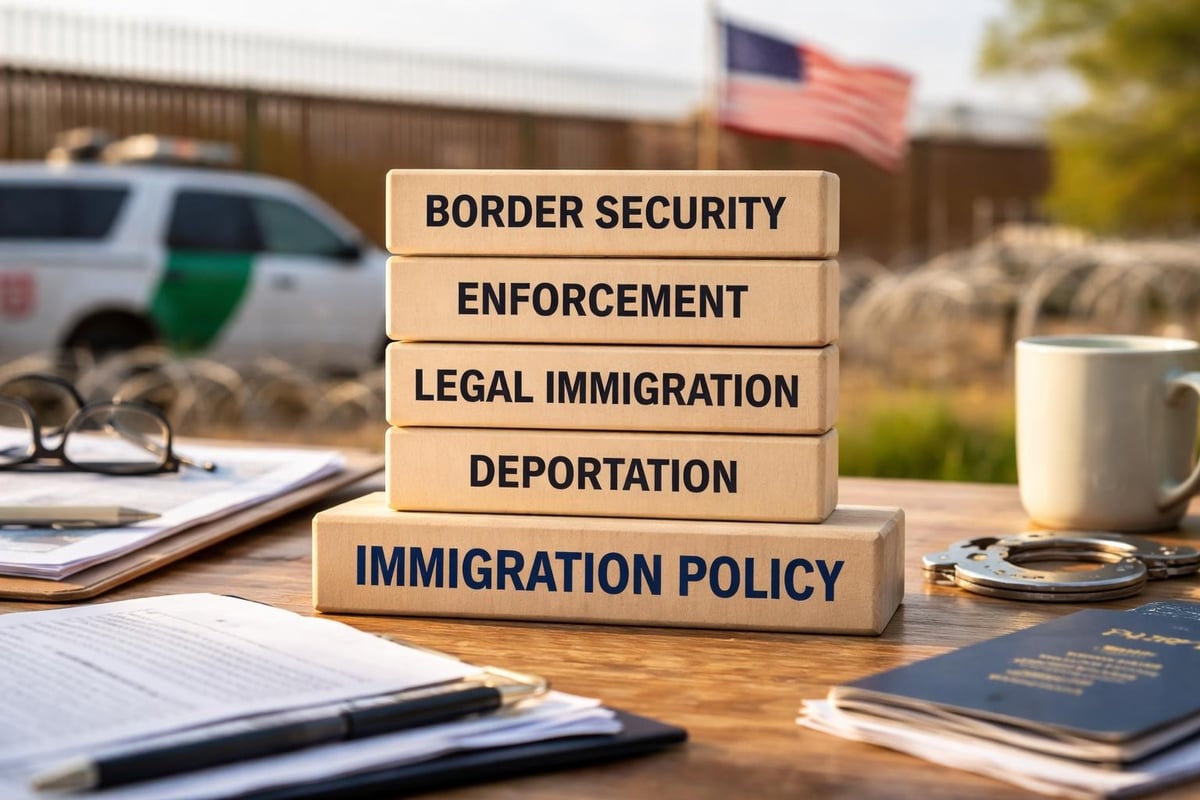
Immigration remained the cornerstone of trumps 2024 platform, with proposals that went beyond his first-term initiatives. The campaign advocated for comprehensive border wall completion, enhanced enforcement mechanisms, and stricter vetting procedures for legal immigration. Trump promised mass deportations of undocumented immigrants and proposed ending birthright citizenship through executive action, positions that generated significant debate throughout the campaign cycle.
Key immigration proposals included:
- Completion of physical barriers along the southern border
- Implementation of enhanced visa screening protocols
- Termination of catch-and-release policies
- Expansion of expedited removal procedures
- Restrictions on asylum eligibility criteria
Economic Policy and Tax Reform
The economic component of trumps 2024 agenda emphasized tax cuts, deregulation, and protectionist trade policies. Economic policy comparisons highlighted significant differences between Trump's proposals and those of his opponent, particularly regarding corporate taxation and middle-class tax relief.
Trump proposed extending and expanding the 2017 Tax Cuts and Jobs Act provisions, reducing the corporate tax rate further, and eliminating taxes on tips and overtime pay. His trade policy maintained the America First approach, threatening tariffs on countries that did not meet specific criteria and promising to bring manufacturing jobs back to domestic soil.
| Economic Priority | Proposed Action | Expected Impact |
|---|---|---|
| Corporate Taxation | Reduce rate to 15% | Increased business investment |
| Individual Taxes | Extend 2017 cuts | Middle-class savings |
| Trade Policy | Universal baseline tariffs | Domestic manufacturing growth |
| Regulatory Reform | Eliminate two regulations per new one | Business expansion |
Education and Cultural Issues
Education policy featured prominently in trumps 2024 messaging, with proposals to eliminate the Department of Education and return control to states and local communities. The campaign advocated for universal school choice, expanding charter schools, and removing what Trump characterized as "radical ideology" from classrooms.
Cultural issues, particularly those related to gender and LGBTQ rights, became significant campaign topics. Trump promised to restrict gender-affirming care for minors, limit transgender participation in sports, and oppose certain LGBTQ-related policies that emerged during the Biden administration.
Campaign Strategy and Organization
The 2024 Trump campaign represented a more disciplined operation compared to previous efforts, combining grassroots enthusiasm with professional political infrastructure. The campaign focused on battleground states, emphasizing voter registration drives and early voting initiatives that proved crucial in November.
Vice Presidential Selection
Trump’s choice of J.D. Vance as his running mate signaled a strategic decision to double down on populist economics and generational change. Vance, a Ohio Senator and author of "Hillbilly Elegy," brought credibility on working-class economic issues and helped the campaign appeal to younger conservatives skeptical of traditional Republican establishment politics.
The Vance selection demonstrated several strategic considerations:
- Geographic balance – Reinforcing support in critical Midwest battleground states
- Generational appeal – Adding a younger voice to broaden coalition
- Policy alignment – Ensuring consistency on trade, immigration, and foreign policy
- Media effectiveness – Deploying an articulate defender across television and digital platforms
- Future succession – Positioning a potential 2028 or 2032 standard-bearer
Rally Strategy and Voter Mobilization
Large-scale rallies remained central to trumps 2024 approach, generating media coverage and energizing supporters. The Madison Square Garden rally exemplified this strategy, drawing massive crowds and dominating news cycles in the campaign's final weeks. These events served multiple purposes: fundraising, voter registration, volunteer recruitment, and message amplification through earned media.
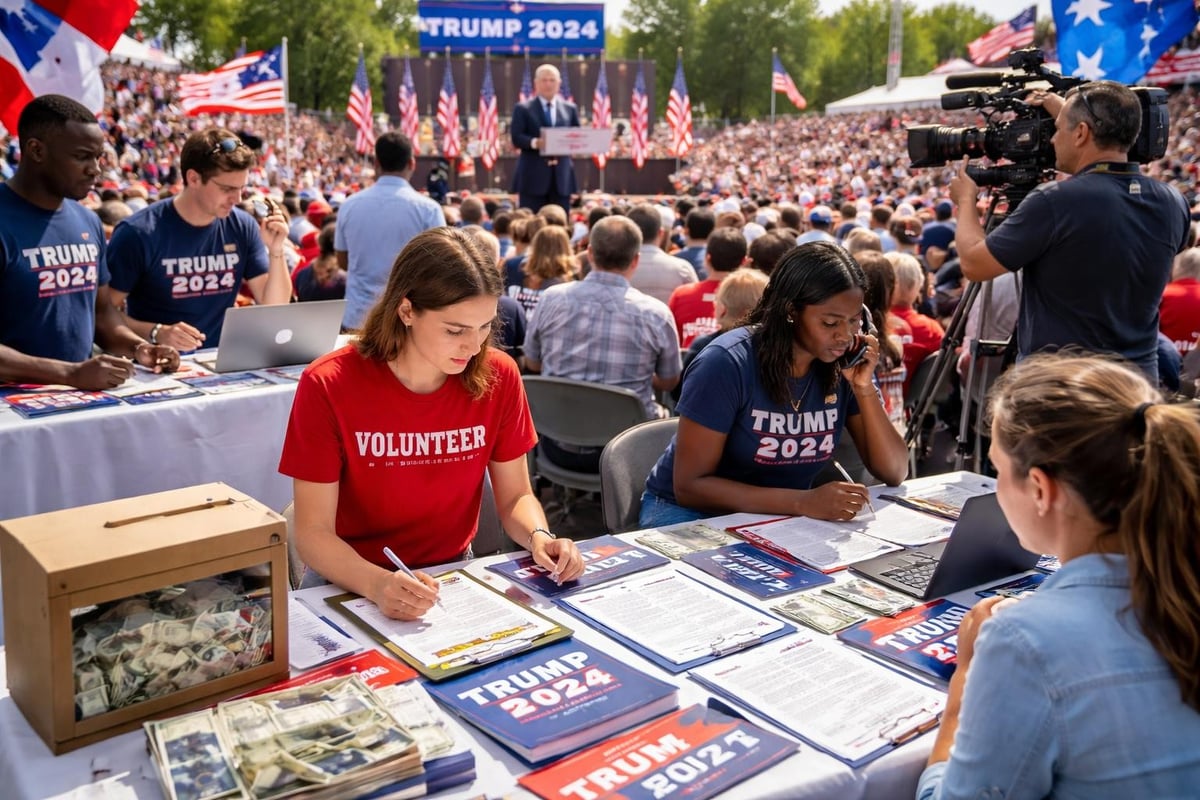
The campaign invested heavily in ground game infrastructure, particularly in states where early voting played a decisive role. This represented a shift from 2020, when Trump had criticized mail-in voting, to 2024, when his operation actively encouraged supporters to vote early and by mail.
Primary Campaign and Republican Nomination
Trump's path to the Republican nomination proved less contested than many anticipated. The primary campaign saw Trump dominate early contests, quickly consolidating support and forcing rivals to withdraw. His performance in smaller contests, including the Puerto Rico Republican primary, demonstrated organizational strength even in less prominent races.
Primary campaign highlights:
- Decisive victory in Iowa caucuses establishing early momentum
- New Hampshire primary win securing frontrunner status
- South Carolina triumph eliminating major opposition
- Super Tuesday sweep effectively clinching nomination
- Convention unity rally bringing party establishment aboard
The abbreviated primary season allowed Trump to pivot to general election messaging earlier than expected, providing additional time to define his opponent and refine campaign themes. Coverage from U.S. Presidential Report provided non-partisan analysis of this primary progression throughout early 2024.
Foreign Policy and National Security
Trump's foreign policy vision for trumps 2024 emphasized reducing overseas commitments while maintaining American strength. The campaign promised to end the Ukraine conflict within 24 hours through negotiations, rebuild relationships with traditional allies, and take a harder line against China on trade and technology issues.
Key International Priorities
The foreign policy platform balanced isolationist impulses with strategic engagement in areas Trump deemed critical to American interests. This approach generated discussion about NATO commitments, Middle East partnerships, and the future of American military presence in various global hotspots.
| Region | Policy Direction | Stated Objective |
|---|---|---|
| Europe | Reduced military presence | Force NATO spending increases |
| Middle East | Selective engagement | Energy independence focus |
| Asia-Pacific | Economic competition | Counter Chinese influence |
| Latin America | Border security emphasis | Immigration reduction |
Domestic Policy Expansion
Plans for regulatory restructuring represented a significant component of trumps 2024 domestic agenda. The campaign promised to revoke numerous Biden-era regulations, particularly those affecting energy production, environmental standards, and labor relations.
Energy and Environmental Policy
Trump proposed unleashing domestic energy production through expanded drilling permissions, pipeline approvals, and reduced environmental review requirements. The campaign promised gasoline prices under two dollars per gallon through increased supply, withdrawal from international climate agreements, and elimination of electric vehicle mandates.
Energy independence became a rallying cry connecting economic policy, foreign policy, and consumer costs into a unified message that resonated across demographic groups concerned about inflation and household budgets.
Healthcare and Social Programs
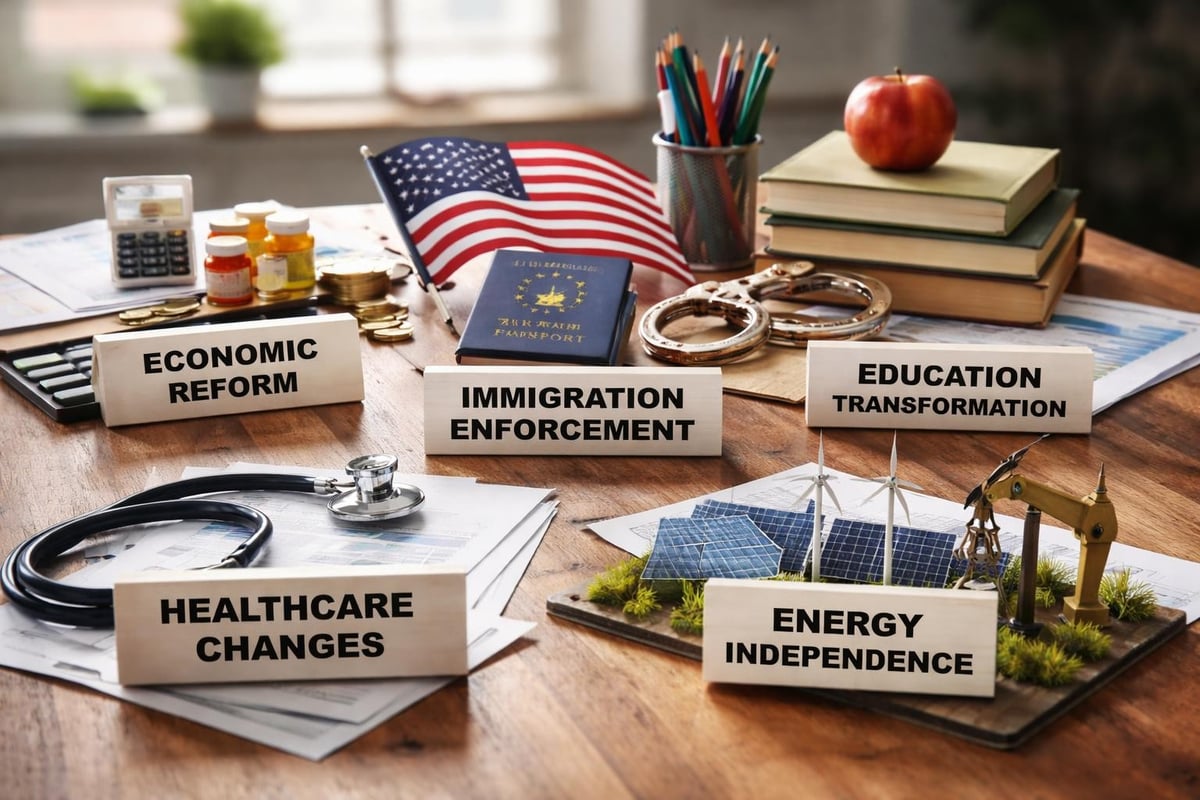
Healthcare policy under trumps 2024 vision involved repealing remaining Affordable Care Act provisions, expanding Health Savings Accounts, and promoting market-based solutions to reduce costs. The campaign avoided specific replacement plans, instead emphasizing regulatory reform and interstate competition to lower premiums.
Social Security and Medicare remained protected in campaign messaging, with Trump promising no cuts to benefits while finding efficiencies in program administration. This position distinguished him from some Republican rivals who had suggested raising retirement ages or means-testing benefits.
Campaign Challenges and Controversies
The trumps 2024 campaign faced unprecedented legal challenges, with multiple indictments and civil cases proceeding during the election cycle. Rather than damaging his standing with core supporters, these legal issues often strengthened Trump's narrative about political persecution and establishment opposition.
Legal proceedings during the campaign:
- Federal January 6th investigation and charges
- Federal classified documents case
- Georgia election interference prosecution
- New York civil fraud trial
- Manhattan criminal trial and conviction
Trump successfully framed these cases as political warfare, fundraising off each development and using courtroom appearances as campaign events. His conviction in the Manhattan case made him the first convicted felon elected president, a historic distinction that surprisingly appeared to have minimal impact on his electoral prospects.
Media Strategy and Communication
Digital media dominated trumps 2024 communication approach, with Truth Social serving as his primary direct-to-supporter platform. The campaign supplemented this with strategic appearances on podcasts, alternative media outlets, and carefully selected mainstream interviews designed to reach specific demographic groups.
The earned media strategy capitalized on Trump's ability to generate headlines, ensuring continuous news coverage without corresponding advertising expenditures. This approach proved particularly effective in a fragmented media environment where traditional television viewership declined while podcast and social media consumption increased.
Coalition Building and Demographic Shifts
Trump's 2024 coalition showed growth among Hispanic voters, particularly Hispanic men, and made inroads with younger voters concerned about economic opportunity. The campaign's focus on practical kitchen-table issues like inflation, housing costs, and job availability resonated beyond his traditional base.
Outreach to minority communities emphasized economic outcomes from his first term, including pre-pandemic unemployment rates and wage growth for lower-income workers. This messaging appeared in targeted advertising and surrogates who could authentically speak to these communities about their priorities.
| Demographic Group | 2020 Support | 2024 Support | Change |
|---|---|---|---|
| Hispanic Men | 36% | 45% | +9% |
| Black Men | 12% | 18% | +6% |
| Young Voters (18-29) | 35% | 42% | +7% |
| White College-Educated | 48% | 51% | +3% |
Analysis from publications tracking presidential election dynamics throughout 2024 documented these demographic shifts as they developed, providing real-time context for campaign strategy adjustments.
Electoral College Strategy
The path to 270 electoral votes required defending states won in 2016 while reclaiming Arizona, Georgia, Pennsylvania, Michigan, and Wisconsin. Trump’s campaign recognized that victory demanded performance in the Rust Belt states that had narrowly rejected him in 2020.
Resource allocation reflected this reality, with advertising spending, candidate time, and ground organization concentrated in these battleground states. The campaign identified specific counties within each state where performance improvements could flip statewide results, micro-targeting messages to address local concerns.
Battleground state priorities:
- Pennsylvania: Energy workers, suburban Philadelphia voters
- Michigan: Auto industry workers, Arab American communities
- Wisconsin: Rural farmers, Milwaukee suburban swing voters
- Arizona: Border security, retirement community residents
- Georgia: Exurban growth areas, rural evangelical voters
- Nevada: Service industry workers, Hispanic business owners
- North Carolina: Research Triangle moderates, rural conservatives
The General Election Campaign
From securing the nomination through Election Day, trumps 2024 general election campaign maintained disciplined messaging around economic performance, border security, and restoration of American strength. The operation successfully navigated a late opponent change when Democrats replaced their presumptive nominee, adapting strategy without losing momentum.
Debates played a limited role compared to previous cycles, with Trump participating selectively and framing his appearances around maximum strategic advantage. When he engaged, the focus remained on contrasting his economic record with current conditions rather than defending controversial statements or policies.
The campaign's closing argument emphasized concrete policy commitments rather than personality-driven appeals. This represented a maturation of political strategy, recognizing that persuadable voters needed substantive reasons to support Trump beyond cultural affinity or opposition to Democrats.
Post-Election Transition Planning
Unlike 2016, when Trump's transition appeared improvised, the 2024 operation prepared extensively for governing. Policy teams developed implementation plans for major initiatives, personnel selections began months before Election Day, and relationships with Congress received careful attention to ensure Day One readiness.
The campaign established working groups for each major policy area, staffed by subject matter experts who could translate campaign promises into executable governmental action. This preparation aimed to maximize the effectiveness of the first 100 days, when presidential power and public attention create optimal conditions for agenda advancement.
Comparing perspectives on economic policy proposals that emerged during the campaign, including those discussed in analysis of competing economic visions, provides context for understanding the choices voters faced and the mandate Trump claimed following his victory.
Understanding the complexity of trumps 2024 campaign requires examining policy substance, strategic execution, and the unique political circumstances that enabled this historic comeback. For comprehensive, non-partisan coverage of presidential campaigns, elections, and governance, U.S. Presidential Report provides the analysis and context citizens need to stay informed about American political leadership.