The geographic origins of American presidents reveal fascinating patterns about political power, regional influence, and the evolution of the United States. Understanding which presidents from states have shaped the nation provides valuable insight into how American democracy has developed across different eras. From the founding generation concentrated in the original colonies to modern leaders emerging from diverse backgrounds, the distribution of presidential birthplaces and home states tells a compelling story about American history and political development.
The Dominance of Virginia in Early Presidential History
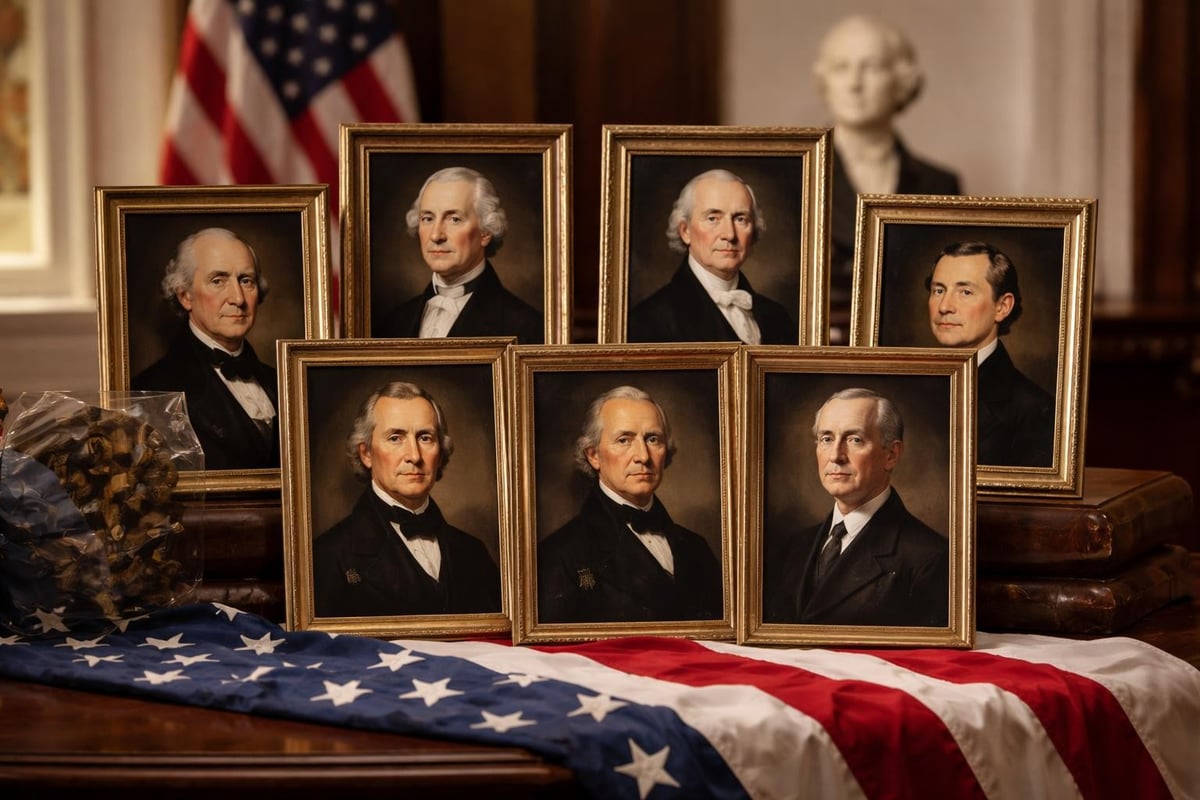
Virginia stands unmatched in its contribution of presidents from states during America's formative years. The Old Dominion produced eight presidents, earning its nickname as the "Mother of Presidents." This extraordinary concentration of presidential leadership reflects Virginia's pivotal role in founding the nation.
The Virginia dynasty includes George Washington, Thomas Jefferson, James Madison, James Monroe, William Henry Harrison, John Tyler, Zachary Taylor, and Woodrow Wilson. Four of the first five presidents called Virginia home, establishing early precedents for executive leadership. This dominance wasn't coincidental-Virginia's wealth, education system, and political culture created ideal conditions for developing national leaders.
Why Virginia Led Presidential Production
Several factors explain Virginia's extraordinary presidential output:
- Educational infrastructure: The College of William & Mary educated future presidents and political leaders
- Economic influence: Plantation wealth provided resources for political careers
- Strategic location: Proximity to the nation's capital facilitated political involvement
- Political tradition: A culture emphasizing public service and civic leadership
The state's influence extended beyond mere numbers. Virginia presidents shaped fundamental American institutions, from the Constitution to westward expansion policies. According to detailed census analysis of presidential birth states, Virginia's concentration of early presidents reflected the state's disproportionate influence during the republic's founding decades.
Ohio's Rise as a Presidential Powerhouse
Ohio emerged as a dominant source of presidents from states during the post-Civil War era, producing eight presidents and earning recognition as a modern presidential cradle. Seven presidents were born in Ohio: Ulysses S. Grant, Rutherford B. Hayes, James Garfield, Benjamin Harrison, William McKinley, William Howard Taft, and Warren G. Harding. William Henry Harrison, though born in Virginia, represented Ohio politically.
The Ohio Presidential Pattern
The Buckeye State's presidential prominence peaked between 1868 and 1923, when six consecutive Republican presidents claimed Ohio connections. This remarkable sequence reflected Ohio's strategic importance in American politics during the industrial age.
| President | Years in Office | Ohio Connection |
|---|---|---|
| Ulysses S. Grant | 1869-1877 | Born in Point Pleasant |
| Rutherford B. Hayes | 1877-1881 | Born in Delaware |
| James Garfield | 1881 | Born in Moreland Hills |
| Benjamin Harrison | 1889-1893 | Born in North Bend |
| William McKinley | 1897-1901 | Born in Niles |
| William Howard Taft | 1909-1913 | Born in Cincinnati |
| Warren G. Harding | 1921-1923 | Born in Blooming Grove |
Ohio's transformation from frontier territory to industrial powerhouse positioned it perfectly for producing presidential candidates. The state's diverse economy, growing population, and swing-state status made Ohio politicians particularly attractive to national parties seeking electable candidates.
New York's Presidential Contributions
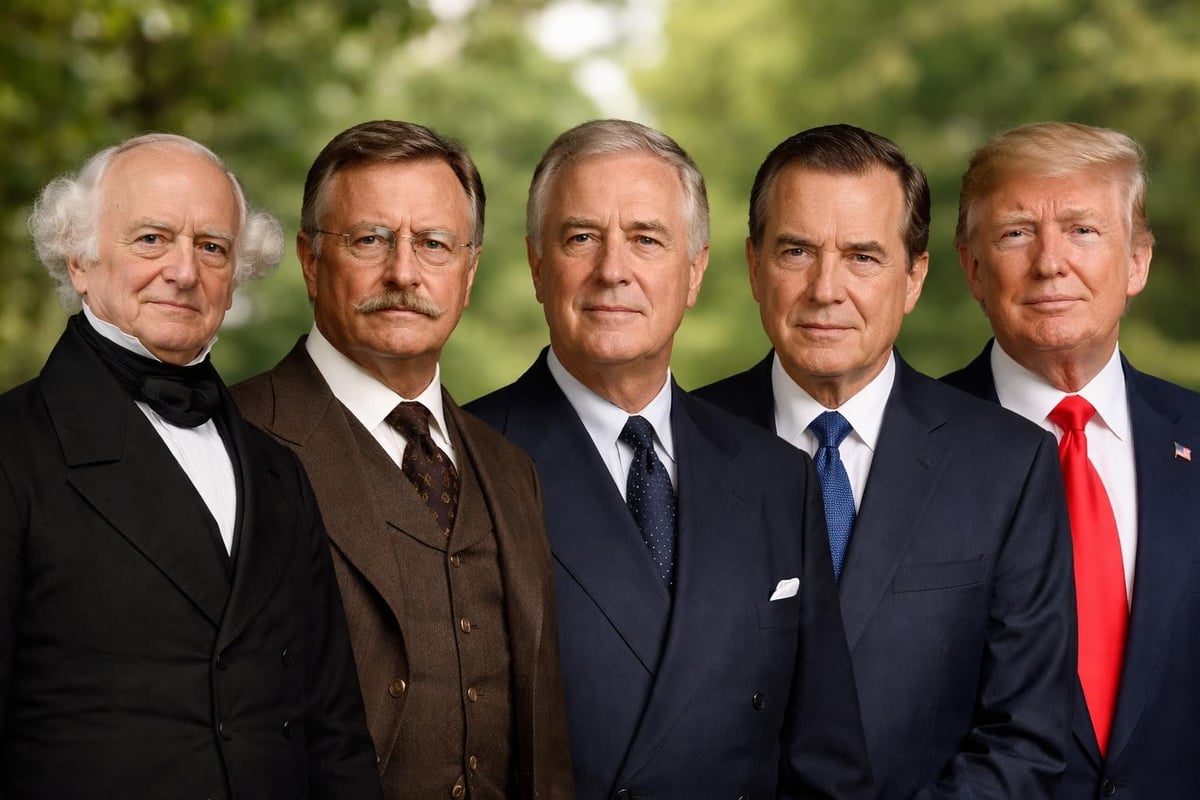
New York holds a distinguished position among presidents from states, having produced five chief executives who navigated the nation through critical periods. Martin Van Buren, Millard Fillmore, Theodore Roosevelt, Franklin D. Roosevelt, and Donald Trump all claim New York as their birthplace, though their political careers followed different trajectories.
The Empire State's presidential output reflects its status as an economic and cultural powerhouse. New York's combination of urban diversity, financial influence, and political complexity created leaders who could navigate national challenges. The Roosevelts, both distant cousins, exemplified how New York's elite culture produced transformational presidents during crisis periods.
Geographic Diversity Among New York Presidents
New York's presidents came from various regions within the state, from the Hudson Valley aristocracy of the Roosevelts to the urban environment that shaped Trump's business and political career. This geographic diversity within a single state demonstrates how different environments can produce distinct leadership styles even from the same presidential source state.
Massachusetts and the Adams Dynasty
Massachusetts contributed four presidents from states, with particular significance in establishing presidential dynasties. John Adams and John Quincy Adams created America's first father-son presidential pair, while John F. Kennedy and George H.W. Bush added to the Bay State's presidential legacy.
The Adams family exemplified how Massachusetts' intellectual tradition and revolutionary heritage translated into national leadership. Both Adams presidents served during the nation's formative period, shaping diplomatic precedents and constitutional interpretations that endure today. Their Massachusetts roots connected them to Puritan traditions of learning and civic responsibility.
Kennedy's presidency represented a different Massachusetts contribution-one rooted in immigrant experience and modern political organization. His election demonstrated how the state's evolving demographic composition could produce new types of presidential leadership while maintaining connections to New England's political traditions.
Regional Patterns in Presidential Origins
Examining presidents from states reveals clear regional patterns that shifted over time. The statistical distribution of presidential birthplaces shows how power centers migrated westward with the nation's expansion.
Eastern Concentration in Early Periods
The original thirteen colonies dominated early presidential production:
- Virginia led with eight presidents
- Massachusetts contributed four presidents
- New York produced five presidents
- North Carolina yielded two presidents (Andrew Jackson, James K. Polk)
- South Carolina produced one president (Andrew Jackson, by some accounts)
This eastern concentration reflected population distribution, educational institutions, and established political networks. As the nation expanded, however, western states began producing competitive candidates who could challenge eastern dominance.
Midwest Emergence
The Midwest became increasingly important in producing presidents from states during the nineteenth and early twentieth centuries. Besides Ohio's dominance, other Midwestern states contributed leaders who understood agricultural interests and industrial development. This regional shift paralleled demographic changes and economic transformation.
Birthplace Versus Home State Distinction
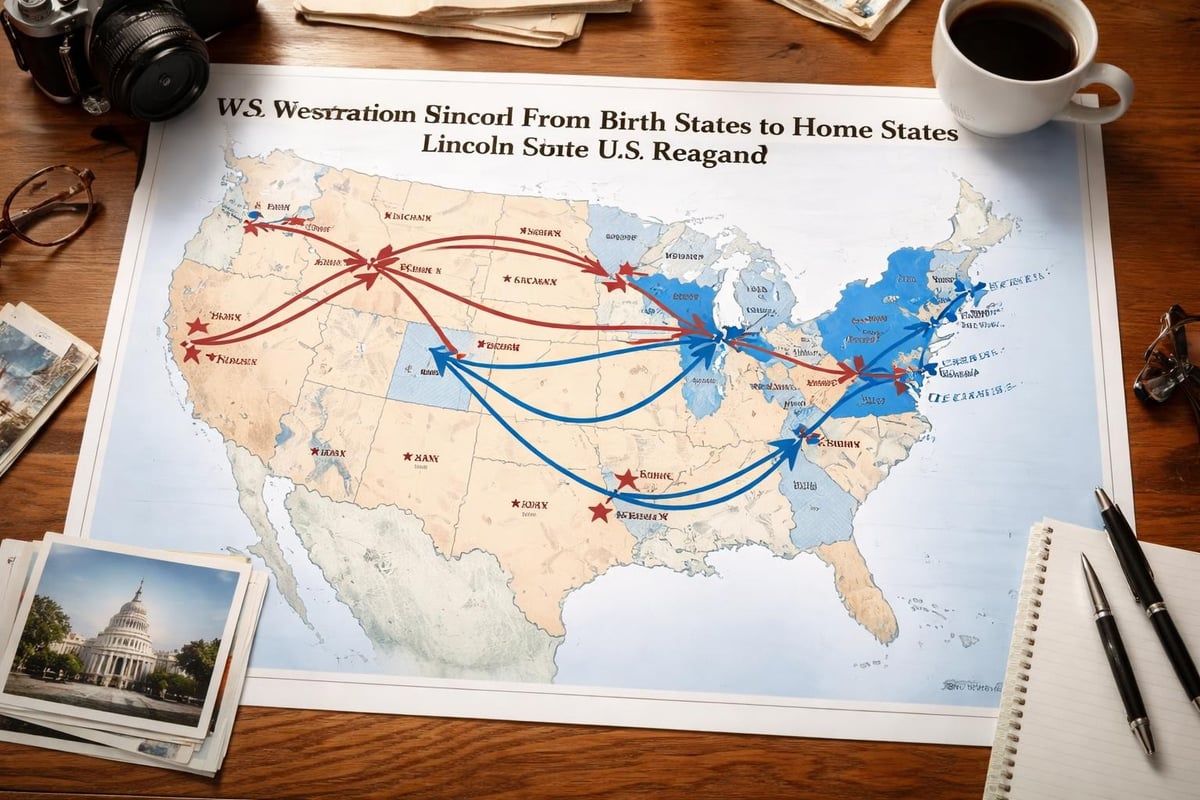
An important distinction exists between presidents from states by birth and those claiming states as their political home. Presidential home states often differ from birthplaces, reflecting westward migration patterns and political opportunity.
Several presidents represent this distinction clearly:
| President | Birth State | Home State |
|---|---|---|
| Abraham Lincoln | Kentucky | Illinois |
| Ronald Reagan | Illinois | California |
| Dwight Eisenhower | Texas | Kansas |
| Richard Nixon | California | California/New York |
Lincoln's journey from Kentucky to Illinois exemplified the frontier experience that shaped nineteenth-century America. His Illinois identification proved politically crucial, positioning him as a western candidate acceptable to eastern Republicans. Reagan's California connection similarly reflected twentieth-century migration patterns and the rise of Sun Belt political influence.
This birthplace-residence distinction matters because it reveals how presidents from states built political bases in regions offering greater opportunities than their birthplaces. Understanding both birthplace and home state provides fuller context for presidential political development.
States Without Presidential Representation
Despite having all fifty states, significant gaps exist in presidents from states. Currently, twenty-nine states have never produced a president by birth. This absence reveals persistent patterns in American political geography and opportunity structures.
Never-Represented Regions
Western states, despite growing populations and economic importance, remain underrepresented in presidential origins. States like Washington, Oregon, and Nevada have never produced presidents, though they've gained political influence through other means. Similarly, many Midwestern and Southern states lack presidential representatives despite substantial populations.
The Mountain West presents particular underrepresentation. Idaho, Montana, Wyoming, Utah, Nevada, and Arizona have never produced presidents from states, though their combined land area exceeds that of all presidential birth states combined. This geographic disconnect between land area and presidential production highlights how population density and historical settlement patterns influence political leadership development.
Modern Trends in Presidential Origins
Recent decades show evolving patterns among presidents from states. The concentration of presidential births has dispersed somewhat, with California, Arkansas, Connecticut, and Georgia producing modern presidents. This diversification reflects demographic shifts and changing regional political dynamics.
California's emergence as a presidential source state (Richard Nixon, though he also lived in New York) marked the Sun Belt's rising influence. Arkansas (Bill Clinton) demonstrated that smaller Southern states could produce competitive candidates in the modern primary system. Georgia's Jimmy Carter similarly showed how changing Southern politics created opportunities for new regional leaders.
Impact of Modern Campaign Systems
The primary system and modern campaign finance have altered how presidents from states emerge. Candidates no longer need established political dynasties or regional power bases to launch successful campaigns. Digital fundraising, social media presence, and national name recognition can compensate for lack of traditional state party support.
This democratization has broadened the pool of potential presidential candidates, though certain states maintain advantages through early primary positioning or swing-state status. Iowa and New Hampshire, despite never producing presidents from states themselves, wield disproportionate influence through their early nominating contests.
Educational and Economic Factors
The correlation between presidents from states and educational institutions reveals interesting patterns. States housing prestigious universities often produced multiple presidents, suggesting educational infrastructure's importance in developing political leaders.
Virginia's College of William & Mary, Massachusetts' Harvard University, and New York's Columbia University all educated multiple presidents. These institutions provided not just education but crucial political networks and intellectual development opportunities. The comprehensive listing of presidential birthplaces shows geographic clustering around major educational centers.
Economic Development and Presidential Production
Economic opportunity within states also influenced presidential production. States experiencing rapid economic growth during specific periods often produced presidential candidates who understood emerging industries and economic challenges. Ohio's industrial boom coincided with its presidential dominance, while Virginia's agricultural wealth supported its early presidential dynasty.
Future Implications for Presidential Geography
Current demographic trends suggest evolving patterns for presidents from states. Sunbelt growth, urban concentration, and changing immigration patterns will likely influence which states produce future presidents. Texas, Florida, and Arizona may emerge as presidential sources given their population growth and increasing political importance.
The increasing diversity of presidential backgrounds reflects broader American demographic changes. While early presidents from states came almost exclusively from wealthy, white, Protestant backgrounds in eastern states, modern candidates represent more varied origins. This diversification suggests future presidents may emerge from previously underrepresented regions and demographic groups.
Technology's Geographic Impact
Digital communication may reduce geographic barriers to presidential campaigns. Candidates from any state can now build national followings through social media and online fundraising. This technological shift might finally break the dominance of traditional presidential source states, allowing leaders from currently underrepresented regions to compete effectively.
However, swing-state residence still provides electoral advantages, as candidates understand key battleground dynamics firsthand. The tension between technology's democratizing potential and strategic electoral considerations will shape future patterns of presidents from states.
Historical Context and Regional Identity
Understanding presidents from states requires appreciating how regional identity shaped presidential leadership styles and policy priorities. Southern presidents brought perspectives on states' rights and regional reconciliation. Western presidents emphasized expansion and resource development. Northeastern presidents often prioritized commerce and international engagement.
These regional influences weren't deterministic, but they provided frameworks through which presidents understood national challenges. Lincoln's Illinois experience shaped his free-soil ideology differently than a Virginia upbringing would have. Reagan's California perspective emphasized different values than his Illinois birthplace might have instilled.
For readers interested in exploring how presidential policy on domestic issues reflects these geographic origins, the connection between state backgrounds and policy priorities remains relevant. Regional economic interests, cultural values, and historical experiences continue influencing how presidents approach national governance.
Comparative State Analysis
Comparing how different states produced presidents from states reveals varied paths to political prominence. Some states developed political machines that systematically promoted candidates to national prominence. Others produced presidents almost accidentally through individual circumstances rather than systemic political culture.
New York's Tammany Hall and similar political organizations created structured advancement paths for ambitious politicians. Ohio's Republican Party organization similarly provided institutional support for presidential aspirants. These organizational advantages complemented individual ambition and talent, creating favorable conditions for producing national leaders.
Small State Contributions
Vermont (Calvin Coolidge and Chester Arthur) demonstrates that small states can produce presidents from states despite limited populations. Both presidents rose through New England political networks before gaining national prominence. Their Vermont origins provided authenticity and connection to rural American values that resonated with broader electorates.
New Hampshire (Franklin Pierce) similarly shows how smaller states contributed presidents during specific historical moments. Pierce's dark-horse candidacy succeeded partly because his New Hampshire background positioned him as acceptable to both Northern and Southern Democrats during the sectional crisis.
The Role of Vice Presidential Selection
Many presidents from states initially gained national prominence through vice presidential nominations. This path to the presidency highlights how running mates often represent geographic balance rather than pure merit considerations. Past presidents in the news frequently discuss how vice presidential selection influenced their eventual presidential prospects.
Theodore Roosevelt's New York credentials balanced William McKinley's Ohio base. Lyndon Johnson's Texas background complemented John Kennedy's Massachusetts roots. These geographic calculations in ticket construction created opportunities for future presidents from states that might not otherwise have produced chief executives during those periods.
Legacy and Name Recognition
States that produced presidents from states often leverage this legacy for tourism and civic pride. Presidential libraries, birthplace museums, and historical markers become economic assets and educational resources. These institutions preserve presidential heritage while generating economic activity and civic engagement.
The presidential library system documents how states celebrate their presidential connections, creating lasting institutions that honor their contributions to national leadership. These libraries serve both scholarly research and public education, ensuring presidents from states remain connected to their geographic origins even after leaving office.
The geographic distribution of American presidents reflects evolving patterns of political power, economic development, and demographic change across U.S. history. While Virginia and Ohio dominated different eras, future presidential origins will likely reflect contemporary population shifts and technological changes. For comprehensive coverage of presidential elections, policy decisions, and historical analysis, U.S. Presidential Report provides non-partisan insights into how current and past presidents continue shaping American governance and political development.