The relationship between tax policy and inflation has become a central debate in American politics, particularly as policymakers grapple with economic challenges in 2026. Understanding republican tax policies and inflation requires examining both theoretical frameworks and empirical evidence from recent presidential administrations. Republican approaches to taxation typically emphasize supply-side economics, corporate tax reductions, and income tax cuts designed to stimulate growth. However, the interaction between these policies and inflation rates remains complex and often contested among economists and political observers.
The Supply-Side Theory Behind Republican Tax Approaches
Republican tax philosophy rests heavily on supply-side economics, which argues that reducing tax burdens on businesses and high earners encourages investment, production, and job creation. Proponents claim these policies expand economic capacity and can actually reduce inflationary pressure by increasing the supply of goods and services.
How Supply-Side Economics Claims to Combat Inflation
The theoretical mechanism works through several channels. Lower corporate tax rates theoretically free up capital for business expansion, equipment purchases, and hiring. When businesses invest in productive capacity, they can produce more goods at lower unit costs. This increased supply, according to the theory, should moderate price increases or even push prices downward in competitive markets.
Individual income tax cuts function similarly by increasing disposable income, which supporters argue incentivizes work effort and entrepreneurship. The Federal Reserve Bank of Minneapolis analyzed supply-side tax cuts and their potential to reduce inflation, finding that while theoretically sound, the empirical evidence for significant anti-inflationary effects remains limited.
Key supply-side assumptions include:
- Tax cuts increase labor force participation
- Business investment rises substantially when after-tax returns improve
- Productivity gains outpace demand-side stimulus effects
- Economic growth expands the tax base despite lower rates

The 2017 Tax Cuts and Jobs Act: A Case Study
The Tax Cuts and Jobs Act (TCJA) enacted under President Trump represents the most significant Republican tax overhaul in recent decades. Signed in December 2017 and implemented in 2018, the legislation reduced the corporate tax rate from 35% to 21% and lowered individual income tax rates across most brackets.
Economic Outcomes and Inflation Metrics
The TCJA's implementation coincided with relatively low inflation rates in 2018 and 2019, when consumer price increases averaged around 2% annually. However, attributing this price stability solely to tax policy oversimplifies a complex economic environment that included Federal Reserve policy, global commodity prices, and trade dynamics.
Research from the Brookings Institution on the Tax Cuts and Jobs Act documented several economic outcomes:
| Economic Indicator | Pre-TCJA (2017) | Post-TCJA (2018-2019 Avg) | Change |
|---|---|---|---|
| GDP Growth Rate | 2.3% | 2.7% | +0.4% |
| Corporate Investment Growth | 4.7% | 6.1% | +1.4% |
| Wage Growth | 2.4% | 3.0% | +0.6% |
| Inflation (CPI) | 2.1% | 2.0% | -0.1% |
The modest inflation decline during this period occurred alongside moderate economic expansion, though economists debate whether the tax cuts drove these outcomes or whether other factors played larger roles. Most analyses suggest the TCJA provided a short-term economic stimulus but did not fundamentally transform growth trajectories or price dynamics.
Demand-Side Stimulus Effects of Tax Cuts
While Republican tax policies emphasize supply-side benefits, tax cuts also function as demand-side fiscal stimulus by putting more money in consumers' and businesses' hands. This demand effect can potentially increase inflationary pressure, particularly when the economy operates near full capacity.
The Fiscal Stimulus-Inflation Connection
When tax cuts increase after-tax income without corresponding spending reductions, they expand the federal deficit and inject additional purchasing power into the economy. If this additional demand exceeds the economy's ability to produce goods and services, prices rise.
The pandemic era demonstrated this dynamic clearly. Fiscal stimulus measures implemented in 2020 and 2021, including tax rebates and enhanced unemployment benefits, contributed to subsequent inflation. A Peterson Institute analysis of pandemic-era fiscal policy estimated that fiscal stimulus accounted for approximately 2.5 percentage points of inflation in 2021-2022.
Republican tax policies and inflation interact through multiple channels:
- Deficit expansion increases aggregate demand when government borrowing rises
- Consumer spending grows as households receive tax cuts and rebates
- Business investment may increase prices for capital goods and labor
- Monetary policy responses as the Federal Reserve adjusts interest rates to counter fiscal stimulus
Research quantifying these effects shows significant variation based on economic conditions. When unemployment is high and capacity utilization is low, tax cuts generate less inflationary pressure. Conversely, tax cuts implemented during economic expansions tend to produce more immediate price effects.

Historical Evidence from Republican Administrations
Examining republican tax policies and inflation across multiple presidencies reveals diverse outcomes influenced by broader economic contexts. Each administration faced unique circumstances that shaped how tax policy affected price levels.
Reagan Era Tax Cuts and Disinflation
President Reagan's 1981 tax cuts, the Economic Recovery Tax Act, reduced marginal income tax rates substantially during a period of high inflation. Inflation fell dramatically from 10.4% in 1981 to 3.2% by 1983. However, this disinflation resulted primarily from Federal Reserve Chairman Paul Volcker's tight monetary policy rather than tax policy itself.
The Reagan tax cuts initially expanded deficits significantly, requiring subsequent tax increases in 1982 and 1984 to address fiscal imbalances. The supply-side growth promised by tax cut advocates materialized partially, but not sufficiently to offset revenue losses or independently tame inflation.
George W. Bush Tax Cuts
The 2001 and 2003 Bush tax cuts occurred during different economic phases. The 2001 cuts aimed to address a recession, while the 2003 cuts sought to accelerate recovery. Inflation remained relatively stable during the 2000s, averaging around 2.5% annually, though the housing bubble and subsequent financial crisis dominated economic outcomes.
Trump-Era TCJA and Beyond
As discussed earlier, the TCJA coincided with low inflation, though causation remains debatable. The subsequent pandemic stimulus under both Trump and Biden administrations, combined with supply chain disruptions, produced the highest inflation rates in four decades by 2022.
For comprehensive coverage of these presidential economic policies, U.S. Presidential Report tracks domestic policy developments across administrations.
Current Debates: Extending the 2017 Tax Cuts
Many provisions of the TCJA are scheduled to expire at the end of 2025, creating significant policy debates in 2026 about extension or modification. Republican policymakers generally advocate for making the tax cuts permanent, while concerns about inflation and deficits complicate these discussions.
Inflationary Risks of Extension
Extending expiring TCJA provisions would reduce federal revenue by approximately $3.5 trillion over ten years according to Congressional Budget Office estimates. This substantial deficit increase could stimulate aggregate demand and potentially contribute to inflationary pressure, particularly if implemented without offsetting spending reductions.
A Heritage Foundation analysis advocating for extending the 2017 tax cuts argues that economic growth from extension would partially offset revenue losses and that spending restraint, rather than tax increases, should address deficit concerns. This perspective emphasizes that tax certainty itself provides economic benefits by reducing uncertainty for business planning.
Counter-arguments focus on fiscal sustainability. Critics note that previous supply-side predictions of self-financing tax cuts have consistently overestimated revenue feedback effects. With federal debt already elevated and interest costs rising, additional deficit-financed tax cuts could necessitate larger future tax increases or spending cuts.
| Extension Scenario | 10-Year Deficit Impact | Estimated Inflation Effect | GDP Growth Impact |
|---|---|---|---|
| Full Extension | +$3.5 trillion | +0.3 to 0.5 percentage points | +0.2% annually |
| Partial Extension (Middle Class Only) | +$2.0 trillion | +0.1 to 0.3 percentage points | +0.1% annually |
| No Extension | Baseline | Baseline | Baseline |
The Role of Monetary Policy in Mediating Tax Policy Effects
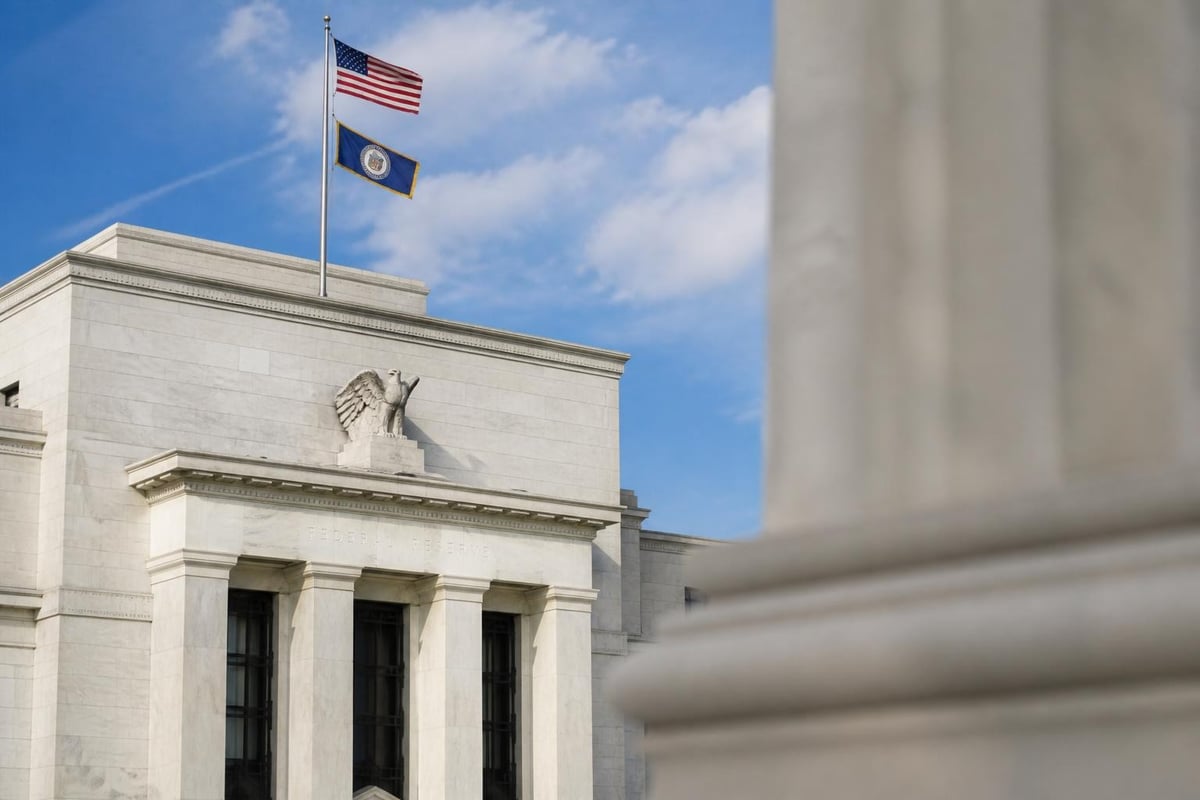
Understanding republican tax policies and inflation requires recognizing that the Federal Reserve's monetary policy responses largely determine ultimate price outcomes. Tax cuts do not operate in isolation but interact with interest rate decisions and money supply management.
Federal Reserve Independence and Coordination
When fiscal policy becomes more expansionary through tax cuts, the Federal Reserve may tighten monetary policy by raising interest rates to prevent overheating. This monetary-fiscal interaction means that tax cuts' inflationary effects depend heavily on central bank responses.
Historical examples demonstrate this dynamic:
- Reagan era: Tight Fed policy dominated, producing disinflation despite tax cuts
- 2000s: Accommodative Fed policy kept rates low despite Bush tax cuts
- 2018-2019: Gradual Fed tightening occurred as TCJA was implemented
The Federal Reserve's dual mandate to promote maximum employment and price stability means it adjusts policy tools based on aggregate economic conditions, including fiscal policy stance. Tax cuts that significantly stimulate demand typically trigger monetary policy responses that moderate inflation but may also limit growth benefits.
Comparing Tax Policy Approaches to Inflation Management
Republican and Democratic approaches to addressing inflation through tax policy differ substantially in emphasis and mechanism. These philosophical differences reflect broader economic worldviews about government's role and market efficiency.
Republican Focus on Supply-Side Expansion
Republican approaches prioritize expanding productive capacity through incentives for investment and work. The logic holds that inflation fundamentally results from too little supply rather than too much demand, so policies should focus on removing barriers to production.
This perspective supports:
- Corporate tax reductions to encourage capital investment
- Lower marginal income tax rates to increase labor supply
- Regulatory reduction to lower business costs
- Capital gains tax cuts to reward investment
For analysis of how these policies play out in presidential politics, readers can explore coverage of economy and tax policy debates shaping recent elections.
Democratic Emphasis on Demand Management and Distribution
Democratic approaches typically emphasize managing aggregate demand and ensuring tax policy doesn't exacerbate inequality. This perspective views inflation as sometimes resulting from excessive demand and favors progressive taxation that can moderate consumption among high earners while supporting lower-income households.
Recent economic research has refined understanding of both approaches. An NBER working paper quantifying fiscal stimulus impacts found that pandemic-era stimulus contributed measurably to inflation, though supply chain disruptions played larger roles. This research suggests that both demand-side stimulus (including tax cuts) and supply constraints matter for inflation outcomes.
Empirical Challenges in Measuring Tax Policy Effects
Isolating the specific inflation impact of republican tax policies and inflation proves methodologically challenging because numerous factors influence price levels simultaneously. Economic research employs various techniques to estimate these effects, each with limitations.
Econometric Difficulties
Establishing causation requires accounting for:
- Concurrent monetary policy changes that may offset or amplify fiscal effects
- Global economic conditions affecting commodity prices and trade
- Supply shocks like pandemic disruptions or energy price spikes
- Expectation effects as businesses and consumers anticipate policy changes
- State and local policy interactions that modify federal tax impacts
Most rigorous studies use counterfactual modeling to estimate what would have occurred absent tax policy changes. These models incorporate economic relationships observed historically but require assumptions about structural stability.
Time lags complicate analysis further. Tax policy effects on business investment may take years to fully materialize, while consumer spending responses occur more quickly. Disentangling short-term demand effects from longer-term supply effects requires extended observation periods.
Political Implications for 2026 and Beyond
As the 2026 midterm elections approach and presidential candidates position themselves for 2028, republican tax policies and inflation will remain central campaign issues. Voters' experiences with price increases since 2021 have elevated economic concerns, making tax policy proposals particularly salient.
Campaign Rhetoric Versus Economic Reality
Political debates about tax policy and inflation often simplify complex economic relationships. Campaign claims that tax cuts will immediately reduce inflation or that they always pay for themselves through growth exceed empirical support. Similarly, arguments that any tax reduction necessarily fuels inflation ignore supply-side effects and economic slack.
Voters evaluating these claims should consider:
- The economic context when tax changes are proposed (recession, expansion, supply constraints)
- Whether spending adjustments accompany tax changes
- The distribution of tax cuts across income groups and sectors
- Time horizons for claimed benefits to materialize
For ongoing coverage of how presidential candidates address these issues, U.S. Presidential Report provides comprehensive political analysis across the political spectrum.
International Comparisons and Lessons
Examining how other advanced economies manage tax policy and inflation provides valuable context for evaluating republican tax policies and inflation in the American context. Different countries have implemented various approaches with instructive outcomes.
European Experiences with Value-Added Taxes
Many European nations rely heavily on value-added taxes (VAT) rather than corporate or income taxes. These consumption taxes generate substantial revenue with potentially different inflation dynamics than income-based systems. When VAT rates increase, immediate price effects occur, but steady-state inflation may not change if monetary policy adjusts appropriately.
Supply-Side Reforms in Other Contexts
Ireland's corporate tax strategy, maintaining a 12.5% rate to attract multinational investment, demonstrates supply-side principles in practice. The policy succeeded in generating substantial foreign direct investment and economic growth, though questions about tax fairness and base erosion persist.
Key lessons for American policy include recognizing that tax policy operates within broader institutional contexts. Ireland's small, open economy differs fundamentally from America's large, relatively closed economy, limiting direct applicability of its approach.
The Path Forward: Evidence-Based Tax Policy
Developing effective approaches to republican tax policies and inflation requires grounding proposals in empirical evidence rather than ideological assumptions. Both supply-side and demand-side effects matter, and optimal policy balances multiple objectives beyond inflation alone.
Principles for Evaluating Tax Proposals
When assessing tax policy proposals in 2026 and beyond, several principles can guide evaluation:
Fiscal sustainability matters. Tax cuts that substantially increase deficits may generate short-term economic benefits but create long-term fiscal challenges requiring eventual correction.
Economic context determines effects. The same tax policy produces different outcomes during recession versus expansion, or when supply chains function normally versus when disrupted.
Distribution affects aggregate outcomes. Tax cuts concentrated among high earners generate different spending and investment patterns than those benefiting middle-income households.
Complementary policies enhance effectiveness. Tax changes combined with regulatory reform, infrastructure investment, or education policy may produce superior outcomes than tax policy alone.
For those interested in deeper dives into presidential economic policies, U.S. Presidential Report’s coverage offers non-partisan analysis of how different administrations approach these complex challenges.
Synthesis: Multiple Channels, Context-Dependent Outcomes
The relationship between republican tax policies and inflation operates through multiple, sometimes conflicting channels. Supply-side effects that expand productive capacity work in opposite directions from demand-side stimulus that increases purchasing power. Which effect dominates depends on economic conditions, policy design, and accompanying monetary policy responses.
Evidence from recent decades suggests that tax cuts alone rarely produce dramatic inflation reductions, nor do they inevitably trigger runaway price increases. Instead, their effects depend on:
- Whether the economy operates below or at full capacity
- How monetary authorities respond to fiscal expansion
- The specific design of tax changes and affected sectors
- Concurrent supply-side developments including technology and trade
This nuanced reality challenges simplified political narratives but provides a more useful framework for evaluating proposals. As policymakers debate extending the 2017 tax cuts or implementing new changes, recognizing these complexities will improve decision-making quality and public understanding of trade-offs involved.
Understanding republican tax policies and inflation requires examining both theoretical frameworks and real-world evidence across multiple administrations and economic contexts. The relationship proves more complex than partisan talking points suggest, with outcomes depending on economic conditions, policy design, and Federal Reserve responses. For ongoing non-partisan coverage of how presidential administrations navigate these economic challenges, U.S. Presidential Report provides comprehensive analysis of domestic policy, economic developments, and political debates shaping America's fiscal future.