The history of American leadership contains uncomfortable truths that modern scholars continue to examine and document. Throughout the nation's 250-year history, numerous chief executives held views that reflected the racial prejudices prevalent during their eras, while some actively promoted discriminatory policies that impacted generations of Americans. Understanding this historical context requires examining specific actions, documented statements, and policy decisions that shaped the lives of millions. The examination of racist presidents provides critical insight into how personal beliefs influenced governance and national direction.
Early Presidential Racial Attitudes and Policies
The founding era of American governance established patterns of racial discrimination that would persist for centuries. Many early presidents owned enslaved people and advocated for policies that perpetuated racial hierarchies. Thomas Jefferson, despite authoring declarations about equality, enslaved hundreds of people throughout his lifetime and expressed beliefs in racial inferiority through his writings.
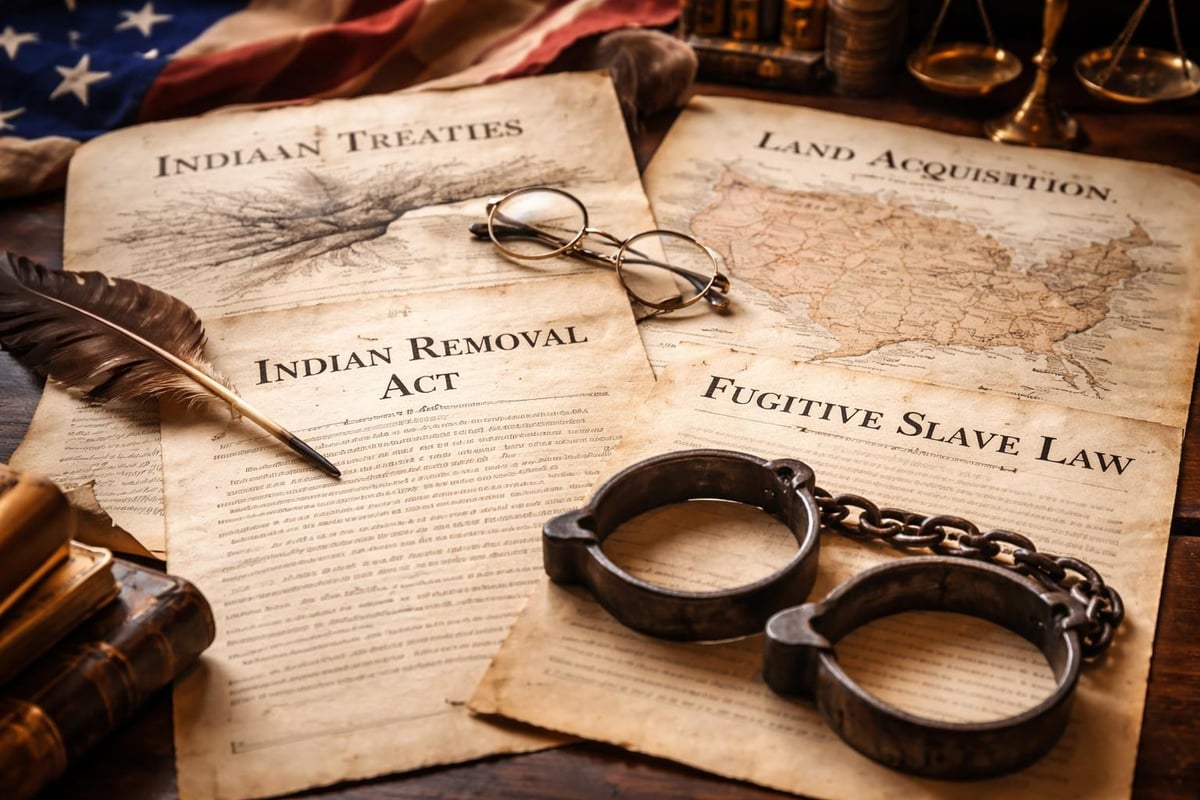
Andrew Jackson's presidency marked one of the most devastating periods for Native American populations. His championing of the Indian Removal Act of 1830 forced thousands of Indigenous people from their ancestral lands, resulting in the Trail of Tears. This policy reflected deeply held racist beliefs about Indigenous peoples' right to their own territories.
The Pre-Civil War Executive Branch
Presidents preceding the Civil War faced mounting tensions over slavery, with several taking positions that reinforced racist systems:
- James Buchanan refused to challenge slavery's expansion and actively opposed abolition efforts
- Franklin Pierce signed the Kansas-Nebraska Act, allowing slavery's potential spread
- Millard Fillmore enforced the Fugitive Slave Act with particular vigor
- John Tyler annexed Texas partially to extend slavery's reach
These administrative decisions weren't merely political compromises-they represented fundamental beliefs about racial hierarchy that shaped policy implementation at the federal level.
Reconstruction and Post-Civil War Leadership
The period following the Civil War presented opportunities for racial progress, yet many presidents failed to capitalize on this momentum. Andrew Johnson, who assumed office after Lincoln's assassination, actively obstructed Reconstruction efforts and opposed citizenship rights for formerly enslaved people. His pardoning of Confederate leaders and resistance to the Fourteenth Amendment demonstrated clear racial bias.
Rutherford B. Hayes ended Reconstruction prematurely through the Compromise of 1877, withdrawing federal troops from Southern states. This decision abandoned Black Americans to discriminatory Jim Crow laws that would dominate the next century. The withdrawal represented a conscious choice to prioritize political expediency over civil rights protection.
| President | Time Period | Key Discriminatory Action | Long-term Impact |
|---|---|---|---|
| Andrew Johnson | 1865-1869 | Obstructed Reconstruction | Weakened civil rights enforcement |
| Rutherford B. Hayes | 1877-1881 | Ended federal Reconstruction | Enabled Jim Crow era |
| Grover Cleveland | 1885-1889, 1893-1897 | Refused civil rights enforcement | Normalized segregation |
| Benjamin Harrison | 1889-1893 | Failed to support voting rights | Disenfranchisement continued |
Progressive Era Contradictions
The early twentieth century brought presidents who championed reform in some areas while maintaining deeply racist views in others. Theodore Roosevelt's complex legacy includes inviting Booker T. Washington to dine at the White House while simultaneously expressing beliefs in racial hierarchies that influenced his conservation and imperialism policies. His foreign policy reflected assumptions about Anglo-Saxon superiority.
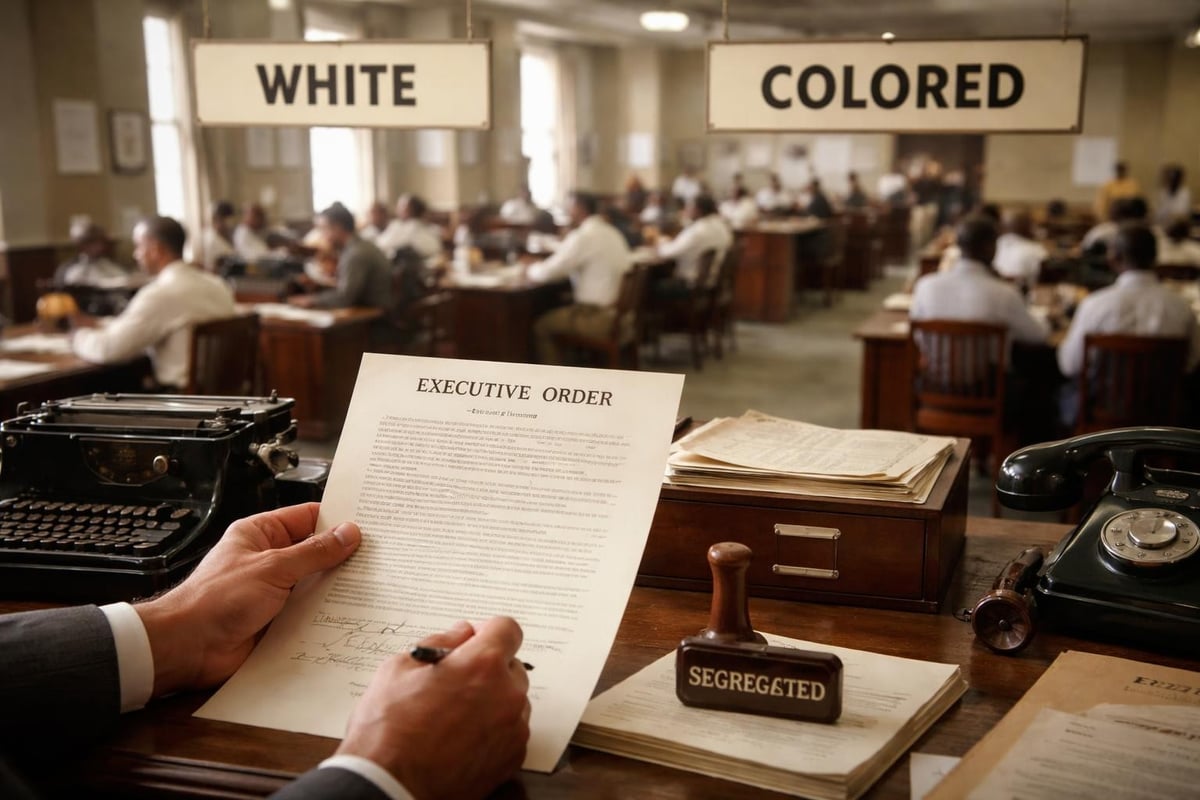
Woodrow Wilson's presidency marked a particularly regressive period for racial progress. Despite his progressive domestic agenda, Wilson re-segregated federal agencies that had been integrated since Reconstruction. His administration’s systematic segregationist practices reversed decades of incremental progress. Wilson also screened "Birth of a Nation," a film glorifying the Ku Klux Klan, at the White House.
Documented Statements and Actions
Wilson's racial views weren't hidden-they shaped his governance philosophy. He removed Black supervisors who managed white employees and instituted segregated bathrooms and cafeterias throughout federal buildings. These weren't passive oversights but active policy implementations.
Calvin Coolidge opposed anti-lynching legislation and expressed views about racial differences that influenced his reluctance to address racial violence. Herbert Hoover's "lily-white" Republican strategy deliberately excluded Black voters from party participation in Southern states.
Mid-Century Presidential Records
Franklin D. Roosevelt's New Deal programs, while transformative for many Americans, often excluded or discriminated against Black citizens. Social Security initially excluded domestic and agricultural workers-occupations predominantly held by Black Americans. The Federal Housing Administration's redlining practices, established under FDR, created residential segregation patterns that persist today.
Harry Truman presents a complicated case study. While he desegregated the military through executive order, he used racial slurs in private correspondence and initially held views consistent with his Missouri upbringing. His evolution on civil rights demonstrates how presidential positions could shift, though personal prejudices often remained.
Dwight Eisenhower reluctantly enforced school desegregation, privately expressing disagreement with the Brown v. Board of Education decision. He delayed federal intervention in civil rights crises and questioned the wisdom of integration efforts.
The long history of racism in the U.S. presidency reveals patterns that extended well beyond early American history into the modern era.
Modern Era Controversies
The late twentieth and early twenty-first centuries saw continued debates about presidential racial attitudes. Richard Nixon's "Southern Strategy" deliberately exploited racial tensions for political gain. His administration's war on drugs disproportionately targeted Black communities, as later revealed by aide John Ehrlichman's admissions.
Ronald Reagan launched his 1980 campaign near Philadelphia, Mississippi, where civil rights workers were murdered, speaking about "states' rights"-terminology closely associated with segregationist resistance. His administration cut civil rights enforcement budgets and opposed key civil rights legislation.
Documented Modern Presidential Statements
Racist quotes from modern U.S. presidents demonstrate that explicit bias didn't end with previous generations. These documented statements reflect ongoing challenges in executive leadership.
The history of presidential condescension and indifference toward Black Americans continued into recent decades, affecting policy priorities and resource allocation for communities of color.
Key modern policy impacts:
- Criminal justice policies that disproportionately affected minorities
- Housing discrimination through federal lending programs
- Educational funding disparities reinforced by federal policy
- Economic inequality perpetuated by tax and regulatory frameworks
Understanding U.S. presidential policy on economic inequality requires examining how racial bias influenced economic decision-making at the federal level.
Contemporary Presidential Actions and Rhetoric
Recent administrations have faced scrutiny over racial issues. The birther conspiracy theory questioning Barack Obama's citizenship represented a racialized attack on the first Black president's legitimacy. This conspiracy gained prominence through political figures who later held executive office.
Donald Trump's presidency sparked intense debate about racial attitudes in leadership. His characterization of Mexican immigrants, comments about "shithole countries," and response to Charlottesville raised questions about executive racial bias. The racist gestures throughout presidential history continued into the twenty-first century according to numerous documented instances.
His administration's policies on immigration included family separation at the border and travel bans targeting majority-Muslim countries. Critics argued these policies reflected racial and religious bias, while supporters maintained they addressed security concerns.
The Trump administration also issued executive orders targeting critical race theory in federal training and educational institutions, framing anti-racism education as divisive.
| Administration | Controversial Policy/Statement | Year | Context |
|---|---|---|---|
| Nixon | Southern Strategy launch | 1968 | Campaign approach |
| Reagan | States' rights speech | 1980 | Campaign event |
| G.H.W. Bush | Willie Horton ad | 1988 | Campaign advertising |
| Trump | "Both sides" Charlottesville | 2017 | Response to violence |

Impact on Policy and Governance
Presidential racial attitudes directly influenced legislative priorities, judicial appointments, and executive enforcement decisions. When racist presidents occupied the White House, civil rights enforcement weakened, discriminatory policies received executive support, and progress toward equality stalled or reversed.
The Supreme Court appointments made by presidents with racial bias shaped constitutional interpretation for generations. Justices appointed by segregationist presidents often ruled against civil rights protections.
Measurement of Presidential Impact
Scholars assess presidential racial attitudes through multiple evidence sources:
- Documented statements in letters, speeches, and recorded conversations
- Policy decisions affecting communities of color disproportionately
- Judicial appointments and their subsequent voting records
- Executive order content and implementation priorities
- Budget allocations for civil rights enforcement agencies
- Pardons and commutations revealing priorities and sympathies
The examination of domestic policy decisions reveals how racial attitudes shaped everything from urban development to healthcare access.
Historical Context and Evaluation Standards
Evaluating racist presidents requires balancing historical context against universal moral principles. Some argue that judging historical figures by contemporary standards creates unfair assessments. Others maintain that moral clarity about racial equality existed during every era, making discrimination always indefensible.
Presidents like Lincoln evolved on racial issues, moving from colonization support to endorsing limited Black suffrage. This evolution demonstrates that progressive change was possible even during periods of widespread prejudice. The question becomes whether presidents led toward justice or reinforced existing hierarchies.
Evaluation framework considerations:
- Did the president's views reflect or exceed their era's dominant prejudices?
- Were their policies more or less discriminatory than available alternatives?
- Did they use executive power to advance or obstruct racial justice?
- How did their actions impact subsequent civil rights progress?
The complexity of presidential legacies means that leaders who advanced progress in some areas simultaneously perpetuated harm in others. Presidential news coverage today increasingly examines these contradictions rather than presenting simplified narratives.
Institutional and Systemic Dimensions
Individual presidential racism operated within broader institutional structures that perpetuated discrimination. The executive branch employed thousands who implemented policies, created regulations, and enforced laws. When racist presidents set the tone from the top, these institutions amplified discriminatory impacts across society.
Federal agencies under racist presidential leadership shaped outcomes in housing, education, employment, and criminal justice. The Federal Housing Administration's redlining maps, created under presidential authority, determined which neighborhoods received investment and which faced disinvestment. These decisions created wealth disparities that persist eight decades later.
Cabinet appointments reflected presidential priorities and values. Secretaries who shared their president's racial biases implemented discriminatory policies throughout their departments. Attorney Generals who opposed civil rights enforcement weakened protections for vulnerable communities.
The intersection of foreign policy and racial attitudes influenced how presidents approached international relations, particularly with nations led by people of color.
Public Memory and Historical Reckoning
How Americans remember racist presidents affects contemporary political discourse. Monuments, currency, and place names honor leaders whose racial views and policies caused immense suffering. Recent decades have seen increased debate about these commemorations and what they communicate about national values.
Some argue that removing honors represents erasing history, while others maintain that celebration differs from documentation. Museums and educational institutions increasingly present fuller accounts of presidential legacies, including their roles in perpetuating racial oppression.
The documentation of racist presidents serves multiple purposes: acknowledging historical truth, understanding policy origins, and learning from past failures. This examination helps citizens evaluate current leadership and demand accountability from public officials.
Presidential libraries and historians now more thoroughly address the racial dimensions of presidential legacies. The National Archives and presidential foundations have expanded exhibits covering previously minimized aspects of presidential records, including racist policies and statements.
Public education about racist presidents creates informed citizenship capable of recognizing contemporary parallels and demanding higher standards from current leadership. Understanding how past presidents used executive power to harm communities guides vigilance about present-day governance.
The historical record of racist presidents reveals uncomfortable truths about American leadership that cannot be ignored or minimized. These documented patterns of bias, discriminatory policies, and harmful rhetoric shaped the nation's trajectory and created inequalities that persist today. For comprehensive, non-partisan coverage of presidential history and current developments, U.S. Presidential Report provides the balanced analysis needed to understand both past and present executive leadership. Stay informed about how presidential decisions continue shaping American society across all communities.