The deployment of National Guard troops to America's borders has become a recurring feature of presidential policy across multiple administrations, sparking debates about federal authority, border security effectiveness, and the proper role of military forces in domestic operations. Understanding how the national guard at the border explained requires examining the legal frameworks, presidential decisions, operational realities, and political implications that shape these deployments. As border security remains a priority for presidential administrations in 2026, the Guard's role continues evolving in response to changing immigration patterns, security threats, and policy objectives that define each president's approach to border management.
Presidential Authority and Legal Framework
The president's ability to deploy National Guard troops to the border stems from dual command structures unique to the Guard. Unlike active-duty military forces restricted by the Posse Comitatus Act, National Guard units can operate under state authority through Title 32 of the U.S. Code, allowing them to perform law enforcement support functions.
When presidents order border deployments, they typically activate Guard units under Title 32 status, meaning troops remain under their state governor's command while receiving federal funding. This arrangement provides legal flexibility unavailable to regular military forces.
State Versus Federal Control
The command structure determines what activities Guard members can perform at the border:
- Title 32 Status: Troops remain under governor command with federal funding
- State Active Duty: Governors deploy using state funds for state missions
- Title 10 Status: Federal control, subject to Posse Comitatus restrictions
- Emergency Declarations: Can modify funding and deployment authorities
Presidential border policies frequently leverage Title 32 deployments because they balance federal interests with state command authority. This structure has enabled multiple administrations to position Guard troops in support roles without triggering legal restrictions on military involvement in civilian law enforcement.
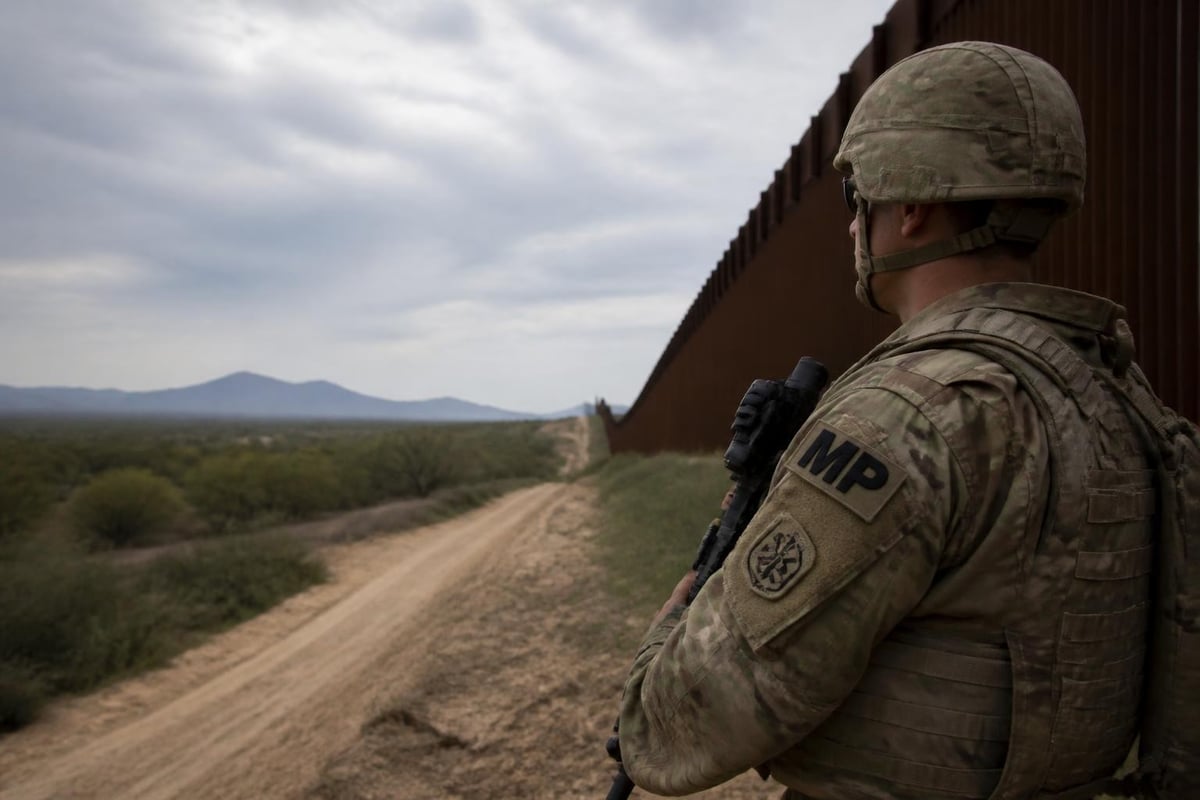
The political dynamics become complex when state governors disagree with presidential border policies. Some governors enthusiastically deploy their state's Guard units, while others resist federal requests, creating patchwork responses to presidential initiatives. These tensions illustrate the constitutional balance between federal immigration authority and state sovereignty over National Guard forces.
Historical Context of Guard Border Deployments
Presidential decisions to deploy National Guard troops to borders stretch back decades, with each administration citing different priorities and threats. President George W. Bush launched Operation Jump Start in 2006, deploying 6,000 Guard members to support Border Patrol operations along the southern border.
President Barack Obama continued this precedent with smaller deployments focused on technology and intelligence support. His administration positioned roughly 1,200 Guard members in border states, emphasizing surveillance rather than direct interdiction activities.
The 2018 Trump Deployment
President Donald Trump significantly expanded Guard presence at the border in 2018, with deployments reaching approximately 5,200 troops to address what his administration characterized as a border crisis. The Trump administration emphasized visibility and deterrence, positioning Guard members in support capacities including vehicle maintenance, surveillance, and administrative assistance.
The extension of Guard border missions through 2022 demonstrated continuity across administrations despite different policy emphases. Presidential transitions haven't eliminated Guard border presence, though mission scope and troop numbers fluctuate based on executive priorities.
| President | Deployment Year | Peak Troop Numbers | Primary Mission Focus |
|---|---|---|---|
| Bush | 2006 | 6,000 | Infrastructure and surveillance |
| Obama | 2010 | 1,200 | Technology and intelligence |
| Trump | 2018 | 5,200 | Deterrence and support operations |
| Biden | 2021-2026 | Varies | Processing and humanitarian support |
Recent presidential approaches reflect evolving border challenges. Immigration surges, humanitarian crises, and security concerns drive deployment decisions that shape how the national guard at the border explained becomes relevant to current policy debates covered by U.S. Presidential Report.
Operational Roles and Limitations
National Guard troops at the border perform support functions distinct from Border Patrol agents' law enforcement duties. Understanding these limitations clarifies misconceptions about Guard capabilities and activities in border regions.
Guard members typically handle:
- Surveillance operations using cameras and monitoring equipment
- Vehicle maintenance for Border Patrol fleets
- Administrative support including data entry and logistics
- Infrastructure construction such as fencing and road improvements
- Aviation support providing helicopter transportation
- Medical assistance during humanitarian situations
These support roles free Border Patrol agents to focus on enforcement activities. The Army describes this incremental approach as essential for maximizing Border Patrol effectiveness without violating restrictions on military law enforcement.
What Guard Troops Cannot Do
Legal and policy restrictions prevent Guard members from direct law enforcement:
- Making arrests or detaining migrants
- Conducting searches or seizures
- Directly interdicting border crossings
- Interrogating suspects
- Using force except in self-defense
Presidential policies must navigate these constraints when designing Guard missions. The national guard at the border explained includes understanding why troops operate in support capacities rather than replacing civilian law enforcement agencies with constitutional authority over immigration enforcement.
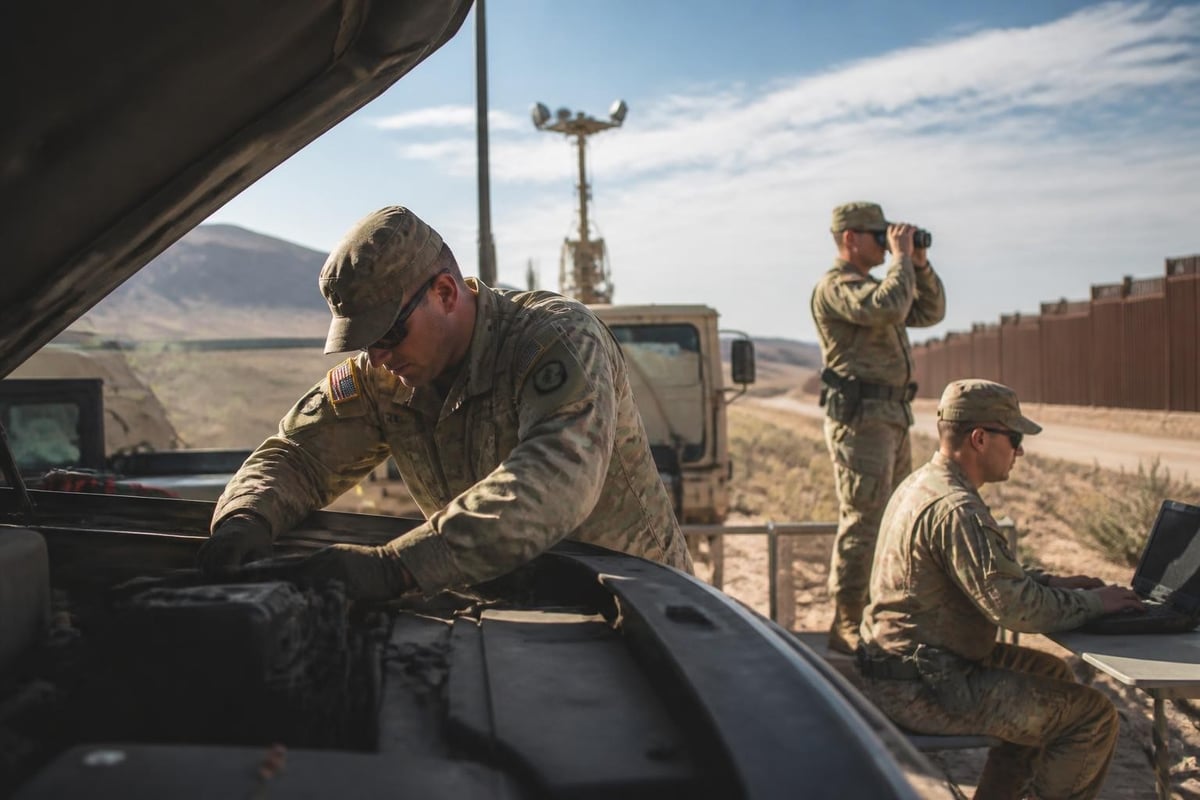
Training requirements vary by mission assignment. Guard members receive specialized instruction before deployment, covering legal authorities, rules of engagement, cultural sensitivity, and specific technical skills needed for their assignments. Units like the North Dakota National Guard’s 957th Engineer Company spend months preparing for year-long deployments that demand both military skills and understanding of border operations.
Costs and Resource Allocation
Presidential border deployments carry significant financial implications that affect both federal budgets and state resources. The federal government typically funds Guard border missions through Department of Defense or Department of Homeland Security appropriations, though funding mechanisms vary by activation authority.
Title 32 deployments receive federal funding covering:
- Personnel costs including pay and benefits
- Transportation to and from deployment locations
- Equipment and operational expenses
- Training requirements
- Living accommodations
Annual costs for sustained Guard border presence reach hundreds of millions of dollars. These expenses compete with other defense priorities and state Guard needs, creating budget tensions that presidential administrations must address when planning deployments.
Impact on State Guard Readiness
Extended border missions affect state National Guard capabilities for other responsibilities:
- Reduced availability for state emergencies
- Equipment wear from sustained operations
- Training time diverted from combat readiness
- Family separations affecting retention
- Delayed maintenance on non-deployed equipment
State governors weigh these factors when responding to presidential deployment requests. Some states maintain ongoing border commitments while others rotate units to distribute burden across multiple states, approaches that reflect differing state priorities and National Guard capacity.
Political Dynamics and Public Perception
Border security ranks among the most politically divisive issues in American governance, making National Guard deployments inherently controversial regardless of which president orders them. Public perception varies dramatically based on partisan affiliation, geographic location, and individual views on immigration policy.
Supporters of Guard border deployments emphasize:
- Enhanced border security and deterrence
- Support for overwhelmed Border Patrol agents
- Visible federal response to border challenges
- Flexibility of Guard forces for changing needs
- Dual benefits of training and mission accomplishment
Critics raise concerns including:
- Militarization of immigration enforcement
- Inefficient use of defense resources
- Political theater rather than effective policy
- Strain on Guard families and readiness
- Cost-effectiveness compared to alternatives
Presidential communication strategies around Guard deployments significantly influence public support. Administrations frame these missions differently based on their broader immigration narratives, with some emphasizing security threats while others highlight humanitarian support capabilities.
| Perspective | Key Arguments | Primary Concerns |
|---|---|---|
| Security-Focused | Deterrence, enforcement support, rapid response | Illegal crossings, drug trafficking, terrorism |
| Humanitarian-Focused | Processing assistance, medical care, infrastructure | Asylum seekers, family separations, human rights |
| Cost-Conscious | Budget impact, efficiency, alternative solutions | Resource allocation, Guard readiness, opportunity costs |
| Federalism-Focused | State-federal relations, command authority, constitutional balance | Governor autonomy, federal overreach, legal frameworks |
The intersection of presidential politics and border policy ensures that how the national guard at the border explained becomes part of larger debates about executive authority, immigration reform, and federal-state relationships that presidential news coverage regularly examines.
International Dimensions and Diplomatic Implications
Guard border deployments don't occur in isolation from international relations. Mexico's response to U.S. border policies, including deployment of 10,000 Mexican National Guard troops to its northern border, demonstrates how presidential border decisions trigger reactions from neighboring countries.
Diplomatic considerations include:
- Bilateral cooperation on immigration and security
- Trade relationships affected by border tensions
- Humanitarian concerns raised by international organizations
- Regional stability in Central America
- Asylum processing protocols and international law
Presidential administrations balance domestic political pressures with international diplomatic relationships when designing Guard missions. Visible military presence at borders can complicate negotiations on immigration reform, trade agreements, and regional cooperation initiatives that require trust between nations.
Evolving Mission Scope in 2026
Current Guard border operations reflect lessons learned from two decades of deployments. Presidential policies in 2026 increasingly emphasize technology integration, with Guard members operating sophisticated surveillance systems, drones, and data analysis platforms that complement traditional support functions.
The expansion of Guard responsibilities beyond border security, including civil unrest response capabilities, affects availability for border missions. Presidential administrations must balance competing demands on National Guard forces across multiple mission areas including natural disasters, pandemic response, civil disturbances, and border operations.
Technology and Infrastructure Focus
Modern Guard border missions prioritize:
- Advanced surveillance system operation
- Data analysis and intelligence fusion
- Cybersecurity for border infrastructure
- Drone operation and maintenance
- Communication network support
These technical specialties align Guard capabilities with 21st-century border challenges while maintaining support role restrictions. Presidential policies increasingly view Guard troops as force multipliers who enhance Border Patrol technological capabilities rather than simply providing additional personnel for traditional tasks.
Training and Professional Development
Guard members gain valuable experience through border deployments that enhance both military and civilian career prospects. Specialized training in surveillance technology, logistics, maintenance, and administrative systems provides skills transferable to post-service employment.
Professional development aspects include:
- Technical certification programs
- Leadership experience in operational environments
- Cross-training with federal law enforcement
- Cultural competency development
- Crisis management skills
Units returning from border missions often report improved readiness for other Guard responsibilities. The operational tempo, though less intense than combat deployments, maintains proficiency and provides realistic training environments that benefit overall Guard capabilities.
However, lengthy or frequent border deployments create retention challenges when civilian employment, family obligations, and educational plans suffer. Presidential policies must consider sustainability of Guard commitments to avoid degrading the volunteer force that provides both state and federal capabilities.
State-by-State Participation Patterns
Not all states participate equally in Guard border missions. Geographic proximity makes Texas, California, Arizona, and New Mexico primary contributors, but presidential policies often request support from states nationwide to distribute burden and bring specialized capabilities.
Factors influencing state participation:
- Governor political alignment with presidential policies
- State National Guard size and capabilities
- Budget implications for state missions
- Public opinion within the state
- Existing state border security commitments
Some governors enthusiastically commit state resources to federal border priorities while others resist or limit participation. These dynamics illustrate the complexity of how the national guard at the border explained must account for federalism principles that give governors substantial authority over their state forces.
Impact on Border Communities
Local communities near Guard deployment sites experience various effects from sustained military presence. Economic impacts include increased demand for housing, food services, and commercial activity that benefits some businesses while straining local infrastructure.
Community relationships between Guard members and border residents generally remain positive, particularly when units engage in community service activities during off-duty time. However, the militarized appearance of border regions can affect tourism, cross-border commerce, and community identity in ways that concern local leaders regardless of their positions on immigration policy.
Presidential policies that consider local community impacts alongside security objectives tend to generate stronger local support and cooperation. Engagement between Guard leadership, local officials, and community organizations helps minimize friction and maximize mission effectiveness.
Understanding how the national guard at the border explained requires examining legal frameworks, presidential decision-making, operational realities, and political dynamics that shape these deployments across multiple administrations. The Guard's unique dual-status capability makes it a flexible tool for presidential border policies while creating complex federal-state dynamics. For comprehensive, non-partisan coverage of how presidential decisions affect National Guard border missions and other critical policy areas, U.S. Presidential Report provides the analysis and context you need to stay informed about executive actions shaping American governance.