The political landscape of the United States has undergone significant transformation over the past two decades, shaped by the distinct leadership styles and policy priorities of the nation's most recent presidents. Understanding these leaders provides essential context for current political debates, policy directions, and the challenges facing American democracy in 2026. From Barack Obama's historic presidency through Joe Biden's single term to Donald Trump's return to office, each administration has left an indelible mark on domestic policy, international relations, and the broader trajectory of American governance.
Defining the Modern Presidential Era
When examining the most recent US presidents, political analysts typically focus on leaders who have served since the turn of the 21st century. This period encompasses profound shifts in technology, global economics, and social movements that have fundamentally reshaped the presidency itself.
The modern presidential era reflects several key characteristics that distinguish it from previous periods. Digital communication has transformed how presidents connect with citizens, while polarization has intensified partisan divisions. Economic challenges, including the 2008 financial crisis and pandemic-related disruptions, have tested presidential leadership in unprecedented ways.
Measuring Presidential Impact
Evaluating presidential effectiveness requires examining multiple dimensions of leadership:
- Legislative accomplishments and policy implementation
- Economic performance during their tenure
- Foreign policy outcomes and international standing
- Crisis management capabilities
- Public approval and political coalition building
- Long-term institutional impacts on governance
These metrics provide frameworks for understanding how recent presidents have navigated the complexities of executive power.

Barack Obama: The First African American President
Barack Obama's presidency (2009-2017) represented a watershed moment in American history. Taking office during the worst economic crisis since the Great Depression, Obama faced immediate challenges that would define his early tenure. The detailed presidential biographies compiled by historians emphasize his unique position in American political history.
Domestic Policy Achievements
Obama's domestic agenda centered on healthcare reform, economic recovery, and social progress. The Affordable Care Act, commonly known as Obamacare, extended health insurance coverage to millions of Americans. Despite fierce political opposition, this legislation fundamentally restructured the healthcare marketplace.
Economic recovery measures included the American Recovery and Reinvestment Act, which authorized $787 billion in stimulus spending. These interventions helped stabilize financial markets and reverse job losses, though recovery remained uneven across different regions and demographic groups.
| Policy Area | Major Initiative | Long-term Impact |
|---|---|---|
| Healthcare | Affordable Care Act | 20+ million gained coverage |
| Economy | Stimulus Package | GDP growth restored |
| Environment | Clean Power Plan | Emissions regulations |
| Foreign Policy | Iran Nuclear Deal | Diplomatic engagement |
| Social Issues | DACA Program | Protection for immigrants |
Foreign Policy and Global Leadership
Obama's foreign policy emphasized multilateral cooperation and diplomatic engagement. The administration prioritized rebuilding international alliances strained during previous years. The Iran nuclear agreement represented a significant diplomatic achievement, though its durability would prove controversial.
The Obama presidency concluded with strong approval ratings but also revealed deepening political divisions that would intensify in subsequent years. For readers interested in tracking presidential polls, understanding Obama's trajectory provides valuable historical context.
Donald Trump: First Term Disruption
Donald Trump's unexpected 2016 victory ushered in a presidency unlike any in modern American history. The first presidency of Donald Trump challenged conventional political norms and established patterns of governance.
Breaking Political Conventions
Trump's approach to the presidency emphasized direct communication through social media, particularly Twitter, bypassing traditional media channels. This strategy energized his base while generating constant controversy. His cabinet selections and policy priorities reflected a nationalist, "America First" philosophy.
Tax reform represented Trump's signature legislative achievement during his first term. The Tax Cuts and Jobs Act of 2017 reduced corporate tax rates from 35% to 21% and restructured individual tax brackets. Supporters praised the economic stimulus, while critics highlighted increased deficit spending.
Immigration and Trade Policy
Immigration policy became a defining issue during Trump's first presidency. Efforts to construct a border wall, travel restrictions affecting predominantly Muslim countries, and family separation policies generated intense debate about American values and security priorities.
Trade policy underwent dramatic revision as Trump renegotiated NAFTA into the USMCA agreement and imposed tariffs on Chinese imports. These actions reflected protectionist economic philosophy aimed at reducing trade deficits and protecting American manufacturing.
The Trump administration's handling of judicial appointments, particularly three Supreme Court nominations, will influence American law for decades. These appointments shifted the court's ideological balance significantly rightward.
Joe Biden: Transitional Leadership
Joe Biden's presidency (2021-2025) began amid unprecedented challenges. The COVID-19 pandemic, economic disruption, and political polarization following the contentious 2020 election created an extraordinarily difficult governing environment. The presidency of Joe Biden focused on restoring institutional norms while addressing immediate crises.
Pandemic Response and Economic Recovery
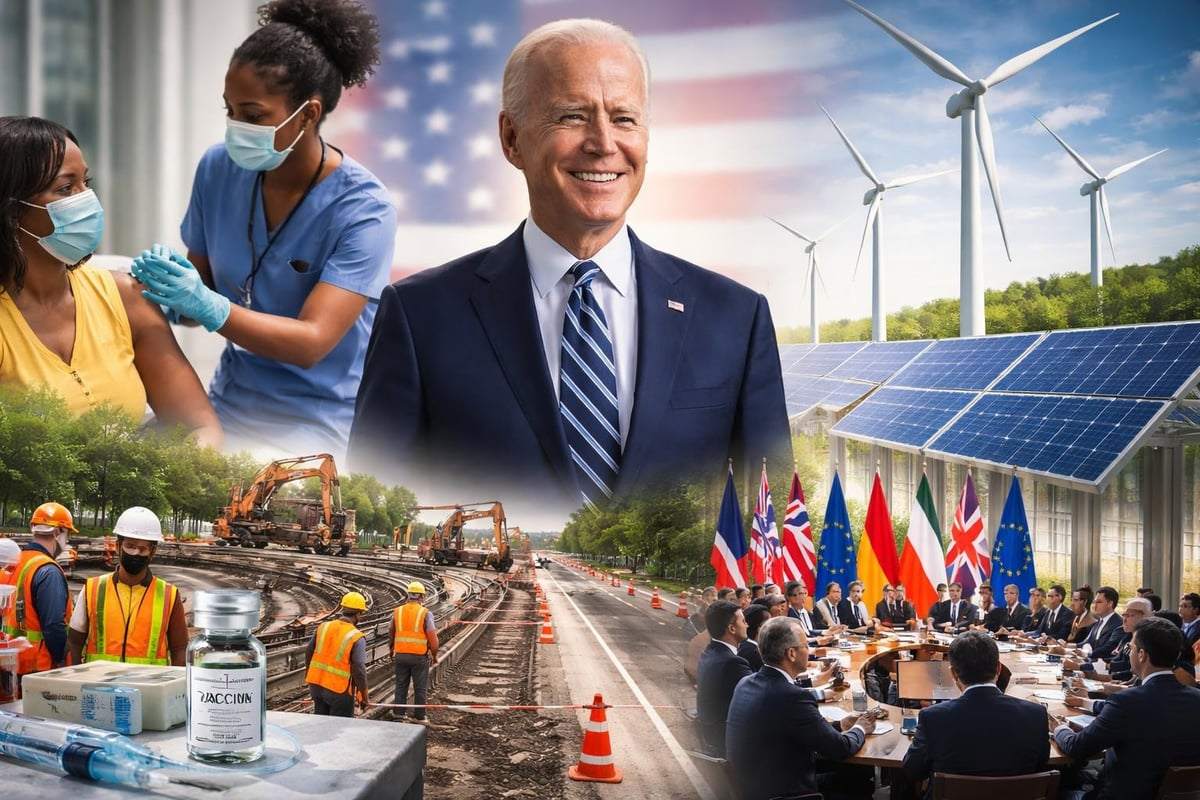
Biden's initial months centered on accelerating vaccine distribution and implementing economic relief measures. The American Rescue Plan provided $1.9 trillion in stimulus, including direct payments to individuals, enhanced unemployment benefits, and aid to state and local governments.
The economic policy of the Biden administration emphasized infrastructure investment through the bipartisan Infrastructure Investment and Jobs Act. This legislation authorized $1.2 trillion for transportation, broadband, and utility improvements.
Infrastructure spending priorities included:
- Transportation networks – roads, bridges, and public transit
- Broadband expansion – rural internet access
- Clean energy grid – modernizing electrical infrastructure
- Water systems – replacing lead pipes and improving quality
- Climate resilience – preparing for environmental challenges
Environmental Initiatives
Environmental policy represented a core Biden priority. The administration's environmental policy initiatives included rejoining the Paris Climate Agreement, establishing ambitious emissions reduction targets, and promoting clean energy development.
Electric vehicle incentives, methane regulations, and protected lands expansion demonstrated comprehensive environmental engagement. However, implementation faced political obstacles and judicial challenges that limited some initiatives' scope.
Political Challenges and One-Term Presidency
Biden's presidency encountered persistent challenges including inflation, immigration pressures, and foreign policy crises. His decision not to seek reelection in 2024 reflected both personal considerations and political realities within the Democratic Party. Those following developments on our blog witnessed extensive coverage of these political dynamics.
Donald Trump: Return to Power
Donald Trump's 2024 electoral victory and second presidency beginning in 2025 represents an unprecedented development in American politics. No president since Grover Cleveland in the 1890s had served non-consecutive terms, making Trump's return historically significant.
Campaign and Electoral Strategy
Trump's 2024 campaign capitalized on concerns about inflation, border security, and cultural issues. His messaging resonated with voters frustrated by economic conditions and seeking change from Biden administration policies.
The electoral coalition that delivered Trump's victory included:
- Working-class voters across racial demographics
- Rural communities feeling economically marginalized
- Swing state populations in Pennsylvania, Michigan, and Wisconsin
- Hispanic voters responding to economic messaging
- Traditional Republicans returning after 2020 divisions
Second Term Policy Priorities
Trump's second term agenda builds on his first presidency while addressing lessons learned. The current administration’s achievements reflect priorities established early in the term.
Regulatory rollback has accelerated, particularly affecting environmental protections, financial regulations, and labor standards. Supporters argue these changes promote economic growth and reduce bureaucratic burden, while critics warn of environmental and worker protection erosion.
| Policy Domain | Trump Second Term Approach | Stated Rationale |
|---|---|---|
| Immigration | Enhanced border enforcement | National security |
| Energy | Fossil fuel expansion | Energy independence |
| Trade | Tariff implementation | Protect manufacturing |
| Regulation | Reduction initiatives | Economic growth |
| Foreign Policy | Transactional diplomacy | America First |
Immigration policy has intensified under Trump's second administration. Expanded deportation efforts, reduced refugee admissions, and stricter asylum policies reflect campaign promises to voters prioritizing border security.
International Relations in 2026
Trump's approach to international relations continues emphasizing bilateral negotiations over multilateral institutions. NATO relationships remain complicated, with ongoing debates about defense spending obligations and alliance commitments.
Relations with China have grown more confrontational, encompassing trade disputes, technology competition, and geopolitical tensions. The administration's Indo-Pacific strategy seeks to counter Chinese influence through regional partnerships and economic initiatives.
Comparative Analysis of Recent Presidents
Examining the most recent US presidents reveals both continuities and stark contrasts in leadership approaches. Each president faced distinct challenges while navigating enduring tensions between different governing philosophies.
Leadership Styles and Communication
Presidential communication has evolved dramatically across recent administrations. Obama employed polished rhetoric and traditional media engagement. Trump revolutionized presidential communication through social media directness. Biden attempted returning to conventional approaches while adapting to digital realities.
These communication differences reflect deeper philosophical divides about presidential roles. Should presidents act as unifying figures or partisan advocates? The most recent US presidents have answered this question differently, shaping public expectations and political culture.
Economic Philosophy and Performance
Economic management reveals significant divergence among recent presidents:
- Obama – Stimulus-driven recovery, regulatory oversight
- Trump (First Term) – Tax cuts, deregulation, trade protectionism
- Biden – Infrastructure investment, social spending, climate integration
- Trump (Second Term) – Continued deregulation, energy expansion
Economic outcomes depend on multiple factors beyond presidential control, including global conditions, technological change, and monetary policy. However, presidential decisions regarding taxation, spending, and regulation substantially influence economic trajectories.
Foreign Policy Doctrines
Foreign policy approaches among the most recent US presidents demonstrate fundamental disagreements about America's global role. Obama's multilateralism contrasted sharply with Trump's transactional nationalism. Biden attempted restoring traditional alliances, while Trump's return has renewed debates about American international commitments.
These differences affect everything from climate cooperation to military alliances to trade relationships. Readers can explore these dynamics further through resources at our presidential library information section.
Institutional Changes and Presidential Power
The presidencies of the most recent US presidents have coincided with significant institutional changes affecting executive power. Partisan polarization has complicated legislative cooperation, increasing presidential reliance on executive orders and administrative actions.
Executive Orders and Administrative Actions
Recent presidents have expanded use of executive authority when facing legislative gridlock:
- Immigration – DACA, travel bans, border policies
- Environment – Emissions standards, protected lands
- Healthcare – ACA implementation, Medicaid expansion
- Labor – Minimum wage for contractors, overtime rules
- Foreign Policy – Trade agreements, sanctions
This pattern raises constitutional questions about separation of powers and executive overreach. Each administration justifies expansive executive action differently, but the trend toward presidential unilateralism continues regardless of party.
Judicial Appointments and Legacy
Judicial appointments represent perhaps the most enduring presidential impact. The most recent US presidents have prioritized confirming judges who reflect their judicial philosophies, knowing these appointments outlast their administrations.
Trump's six Supreme Court appointments across both terms (three in each) fundamentally reshaped the federal judiciary. These appointments will influence American law for decades, affecting issues from abortion rights to environmental regulation to voting rights.
Media Relations and Public Perception
Presidential relationships with media have transformed dramatically across recent administrations. Trust in traditional media has declined while partisan outlets and social media platforms have proliferated, fragmenting the information environment.
Obama maintained generally positive relationships with mainstream media while facing criticism from conservative outlets. Trump openly antagonized media organizations, labeling unfavorable coverage "fake news" and cultivating direct communication channels. Biden attempted restoring traditional press relations, though coverage remained intensely partisan.
Social Media and Presidential Communication
Social media has fundamentally altered how presidents communicate and how citizens engage with presidential leadership. Trump's Twitter presence during his first term demonstrated social media's power to drive news cycles and political discourse.
Platform policies regarding political content, misinformation, and presidential accounts have become contentious issues. Trump's social media suspension following January 6, 2021, events and subsequent platform creation reflected these tensions. His return to office has renewed debates about platform responsibilities and presidential communication.
Challenges Facing Future Presidents
The experiences of the most recent US presidents illuminate challenges that will confront future leaders. Political polarization shows no signs of abating, complicating efforts to build governing coalitions and address complex policy problems.
Climate change demands urgent attention despite political disagreements about appropriate responses. Technological disruption continues transforming economy and society faster than policy can adapt. Global competition with China will define geopolitical dynamics for decades.
Demographic changes, including aging populations and increasing diversity, will reshape political coalitions and policy priorities. Future presidents must navigate these changes while addressing immediate crises and long-term challenges simultaneously.
Democratic Resilience and Institutional Trust
Perhaps the most significant challenge involves maintaining democratic institutions and public trust in government. The most recent US presidents have governed during a period of declining institutional confidence, requiring renewed focus on democratic norms and civic engagement.
Election integrity, peaceful transfer of power, and respect for constitutional constraints have become contested rather than assumed. Restoring consensus around these democratic fundamentals represents an urgent priority transcending any single presidency.
Understanding the policies, challenges, and leadership styles of the most recent US presidents provides essential context for interpreting current political developments and anticipating future directions. Whether examining domestic achievements, foreign policy initiatives, or institutional changes, these presidencies have profoundly shaped American governance and global affairs. For comprehensive, non-partisan coverage of presidential news and analysis helping you stay informed about current and past presidents, visit U.S. Presidential Report for reliable information on the leaders shaping our nation.