The American political landscape is experiencing a seismic transformation as independent voter shift trends 2026 reveal unprecedented changes in how citizens approach electoral decisions. Recent polling data shows independent voters now represent the largest voting bloc in the United States, surpassing both major political parties in sheer numbers. This shift carries profound implications for presidential campaigns, congressional races, and the future direction of American governance as we approach the 2028 presidential election cycle.
The Historic Rise of Independent Voters
The growth of independent voters has reached a critical inflection point in 2026. According to recent Gallup polling data, 45% of U.S. adults now identify as independents, marking a significant departure from traditional party affiliations. This represents a continuation of trends observed throughout the previous decade, but with accelerating momentum that political strategists cannot ignore.
Demographic Breakdown of the Independent Surge
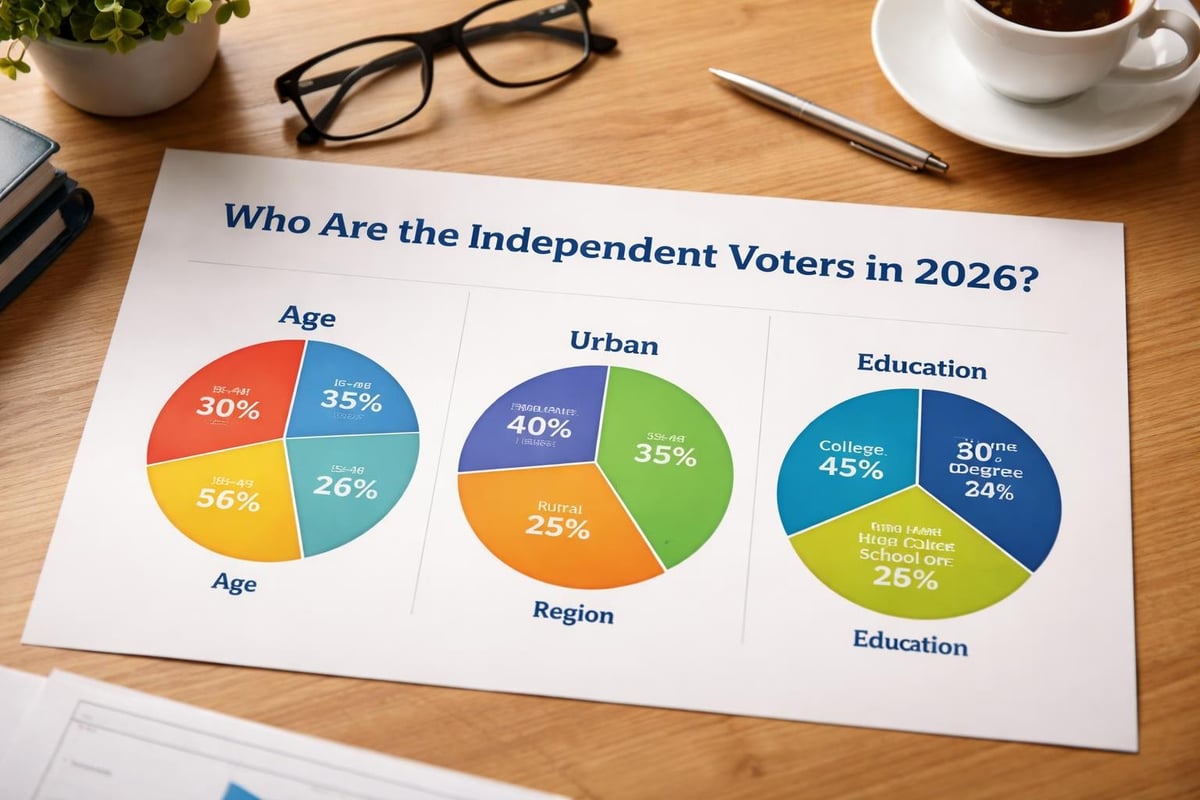
The composition of independent voters reveals important patterns that explain the breadth of this political realignment. Younger Americans lead this transformation, with voters under 35 showing the highest rates of independent identification. This generational divide suggests long-term structural changes rather than temporary political frustrations.
| Age Group | Independent % | Democrat % | Republican % |
|---|---|---|---|
| 18-29 | 52% | 28% | 20% |
| 30-44 | 48% | 29% | 23% |
| 45-64 | 43% | 32% | 25% |
| 65+ | 38% | 34% | 28% |
Geographic distribution also plays a crucial role in understanding independent voter shift trends 2026. Suburban communities across swing states have witnessed the most dramatic increases in independent registration, while rural and urban areas maintain stronger partisan identities.
Key Factors Driving Political Independence
Multiple converging forces explain why Americans are choosing independence over traditional party loyalty. These factors range from structural changes in media consumption to fundamental dissatisfaction with partisan governance.
Erosion of Party Trust
Partisan gridlock has driven many voters to abandon party labels entirely. The inability of Congress to address pressing national challenges-from infrastructure to healthcare reform-has created widespread frustration. Voters increasingly view party affiliation as an obstacle to pragmatic problem-solving rather than a vehicle for effective governance.
The 2024 presidential election aftermath intensified these sentiments. Regardless of which candidate voters supported, many Americans expressed exhaustion with polarized rhetoric and combative political culture. This exhaustion translates directly into independent registration.
Media Fragmentation and Information Diversity
The proliferation of information sources has weakened traditional party messaging mechanisms. Voters no longer rely exclusively on party-aligned media outlets for political information. Instead, they curate diverse information streams that expose them to cross-partisan perspectives and issue-specific analysis.
Social media platforms, despite their challenges, enable voters to follow individual politicians, policy experts, and journalists directly without party mediation. This disintermediation reduces the gatekeeping power that parties once wielded over political narratives.
Issue-Based Decision Making
Independent voters prioritize specific policy outcomes over ideological consistency. This pragmatic approach to politics stands in sharp contrast to traditional party loyalty:
- Economic concerns dominate independent voter priorities, particularly inflation, wages, and job security
- Healthcare access remains a top-tier issue across demographic groups
- Education quality drives decisions among parents and younger voters
- Environmental policy attracts support from independents when framed around practical solutions
- Government efficiency appeals to voters frustrated with bureaucratic dysfunction
Understanding why more Americans are choosing political independence requires recognizing this shift toward outcome-oriented politics.
Impact on Presidential Elections
The independent voter shift trends 2026 create both opportunities and challenges for presidential candidates planning 2028 campaigns. These unaffiliated voters will likely determine the next occupant of the White House, making them the most coveted constituency in American politics.
Strategic Implications for Presidential Campaigns
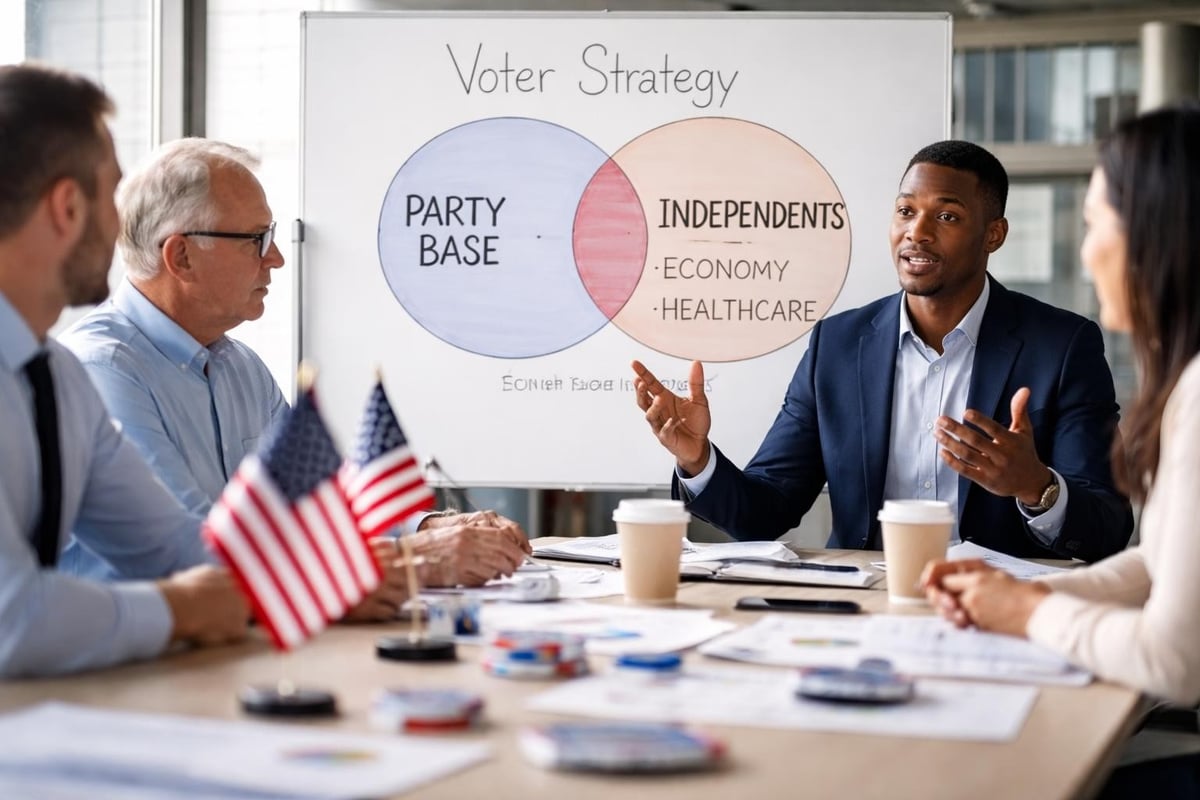
Presidential campaigns must fundamentally rethink their approaches to voter outreach. Traditional party-based mobilization strategies prove less effective with independent voters who resist tribal political appeals.
Candidate-centered messaging becomes essential. Independent voters evaluate individual candidates based on competence, character, and policy proposals rather than party platforms. This places premium value on authentic communication and substantive policy knowledge.
Coalition building grows more complex. Presidential candidates can no longer rely on automatic support from party bases. Instead, they must construct diverse coalitions spanning traditional partisan divides, requiring message discipline and strategic flexibility.
The U.S. Presidential Report provides comprehensive coverage of how presidential candidates adapt their strategies to appeal to independent voters while maintaining support from party bases.
Historical Precedents and Future Projections
Historical analysis reveals that independent voters have determined recent presidential outcomes. The 2020 election saw independent voters break decisively in favor of Joe Biden, while 2016 witnessed independents supporting Donald Trump in key swing states. These swings demonstrate the electoral power wielded by unaffiliated voters.
Projections for 2028 suggest independent voters will constitute approximately 40-45% of the electorate in battleground states. This concentration of independent voters in competitive states amplifies their influence beyond their national numbers.
The 2026 Midterm Elections: A Testing Ground
The current midterm cycle serves as an immediate laboratory for understanding independent voter shift trends 2026. Congressional races across the country reveal how candidates court independent voters while satisfying party constituencies.
State-Level Dynamics
Texas provides a particularly instructive case study. An early voting surge and new survey data highlight the significant role independent voters play in shaping primary outcomes. This pattern extends beyond Texas to other states with open or semi-open primary systems.
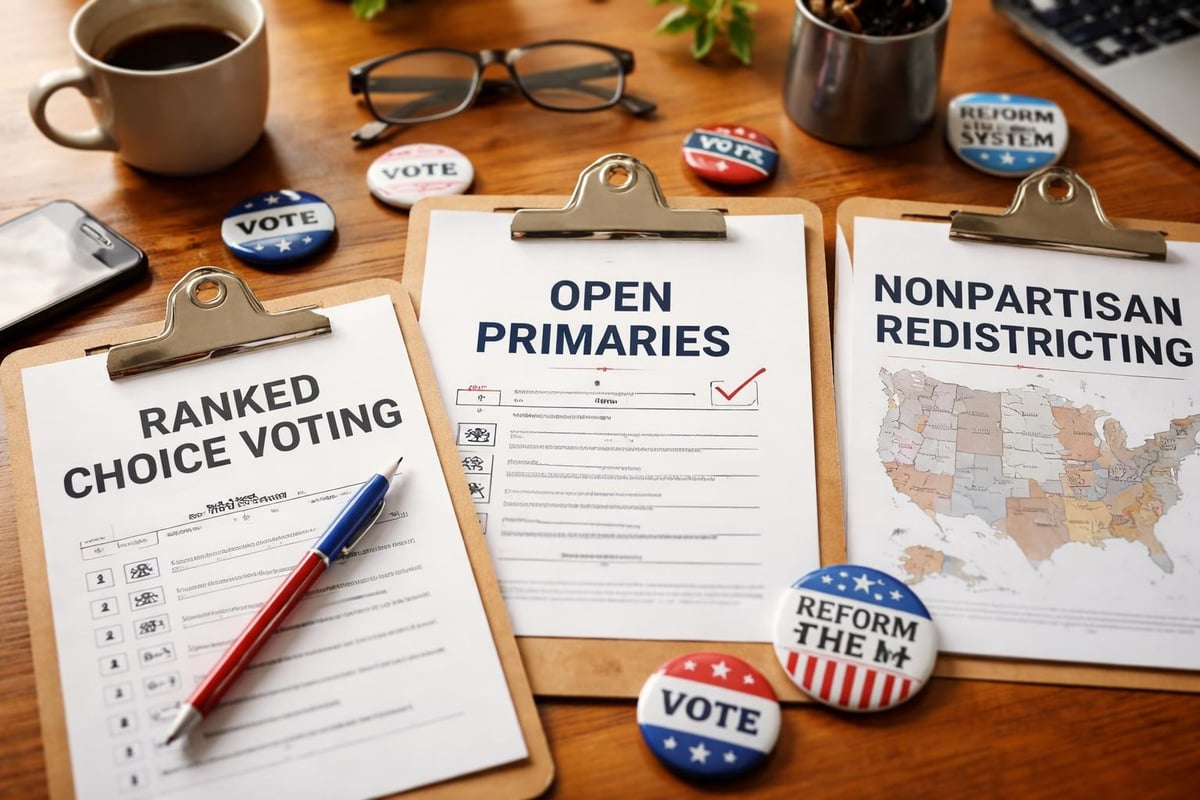
Open primaries attract substantial independent participation, potentially reshaping candidate selection processes. States maintaining closed primaries increasingly face pressure to expand access, recognizing that excluding independents from nomination contests alienates a plurality of voters.
Congressional Campaign Adaptations
House and Senate candidates employ several tactics to appeal to independent voters:
- Emphasize bipartisan credentials through co-sponsorship of legislation with opposing party members
- Highlight local issues rather than national partisan talking points
- Minimize party label visibility in campaign materials and advertisements
- Showcase practical accomplishments over ideological positions
- Maintain accessible communication with constituents across the political spectrum
These approaches reflect recognition that independent voters increasingly determine competitive race outcomes. Candidates who successfully navigate this terrain position themselves advantageously for general elections.
Electoral System Reforms and Independent Advocacy
Independent voters are not merely passive participants in political realignment. Many actively advocate for structural reforms designed to enhance independent voter influence and reduce partisan polarization.
Ranked Choice Voting Momentum
Ranked choice voting (RCV) gains traction as independents seek alternatives to traditional plurality systems. This electoral method allows voters to rank candidates by preference, potentially reducing strategic voting and expanding viable candidate fields.
Several municipalities and states have implemented or are considering RCV systems. Independent voters disproportionately support these reforms, viewing them as mechanisms to break two-party dominance.
Primary System Reforms
The movement toward nonpartisan primaries reflects independent voter frustrations with exclusionary nomination processes. California and Washington state pioneered top-two primary systems, allowing all voters to participate in initial candidate selection regardless of party registration.
| Reform Type | States Implemented | Independent Voter Support |
|---|---|---|
| Ranked Choice Voting | 4 states, 50+ municipalities | 68% |
| Top-Two Primaries | 4 states | 72% |
| Open Primaries | 21 states | 81% |
| Same-Day Registration | 23 states | 76% |
The Declaration of Independents movement advocates for comprehensive electoral reforms that eliminate barriers to independent voter participation.
Media Coverage and Independent Voter Perspectives
Mainstream political media increasingly recognizes independent voter significance, though coverage quality varies considerably. Understanding independent voter shift trends 2026 requires media outlets to move beyond binary partisan frameworks.
Challenges in Political Journalism
Traditional political journalism often defaults to Republican-versus-Democrat narratives that marginalize independent perspectives. This framing reflects organizational structures built around partisan politics and decades of two-party dominance.
Horse race coverage particularly disadvantages independent voters. Polls frequently categorize independents as "leaners" toward one party or another, obscuring genuine ideological diversity within this group. More sophisticated analysis recognizes that many independents genuinely occupy distinct political spaces.
Evolving Coverage Approaches
Progressive media organizations develop new frameworks for covering independent voters. These approaches include:
- Issue-specific analysis that transcends partisan positioning
- Voter profile features highlighting individual independent voter decision-making processes
- Policy comparison tools enabling voters to evaluate candidates based on substantive positions
- Nonpartisan fact-checking that holds all politicians accountable regardless of affiliation
Examining what will decide the 2026 midterms reveals how independent voter priorities shape electoral outcomes and media coverage alike.
Economic Concerns and Independent Voter Priorities
Economic issues dominate independent voter concerns in 2026, reflecting broader national anxieties about inflation, wage growth, and financial security. Unlike partisan voters who may prioritize cultural or ideological issues, independents consistently rank economic performance as their primary electoral consideration.
Pocketbook Politics
Kitchen table economics drive independent voter decisions. These voters evaluate candidates based on perceived competence in managing economic challenges rather than adherence to particular economic philosophies.
Independent voters show pragmatic flexibility on economic policy:
- Support government intervention when markets fail to deliver desired outcomes
- Favor fiscal responsibility but prioritize results over ideological purity
- Back targeted business regulation balanced against entrepreneurial freedom
- Endorse social safety net programs that demonstrate effectiveness and efficiency
This eclectic approach to economic policy defies traditional left-right categorization, creating opportunities for candidates who credibly present themselves as problem-solvers rather than ideologues.
Employment and Career Security
Job market dynamics significantly influence independent voter attitudes. Unlike previous generations who expected linear career progression within single industries, today's independent voters navigate dynamic employment landscapes requiring continuous adaptation.
These voters support policies promoting:
- Workforce development programs connecting workers with emerging opportunities
- Educational accessibility enabling career transitions and skill acquisition
- Portable benefits not tied to specific employers
- Entrepreneurial support facilitating business creation and innovation
- Economic mobility removing barriers to advancement
Political analysis from the U.S. Presidential Report blog examines how economic policy proposals resonate with independent voters across demographic groups.
Foreign Policy and Global Engagement
Independent voters display nuanced perspectives on foreign policy that resist simplistic categorization as isolationist or interventionist. Instead, these voters apply cost-benefit analysis to international engagement, asking whether specific policies serve American interests.
Selective Engagement Philosophy
Pragmatic internationalism characterizes independent voter foreign policy preferences. These voters support international cooperation when clear benefits exist but resist costly commitments lacking strategic justification.
Independent voters evaluate foreign policy through several lenses:
- National security impact: Does this policy enhance American safety?
- Economic consequences: What are the trade and investment implications?
- Alliance value: Do partner nations share burdens equitably?
- Democratic promotion: Can American influence advance democratic governance?
- Resource efficiency: Are costs proportionate to benefits?
This multifaceted approach produces positions that borrow elements from both traditional Democratic and Republican foreign policy schools without fully embracing either.
Global Threats Assessment
Independent voters prioritize concrete threats over abstract geopolitical theories. Terrorism, cyber warfare, economic espionage, and nuclear proliferation rank highly among independent voter concerns. Climate change increasingly registers as a security issue among younger independents who view environmental degradation as threat multiplier.
The rise of independent voters discussed in various media outlets reflects sophisticated voter understanding of complex policy challenges that transcend partisan talking points.
Technology, Privacy, and Digital Rights
Digital age concerns occupy prominent positions in independent voter priorities. These voters navigate tension between technological innovation benefits and privacy protection needs, seeking balanced approaches rather than absolutist positions.
Data Privacy Expectations
Personal information control emerges as a defining independent voter concern. These voters support reasonable regulations protecting consumer data while avoiding heavy-handed approaches that stifle innovation.
Independent voters favor:
- Transparent data collection practices with clear user consent
- Meaningful enforcement mechanisms against privacy violations
- Portable data allowing users to transfer information between platforms
- Opt-in rather than opt-out approaches to data sharing
- Criminal penalties for egregious privacy breaches
Platform Accountability
Social media governance presents particular challenges for independent voters who value free expression but recognize platform power to shape public discourse. These voters seek middle ground between unregulated platforms and government censorship.
Algorithmic transparency attracts independent voter support. Understanding how platforms curate content and amplify particular voices helps voters assess information source reliability and identify potential manipulation.
Healthcare Policy Priorities
Healthcare remains among the most consequential policy areas for independent voters, combining immediate personal stakes with broader economic implications. Independent voter shift trends 2026 partly reflect dissatisfaction with partisan healthcare approaches that fail to deliver universal access or cost containment.
Access Versus Affordability
Independent voters refuse to choose between healthcare access and affordability, demanding both simultaneously. This insistence on comprehensive solutions pushes candidates beyond traditional Democratic single-payer and Republican market-based proposals.
Hybrid systems combining public and private elements attract independent voter interest. These voters study international models seeking evidence-based approaches rather than ideologically predetermined solutions.
| Healthcare Priority | Independent Voter Ranking | Party Alignment |
|---|---|---|
| Cost Reduction | 1st | Neither |
| Universal Access | 2nd | Neither |
| Quality Care | 3rd | Neither |
| Provider Choice | 4th | Republican-leaning |
| Prescription Drug Costs | 5th | Democrat-leaning |
Mental Health Services
Mental healthcare parity commands strong independent voter support. These voters recognize mental health as integral to overall wellbeing and reject insurance practices that discriminate against mental health treatment.
Substance abuse treatment, youth mental health services, and veteran psychological care particularly resonate with independent voters who view these challenges as public health priorities requiring comprehensive responses.
Education and Workforce Development
Educational policy represents another arena where independent voters pursue pragmatic solutions over ideological consistency. These voters evaluate educational approaches based on measurable outcomes rather than philosophical commitments.
K-12 Education Priorities
Student achievement drives independent voter education preferences. These voters support teachers and schools demonstrating effectiveness while demanding accountability for persistent failure.
Independent voters embrace diverse educational approaches:
- Public schools with strong academic results
- Charter schools offering innovation and choice
- Private schools providing specialized programs
- Homeschooling enabling customized instruction
- Vocational education preparing students for skilled trades
This pluralistic stance contrasts with partisan positions that categorically favor or oppose particular educational models.
Higher Education Affordability
College cost concerns unite independent voters across demographic groups. These voters view higher education debt as economic drag limiting opportunity and mobility.
Solutions attracting independent voter support include:
- Income-based repayment capping debt service at affordable levels
- Community college access providing low-cost pathway to credentials
- Apprenticeship programs combining work and education
- Credential recognition validating skills regardless of acquisition method
- Institutional accountability linking federal funding to student outcomes
Climate and Environmental Policy
Environmental concerns increasingly influence independent voter decisions, particularly among younger demographics. However, independent voters approach climate policy pragmatically, seeking solutions balancing environmental protection with economic vitality.
Market-Based Environmental Solutions
Innovation incentives appeal to independent voters more than regulatory mandates. These voters support government investment in clean energy research, tax incentives for sustainable practices, and market mechanisms pricing environmental externalities.
Carbon pricing attracts independent voter interest when revenues fund tax reduction or infrastructure investment rather than general government operations. This revenue-neutral approach addresses climate change without expanding government size.
Local Environmental Quality
Air quality, water safety, and public land access resonate strongly with independent voters who experience these issues directly. Unlike abstract global climate debates, local environmental quality presents tangible impacts that independent voters readily grasp.
Understanding these nuanced positions helps explain the complex independent voter shift trends 2026 that defy simple categorization. Political analysis examining presidential policy positions benefits from recognizing this sophisticated electorate.
Generational Differences Among Independents
Not all independent voters share identical characteristics or priorities. Generational cohorts within the independent voter category display distinct patterns worth understanding.
Millennial and Gen Z Independents
Digital natives dominate younger independent voter ranks. These voters grew up with internet access, experienced political polarization as normal, and harbor deep skepticism toward institutions including political parties.
Younger independents prioritize:
- Climate action with measurable results
- Student debt relief and education affordability
- Racial and social justice initiatives
- Technology regulation protecting privacy
- Political reform increasing participation
Gen X Independents
Middle-aged independents often cite disillusionment with both parties as primary motivation for unaffiliated status. These voters remember pre-internet political discourse and perceive contemporary polarization as departure from earlier norms.
Gen X independents focus on:
- Economic stability and retirement security
- Healthcare access for aging parents
- Educational opportunity for children
- Pragmatic foreign policy avoiding costly conflicts
- Fiscal responsibility and debt reduction
Boomer Independents
Older independents represent smaller proportions of their cohort but growing absolute numbers. These voters often became independent after decades of party affiliation, suggesting genuine political realignment rather than youthful experimentation.
Boomer independents emphasize:
- Social Security and Medicare protection
- Healthcare quality and accessibility
- Traditional American values with modern application
- Bipartisan cooperation on national challenges
- Respect for institutional norms and procedures
The independent voter shift trends 2026 represent a fundamental realignment in American politics that will shape presidential elections for years to come. These unaffiliated voters prioritize pragmatic solutions over partisan loyalty, demanding candidates who address real challenges with evidence-based policies. For comprehensive, non-partisan coverage of how presidential candidates and sitting presidents respond to this evolving electorate, U.S. Presidential Report provides the balanced analysis voters need to make informed decisions about America's political future.