The immigration and crime debate has dominated American political discourse for decades, intensifying during election cycles and presidential administrations. As policymakers craft legislation and executives implement enforcement strategies, understanding the factual relationship between immigration patterns and criminal activity becomes essential. This topic carries significant weight in presidential politics, influencing voter perceptions, shaping campaign strategies, and determining policy priorities that affect millions of Americans and immigrants alike.
Historical Context of Immigration Policy and Crime Statistics
Presidential administrations throughout American history have approached immigration enforcement with varying strategies, each claiming to address public safety concerns. The immigration and crime debate gained particular prominence during the 1990s when both parties supported stricter immigration controls alongside crime reduction initiatives.
During this period, policymakers often linked immigration reform to broader criminal justice discussions. Federal agencies expanded databases tracking both documented and undocumented immigrants, creating systems that remain foundational to modern enforcement. These historical frameworks continue influencing contemporary debates, even as research methodologies and data collection have evolved substantially.
Research Foundations and Methodological Challenges
Understanding the immigration and crime debate requires examining rigorous academic research. The National Institute of Justice has published studies on immigration and crime that highlight critical factors often overlooked in political rhetoric. This research demonstrates that immigrant heterogeneity plays a significant role in neighborhood crime rates, suggesting simplistic narratives fail to capture complex realities.
Researchers face substantial challenges when analyzing these relationships:
- Data availability limitations: Many jurisdictions do not systematically track immigration status in crime statistics
- Confounding variables: Socioeconomic factors, neighborhood characteristics, and enforcement patterns influence outcomes
- Definitional inconsistencies: Terms like "illegal immigrant" and "undocumented person" carry different legal and statistical meanings
- Reporting biases: Fear of deportation affects crime reporting patterns within immigrant communities

The Office of Justice Programs emphasizes the necessity of robust evidence before establishing causal connections between unauthorized immigrant populations and crime increases. This standard represents a critical benchmark for evaluating claims made during presidential campaigns and policy debates.
Presidential Rhetoric Versus Statistical Evidence
The gap between political messaging and empirical data represents one of the most significant aspects of the immigration and crime debate. Presidential candidates and sitting presidents have historically used immigration as a wedge issue, often amplifying isolated incidents to suggest broader patterns.
Campaign Strategies and Public Perception
Presidential campaigns leverage immigration topics strategically, knowing these issues resonate with specific voter demographics. Campaign messaging frequently emphasizes anecdotal cases rather than comprehensive statistics, creating narratives that may diverge from national trends.
| Presidential Term | Primary Immigration Focus | Crime-Related Messaging |
|---|---|---|
| 2016-2020 | Border security enforcement | Emphasized violent crimes by undocumented immigrants |
| 2020-2024 | Humanitarian processing | Balanced enforcement with pathway reforms |
| 2024-2028 | Comprehensive reform | Data-driven public safety approach |
Political strategists understand that personal stories create emotional connections more effectively than statistical analyses. This reality shapes how presidential administrations communicate about the immigration and crime debate, often prioritizing messaging impact over nuanced policy discussions.
Current Statistical Landscape in 2026
Recent data provides important context for understanding crime trends alongside immigration patterns. According to recent reporting on violent crime statistics, the United States experienced a 4.5% decrease in violent crime in 2024, even as immigration numbers fluctuated.
This decline occurred during a period when unauthorized immigrant populations reached record levels, with approximately 14 million people living illegally in the U.S. in 2023. The simultaneous occurrence of these trends challenges simplistic cause-and-effect narratives often presented in political discourse.
Examining the Data Distribution
Crime statistics reveal significant geographic and demographic variations that complicate national-level generalizations:
- Urban areas with high immigrant populations often show lower per-capita crime rates than comparable cities with fewer immigrants
- Border regions experience unique enforcement challenges that differ from interior jurisdictions
- Sanctuary city policies correlate with different reporting patterns but not necessarily higher crime rates
- Economic conditions in immigrant communities influence both opportunity crime and violent incidents

Research consistently demonstrates that first-generation immigrants commit crimes at lower rates than native-born citizens, a finding that remains stable across multiple studies and time periods. This evidence contradicts common assumptions within the immigration and crime debate.
Policy Implications for Presidential Governance
Presidential administrations must balance enforcement priorities, humanitarian considerations, and public safety objectives when crafting immigration policy. The immigration and crime debate influences resource allocation decisions across multiple federal agencies, from the Department of Homeland Security to the Department of Justice.
Enforcement Resource Allocation
Federal budgets reflect presidential priorities regarding immigration enforcement. Recent administrations have allocated billions toward various enforcement mechanisms:
- Border infrastructure investments: Physical barriers, surveillance technology, and personnel deployment
- Interior enforcement operations: Workplace raids, targeted removals, and detention facilities
- Immigration court system expansion: Addressing case backlogs and processing efficiency
- Community policing partnerships: Collaboration between local law enforcement and federal agencies
- Visa overstay tracking systems: Technology investments for monitoring legal entry violations
These investments reveal how presidential administrations operationalize their positions on the immigration and crime debate. Budget priorities demonstrate whether administrations emphasize deterrence, processing efficiency, or comprehensive reform approaches.
Legislative Battles and Executive Action
Congress has repeatedly attempted immigration reform legislation, with presidential leadership proving crucial for advancing comprehensive proposals. The immigration and crime debate often stalls legislative progress as lawmakers dispute foundational premises about the relationship between these issues.
Presidential executive actions have filled gaps left by legislative gridlock. From Deferred Action for Childhood Arrivals (DACA) to various enforcement priority memoranda, presidents have used administrative authority to shape immigration policy when congressional action proves impossible.
Congressional Dysfunction and Presidential Responses
The breakdown in bipartisan immigration reform reflects broader congressional polarization. Presidential candidates promise legislative solutions, but governing realities often force reliance on executive mechanisms with limited durability.
Recent presidential administrations have navigated these constraints differently:
- Enforcement-first approaches: Prioritizing removal operations and border security before considering legalization pathways
- Comprehensive reform advocacy: Simultaneously addressing border security, interior enforcement, and legal status resolution
- Targeted relief programs: Creating specific protections for defined populations while maintaining general enforcement
Understanding presidential approaches to the immigration and crime debate requires examining both their stated policy preferences and their practical governing strategies under congressional constraints. U.S. Presidential Report provides ongoing coverage of these executive decisions and their implementation challenges.
State and Local Dynamics
The immigration and crime debate extends beyond federal policy into state and local jurisdictions, where enforcement cooperation varies significantly. Presidential administrations face complex federalism questions when state governors adopt divergent approaches to immigration enforcement.
Sanctuary city policies represent one flashpoint where local governments limit cooperation with federal immigration authorities. Proponents argue these policies improve public safety by encouraging immigrant communities to report crimes without fear of deportation consequences. Critics contend they obstruct legitimate federal enforcement priorities.
Measuring Public Safety Outcomes
Determining whether sanctuary policies affect crime rates requires careful analysis:
| Policy Approach | Reported Benefits | Reported Challenges |
|---|---|---|
| Sanctuary policies | Increased crime reporting, improved community trust | Federal enforcement complications |
| Full cooperation | Enhanced deportation efficiency | Reduced immigrant cooperation with police |
| Selective cooperation | Balanced approach targeting serious offenders | Implementation inconsistencies |
Research on these outcomes remains contested, with studies showing different results depending on methodology, time periods examined, and specific metrics analyzed. This ambiguity perpetuates the immigration and crime debate across presidential election cycles.
Media Coverage and Public Opinion Formation
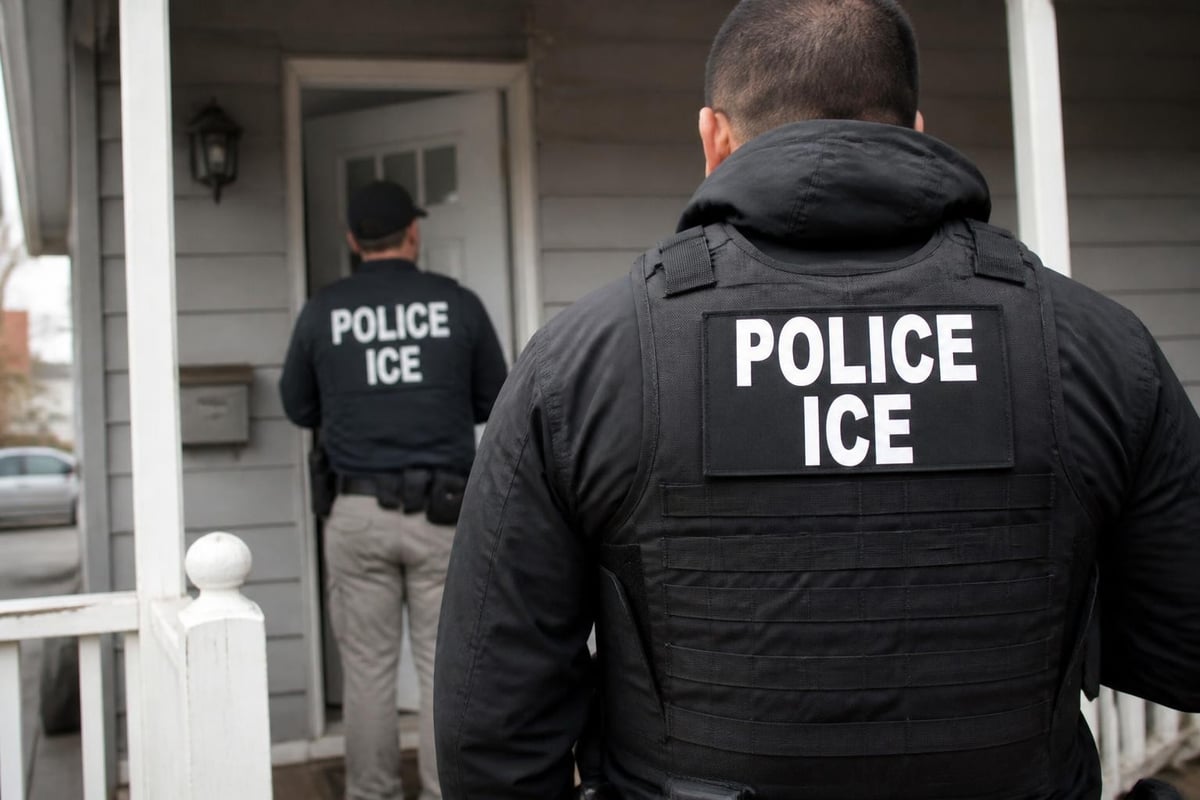
Presidential communication strategies regarding the immigration and crime debate occur within a fragmented media environment. News coverage emphasizes dramatic incidents over statistical trends, creating perception gaps between public understanding and empirical reality.
Social media platforms amplify these dynamics, allowing viral incidents to shape national conversations disproportionately. Presidential statements on immigration-related crimes receive immediate widespread distribution, influencing public opinion formation regardless of whether individual cases represent broader patterns.
Fact-Checking Infrastructure
Modern presidential discourse faces scrutiny from fact-checking organizations that evaluate claims about immigration and crime. These verification efforts provide important counterbalances to political rhetoric, though their effectiveness depends on public willingness to engage with corrective information.
Presidential administrations increasingly employ data visualization and official statistics to support their positions on the immigration and crime debate. However, competing interpretations of identical datasets demonstrate how political framing influences statistical narratives.
International Comparisons and Best Practices
The United States immigration and crime debate exists within a global context where other nations face similar challenges. Presidential administrations can examine international approaches to inform domestic policy development.
European nations have confronted refugee integration challenges while managing public safety concerns. Their experiences demonstrate both successful integration strategies and cautionary tales about inadequate planning. Canadian immigration systems emphasize economic contributions while maintaining security screening, offering alternative models for balancing priorities.
Comparative analysis reveals that comprehensive integration support including language training, employment assistance, and community development correlates with better public safety outcomes. Presidential policies incorporating these elements address root causes rather than solely emphasizing enforcement mechanisms.
Economic Dimensions of Immigration Policy
The immigration and crime debate intersects with economic policy in ways presidential administrations must consider. Labor market impacts, fiscal contributions, and economic displacement concerns all influence public attitudes toward immigration policy.
Research demonstrates that immigration generates net economic benefits through entrepreneurship, labor force participation, and consumer demand. However, localized displacement effects and wage pressures in specific sectors create political tensions that presidential candidates must address.
Workforce Contributions and Underground Economies
Undocumented immigrants participate substantially in American labor markets, particularly in agriculture, construction, hospitality, and service industries. This economic integration creates complex enforcement dilemmas for presidential administrations.
Strict enforcement can disrupt labor-dependent industries while potentially reducing underground economic activity. Conversely, legalization pathways might formalize existing economic relationships while generating tax revenue. Presidential approaches to the immigration and crime debate increasingly incorporate these economic considerations alongside traditional security frameworks.
Future Trajectories and Presidential Leadership
The immigration and crime debate will continue shaping presidential elections and governance strategies throughout 2026 and beyond. Demographic changes, economic pressures, and global migration patterns ensure immigration remains central to American political discourse.
Presidential leadership quality significantly influences whether this debate generates productive policy solutions or remains mired in partisan gridlock. Effective presidential communication acknowledges legitimate public safety concerns while remaining grounded in empirical evidence rather than exploiting fear.
Emerging factors that will shape future debates include:
- Climate-driven migration pressures increasing displacement from Central America and other regions
- Technological advances in surveillance and border management creating new enforcement capabilities
- Artificial intelligence applications in visa processing and risk assessment
- Changing labor market demands as automation transforms workforce requirements
- Generational shifts in public attitudes toward immigration and diversity
Presidential candidates in upcoming election cycles will face pressure to articulate comprehensive positions addressing these evolving dimensions. The immigration and crime debate demands nuanced leadership capable of balancing competing values while implementing evidence-based policies.
Bridging Partisan Divides Through Evidence
Transcending polarized rhetoric surrounding the immigration and crime debate requires presidential commitment to evidence-based policymaking. While political incentives often favor simplified messaging, governing responsibilities demand more sophisticated approaches.
Bipartisan coalitions have historically achieved immigration reform when presidential leadership provides political cover for compromise. The 1986 Immigration Reform and Control Act demonstrated that comprehensive solutions addressing both enforcement and legalization could achieve broad support under appropriate conditions.
Contemporary polarization complicates similar efforts, but presidential leadership remains essential for creating political space where productive negotiations can occur. This leadership must acknowledge legitimate concerns across the political spectrum while rejecting false premises that contradict established evidence.
The immigration and crime debate represents one of the most consequential and contentious issues in American presidential politics, demanding careful analysis that separates fact from fiction. Evidence-based understanding of this relationship is essential for informed citizenship and effective governance. For comprehensive, non-partisan coverage of presidential policy decisions affecting immigration, crime, and related governance matters, U.S. Presidential Report provides the latest news and analysis concerning current and past U.S. Presidents. Stay informed about how presidential leadership shapes these critical national debates.