The migrant crisis in New York City has emerged as one of the most complex policy challenges facing municipal and federal authorities in recent years. Since 2022, the city has received over 200,000 asylum seekers, placing unprecedented strain on shelter systems, municipal budgets, and social services infrastructure. This situation has become a critical test case for immigration policy implementation, revealing the stark disconnect between federal border management and local service delivery capabilities. Understanding this crisis requires examining the intersection of presidential administration policies, state-level responses, and municipal resource allocation strategies.
Federal Immigration Policy and Urban Consequences
Presidential administration policies have directly shaped the trajectory of the migrant crisis in New York City. The Biden administration's approach to asylum processing and border management created conditions that led to significant northward migration flows beginning in 2022. Federal immigration policy decisions set the framework within which cities like New York must operate, yet local governments bear the immediate burden of providing services and shelter.
The disconnect between federal policy formulation and municipal implementation has created significant friction. While immigration enforcement remains under federal jurisdiction, the practical responsibilities of housing, feeding, and integrating newcomers fall to city agencies. This division of responsibility has exposed fundamental weaknesses in the American federalist system when addressing humanitarian crises.
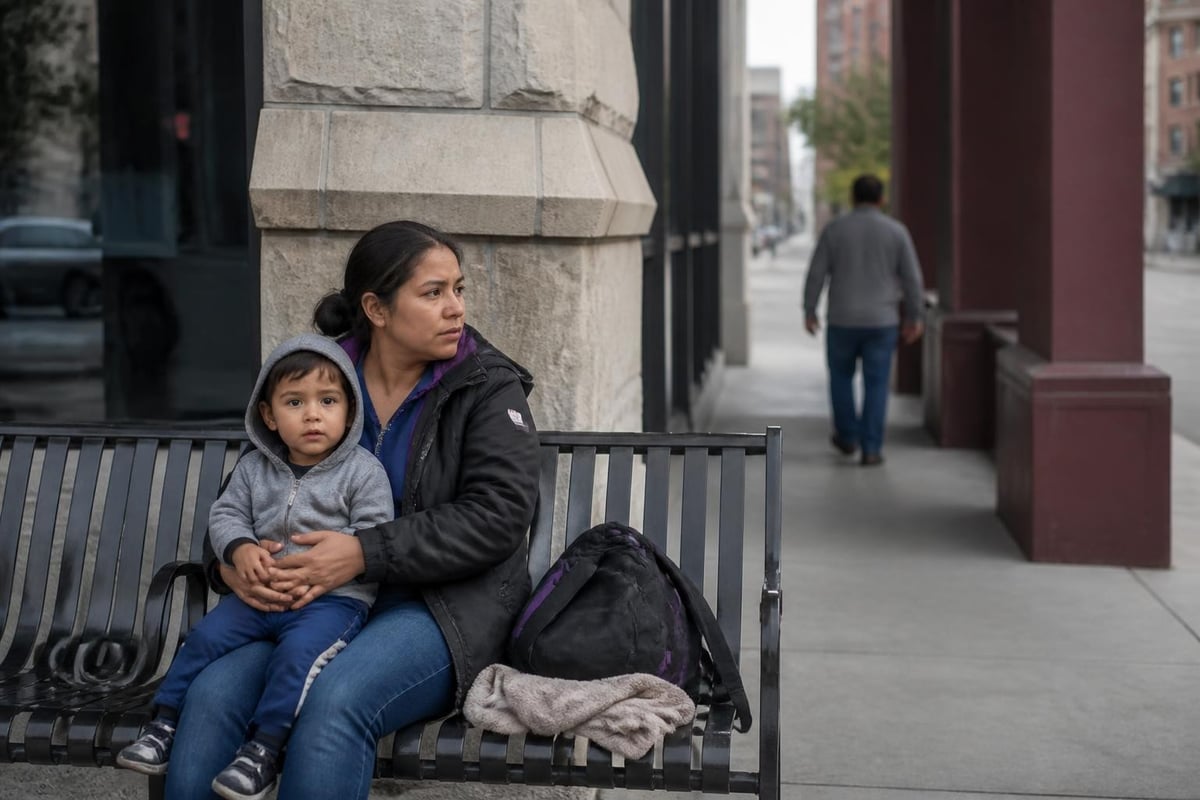
Presidential Leadership During Crisis Periods
Executive decisions made in Washington have cascading effects on urban centers designated as sanctuary cities. The choice to maintain or modify asylum access policies, the pace of work authorization processing, and federal funding allocation all stem from presidential priorities. These decisions shape whether cities face manageable integration challenges or overwhelming service demands.
Presidential communication strategies also influence public perception and political support for assistance programs. When federal leaders frame migration as either humanitarian opportunity or security threat, they shape the political environment in which mayors like Eric Adams must operate. The political implications of mayoral leadership during this crisis demonstrate how local officials navigate between federal policy constraints and constituent demands.
The relationship between presidential administrations and major cities facing migration pressures reveals broader tensions in American governance. Cities require federal financial support yet resist federal enforcement priorities that conflict with local values.
Municipal Response Mechanisms and Shelter Infrastructure
New York City's response to the migrant crisis has involved multiple strategies, from emergency shelter expansion to innovative housing coordination systems. The city initially converted hotels, including the Roosevelt Hotel, into arrival processing centers to manage the initial influx. These temporary facilities provided immediate relief but proved financially unsustainable for long-term operations.
The Adams administration implemented several key measures to address capacity challenges:
- Converting municipal facilities and establishing temporary shelter sites
- Implementing stay limits at certain shelter facilities to encourage transition to permanent housing
- Coordinating with nonprofit organizations to expand service networks
- Pursuing federal and state funding to offset costs
- Developing expedited work authorization processing assistance
The closure of facilities like the Floyd Bennett Field tent camp marked transitions in city strategy from emergency response to longer-term integration planning. Each operational adjustment reflected evolving understanding of migration patterns and service demand.
Service Delivery Challenges and Innovations
Delivering services at scale while maintaining quality standards has tested city agencies across multiple departments. Education, healthcare, legal services, and employment assistance all faced sudden demand increases requiring rapid system adaptation. The city's coordination efforts revealed both strengths and limitations in existing social service infrastructure.
| Service Area | Primary Challenge | Implementation Response |
|---|---|---|
| Shelter | Capacity shortage | Hotel conversions, tent facilities |
| Education | Student enrollment surge | Temporary classroom expansion |
| Healthcare | Language barriers | Interpreter service expansion |
| Legal Services | Court backlog | Nonprofit partnership expansion |
| Employment | Work authorization delays | Pre-authorization skill development programs |
These adaptations required unprecedented inter-agency coordination and nonprofit sector mobilization. Success varied across service domains, with some systems proving more adaptable than others.
Financial Implications and Budget Realities
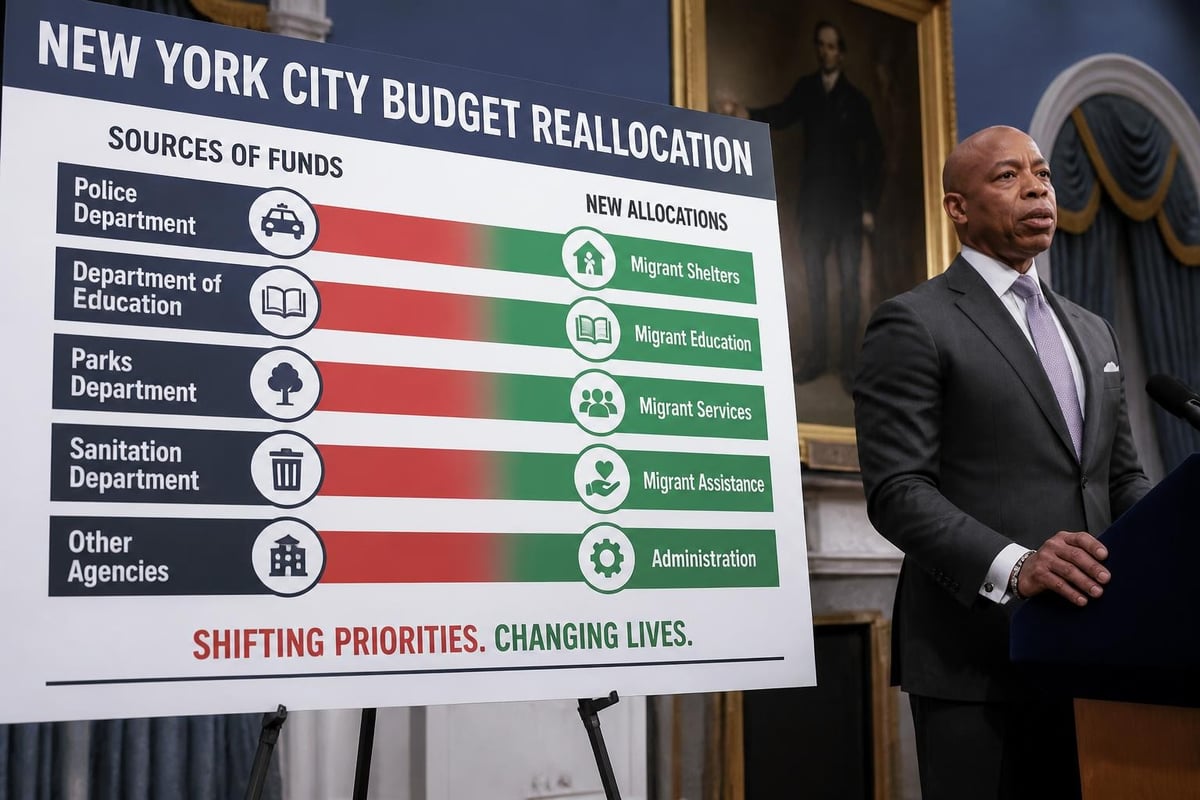
The fiscal impact of the migrant crisis in New York City extends into billions of dollars, fundamentally altering municipal budget priorities. Mayor Adams repeatedly highlighted these costs, projecting multi-year expenditures that would require service reductions in other areas without additional federal and state assistance. These budget pressures created political conflicts across governmental levels.
Federal reimbursement for migration-related expenses became a contentious negotiating point. Cities argued that federal immigration policy decisions should not create unfunded mandates for local governments. The Biden administration eventually allocated emergency funding, but cities maintained that amounts remained insufficient relative to actual costs incurred.
Key budget impact areas include:
- Emergency shelter operations and facility conversions
- Social services expansion including casework and legal assistance
- Healthcare provision for uninsured populations
- Education services for newly enrolled students
- Public safety and emergency response capacity increases
The financial strain illuminated broader questions about fiscal federalism and responsibility allocation in the American system. When federal policies create local costs, mechanisms for compensation remain politically contentious and inadequately formalized.
Political Dynamics and Partisan Responses
The migrant crisis in New York City became a significant political flashpoint, influencing mayoral, gubernatorial, and presidential politics. Republicans criticized Democratic immigration policies as creating the crisis, while Democrats defended asylum access as humanitarian obligation. This partisan framing obscured potential policy solutions that might command bipartisan support.
Mayor Adams, a Democrat, found himself criticizing his own party's federal leadership while defending the city's sanctuary status. This position reflected the complex political calculations required of urban leaders managing both progressive constituents and practical governance constraints. His criticism of federal immigration policies drew both praise and condemnation depending on partisan perspective.
The crisis influenced presidential campaign discourse heading into the 2024 election cycle and continues shaping 2026 discussions. Presidential policy approaches to immigration became central campaign differentiators, with candidates proposing dramatically different approaches ranging from enhanced enforcement to expanded asylum access.
State-Level Political Responses
New York State government faced its own political pressures regarding the crisis. Governor Hochul navigated between supporting New York City's requests for assistance and managing upstate constituencies less sympathetic to migration-related expenditures. State funding allocations became political battlegrounds reflecting these regional tensions.
The intergovernmental dynamics revealed how migration policy intersects with American federalism's vertical and horizontal dimensions. Cities, states, and federal government each possess distinct authorities and responsibilities, creating coordination challenges during crisis response.
Housing Market Pressures and Long-Term Integration
Beyond immediate shelter needs, the migrant crisis in New York City intersected with existing housing affordability challenges. The city faced severe housing shortages before the recent migration surge, and additional demand intensified competition for limited affordable units. Housing policy responses proposed by political leaders attempted to address both existing residents and newcomers.
Integration of asylum seekers into permanent housing required coordinating multiple systems:
- Legal status determination and work authorization processing
- Employment placement and income establishment
- Housing application and eligibility verification
- Landlord coordination and lease negotiation
- Ongoing social service support during transition
Each step involved bureaucratic processes that could take months, during which individuals remained in city shelter systems. Accelerating these timelines became a priority for reducing shelter census and associated costs.
Innovative Housing Coordination Approaches
Researchers explored queue routing strategies and equitable housing coordination systems to improve placement efficiency. These technical approaches to housing allocation aimed to reduce wait times and improve matches between available units and household needs. Implementation required sophisticated data systems and inter-agency information sharing.
The housing dimension of the crisis revealed how short-term humanitarian responses must connect to long-term integration strategies. Without pathways from emergency shelter to permanent housing, cities face indefinite service obligations that strain budgets and perpetuate instability for migrants.
Community Impact and Social Cohesion
The arrival of tens of thousands of asylum seekers affected New York City neighborhoods differentially depending on shelter placement decisions and community characteristics. Some areas experienced significant demographic shifts within short timeframes, creating both opportunities for cultural enrichment and challenges for service provision and community adjustment.
Schools in neighborhoods with large migrant populations faced immediate needs for English language instruction capacity, counseling services for trauma-affected students, and cultural competency development among staff. NBC New York’s investigative reporting documented both inspirational stories of community welcome and instances of tension over resource competition.
Community organizations played crucial roles in bridging gaps between official services and individual needs. Faith-based groups, mutual aid networks, and immigrant-led organizations provided cultural navigation assistance, language interpretation, and social connection opportunities that formal systems struggled to deliver at scale.

Public Opinion and Media Coverage
Media framing of the migrant crisis in New York City significantly influenced public opinion and political pressure on officials. Coverage ranged from sympathetic human interest stories highlighting asylum seeker experiences to critical examinations of policy failures and cost overruns. NY1’s comprehensive reporting provided in-depth analysis that helped New Yorkers understand crisis complexities.
Public opinion surveys revealed divided sentiments. Many New Yorkers supported humanitarian assistance while simultaneously expressing concern about costs and service impacts. This ambivalence reflected broader American tensions between national identity as refuge for those fleeing hardship and anxiety about immigration's economic and cultural effects.
Policy Lessons and Future Preparedness
The migrant crisis in New York City offers important lessons for federal, state, and municipal policymakers preparing for future migration surges. The lack of coordinated response capacity among governmental levels created inefficiencies and duplicated efforts. Establishing standing protocols for migration surge management could improve future responses.
Government measures implemented during the crisis provide templates for other cities potentially facing similar challenges. Documentation of what worked and what failed serves as valuable knowledge for urban planners and emergency managers nationwide.
Critical policy recommendations include:
- Establishing federal-municipal coordination protocols before crises emerge
- Creating dedicated funding mechanisms for migration-related municipal costs
- Accelerating work authorization processing to enable self-sufficiency
- Developing housing surge capacity planning across metropolitan regions
- Implementing data systems enabling real-time service capacity monitoring
These structural improvements would position cities to respond more effectively to future migration patterns, whether driven by international conflicts, climate change, or economic disruption.
Presidential Administration Roles
Future presidential administrations must recognize that immigration policy decisions carry direct municipal consequences. Consultation with major cities during policy formulation could improve implementation and reduce unintended impacts. Establishing formal advisory mechanisms bringing mayors into federal immigration policy discussions would acknowledge their frontline operational responsibilities.
The relationship between presidential policy decisions and local governance challenges extends beyond immigration to multiple policy domains. The migrant crisis exemplifies how federal-local coordination gaps create implementation challenges that undermine policy effectiveness regardless of underlying intent.
Comparative Context and National Implications
While New York City's experience attracted significant attention, other American cities faced similar challenges during the same period. Chicago, Denver, and Los Angeles each developed distinct response approaches based on local political cultures, available resources, and existing infrastructure. Comparing these different strategies reveals multiple viable approaches to migration management.
The national implications extend to border policy, asylum processing reform, and intergovernmental fiscal relationships. Ongoing debates about presidential authority and immigration enforcement influence how future administrations might handle similar situations. The lessons from New York's experience inform these broader policy discussions.
Cities across America watched New York's struggle, recognizing that migration pressures could shift to their jurisdictions based on policy changes or geopolitical developments. This shared vulnerability created incentives for cities to collectively advocate for federal policy reforms addressing root causes and improving coordination mechanisms.
The migrant crisis in New York City represents a critical intersection of federal immigration policy, municipal service capacity, and humanitarian obligation that will continue shaping American political discourse. Understanding how presidential decisions cascade through governmental levels to affect communities provides essential context for evaluating leadership and policy effectiveness. For comprehensive coverage of how presidential administrations address immigration and other critical policy challenges, U.S. Presidential Report offers non-partisan analysis that helps readers navigate complex political developments and understand their real-world implications.