The relationship between media institutions and electoral outcomes has never been more scrutinized than in 2026. As voters prepare for another presidential election cycle, understanding how mainstream media influences elections becomes essential for making informed decisions. Traditional news outlets, digital platforms, and emerging technologies intersect to create a complex information environment that shapes candidate visibility, policy discussions, and ultimately, voter choices. The mechanisms through which media organizations affect electoral processes extend far beyond simple news reporting, encompassing editorial decisions, coverage allocation, and narrative framing that collectively influence public perception.
The Gatekeeping Function of News Organizations
Mainstream media outlets serve as gatekeepers by determining which candidates, issues, and controversies receive sustained attention. This editorial power directly impacts how mainstream media influences elections by elevating certain narratives while marginalizing others.
Coverage Allocation and Candidate Visibility
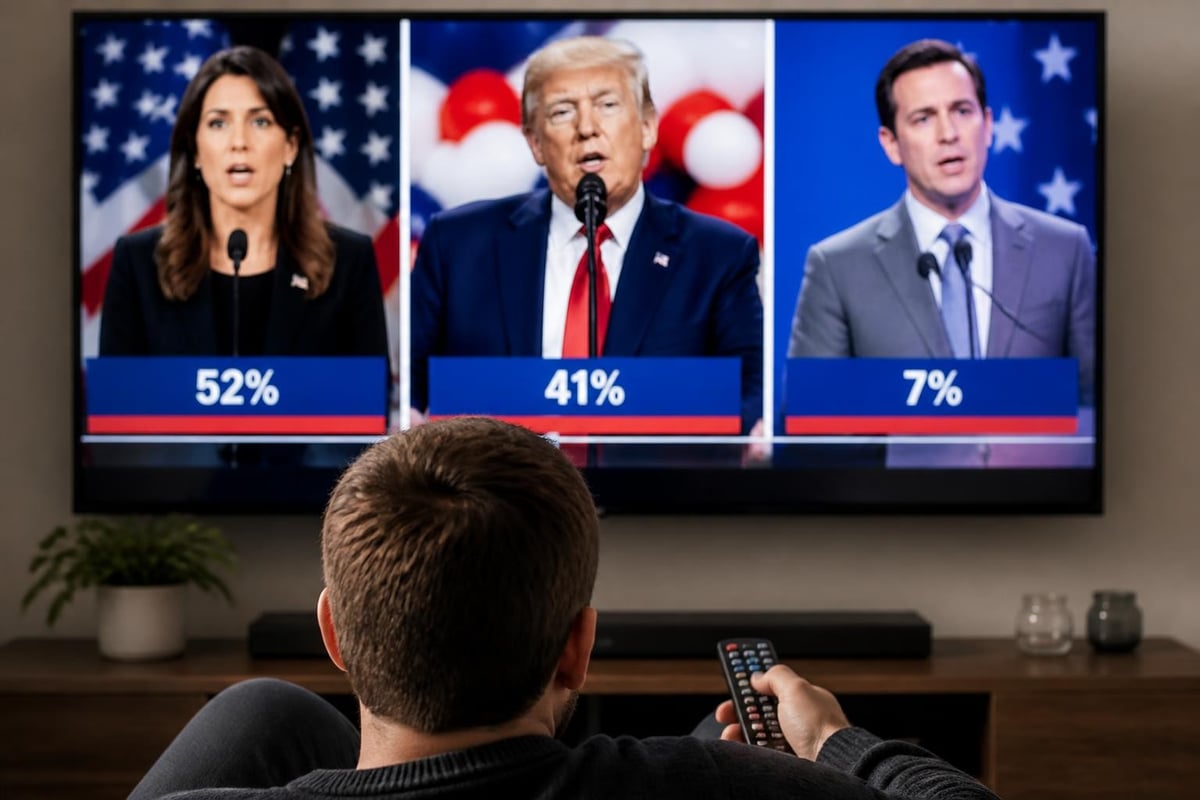
News organizations make daily decisions about airtime, column inches, and homepage placement. These choices create disparate visibility levels among candidates competing for the same office. Research examining the 2024 European Parliament elections revealed disproportionate media attention favoring specific political groups, a pattern that extends to U.S. presidential races.
The visibility gap affects fundraising capacity, volunteer recruitment, and name recognition. Candidates receiving extensive media coverage typically experience:
- Increased polling numbers within 72 hours of major coverage
- Enhanced donor engagement and financial contributions
- Greater volunteer sign-ups and grassroots mobilization
- Improved performance in debates due to perceived legitimacy
Agenda-Setting and Issue Prioritization
The agenda-setting theory explains how mainstream media influences elections by determining which policy issues dominate public discourse. Media outlets don't necessarily tell voters what to think, but they powerfully influence what voters think about.
The Cascading Effect on Campaign Strategy
When news organizations emphasize particular issues, campaigns adjust their messaging accordingly. During the 2026 election cycle, if mainstream outlets dedicate substantial coverage to economic policy, candidates must address those concerns or risk appearing out of touch.
This dynamic creates a feedback loop:
- Media organizations identify trending topics or breaking news
- Coverage intensifies around selected issues
- Campaigns respond with policy proposals and messaging
- Polling shows increased voter concern about covered topics
- Media continues coverage based on demonstrated public interest
The University of Oregon’s analysis of media influence on politics highlights how election trends reflect this interactive process between media institutions and campaign operations.
| Media Focus Area | Campaign Response | Voter Impact |
|---|---|---|
| Economic policy | Detailed financial plans | Prioritizes pocketbook issues |
| National security | Foreign policy positions | Heightens safety concerns |
| Social issues | Cultural stance clarification | Shapes identity-based voting |
| Healthcare costs | Insurance reform proposals | Elevates personal wellness concerns |
Framing and Narrative Construction
Beyond topic selection, how mainstream media influences elections involves the specific framing applied to candidates and issues. Framing determines the lens through which voters interpret political information.
Horse Race Versus Policy Coverage
Contemporary political journalism frequently emphasizes electoral competition over substantive policy analysis. This "horse race" framing presents elections as sporting events, focusing on polling numbers, strategic maneuvers, and campaign controversies rather than governance capabilities.
The consequences of this approach include:
- Reduced voter knowledge about policy differences between candidates
- Increased cynicism about political motivations
- Greater emphasis on personality over competence
- Diminished accountability for campaign promises
When voters engage with U.S. Presidential Report’s coverage, they encounter alternative framing that prioritizes governance and policy substance over electoral theatrics.
The Digital Transformation of Media Influence
Traditional broadcast and print media now share the information ecosystem with digital platforms, fundamentally altering how mainstream media influences elections in 2026.
Search Engine Curation and Political Information
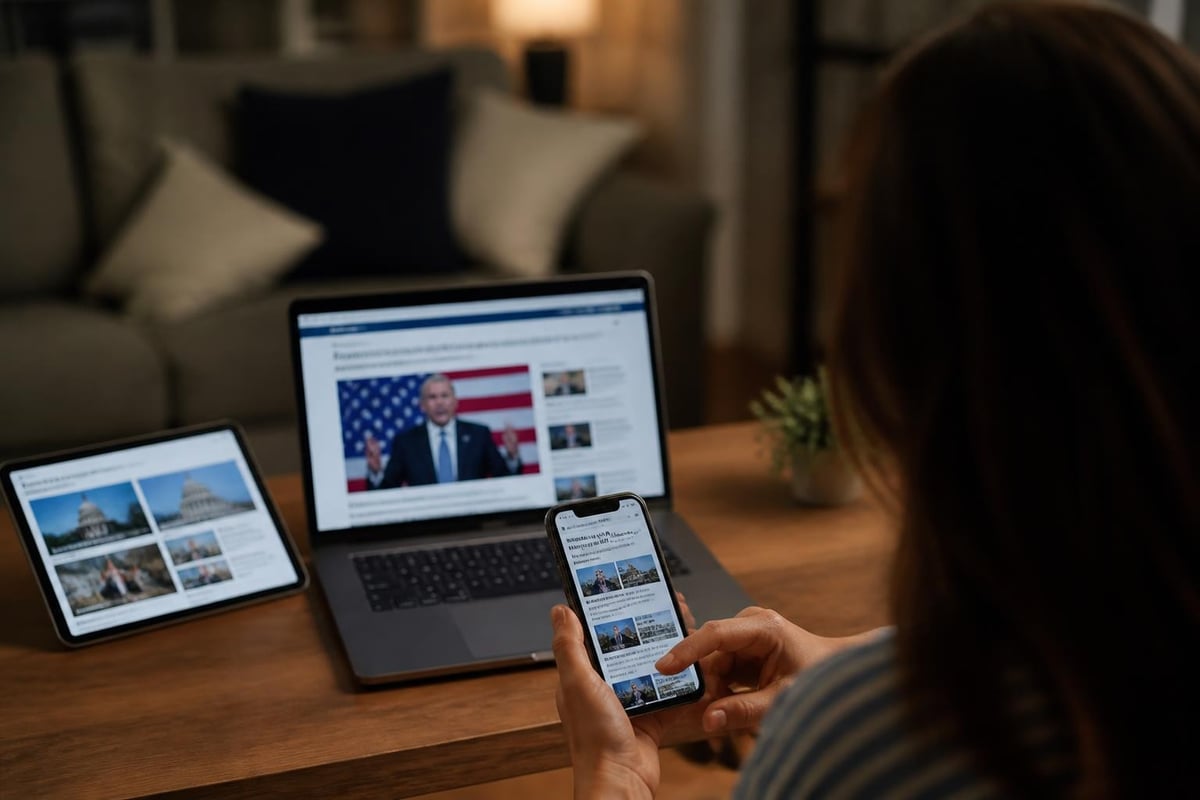
Research examining political information curation on Google and Bing prior to the 2024 elections revealed systematic patterns in source prioritization. These algorithmic choices affect which mainstream media outlets voters encounter when researching candidates.
The implications extend to information accessibility:
- Voters rely on search engines for candidate background research
- Algorithm prioritization determines source credibility perception
- Regional variations in search results create information disparities
- Mobile-first consumption changes reading patterns and depth
Social Media Amplification and Bot Networks
The intersection of mainstream media content and social platform distribution creates new influence mechanisms. Analysis of social bots amplifying low-credibility content during the 2016 campaign demonstrated how automated accounts manipulate perceived consensus around media narratives.
By 2026, these challenges have evolved. Platforms continue wrestling with:
- Coordinated inauthentic behavior that artificially boosts specific coverage
- Verification challenges distinguishing legitimate engagement from manipulation
- Echo chamber effects where algorithms reinforce existing preferences
- Cross-platform coordination enabling narrative synchronization
Artificial Intelligence and Emerging Media Technologies
Examining how AI is reshaping politics reveals transformative changes in content creation, distribution, and consumption. These technologies fundamentally alter how mainstream media influences elections moving forward.
Generative AI and Content Production
Large language models enable rapid content generation, raising questions about authorship, accuracy, and editorial standards. Mainstream outlets increasingly incorporate AI tools for:
- Initial draft creation for breaking news coverage
- Data analysis identifying trending topics
- Personalized content recommendations for readers
- Automated fact-checking of candidate statements
- Translation services expanding audience reach
The integration presents both opportunities and risks. Speed advantages allow faster response to developing stories, while accuracy concerns emerge when AI-generated content lacks proper verification.
Polarization and Partisan Media Ecosystems
The fragmentation of mainstream media into ideologically distinct ecosystems affects how information reaches different voter segments. Research examining polarization shifts between 2016 and 2020 elections documented increasing partisan divisions in media consumption patterns.
The Filter Bubble Phenomenon
Voters increasingly consume news from sources aligned with their existing political orientations. This self-selection creates distinct information environments where:
| Left-Leaning Outlets | Center/Neutral Outlets | Right-Leaning Outlets |
|---|---|---|
| Emphasize social justice issues | Balance multiple perspectives | Highlight traditional values |
| Frame economic policy progressively | Present technical analysis | Emphasize market solutions |
| Prioritize environmental concerns | Cover diverse topics equally | Focus on energy independence |
| Stress systemic inequality | Moderate interpretation | Emphasize individual responsibility |
This fragmentation challenges the notion of shared factual baselines necessary for democratic deliberation.
International Perspectives on Media Influence
Examining how mainstream media operates globally provides valuable context for understanding domestic patterns. Analysis from Le Monde regarding Eastern European media reveals that credibility challenges extend beyond fringe sources.
Domestic Actors and Institutional Credibility
The assumption that misinformation originates primarily from foreign interference overlooks domestic institutional failures. Mainstream outlets sometimes:
- Amplify unverified claims during breaking news situations
- Apply inconsistent editorial standards across political parties
- Prioritize engagement metrics over accuracy in digital publishing
- Face commercial pressures that compromise journalistic independence
These patterns demonstrate that understanding how mainstream media influences elections requires scrutinizing established institutions, not just alternative sources.
The Economics of Political Coverage
Financial considerations shape editorial decisions in ways that directly impact how mainstream media influences elections. News organizations operate within commercial constraints that affect coverage choices.
Advertising Revenue and Editorial Independence
Political campaigns represent significant advertising purchasers during election cycles. This creates potential conflicts between editorial independence and commercial interests. Major media companies must balance:
- Investigative journalism that may alienate advertising clients
- Access journalism maintaining relationships with campaign sources
- Sensationalist coverage driving engagement metrics and revenue
- Public service obligations serving democratic information needs
The tension between these priorities affects coverage depth, critical analysis, and investigative resource allocation.
Consolidation and Ownership Patterns
Media consolidation concentrates editorial control among fewer corporate entities. When examining presidential policy coverage, ownership patterns influence which stories receive resources and prominence.
Consolidation effects include:
- Reduced local political coverage as regional outlets merge
- Standardized national narratives replacing community perspectives
- Cost-cutting eliminating investigative journalism positions
- Profit maximization prioritized over public interest reporting
Voter Information Processing and Media Literacy
Understanding how mainstream media influences elections requires examining how voters process political information. Cognitive biases and information-processing limitations affect media consumption.
Confirmation Bias and Selective Exposure
Voters tend to seek information confirming existing beliefs while avoiding contradictory evidence. This bias interacts with media fragmentation, allowing selective exposure to ideologically compatible sources.
The consequences manifest in:
- Reduced persuadability through factual correction
- Strengthened partisan identity through repeated exposure
- Decreased cross-ideological communication
- Increased polarization despite information abundance
Regulatory Frameworks and Media Accountability
The legal and regulatory environment shapes how mainstream media influences elections through constraints on ownership, content standards, and political advertising.
Equal Time Provisions and Fairness Concerns
Broadcast media faces regulatory requirements regarding candidate access and advertising rates. These rules attempt ensuring equitable treatment, though enforcement challenges persist.
Cable news and digital platforms operate under different standards, creating disparate regulatory environments where traditional broadcasters face stricter constraints than emerging competitors.
Comparative Historical Analysis
Examining how mainstream media influences elections across different eras reveals evolving patterns. The 2026 landscape differs substantially from previous cycles due to technological advancement and audience fragmentation.
From Broadcast Dominance to Platform Diversity
The transition from three-network dominance to today's fractured ecosystem fundamentally altered information flows. During the mid-20th century, shared media experiences created common factual baselines. Contemporary voters inhabit distinct information environments with minimal overlap.
This evolution affects electoral dynamics through:
- Reduced shared reality making consensus-building more difficult
- Increased niche targeting allowing precise voter segment messaging
- Diminished gatekeeping power of traditional editorial boards
- Enhanced candidate direct communication bypassing media intermediaries
Readers seeking comprehensive coverage across this evolving landscape can explore the U.S. Presidential Report blog for ongoing analysis.
Misinformation and Verification Challenges
The speed of modern news cycles creates verification challenges that affect how mainstream media influences elections. Rushing to publication sometimes compromises accuracy.
The Pressure for Breaking News
Competitive dynamics push outlets to publish developing stories before complete verification. This urgency contributes to:
- Initial reports requiring subsequent correction
- Speculation presented as analysis
- Anonymous sourcing reducing accountability
- Sensationalist headlines overstating content
The cumulative effect erodes institutional credibility, particularly when corrections receive less prominence than original errors.
Measurement and Assessment Methodologies
Quantifying how mainstream media influences elections presents methodological challenges. Researchers employ various approaches measuring media effects on voter attitudes and behaviors.
Survey Research and Experimental Studies
Academic investigations use controlled experiments and survey research isolating media influence from other electoral factors. These studies consistently demonstrate measurable effects on:
| Measurement Area | Observable Effect | Significance Level |
|---|---|---|
| Candidate favorability | 3-7 point shifts | High |
| Issue priority ranking | Substantial reordering | Moderate-High |
| Turnout likelihood | 2-4 point changes | Moderate |
| Policy knowledge | Significant improvement | High |
Understanding these quantified effects helps campaigns strategize media engagement and helps voters recognize influence mechanisms.
Understanding how mainstream media influences elections empowers voters to consume political information critically and make decisions based on comprehensive analysis rather than selective narratives. The mechanisms through which media shapes electoral outcomes-from gatekeeping and agenda-setting to framing and technological amplification-operate continuously throughout campaign cycles, requiring ongoing vigilance and media literacy. For comprehensive, non-partisan coverage of presidential elections and governance issues, U.S. Presidential Report provides balanced analysis helping readers navigate the complex media landscape and access reliable information about current and past presidents.