Discover how the Electoral College operates in 2026, including the selection of electors, vote allocation, and the process for choosing the President.
The Electoral College process for 2026: how 538 electors from all 50 states and DC cast votes to determine the presidency based on state-by-state popular vote results
The Foundation of the Electoral College System
The Electoral College represents a constitutional compromise between direct popular vote and congressional selection of the President. The National Archives explains the Electoral College process as a body of 538 electors who formally cast votes for President and Vice President following the general election.
Each state receives electoral votes equal to its combined representation in Congress. This means every state gets electors matching their number of senators (always two) plus their number of representatives in the House (based on population). The District of Columbia also receives three electoral votes following ratification of the 23rd Amendment in 1961.
The allocation breaks down as follows:
- California holds the most electoral votes with 54
- Texas follows with 40 electoral votes
- Florida and New York each command substantial influence
- Seven states plus DC have only three electoral votes
- A total of 538 electoral votes are distributed nationally
- A candidate needs 270 electoral votes to win the presidency
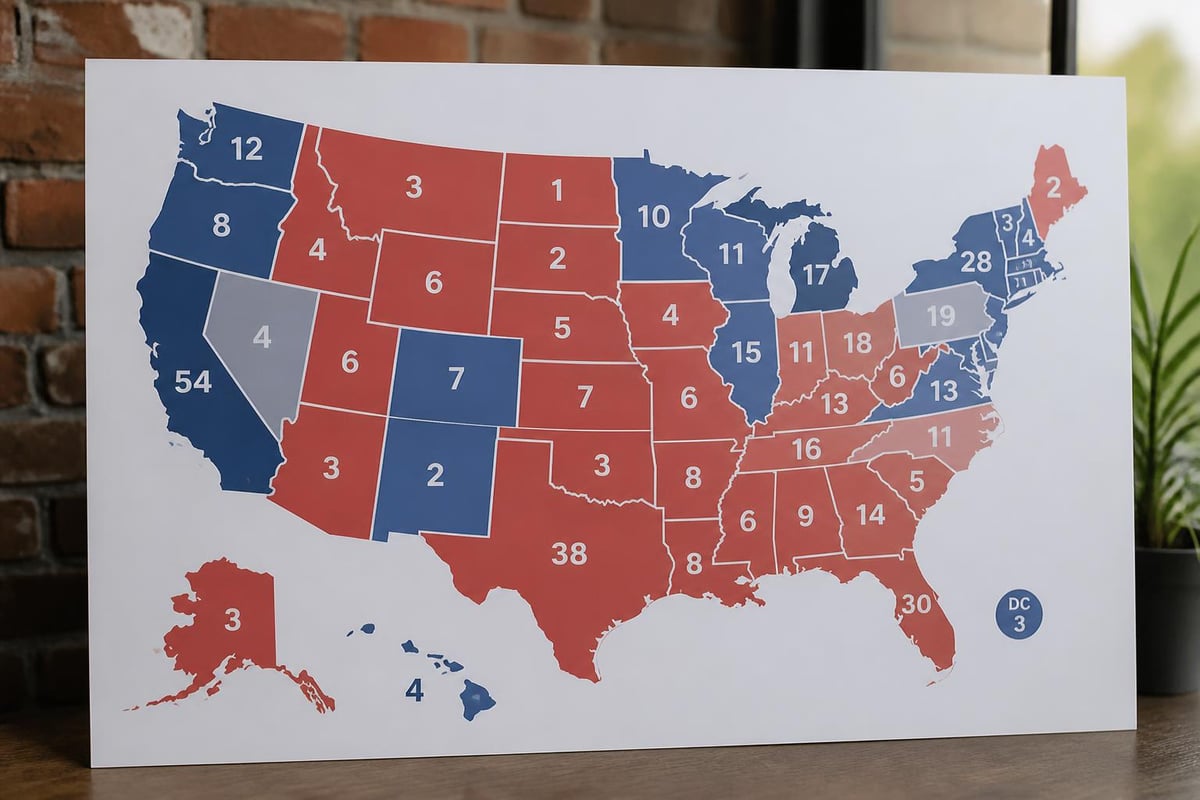
Population shifts recorded in the 2020 Census resulted in electoral vote redistribution beginning with the 2024 election cycle. These changes continue to apply in 2026 and will remain until the next census-based reapportionment. States like Texas and Florida gained representation, while states in the Northeast and Midwest lost electoral votes.
How States Select Their Electors
Understanding how does the electoral college work in 2026 requires knowing how electors themselves are chosen. Political parties in each state nominate their slate of potential electors, typically during state party conventions or through party committee votes. These individuals are often party loyalists, local officials, or community leaders who have demonstrated commitment to their party.
The Nomination Process
State parties develop their own procedures for selecting electors. Some states hold formal conventions where delegates vote on elector slates. Others empower state party executive committees to make these selections. The nominated electors pledge to support their party's presidential and vice-presidential candidates.
Federal law prohibits certain individuals from serving as electors. Members of Congress cannot serve as electors, nor can anyone holding a federal office of "trust or profit." This constitutional provision prevents conflicts of interest and maintains separation between the Electoral College and other government branches.
Winner-Take-All vs. Proportional Systems
Most states employ a winner-take-all system where the candidate receiving the most popular votes in that state wins all of its electoral votes. This system amplifies the importance of swing states and shapes campaign strategy significantly.
| State System | States Using It | Impact on Campaigns |
|---|---|---|
| Winner-take-all | 48 states + DC | Concentrates attention on competitive states |
| Proportional by district | Maine, Nebraska | Creates multiple battlegrounds within states |
| Fully proportional | None currently | Would distribute votes by percentage |
Maine and Nebraska use a different approach. These states award two electoral votes to the statewide popular vote winner, then allocate one electoral vote to the popular vote winner in each congressional district. This district method has occasionally resulted in split electoral votes, most notably in Nebraska during recent election cycles.
The Timeline and Process for 2026
The presidential election year follows a carefully orchestrated timeline governed by federal law and the Constitution. Each step plays a crucial role in how does the electoral college work in 2026.
Election Day Through Electoral Vote
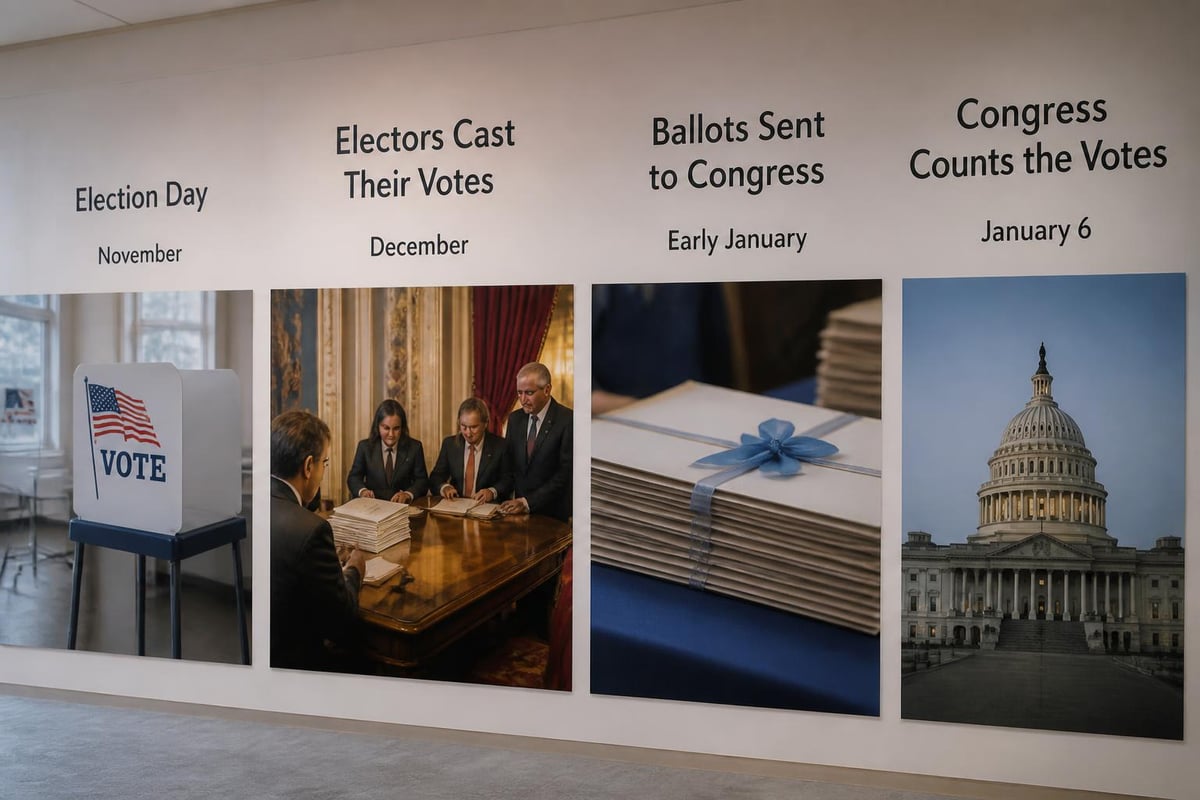
November 3, 2026 marks Election Day for the presidential election. Voters across all states and DC cast ballots for their preferred presidential ticket. Technically, voters select their state's slate of electors rather than directly voting for President.
Following Election Day, states have specific deadlines to complete their vote counts and certify results:
- States conduct official vote counts and address any recounts or challenges
- Governors prepare Certificates of Ascertainment listing appointed electors
- State officials transmit these certificates to the National Archives
- Electors meet in their respective state capitals
December 16, 2026 represents the date when electors meet in their state capitals. The roles and responsibilities of electors include casting separate ballots for President and Vice President. These meetings occur simultaneously across all states, preventing coordination or influence between state delegations.
Congressional Certification
January 6, 2027 brings the joint session of Congress where electoral votes are officially counted. The sitting Vice President, serving as President of the Senate, presides over this ceremonial but constitutionally mandated process.
Congress receives electoral vote certificates from all states. Representatives and Senators may object to specific state certifications, but any objection requires written support from at least one member of each chamber. If both a Representative and Senator object, each chamber debates the objection separately for up to two hours before voting.
The Electoral Count Reform Act, enacted after the January 6, 2021, events, clarified and strengthened procedures for this process. Legal perspectives on the Electoral College note these reforms reduced ambiguity around the Vice President's role and raised thresholds for objections.
Faithless Electors and Legal Safeguards
The question of whether electors must vote according to their state's popular vote has generated significant legal discussion. So-called "faithless electors" occasionally vote contrary to their pledge, though this happens rarely and has never changed an election outcome.
In 2020, the Supreme Court ruled in Chiafalo v. Washington that states may enforce laws penalizing or replacing faithless electors. Many states have subsequently strengthened their faithless elector statutes:
- 32 states and DC legally bind electors to vote for their pledged candidate
- Penalties vary from fines to criminal misdemeanors
- Replacement provisions allow immediate substitution of faithless electors
- 15 states have enacted new or stronger faithless elector laws since 2020
This legal framework ensures that understanding how does the electoral college work in 2026 includes recognizing the binding nature of elector pledges in most jurisdictions. The risk of faithless electors disrupting the process has been substantially minimized through state legislation.
Strategic Implications for Campaigns
The Electoral College fundamentally shapes presidential campaign strategy. Rather than pursuing a nationwide popular vote, candidates must build state-by-state coalitions reaching 270 electoral votes.
Swing State Focus
Competitive states receive disproportionate campaign attention and resources. Presidential candidates, their running mates, and surrogates concentrate visits, advertising spending, and organizational efforts in states where margins remain close.
The 2024 election identified several key battleground states that continue to influence 2026 strategic thinking:
- Pennsylvania (19 electoral votes)
- Georgia (16 electoral votes)
- North Carolina (16 electoral votes)
- Michigan (15 electoral votes)
- Arizona (11 electoral votes)
- Wisconsin (10 electoral votes)
- Nevada (6 electoral votes)
Understanding presidential campaign strategies reveals how candidates allocate finite resources to maximize electoral vote acquisition rather than raw vote totals.
Safe State Dynamics
States considered reliably Republican or Democratic receive minimal campaign attention despite large populations. California, with 54 electoral votes, sees little campaigning because its Democratic lean is pronounced. Similarly, Texas with 40 electoral votes attracts less attention than its size might suggest due to its Republican lean, though Democrats increasingly view it as potentially competitive.
This dynamic creates voter engagement disparities. Citizens in swing states encounter extensive campaigning, while those in safe states experience presidential elections more distantly.
Contemporary Debates and Reform Proposals
Discussions about Electoral College reform surface regularly, particularly following elections where the popular vote winner differs from the electoral vote winner. The 2000 and 2016 elections both produced this outcome, intensifying reform advocacy.
National Popular Vote Interstate Compact
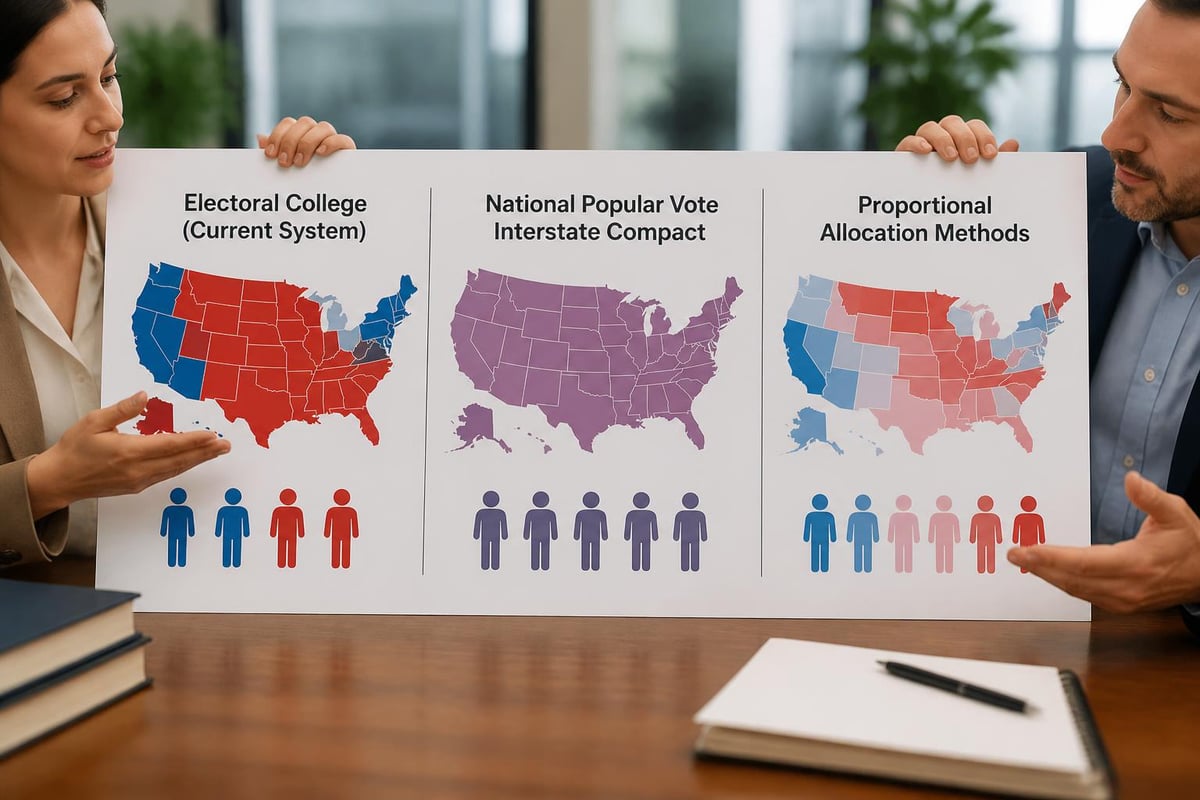
The most prominent reform effort involves the National Popular Vote Interstate Compact. States joining this agreement pledge to award their electoral votes to the national popular vote winner, regardless of their state results.
| Compact Status | Number of States | Electoral Votes | Notes |
|---|---|---|---|
| Enacted | 17 + DC | 209 | Requires 270 to activate |
| Pending | Several | Variable | Awaiting legislative action |
| Needed | N/A | 61 more | To reach activation threshold |
The compact only takes effect once states representing 270 electoral votes have joined. As of 2026, participating states total 209 electoral votes, leaving the initiative short of its activation threshold.
Constitutional Amendment Challenges
Abolishing the Electoral College entirely requires a constitutional amendment. This process demands two-thirds approval from both congressional chambers and ratification by three-fourths of states (38 of 50).
Small states benefit disproportionately from the Electoral College because every state receives at least three electoral votes regardless of population. Wyoming's approximately 580,000 residents have three electoral votes, while California's 39 million residents have 54. Per capita, Wyoming residents have roughly 3.6 times the electoral influence of California residents.
This mathematical reality makes small states unlikely to support abolition. Research on redistricting and electoral systems demonstrates how structural features of American elections create persistent advantages for certain constituencies, making reform politically challenging despite popular support.
Scenarios Requiring Congressional Intervention
Understanding how does the electoral college work in 2026 includes knowing what happens if no candidate achieves 270 electoral votes. This contingency, while rare, has occurred in American history.
The Contingent Election Process
If no presidential candidate wins an electoral majority, the House of Representatives selects the President. Each state delegation receives one vote, regardless of population size. A candidate must receive votes from 26 state delegations to win.
Simultaneously, the Senate selects the Vice President, with each Senator casting one individual vote. The vice-presidential candidate receiving votes from 51 Senators wins.
Key features of contingent elections:
- House voting occurs by state delegation, not individual members
- Only the top three electoral vote recipients remain eligible
- State delegations split evenly cast no vote for that state
- The process continues until someone receives 26 state delegation votes
- Senate vice-presidential selection operates independently
This scenario becomes more plausible with strong third-party candidacies. A significant independent candidate winning even one or two states could prevent either major party candidate from reaching 270 electoral votes.
The Twentieth Amendment Deadline
The Constitution requires resolution by Inauguration Day, January 20, 2027. If the House cannot select a President by this date, the individual chosen as Vice President by the Senate becomes Acting President. If neither chamber has chosen anyone, the Presidential Succession Act determines who assumes office.
State-Level Administration and Certification
Individual states manage their own election processes, including how does the electoral college work in 2026 at the state level. State-specific electoral procedures, like those in California, demonstrate the decentralized nature of American elections.
State officials bear responsibility for certifying election results and appointing electors. Secretaries of State or equivalent officials typically oversee this process, though specific procedures vary by state law.
Following the 2024 election cycle, many states updated their election security and certification protocols. These changes aimed to protect against interference while ensuring transparency and public confidence in results.
Safe Harbor Deadline
Federal law establishes a "safe harbor" deadline, occurring six days before electors meet. States completing their vote counts, resolving legal challenges, and certifying results by this date receive special protection. Congress must accept these certified results unless both chambers vote to reject them.
For 2026, the safe harbor deadline falls on December 10, 2026. This date creates urgency for states to complete recounts and resolve disputes quickly following Election Day.
The Electoral College in Modern Political Context
The Electoral College's influence extends beyond the mechanical process of selecting Presidents. It shapes party platforms, policy priorities, and the nature of American federalism.
Presidential candidates tailor their policy positions partly based on Electoral College math. Issues particularly important to swing state voters receive heightened attention. Manufacturing policy becomes prominent because of Midwestern battlegrounds. Immigration policy gains emphasis due to border state competitiveness.
Analysis of recent presidential elections shows how prediction models increasingly account for Electoral College dynamics rather than national polling alone. State-by-state forecasting has become more sophisticated, recognizing that national popular vote trends may not translate uniformly across electoral battlegrounds.
The system also influences party coalition building. Both major parties must assemble diverse coalitions spanning geographic, demographic, and ideological divides to accumulate 270 electoral votes. This requirement historically encouraged moderation and broad-based appeals, though contemporary political polarization challenges this dynamic.
Media Coverage and Public Understanding
Despite its constitutional importance, public understanding of how does the electoral college work in 2026 remains inconsistent. Polls regularly show many Americans cannot explain basic Electoral College mechanics or accurately identify the number