The intersection of executive power and judicial oversight has become increasingly significant in American governance, particularly as courts examine presidential directives. The executive order supreme court review 2026 landscape represents a critical moment in constitutional law, where the boundaries of presidential authority face scrutiny through multiple high-stakes cases. Understanding these judicial challenges provides essential insight into how the balance of power operates within our democratic system, affecting everything from immigration policy to regulatory reform.
Constitutional Framework for Executive Order Challenges
The Supreme Court's authority to review executive orders stems from the fundamental principle of judicial review established in Marbury v. Madison. This power ensures that presidential actions remain within constitutional boundaries and do not exceed the authority granted by Congress or the Constitution itself.
Executive orders function as directives from the President to federal agencies, carrying the force of law when properly issued. However, they must align with existing statutory authority and constitutional provisions. When challenges arise, courts examine whether the President has acted within their legitimate scope of power or overstepped into legislative territory.
Three-Tier Analysis Framework
Courts typically apply a three-part framework when evaluating executive authority, based on Justice Robert Jackson's concurring opinion in Youngstown Sheet & Tube Co. v. Sawyer:
- Category One: Presidential authority is at its maximum when acting pursuant to express or implied congressional authorization
- Category Two: The President acts in absence of congressional grant or denial of authority, creating a "zone of twilight"
- Category Three: Presidential power is at its lowest when acting contrary to congressional will
This framework has shaped how courts approach executive order supreme court review 2026 cases, providing a structured methodology for constitutional analysis.
Major Executive Order Cases in 2026
Several significant cases have emerged this year, each testing different aspects of presidential power. These challenges span various policy domains and reflect ongoing tensions between executive action and constitutional constraints.
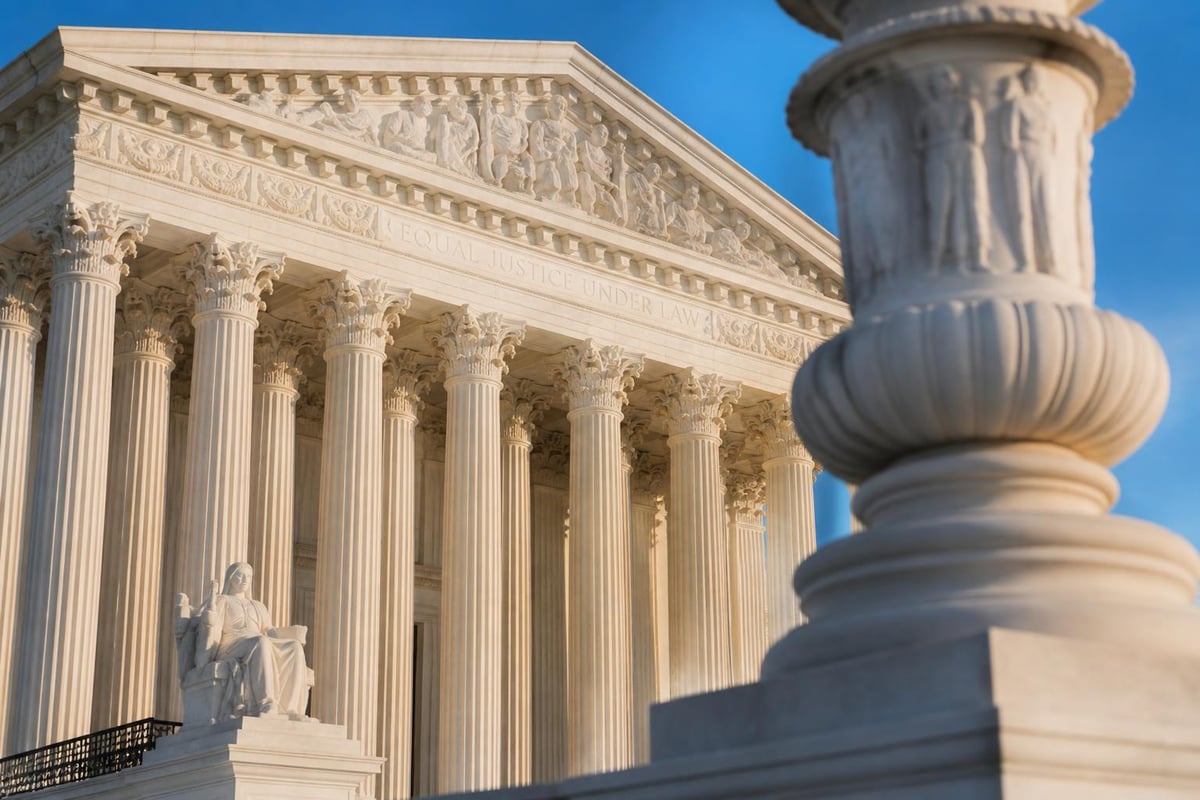
Birthright Citizenship Controversy
One of the most consequential challenges involves executive actions attempting to restrict birthright citizenship, raising fundamental questions about the 14th Amendment's Citizenship Clause. The administration sought expedited review, arguing that the executive order merely clarified existing law rather than contradicting constitutional provisions.
Supreme Court justices have expressed skepticism during oral arguments, particularly regarding the scope of presidential authority to reinterpret constitutional amendments. The questions raised by justices focused on whether executive action could effectively nullify constitutional text and precedent.
Legal scholars note that this case represents a defining moment for executive order supreme court review 2026, potentially establishing new boundaries around presidential interpretation of constitutional provisions.
Regulatory Repeal Initiatives
The administration has pursued aggressive regulatory reform through executive directives, including efforts to repeal regulations deemed unlawful under recent Supreme Court decisions. This approach raises questions about the proper balance between executive efficiency and administrative procedure.
Critics argue that wholesale regulatory elimination without proper notice-and-comment procedures violates the Administrative Procedure Act. Supporters contend that removing unlawful regulations simply restores the proper legal baseline and does not require extensive procedural safeguards.
Procedural Dynamics of 2026 Reviews
The mechanics of how cases reach the Supreme Court significantly impact the timeline and scope of judicial review. Understanding these procedural elements provides context for current litigation patterns.
| Stage | Typical Duration | Key Considerations |
|---|---|---|
| District Court Filing | Immediate | Venue selection, standing requirements |
| Preliminary Injunction | 2-4 weeks | Likelihood of success, irreparable harm |
| Appeals Court Review | 2-6 months | Panel composition, circuit splits |
| Supreme Court Petition | 3-12 months | Certiorari factors, emergency applications |
Emergency Applications and Shadow Docket
An increasingly prominent feature of executive order supreme court review 2026 has been the use of emergency applications to the Supreme Court, often called the "shadow docket." These applications seek immediate stays of lower court injunctions, allowing executive orders to take effect while litigation continues.
Key characteristics of shadow docket decisions:
- Issued without full briefing or oral arguments
- Often decided quickly, sometimes within days
- May lack detailed explanations or reasoning
- Typically addressed to individual justices by circuit
The shadow docket has become controversial, with critics arguing it allows major policy decisions without adequate deliberation. Defenders maintain these emergency procedures serve necessary purposes when lower courts issue overbroad preliminary injunctions.
Nationwide Injunctions Debate
Multiple executive order supreme court review 2026 cases have involved nationwide injunctions issued by single district court judges. This practice has generated significant debate about the proper scope of judicial relief.
Proponents argue nationwide injunctions provide necessary uniformity and prevent the government from implementing unconstitutional policies in non-enjoined jurisdictions. Opponents contend these injunctions exceed judicial authority, prevent policy experimentation, and forum shopping while consolidating excessive power in individual judges.
Constitutional Doctrines Shaping Review
Several legal doctrines significantly influence how courts evaluate executive orders, creating a complex analytical landscape that shapes case outcomes.
Standing Requirements
Plaintiffs challenging executive orders must demonstrate Article III standing by establishing:
- Injury in fact: Concrete and particularized harm
- Causation: Injury fairly traceable to challenged action
- Redressability: Likely relief from favorable decision
Standing questions have proved crucial in several 2026 cases, with courts dismissing challenges from plaintiffs unable to demonstrate sufficient connection to alleged harms.
Political Question Doctrine
Courts occasionally invoke the political question doctrine to avoid deciding cases involving core executive functions or foreign policy matters. This doctrine reflects judicial restraint in areas where constitutional text commits decisions to political branches or where manageable judicial standards are absent.
However, courts generally reject political question arguments when executive orders allegedly violate clear constitutional or statutory boundaries, as those determinations fall within traditional judicial competence.
Impact on Federal Governance
The outcomes of executive order supreme court review 2026 cases carry significant implications beyond individual policies, shaping the future landscape of presidential power and administrative law.
Administrative State Implications
Recent Supreme Court decisions have already constrained agency authority through doctrines like major questions and limiting Chevron deference. Executive order challenges in 2026 build upon these precedents, potentially further restricting executive branch flexibility.
Key affected areas include:
- Environmental regulation and climate policy
- Immigration enforcement and border security
- Healthcare administration and insurance markets
- Labor standards and workplace protections
- Financial regulation and consumer protection
Separation of Powers Balance
Each executive order supreme court review 2026 decision contributes to the ongoing negotiation of power between branches. Stringent judicial review strengthens congressional prerogatives and judicial oversight, while deferential review expands presidential discretion.
This balance affects not only current disputes but establishes precedents for future administrations, regardless of political affiliation. Decisions protecting presidential authority today may enable different policies tomorrow, creating institutional incentives beyond partisan considerations.
Historical Context and Precedent
Understanding current executive order challenges requires examining historical patterns of judicial review and presidential power.
New Deal Era Conflicts
The Supreme Court's confrontation with Franklin Roosevelt's New Deal programs established enduring principles about executive authority limits. Cases like Schechter Poultry Corp. v. United States rejected broad delegations of legislative power to the President, establishing the nondelegation doctrine.
These precedents remain relevant to executive order supreme court review 2026, particularly as courts examine whether modern directives improperly assume legislative functions.
War Powers and National Security
Historical cases involving war powers and national security have generally granted broader presidential discretion, recognizing executive primacy in foreign affairs and military matters. However, even in these domains, courts have imposed limits when executive actions affect domestic civil liberties.
Historical progression of Supreme Court approaches to executive authority from the Founding era through 2026, showing cycles of expansion and constraint
Modern Administrative Presidency
Beginning in the 1960s, presidents increasingly used executive orders to shape policy when congressional action proved difficult. This trend accelerated across recent administrations, creating the extensive framework of executive directives now subject to judicial scrutiny.
| President | Executive Orders (Annual Average) | Primary Focus Areas |
|---|---|---|
| Reagan | 47 | Regulatory reform, national security |
| Clinton | 46 | Environmental protection, civil rights |
| Bush (43) | 36 | Homeland security, counterterrorism |
| Obama | 35 | Immigration, climate change |
| Trump | 55 | Immigration, deregulation |
| Biden | 62 | COVID response, climate policy |
Monitoring Executive Order Litigation
Following developments in executive order supreme court review 2026 requires understanding where to find reliable information and how to interpret judicial signals. Resources like the Supreme Court’s interim orders tracker provide valuable updates on pending cases and their procedural status.
Key Indicators of Case Significance
Certain factors signal whether an executive order challenge will receive Supreme Court attention:
- Circuit court splits on legal questions
- Nationwide injunctions affecting federal operations
- Emergency applications seeking immediate stays
- Explicit grants of certiorari before final judgment
- Solicitor General involvement and position
Reading Court Signals
Supreme Court orders, even brief procedural rulings, often contain clues about how justices view underlying issues. Dissents from denial of certiorari or emergency relief applications may preview arguments justices find compelling.
Oral argument transcripts reveal justices' concerns and skepticism, providing insight into potential decision directions. Question frequency, tone, and subject matter often correlate with eventual vote patterns.
Implications for Presidential Power
The cumulative effect of executive order supreme court review 2026 decisions will shape presidential authority for years to come, influencing how future presidents approach governance challenges.
Practical Constraints on Executive Action
Robust judicial review creates practical constraints that affect executive order drafting and implementation. Presidents and their legal advisers must carefully structure orders to withstand scrutiny, potentially limiting policy ambitions or requiring congressional cooperation.
These constraints may promote better-considered policies that respect statutory and constitutional boundaries. Alternatively, they might frustrate legitimate executive needs for swift action in emergencies or evolving situations.
Incentives for Congressional Engagement
When courts invalidate executive orders for exceeding statutory authority, they implicitly encourage congressional action to provide clearer authorization. This dynamic can strengthen legislative processes and democratic accountability.
However, congressional gridlock often prevents such legislative responses, leaving policy vacuums that neither branch effectively fills. This stalemate highlights ongoing tensions in American governance structure.
Future Trajectory of Executive Authority
Looking beyond 2026, the trajectory of presidential power will depend partly on how current Supreme Court cases resolve foundational questions about executive authority.
Potential Doctrinal Developments
Several doctrinal areas may see significant evolution:
- Refinement of major questions doctrine application to executive orders
- Clarification of presidential authority to interpret constitutional provisions
- Standards for nationwide injunction appropriateness
- Framework for emergency actions requiring immediate implementation
These developments will emerge gradually through case-by-case adjudication, reflecting the common law nature of constitutional doctrine.
Political and Institutional Responses
Congressional responses to judicial limitations on executive power could include clearer statutory delegations, explicit authorizations for specific actions, or restrictions on presidential discretion. The direction depends on political alignments and institutional priorities.
Public opinion and electoral consequences also shape executive power dynamics, as presidents weigh political costs of aggressive executive action against policy benefits. Those considering executive power issues can stay informed through U.S. Presidential Report’s coverage of political developments.
Long-Term Constitutional Balance
The ultimate question underlying executive order supreme court review 2026 concerns the appropriate balance between energy in the executive and safeguards against overreach. This balance has shifted throughout American history, reflecting changing governance needs and constitutional understandings.
Competing constitutional values include:
- Effective governance requiring swift executive action
- Democratic accountability through legislative processes
- Rule of law constraining arbitrary power
- Practical administration of complex modern state
- Protection of individual rights from government overreach
No permanent equilibrium exists; instead, constitutional balance emerges through ongoing negotiation between branches, mediated by courts interpreting foundational legal texts in contemporary contexts.
The executive order supreme court review 2026 landscape reveals fundamental questions about presidential authority and constitutional governance that will shape American law for generations. As these cases progress through the judicial system, they offer critical insights into how our constitutional framework adapts to modern governance challenges. For comprehensive, non-partisan coverage of these developments and their implications for presidential power, U.S. Presidential Report provides essential analysis and updates to help you understand the evolving relationship between the presidency and the courts.