The 2024 us presidential election represented a pivotal moment in American political history, marked by unprecedented developments including a sitting president's withdrawal from the race and significant shifts in voter demographics. This election cycle witnessed intense scrutiny of democratic institutions, evolving campaign strategies, and transformative changes in how Americans engaged with the electoral process. Understanding the comprehensive landscape of this election requires examining the candidates, campaign dynamics, voter behavior, and lasting implications for governance and political discourse.
The Race Takes Shape: Candidates and Early Dynamics
The 2024 us presidential contest began with familiar faces and unexpected turns that would fundamentally reshape the campaign landscape. President Joe Biden initially sought reelection, positioning himself as the Democratic incumbent with a record to defend. On the Republican side, former President Donald Trump launched his campaign early, leveraging his established political base and fundraising network.
The primary season unfolded with intense competition across both parties. Trump consolidated Republican support rapidly, despite facing multiple legal challenges and investigations. His campaign strategy focused on energizing his core supporters while attempting to expand his coalition beyond traditional Republican demographics.
Biden's Historic Withdrawal
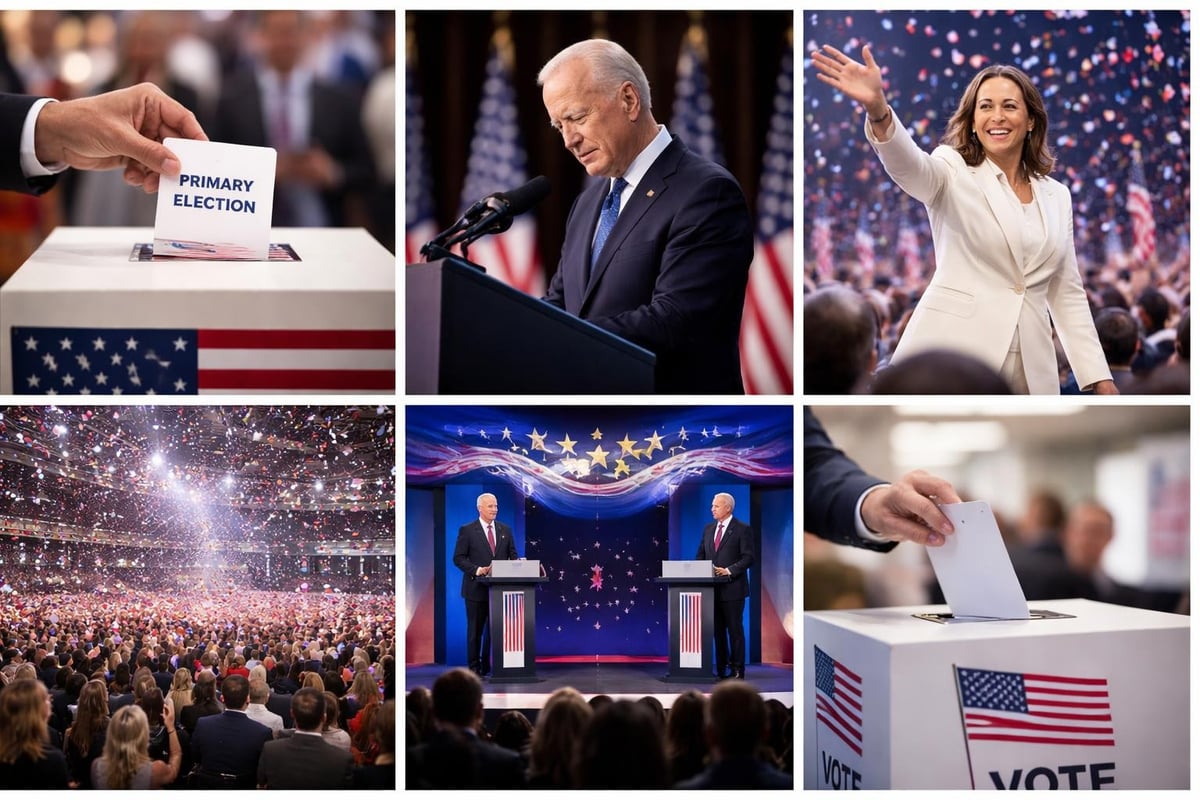
A defining moment occurred when President Biden withdrew from the 2024 presidential race, creating unprecedented circumstances for the Democratic Party. This decision, made after mounting concerns about his age and performance in early debates, triggered a compressed nomination process.
Vice President Kamala Harris quickly emerged as the Democratic nominee, inheriting Biden's campaign infrastructure and fundraising apparatus. The transition presented both opportunities and challenges:
- Momentum generation through historic candidacy potential
- Limited time to establish independent campaign identity
- Inherited policy positions requiring careful calibration
- Fundraising advantages from existing donor networks
- Name recognition challenges in key battleground states
Harris's campaign faced the complex task of maintaining Democratic unity while differentiating herself sufficiently to energize voters. Her 2024 presidential campaign emphasized themes of generational change, reproductive rights, and economic opportunity, appealing to diverse coalition partners essential for Democratic success.
Campaign Strategies and Messaging Frameworks
The 2024 us presidential campaigns employed sophisticated data analytics and targeted messaging unprecedented in scale and precision. Both major party campaigns invested heavily in digital outreach, micro-targeting specific voter segments with customized appeals.
Republican Strategy and Execution
Trump's campaign built upon his established brand while refining approaches based on 2020 lessons. The strategy centered on several core elements:
Economic messaging dominated Republican communications, emphasizing inflation concerns, border security, and regulatory reduction. The campaign effectively linked economic anxiety to administration policies, particularly among working-class voters experiencing cost-of-living pressures.
Demographic expansion efforts targeted groups traditionally aligned with Democrats. Analysis shows Trump increased his vote total by approximately 2.5 million, with notable gains among Hispanic voters, younger Black men, and suburban moderates concerned about crime and economic issues.
| Voter Demographic | 2020 Performance | 2024 Performance | Net Change |
|---|---|---|---|
| Hispanic Men | 36% | 45% | +9% |
| Black Men (18-44) | 85% | 78% | -7% |
| Suburban Women | 52% | 48% | -4% |
| Rural Voters | 65% | 68% | +3% |
Democratic Approach and Challenges
Harris's abbreviated campaign required rapid mobilization and message development. The Democratic strategy emphasized:
- Coalition maintenance across diverse demographic groups
- Reproductive rights as mobilizing issue post-Dobbs decision
- Democracy protection themes highlighting constitutional concerns
- Economic opportunity messaging targeting middle-class families
- Healthcare access and prescription drug cost reduction
The compressed timeline limited Harris's ability to fully define her candidacy independent of the Biden administration. Polling data throughout the campaign reflected voter ambivalence about her policy positions and leadership vision, particularly on economic matters where Republicans maintained messaging advantages.
Electoral Geography and Battleground States
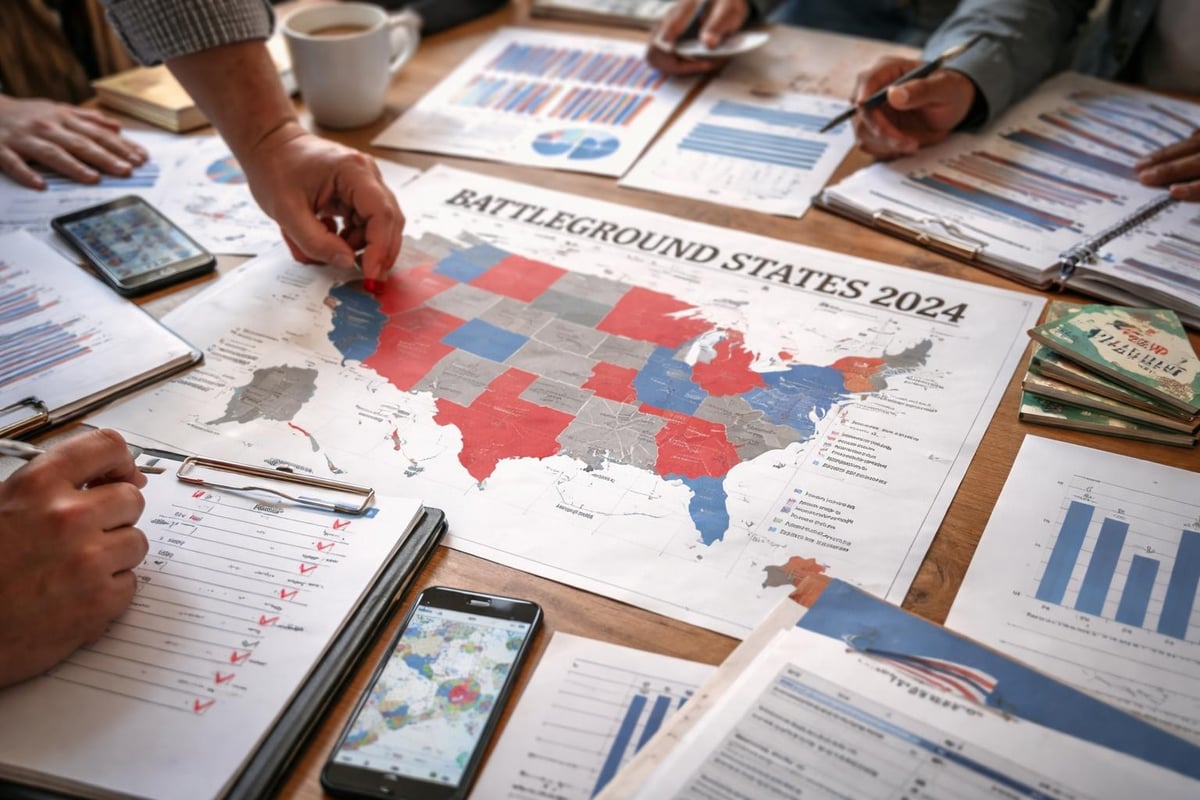
The 2024 US presidential election results revealed significant geographic patterns that defined the outcome. Seven battleground states received disproportionate campaign attention and resources: Pennsylvania, Michigan, Wisconsin, Arizona, Nevada, Georgia, and North Carolina.
Rust Belt Dynamics
The industrial Midwest proved decisive once again. Pennsylvania, Michigan, and Wisconsin formed the "blue wall" that Democrats sought to rebuild after 2016 losses. Trump's campaign invested heavily in these states, emphasizing manufacturing job concerns and trade policy.
Working-class voters in smaller cities and rural areas demonstrated strong Republican preferences, while urban cores remained solidly Democratic. Suburban counties surrounding major metropolitan areas became the critical swing geography where both campaigns concentrated resources.
Pennsylvania emerged as the most contested state, with both candidates making dozens of visits. The state's diverse economy, ranging from energy production to healthcare and technology, created complex electoral dynamics requiring nuanced messaging approaches.
Media Landscape and Information Ecosystem
The 2024 us presidential election unfolded within a fragmented media environment characterized by partisan outlets, social media influence, and declining trust in traditional journalism. Research on large language models during the election season highlighted how artificial intelligence tools influenced political discourse and information dissemination.
Digital Campaign Tactics
Both campaigns leveraged sophisticated digital operations:
- Targeted advertising on social platforms reaching specific voter segments
- Influencer partnerships engaging non-traditional political voices
- Podcast appearances accessing engaged niche audiences
- Email fundraising generating billions in small-dollar donations
- Text message campaigns for voter mobilization and persuasion
The fragmented information environment enabled campaigns to deliver different messages to different audiences with minimal cross-contamination. Voters increasingly received campaign communications through algorithmically curated feeds reflecting their existing preferences and biases.
Misinformation Challenges
Election officials and fact-checkers confronted persistent misinformation about voting procedures, candidate backgrounds, and policy positions. The election served as a crash test for American democracy, with concerns about electoral integrity, foreign interference, and domestic disinformation campaigns.
Social media platforms implemented various content moderation policies, though effectiveness remained debated. The balance between preventing harmful misinformation and preserving free political speech created ongoing tensions throughout the campaign.
Voter Turnout and Demographic Shifts
Turnout patterns in the 2024 us presidential election reflected both enthusiasm and strategic mobilization efforts. Overall participation remained high by historical standards, though below the exceptional 2020 levels driven by pandemic-era voting reforms.
Age and Generational Patterns
Younger voters demonstrated complex political allegiances that defied simple categorization. While voters under 30 leaned Democratic overall, Republican gains among young men, particularly those without college degrees, represented a notable shift from previous cycles.
Older voters maintained reliable turnout patterns, with seniors split more evenly between parties than in recent elections. Medicare and Social Security policy discussions resonated strongly with this demographic, though economic concerns and cultural issues also influenced preferences.
Educational Polarization
The education gap in partisan preferences widened further. College-educated voters, particularly those with graduate degrees, strongly favored Democrats. Voters without college degrees increasingly supported Republicans, creating class-based political alignments that transcended traditional party coalitions.
| Education Level | Democratic Support | Republican Support | Margin |
|---|---|---|---|
| High School or Less | 43% | 55% | R+12 |
| Some College | 46% | 52% | R+6 |
| College Degree | 54% | 44% | D+10 |
| Graduate Degree | 61% | 37% | D+24 |
Policy Debates and Issue Priorities
The 2024 us presidential campaign featured substantive policy debates across multiple domains, though discussion quality varied considerably across different forums and media outlets.
Economic Policy Frameworks
Inflation and cost-of-living concerns dominated voter priorities throughout the campaign. Republicans criticized administration policies they claimed exacerbated price increases, while Democrats emphasized corporate price gouging and supply chain disruptions beyond government control.
Tax policy differences emerged clearly:
- Republicans proposed extending 2017 tax cuts and implementing additional business-friendly provisions
- Democrats advocated higher taxes on corporations and wealthy individuals to fund social programs
- Both parties proposed targeted middle-class tax relief, though specifics differed substantially
Trade policy discussions revisited familiar terrain, with both candidates expressing skepticism toward multilateral trade agreements and emphasizing domestic manufacturing priorities.
Immigration and Border Security
Border security emerged as a top-tier issue, particularly in southwestern states. Republican messaging emphasized enforcement, deportation expansion, and wall construction. Democratic responses struggled between progressive activists opposing harsh enforcement and moderates seeking credible border management positions.
The U.S. Presidential Report provides ongoing coverage of immigration policy developments and their political implications.
Healthcare and Social Policy
Healthcare access remained contentious despite reduced prominence compared to previous cycles. Republicans avoided detailed Affordable Care Act repeal discussions that proved politically damaging previously, instead emphasizing prescription drug costs and insurance competition.
Reproductive rights became a central Democratic mobilizing issue following the Dobbs decision. Harris's campaign emphasized restoration of abortion access, while Trump adopted varying positions attempting to balance conservative base support with general election concerns.
Media Coverage and Campaign Events
The traditional campaign calendar played out with modifications reflecting contemporary political realities. Party conventions served more as made-for-television productions than deliberative bodies, with carefully scripted messaging and celebrity appearances designed for maximum viewership.
Presidential Debates
Debates generated significant viewership and influenced campaign trajectories, particularly early encounters that contributed to Biden's withdrawal decision. The Harris-Trump debates featured sharp exchanges on economics, foreign policy, and democratic institutions.
Format discussions revealed ongoing tensions about debate structures, moderator roles, and fact-checking protocols. Campaigns negotiated extensively over venues, timing, and participation terms, with both sides seeking maximum strategic advantage.
Ground Game Operations
Despite digital sophistication, traditional field operations remained crucial. Door-to-door canvassing, phone banking, and voter registration drives consumed significant campaign resources. Both parties invested heavily in battleground state infrastructure, recruiting volunteers and paid staff months before election day.
Early voting expansion in many states extended campaign timelines, requiring sustained resource allocation throughout October rather than concentrated final-week pushes. Presidential polls tracked shifting preferences as early votes were cast.

Results Analysis and Electoral Outcome
The detailed state-by-state results revealed a decisive outcome with implications extending far beyond the immediate victor. Trump's victory represented both personal political resilience and broader realignment trends reshaping American electoral geography.
Electoral College Mathematics
The final electoral college tally reflected narrow victories in multiple battleground states producing comfortable overall margins. Trump secured Pennsylvania's 19 electoral votes alongside Michigan and Wisconsin, reconstructing the blue wall breach from 2016.
Southwestern states presented mixed results, with Arizona remaining competitive while Nevada trended Republican. Georgia's outcome reflected complex demographic changes and sophisticated organizing efforts by both parties.
Popular Vote Dynamics
The popular vote margin, while narrower than electoral college results suggested, demonstrated Trump's expanded coalition. Gains among Hispanic voters, particularly men, proved crucial in several competitive states. Urban underperformance for Harris compared to Biden's 2020 results contributed significantly to the outcome.
Suburban volatility continued, with some affluent suburban counties shifting Democratic while working-class suburbs moved Republican. These cross-cutting trends created complex local dynamics defying simple national narratives.
Post-Election Landscape and Governance Implications
The 2024 us presidential election outcome immediately shaped governance expectations and policy trajectories for the incoming administration. Trump's second term promised significant departures from Biden-era policies across multiple domains.
Policy Priorities and Executive Actions
The incoming administration signaled intentions to pursue aggressive executive action on immigration enforcement, regulatory rollbacks, and energy policy. Congressional cooperation would determine legislative ambitions' feasibility, with divided government scenarios requiring bipartisan negotiation on major initiatives.
Concerns emerged among Hispanic communities about deportation expansion and immigration enforcement intensification, despite Trump's improved performance with these voters. Reconciling campaign promises with coalition maintenance presented early governing challenges.
Democratic Party Reassessment
Democrats faced fundamental questions about coalition composition, messaging effectiveness, and policy priorities following the defeat. Progressive activists and moderate pragmatists offered conflicting diagnoses and prescriptions, ensuring contentious internal debates about future direction.
The party's traditional labor union base showed continued erosion, while gains among college-educated professionals created tensions between economic populism and cultural progressivism. Resolving these contradictions would shape Democratic competitiveness in future cycles.
International Reactions and Foreign Policy Implications
Global leaders monitored the 2024 us presidential election outcome closely, recognizing significant foreign policy implications. Trump's return to office signaled potential shifts in alliance relationships, trade agreements, and multilateral institution engagement.
European allies expressed concerns about NATO commitment levels and transatlantic cooperation continuity. Asian partners assessed implications for China policy, regional security arrangements, and economic partnerships. Middle Eastern governments anticipated policy changes affecting regional conflicts and diplomatic initiatives.
The election result's international dimension reflected America's continued global influence despite domestic political polarization. Foreign governments invested resources in understanding administration priorities and establishing productive relationships with incoming officials.
Trade and Economic Relationships
Campaign rhetoric about tariffs and trade renegotiation created uncertainty for international businesses and trading partners. The administration's actual policy implementation would determine whether campaign promises translated into substantive changes or negotiating positions for favorable deals.
China policy remained a rare area of bipartisan consensus, though tactical approaches differed. Technology competition, intellectual property protection, and supply chain resilience continued as central concerns transcending partisan divisions.
Long-Term Electoral Trends and Party Realignment
The 2024 us presidential election accelerated realignment trends reshaping American partisan coalitions. Educational polarization, declining geographic diversity in party support, and shifting racial and ethnic voting patterns suggested fundamental changes in electoral competition.
Republicans' working-class gains, if sustained, would require policy attention to these voters' economic concerns beyond cultural appeals. Democrats' growing strength among affluent, educated voters created tensions with traditional economic populist messaging.
Geographic sorting intensified, with fewer genuinely competitive states and growing disparities between red and blue America. This concentration created both strategic challenges for campaigns and governance difficulties for elected officials seeking broad-based support.
The presidential library resources will eventually document this transformative election for future researchers studying American political evolution.
The 2024 us presidential election marked a consequential moment in American political history, featuring unprecedented candidate dynamics, significant demographic shifts, and lasting implications for both major parties. For comprehensive, non-partisan coverage of presidential news, elections, and governance issues, visit U.S. Presidential Report for ongoing analysis and updates on current and past presidents.