The relationship between trade policy and employment remains one of the most debated topics in American political discourse. As the United States navigates an increasingly complex global economy in 2026, understanding how government decisions on tariffs, trade agreements, and international commerce affect American workers has never been more critical. Presidential administrations from both parties have implemented varying approaches to trade, each claiming their policies best serve American workers and businesses. The intersection of us trade policies and jobs creates ripple effects throughout the economy, influencing everything from manufacturing employment to service sector growth.
The Fundamentals of Trade Policy and Employment
Trade policy encompasses the regulations, agreements, and strategic decisions that govern how the United States engages in international commerce. These policies directly impact employment levels across multiple sectors, though the relationship proves more nuanced than simple cause and effect.
According to data from the International Trade Administration, exports alone support millions of American jobs across diverse industries. When businesses sell goods and services to foreign markets, they require workers to produce, package, ship, and service those products. The direct employment created by exports represents only part of the picture.
Direct and Indirect Employment Effects
Trade-supported employment operates on multiple levels:
- Direct jobs: Workers employed in companies that produce exported goods or services
- Indirect jobs: Employment in supplier companies that provide materials and components
- Induced jobs: Positions created when export-related workers spend their wages in local economies
- Service sector positions: Legal, financial, logistics, and consulting roles supporting trade operations
Research indicates that trade supports nearly 39 million American jobs, demonstrating the extensive reach of international commerce throughout the U.S. economy. Manufacturing, agriculture, technology, and professional services all depend heavily on access to global markets.

Presidential Approaches to Trade and Employment
Different administrations have pursued distinct strategies regarding us trade policies and jobs, reflecting varying economic philosophies and political priorities. These approaches shape employment patterns across regions and industries.
The shift between protectionist measures and free trade advocacy creates uncertainty for businesses planning long-term investments and hiring decisions. Some presidents emphasize bilateral trade agreements, while others pursue multilateral frameworks through organizations like the World Trade Organization.
Tariffs and Their Employment Consequences
Tariffs represent one of the most visible trade policy tools available to presidential administrations. By imposing taxes on imported goods, policymakers aim to protect domestic industries and encourage local production. However, the employment effects of tariffs prove complex and sometimes contradictory.
Analysis of recent tariff policies reveals that while certain sectors may gain jobs through import protection, other industries face higher input costs that can lead to reduced competitiveness and employment losses. When manufacturers pay more for imported components, they may reduce hiring or investment in expansion.
The impact varies significantly by industry:
| Industry Sector | Potential Job Gains | Potential Job Losses | Net Effect |
|---|---|---|---|
| Steel Manufacturing | Protected domestic jobs | None direct | Positive short-term |
| Auto Manufacturing | Limited | Higher input costs reduce competitiveness | Mixed to negative |
| Agriculture | Export retaliation risks | Reduced foreign market access | Often negative |
| Technology | Limited | Supply chain disruption | Generally negative |
Trade Deficits and Employment Reality
Political rhetoric often portrays trade deficits as inherently harmful to American workers. However, economists note that the relationship between trade balances and employment proves more complicated than campaign slogans suggest.
The United States has maintained persistent trade deficits for decades, yet employment levels fluctuate based on numerous factors beyond trade policy alone. Domestic demand, technological change, education levels, and monetary policy all influence job creation and destruction.
The Export Advantage for Workers
Companies engaged in exporting typically offer superior compensation compared to purely domestic-focused businesses. Export-oriented firms tend to be more productive, invest more in worker training, and offer higher wages to attract skilled employees.
Between 1995 and 2011, researchers found that merchandise exports resulted in a net gain of 1.7 million jobs, even when accounting for import-related displacement. This data suggests that expanding export opportunities through trade agreements can provide substantial employment benefits.
Service exports have grown particularly important for American employment:
- Financial services exported globally
- Software and technology solutions
- Engineering and consulting services
- Educational services for international students
- Entertainment and media content
Manufacturing Employment and Trade Policy Evolution
The decline of American manufacturing employment represents perhaps the most emotionally charged aspect of trade policy debates. From 1979 to 2020, the United States lost millions of manufacturing jobs, creating economic devastation in regions once dominated by factories.
Critics argue that trade policies have systematically failed American workers, prioritizing corporate profits over employment stability. They point to plant closures, wage stagnation, and community decline as evidence that globalization benefits have not been broadly shared.
Automation Versus Trade
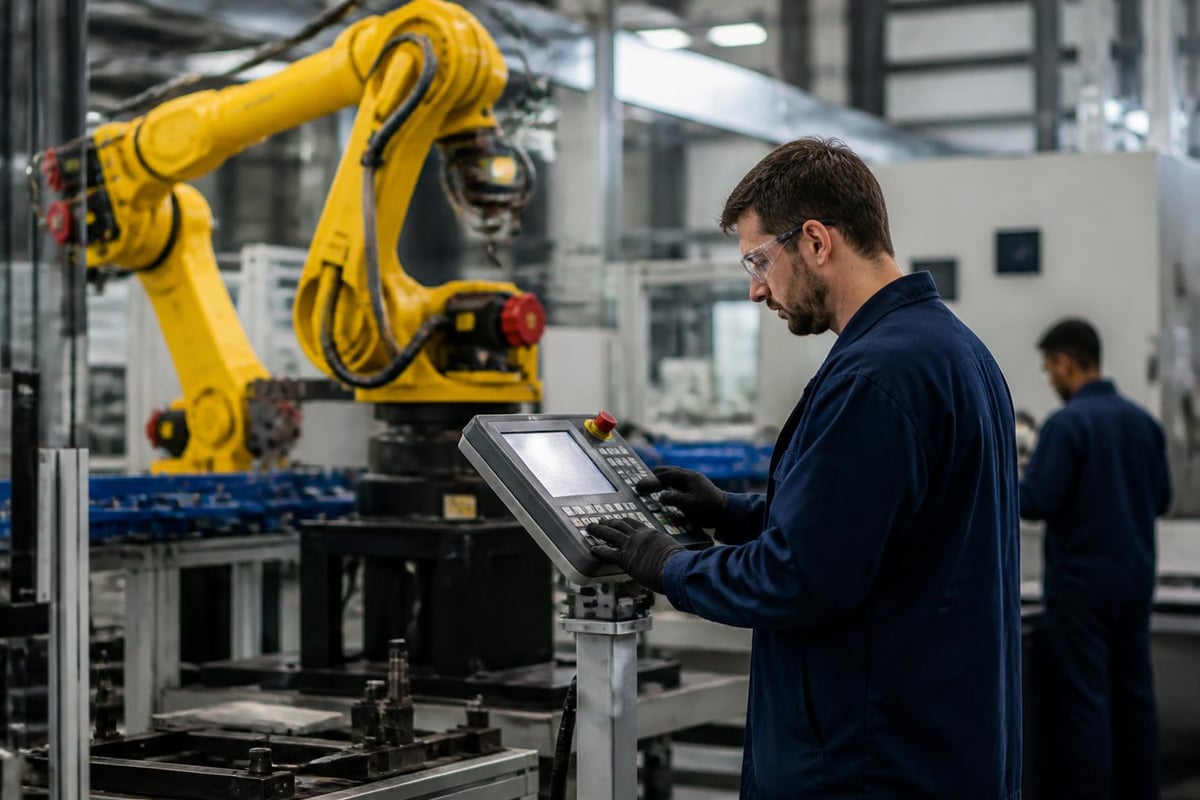
Disentangling the employment effects of trade from technological change presents significant analytical challenges. Studies suggest that automation and productivity improvements account for a larger share of manufacturing job losses than trade policy, though both factors interact in complex ways.
Modern factories produce more output with fewer workers due to:
- Robotics and automated assembly lines
- Computer-controlled precision manufacturing
- Artificial intelligence in quality control
- Advanced materials requiring less processing
- Just-in-time inventory systems reducing warehouse employment
The connection between us trade policies and jobs becomes clearer when examining specific industries where trade protection has been attempted. Some protected industries maintained employment levels temporarily but failed to become globally competitive, ultimately requiring continued government support.
Regional Employment Impacts of Trade Policy
Trade policy effects distribute unevenly across American geography, creating political tensions between regions. Coastal areas with major ports, technology centers, and financial hubs often benefit from expanded trade, while manufacturing-dependent regions face more challenges.
States heavily dependent on agriculture exports face unique vulnerabilities. When trading partners retaliate against American tariffs by restricting agricultural imports, farmers and related industries experience direct employment losses. The ripple effects extend to equipment manufacturers, seed companies, and rural service providers.
Winners and Losers in Trade Transitions
Economic research consistently shows that trade creates aggregate benefits for national economies while concentrating costs on specific communities and workers. The political challenge involves compensating those who lose while preserving benefits for consumers and growth sectors.
Communities affected by trade-related job displacement face:
- Immediate unemployment as facilities close or downsize
- Reduced property values and tax revenues
- Strained social services as workers seek assistance
- Population decline as working-age residents relocate
- Difficulty attracting new investment due to weakened infrastructure
Trade Adjustment Assistance and Workforce Development
Recognizing that us trade policies and jobs create both opportunities and dislocations, the federal government established Trade Adjustment Assistance programs. These initiatives provide extended unemployment benefits, retraining, and relocation assistance to workers displaced by import competition.
However, critics argue these programs remain underfunded relative to the scale of displacement and often fail to prepare workers for comparable employment opportunities. The challenge of retraining middle-aged manufacturing workers for service economy positions has proven particularly difficult.
Effective workforce development requires:
- Early identification of at-risk industries and workers
- Portable benefits not tied to specific employers
- Accessible retraining in growing sectors
- Support for geographic mobility when necessary
- Collaboration between community colleges and employers
Trade Agreements and Employment Provisions
Modern trade agreements increasingly include labor provisions designed to protect workers and prevent a "race to the bottom" in working conditions. These provisions aim to ensure that trade expansion does not come at the expense of worker rights and safety standards.
The debate over whether these provisions effectively protect American jobs or simply add bureaucratic complexity continues. Some argue that without robust enforcement mechanisms, labor provisions in trade agreements amount to symbolic gestures rather than meaningful protections.

Small Business and Trade Opportunities
While large corporations dominate trade statistics, small and medium-sized enterprises increasingly participate in global commerce. Digital platforms enable smaller businesses to reach international customers without massive infrastructure investments, creating employment opportunities in communities across America.
According to educational resources on trade effects, international trade influences not just employment levels but also wage structures and working conditions across industries. Exposure to global competition can pressure wages downward in some sectors while enabling wage increases in export-oriented industries.
Supply Chain Resilience and Domestic Employment
The COVID-19 pandemic and subsequent supply chain disruptions prompted reassessment of global production networks. Many policymakers and business leaders now emphasize resilience over pure efficiency, potentially creating opportunities for domestic employment growth.
Reshoring initiatives aim to bring production back to the United States through:
- Tax incentives for domestic manufacturing investment
- Government procurement preferences for American-made goods
- Investment in advanced manufacturing technologies
- Workforce training programs aligned with modern production methods
- Infrastructure improvements supporting logistics and distribution
The employment effects of reshoring remain modest thus far but could accelerate depending on policy choices and global economic conditions.
The Future of Trade Policy and Employment
As 2026 progresses, several trends shape the relationship between us trade policies and jobs. The rise of digital services trade, concerns about economic security, climate-related trade measures, and technological disruption all influence policy debates.
Artificial intelligence and machine learning may fundamentally alter both what jobs exist and how trade policy affects employment. Services once considered non-tradable become globally contestable when technology enables remote delivery, expanding both opportunities and competitive pressures.
Recent analysis of tariff policies demonstrates that trade barriers typically reduce overall economic output even when protecting specific industries. The challenge for policymakers involves balancing legitimate concerns about worker displacement with the broader benefits of international commerce.
Presidential candidates in upcoming elections will undoubtedly emphasize their approaches to trade and employment, as detailed on platforms like U.S. Presidential Report. The political appeal of protectionist rhetoric remains strong, particularly in communities experiencing economic anxiety, even as economists generally favor more open trade policies with targeted support for displaced workers.
Measuring Trade Policy Success
Evaluating whether trade policies successfully support employment requires looking beyond simple job counts. Quality metrics matter as much as quantity:
| Success Metric | Measurement Approach | Why It Matters |
|---|---|---|
| Job creation | Total new positions in trade-related sectors | Direct employment impact |
| Wage levels | Average compensation in export vs. non-export firms | Worker prosperity |
| Job stability | Duration of employment in trade-affected industries | Economic security |
| Benefits access | Health insurance, retirement plans in trade sectors | Overall worker wellbeing |
| Career advancement | Promotion rates and skill development opportunities | Long-term economic mobility |
Sustainable trade policies balance short-term political pressures with long-term economic fundamentals, recognizing that employment patterns constantly evolve regardless of government intervention.
Trade Policy Coordination Challenges
The constitutional framework divides trade policy authority between the executive and legislative branches, creating coordination challenges. Presidents can impose certain tariffs independently but require Congressional approval for comprehensive trade agreements, sometimes leading to gridlock or policy uncertainty.
This institutional arrangement reflects the founders' recognition that trade policy involves fundamental economic choices affecting different constituencies. The tension between presidential prerogatives and Congressional authority continues shaping how us trade policies and jobs intersect in practice.
Similar tensions exist regarding climate-related policies, where trade measures increasingly intersect with environmental objectives. Carbon border adjustments and green technology preferences represent emerging trade policy tools with significant employment implications.
Labor Market Flexibility and Trade Adjustment
Countries with more flexible labor markets generally adjust more smoothly to trade-related disruptions. The United States features relatively flexible labor markets compared to many European nations, facilitating reallocation of workers across sectors and regions.
However, this flexibility comes with costs in terms of worker security and predictability. The policy challenge involves maintaining sufficient flexibility for efficient resource allocation while providing adequate support for workers experiencing transitions.
Geographic mobility, occupational licensing reform, and portable benefits all influence how effectively labor markets respond to changing trade patterns. States with restrictive licensing requirements make it harder for displaced workers to find new employment, prolonging adjustment periods.
The complex relationship between trade policy and employment requires nuanced analysis that goes beyond political rhetoric. While trade creates both opportunities and challenges for American workers, evidence suggests that thoughtfully designed policies can maximize benefits while supporting those experiencing displacement. For comprehensive, non-partisan coverage of how presidential administrations approach trade and other critical policy areas, U.S. Presidential Report provides detailed analysis of the decisions shaping America's economic future. Stay informed about the policies affecting your livelihood and our nation's prosperity.