The automotive landscape in the United States has undergone significant transformation over the past decade, with electric vehicles shifting from niche products to mainstream considerations. Central to this transition are various regulatory frameworks that have sparked intense political debate and public discussion. Understanding these policies requires examining not just federal initiatives but also state-level actions, manufacturer obligations, and the political forces that continue to shape America's transportation future. With electric vehicle mandates explained in detail, stakeholders can better navigate the complex intersection of environmental policy, economic considerations, and political priorities.
Understanding the Regulatory Framework
Electric vehicle mandates represent a category of policies designed to accelerate the adoption of zero-emission vehicles through various regulatory mechanisms. These policies do not typically force consumers to purchase electric vehicles but instead place requirements on manufacturers, dealerships, and state fleets. The regulatory landscape includes emissions standards, sales targets, and incentive structures that collectively push the automotive industry toward electrification.
At the federal level, the Environmental Protection Agency establishes emissions standards for vehicle manufacturers. These standards have become increasingly stringent over time, making it challenging for automakers to meet requirements without expanding their electric vehicle offerings. The standards focus on fleet-wide average emissions rather than mandating specific vehicle types, though the practical effect encourages EV production.
State-Level Zero-Emission Vehicle Programs
California has pioneered zero-emission vehicle requirements through its Advanced Clean Cars program, which other states have adopted under Clean Air Act provisions. These Zero-Emission Vehicle mandates establish specific percentages of manufacturer sales that must consist of electric or hydrogen fuel cell vehicles.
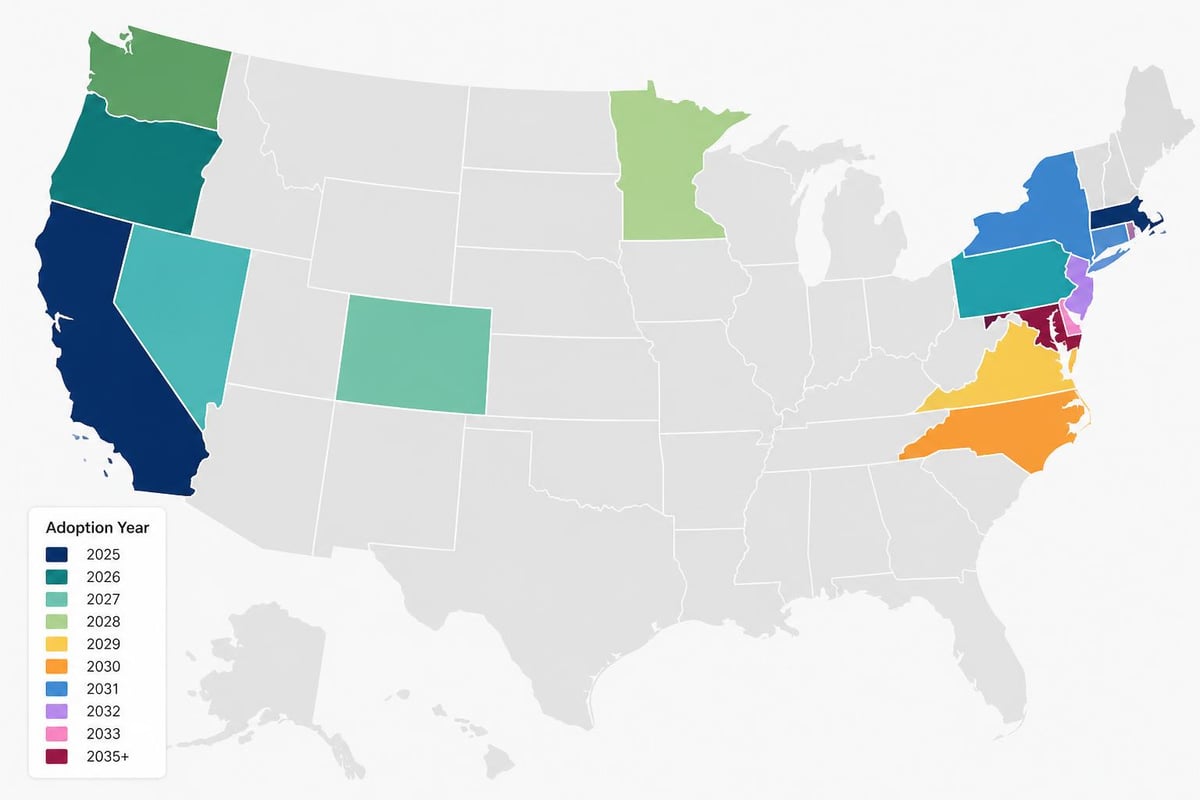
Currently, fourteen states have implemented versions of California's ZEV program:
- California
- Colorado
- Connecticut
- Delaware
- Maine
- Maryland
- Massachusetts
- New Jersey
- New York
- Oregon
- Rhode Island
- Vermont
- Virginia
- Washington
Each state operates under similar frameworks with varying implementation timelines and specific requirements. Delaware's recent electric vehicle mandate implementation demonstrates how states continue expanding these programs despite political opposition in some quarters.
Federal Policy Developments and Executive Actions
The federal approach to electric vehicle policy has fluctuated significantly based on presidential administration priorities. Unlike common misconceptions, no comprehensive federal mandate requires consumers to purchase electric vehicles. Instead, federal policy operates through emissions regulations, tax incentives, and infrastructure investments.
The Biden administration strengthened vehicle emissions standards and invested heavily in charging infrastructure through the Infrastructure Investment and Jobs Act. These policies aimed to support a transition where electric vehicles would comprise a significant portion of new vehicle sales by 2032. However, political changes have led to policy reversals and ongoing debates about the federal government's role in transportation electrification.
Executive Order Impacts on EV Policy
Recent executive orders have attempted to reshape federal electric vehicle policy. President Trump’s executive order on electric vehicle mandates sought to eliminate what was characterized as federal EV mandates, though the actual regulatory landscape proved more complex than simple mandate elimination.
The executive order primarily targeted EPA emissions standards and federal purchasing requirements. As WIRED’s analysis explains, the absence of a true federal consumer mandate means the executive order's practical effects focus on regulatory rollbacks rather than mandate elimination.
This political dynamic illustrates how electric vehicle mandates explained in policy documents often differ from public discourse. The gap between political messaging and regulatory reality creates confusion among consumers, manufacturers, and state policymakers attempting to plan long-term strategies.
Manufacturer Requirements and Compliance Strategies
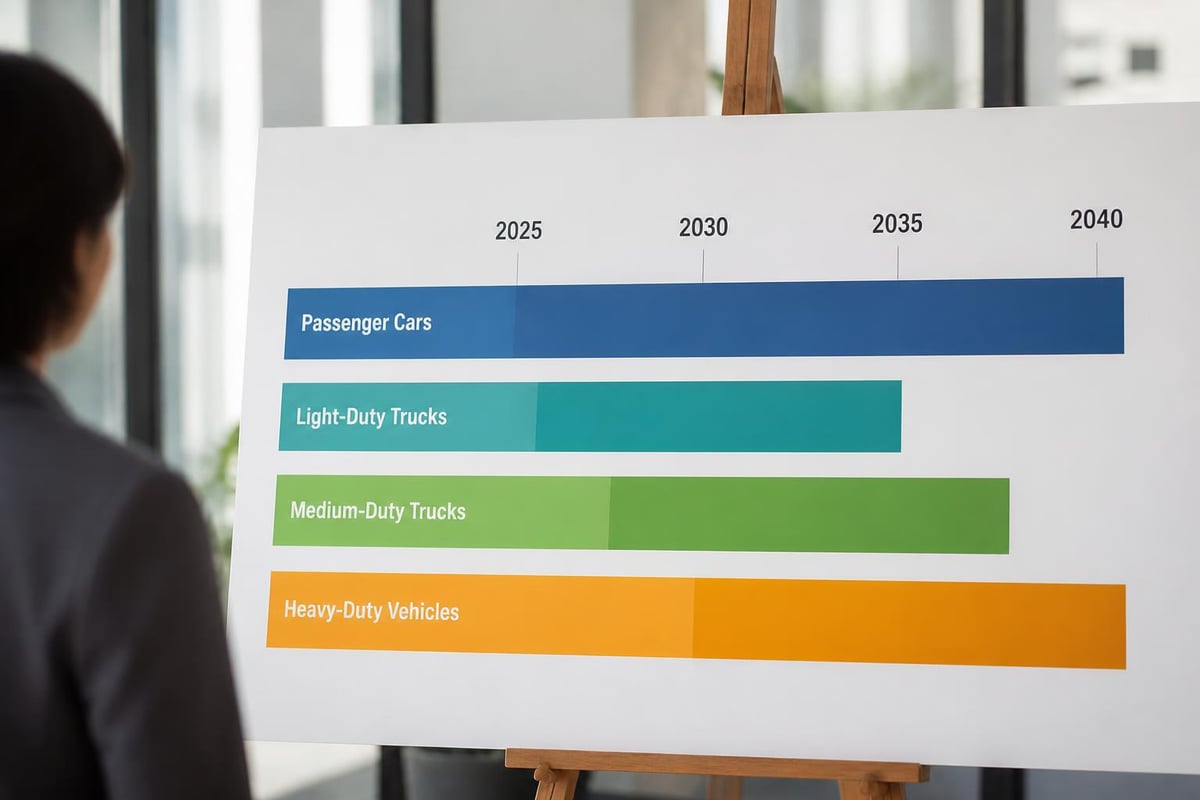
Automotive manufacturers face complex compliance obligations under various electric vehicle policies. These requirements extend beyond passenger vehicles to include medium and heavy-duty trucks, creating comprehensive transition pressures across vehicle classes.
Light-Duty Vehicle Obligations
Under state ZEV programs, manufacturers must ensure specific percentages of their annual sales consist of zero-emission vehicles. These percentages increase progressively, reaching ambitious targets by 2035 in many jurisdictions. Manufacturers earn credits for each qualifying vehicle sold, with additional credits available for longer-range models.
| Year | California ZEV Sales Requirement | Multi-State Average |
|---|---|---|
| 2025 | 35% | 30-35% |
| 2030 | 68% | 60-68% |
| 2035 | 100% | 100% |
Manufacturers who fall short can purchase credits from competitors with surplus credits, creating a market-based compliance mechanism. Tesla has generated significant revenue selling credits to traditional automakers working to meet their obligations.
Heavy-Duty Vehicle Regulations
Medium and heavy-duty zero-emission vehicle mandates represent an expanding frontier in transportation electrification. California's Advanced Clean Trucks regulation requires manufacturers to sell increasing percentages of electric trucks, with requirements varying by vehicle class.
These regulations acknowledge the unique challenges of electrifying larger vehicles, including range requirements, charging infrastructure needs, and total cost of ownership considerations. The phase-in schedules provide longer timelines for heavier vehicle classes while still establishing clear transition pathways.
Flexibility Mechanisms and Compliance Pathways
Electric vehicle mandates explained comprehensively must address the various flexibility mechanisms built into regulatory frameworks. Policymakers recognized that rigid requirements could create unintended consequences, so most programs include provisions allowing manufacturers to meet obligations through multiple pathways.
Credit Banking and Trading
Manufacturers can bank excess credits earned in years when they exceed requirements, using those credits to satisfy obligations in future years. This system provides planning flexibility and rewards early leadership in electric vehicle development. The credit trading market enables manufacturers with different strategies to collectively achieve policy goals.
Credit values vary based on vehicle type, range, and other factors. Battery electric vehicles typically earn more credits than plug-in hybrids, reflecting policy preferences for fully zero-emission technologies. Some programs also provide multiplier credits during early program years to encourage rapid market development.
Pooling Arrangements
Some manufacturers enter pooling arrangements, combining their sales across brands to meet collective requirements. This approach works particularly well for automotive groups with multiple brands serving different market segments. By pooling, manufacturers can leverage strengths across their portfolio while addressing weaknesses in specific brand lineups.
Political Dimensions and Policy Debates
The political controversy surrounding electric vehicle policy reflects broader debates about government's role in market transformation, energy independence, and climate change response. These discussions have intensified as policies moved from voluntary goals to binding requirements.
Critics argue that electric vehicle mandates represent government overreach, imposing costs on consumers who may prefer traditional vehicles and potentially harming domestic automakers competing with foreign manufacturers. Concerns about charging infrastructure adequacy, electric grid capacity, and battery material supply chains feature prominently in opposition arguments.
Supporters contend that these policies provide necessary certainty for long-term manufacturing investments, reduce transportation emissions contributing to climate change, and position American companies competitively in global markets increasingly oriented toward electrification. They point to falling battery costs and improving vehicle performance as evidence that the transition can succeed with appropriate policy support.
Presidential Impact on Transportation Policy
Presidential administrations significantly influence electric vehicle policy through regulatory authority, enforcement priorities, and legislative proposals. The contrast between recent administrations illustrates how presidential leadership shapes policy direction, with implications extending beyond single election cycles.
Executive agencies like the EPA, Department of Transportation, and Department of Energy implement policies that collectively determine federal electric vehicle strategy. Presidential appointments to these agencies directly affect regulatory interpretation and enforcement approaches, making elections consequential for long-term transportation policy.
Economic Implications and Market Dynamics
Electric vehicle mandates create substantial economic ripples throughout the automotive industry, energy sector, and broader economy. Understanding these economic dimensions helps explain both policy support and opposition from various stakeholders.
Manufacturing Investment and Employment
Automakers have announced hundreds of billions in electric vehicle and battery manufacturing investments, with many facilities located in states without ZEV mandates. These investments create manufacturing jobs while simultaneously disrupting traditional automotive supply chains. The transition requires workforce retraining and creates geographic winners and losers as production shifts.
Battery manufacturing has emerged as a strategic priority, with national EV mandates often accompanied by domestic content requirements and supply chain development initiatives. The United States competes with China, Europe, and other regions for battery manufacturing capacity and critical mineral access.
Consumer Cost Considerations
Electric vehicle prices have declined substantially as technology matures and production scales increase. However, upfront costs typically remain higher than comparable gasoline vehicles, though total ownership costs may favor electric vehicles when fuel savings and maintenance differences are included.
Federal and state incentives offset purchase price premiums, with tax credits worth up to $7,500 for qualifying vehicles. These incentives face political scrutiny regarding their effectiveness, fiscal cost, and distributional impacts across income levels.
| Cost Category | Electric Vehicle | Gasoline Vehicle | Difference |
|---|---|---|---|
| Average Purchase Price | $55,000 | $48,000 | +$7,000 |
| Federal Tax Credit | -$7,500 | $0 | -$7,500 |
| Annual Fuel Cost | $800 | $2,400 | -$1,600 |
| Annual Maintenance | $600 | $1,200 | -$600 |
| 5-Year Total Cost | $48,500 | $63,000 | -$14,500 |
Infrastructure Development Requirements
Successful electric vehicle adoption requires extensive charging infrastructure development, creating policy challenges beyond vehicle mandates themselves. Range anxiety remains a primary consumer concern, making charging availability crucial for market growth.
Public Charging Networks
The federal government has allocated $7.5 billion for charging infrastructure through the National Electric Vehicle Infrastructure program. States are deploying these funds to create charging corridors along major highways and support urban charging availability. However, deployment has proceeded more slowly than initially anticipated, with permitting, utility coordination, and equipment supply chain issues creating delays.
Private sector charging companies have also invested heavily in network expansion, with Tesla's Supercharger network leading in availability and reliability. The opening of proprietary networks to multiple vehicle brands represents a significant development improving charging accessibility.
Home and Workplace Charging
Most electric vehicle charging occurs at home, making residential charging access a crucial equity consideration. Single-family homeowners can readily install home chargers, while apartment residents and those without dedicated parking face greater challenges. Policies addressing multi-unit dwelling charging and workplace charging help expand access beyond homeowners.
State Autonomy and Federal-State Dynamics
The relationship between federal and state electric vehicle policies creates a complex regulatory environment where manufacturers must navigate multiple requirements simultaneously. California's unique Clean Air Act waiver authority enables it to set standards exceeding federal minimums, with other states able to adopt California's standards.
This arrangement has created de facto national policy even when federal requirements remain less stringent, as manufacturers find producing separate vehicle lineups for different states economically impractical. The political battles over California's waiver authority reflect recognition of this dynamic, with control over California's authority effectively determining national direction.
Recent legal challenges to state EV policies have raised questions about the limits of state authority and potential federal preemption. These cases will shape the regulatory landscape for years, determining whether states can maintain ambitious policies diverging from federal direction.
International Context and Competitive Considerations
Global automotive markets are rapidly electrifying, with European ZEV mandates and Chinese policies driving worldwide market transformation. The UK’s ZEV mandate implementation demonstrates how other nations structure similar policies with their own flexibility mechanisms and compliance pathways.
American manufacturers compete in these global markets, making domestic policy alignment with international standards a competitive consideration. Divergent policies could disadvantage American companies or create inefficiencies in global production planning.
China has emerged as both the largest electric vehicle market and leading manufacturing center, with domestic manufacturers gaining global market share. This competition adds national security and industrial policy dimensions to electric vehicle policy debates, beyond environmental considerations alone.
Looking Ahead: Policy Evolution and Uncertainty
The future of electric vehicle mandates explained today remains uncertain as political, technological, and economic forces continue evolving. Technology advances may make policies unnecessary as electric vehicles achieve cost parity and performance advantages without regulatory pressure. Alternatively, political opposition could weaken or eliminate policies before market transformation completes.
Consumer preferences will ultimately determine transition success regardless of policy structures. If electric vehicles fail to meet consumer needs or expectations, even strong policies may prove insufficient. Conversely, if consumers embrace electric vehicles enthusiastically, mandates may become irrelevant as market forces drive transformation independently.
The next several years will prove critical in determining whether electric vehicle mandates accomplished their intended acceleration of market transformation or whether they generated political backlash that ultimately slowed progress. Monitoring policy developments requires attention to federal regulatory actions, state legislative initiatives, and court decisions that collectively shape the evolving landscape.
Electric vehicle mandates represent a complex intersection of environmental policy, economic transformation, and political ideology that will continue evolving as technology advances and market conditions change. For readers seeking comprehensive, non-partisan coverage of how presidential administrations shape transportation policy and other critical issues affecting American governance, U.S. Presidential Report provides reliable analysis of policy developments across administrations. Stay informed on the latest presidential actions and their real-world implications by exploring our coverage of current and historical presidential leadership.