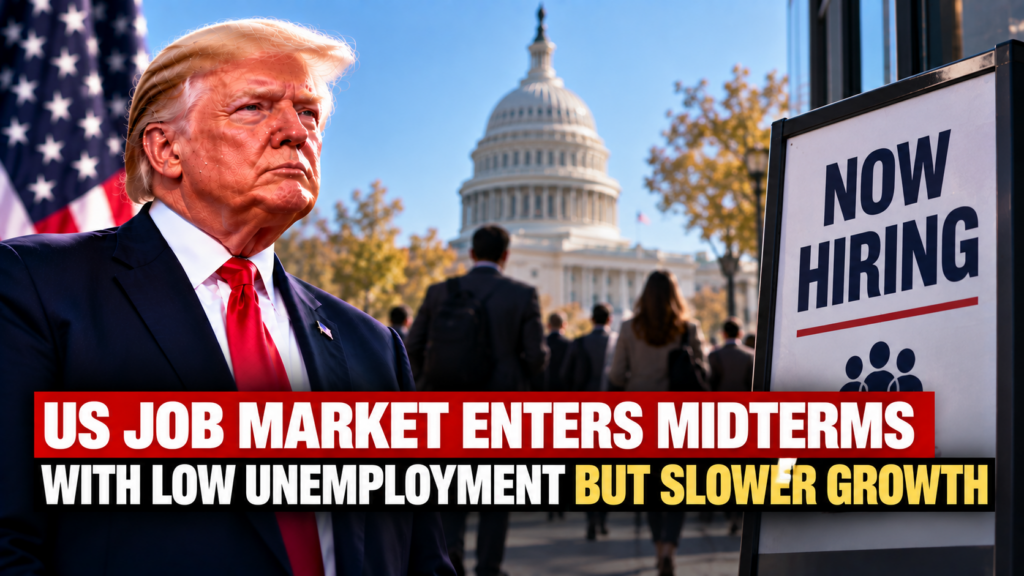
The U.S. is heading into the 2026 midterm elections with a 4.2% unemployment rate, a level historically associated with full employment. But the US job market is losing some of the momentum seen after the COVID-19 pandemic, with slower hiring, limited wage growth and a workforce facing demographic and immigration pressures.
According to a report by Reuters, President Donald Trump and Republicans will enter the November 3 congressional elections with a labor market that remains resilient by traditional measures but feels less favorable to many workers and voters.
What Happened
The Labor Department’s September employment report, released Friday, provided the final major jobs snapshot before Americans vote in the midterms.
The unemployment rate stood at 4.2%, a historically low level that economists generally associate with full employment. Outside the pandemic period, unemployment has remained at or below 4.5% since around 2017.
Yet the strength of the headline unemployment figure masks several changes beneath the surface.
The economy continues to add jobs, but hiring has slowed considerably compared with the period immediately following the pandemic. Workers are also less likely to leave their jobs in search of higher pay.
Key Details of the US Job Market
Low Unemployment Remains a Strength
The 4.2% unemployment rate remains one of the strongest indicators of economic resilience.
Household spending has continued to hold up despite persistently elevated inflation, partly because a large share of Americans remain employed.
However, low unemployment does not necessarily mean workers feel confident about finding better opportunities.
Hiring Has Become Less Dynamic
After the pandemic, businesses hired workers at unusually fast rates and employees frequently changed jobs for higher pay.
That pattern has largely disappeared.
Companies have been reluctant to lay off workers, while also moving more slowly when hiring. Unemployment claims remain low, but job seekers are facing a market with fewer opportunities to move into better-paying positions.
A recent Conference Board survey found that fewer people viewed jobs as plentiful, while the share saying jobs were difficult to obtain reached its highest level since January 2021. The survey also showed consumer confidence at a 12-year low.
Labor Force Growth Faces New Pressure
The U.S. workforce has historically expanded through immigration, population growth and increased participation by women.
That long-term expansion has weakened.
An aging population, low birth rates and the Trump administration’s immigration crackdown are putting additional pressure on labor force growth. The number of people working or looking for work remains below the record 171.5 million reached in November 2025.
Manufacturing Jobs Show Mixed Results
Manufacturing remains an important part of Trump’s economic agenda.
During his 2024 presidential campaign, Trump promoted tariffs and deregulation as ways to expand manufacturing employment and restore economic opportunities in communities affected by the movement of production overseas.
But manufacturing employment has continued to face long-term structural pressure.
The sector peaked at around 19.5 million jobs in 1979. Today, it employs about 12.6 million people, roughly 21,000 fewer than when Trump took office in January 2025 and below the 12.9 million peak reached during Biden’s presidency.
Reuters reported that Trump’s aggressive tariff policies have caused significant disruption but have so far done little to fundamentally change hiring patterns shaped by an aging population and other structural forces.
Inflation Continues to Erode Wage Gains
For many American workers, the biggest problem is not the availability of jobs but what those jobs provide financially.
Inflation-adjusted after-tax income has grown at less than 2% year over year in recent periods. That compares with annual real disposable income growth of around 3% in more typical previous years.
Slower wage growth may reflect several factors, including automation, capital investment and strong corporate profits.
As a result, the low unemployment rate has not translated into the same sense of worker bargaining power seen during the post-pandemic hiring boom.
Political and Economic Impact
The labor market presents a complicated economic message for Trump and Republicans ahead of the midterms.
On one hand, a 4.2% unemployment rate provides evidence that the economy continues to support a large employed workforce.
On the other hand, voters are judging the economy based on more than whether they have a job. Inflation, wage growth, job availability and the ability to move into better-paying positions all influence how households experience economic conditions.
That disconnect could matter politically as voters prepare to choose members of Congress on November 3.
What Happens Next
The US job market will remain an important measure of the economy as the midterm elections approach.
The combination of low unemployment and slower hiring creates a less dynamic form of full employment than Americans experienced during the post-pandemic recovery. At the same time, demographic changes, immigration policy and persistent inflation could continue shaping the labor market.
For the Trump administration, the challenge is turning a historically low unemployment rate into broader economic gains that workers and voters can feel in their household finances. The midterms will provide an early political test of whether voters view the current labor market as evidence of economic strength or as a sign that opportunities are becoming harder to find.
Related Reading
- Trump Administration Finalizes “Freedom Means Affordable Cars” Initiative
- Trump Announces $15 Billion Iowa Steel Plant Project
The unemployment rate is 4.2%, a historically low level generally associated with full employment.
Hiring has slowed, workers have less ability to switch jobs for higher pay, and inflation continues to reduce the gains from wages.