The American news landscape has undergone significant transformation in recent decades, with audiences increasingly questioning the objectivity of media coverage. Political bias in news coverage has become a central concern for readers seeking accurate information about presidential administrations, policy decisions, and governance. Understanding how editorial choices, source selection, and framing techniques influence reporting helps readers become more discerning consumers of political news. For those following presidential developments, recognizing these patterns is essential to forming well-rounded perspectives on current events.
The Evolution of Media Partisanship
Traditional journalism once emphasized strict objectivity standards, with news organizations striving to present facts without editorial slant. That model has shifted considerably since the 1990s, as cable news networks discovered the profitability of opinion-driven programming.
The 24-hour news cycle created demand for constant content, leading networks to fill airtime with analysis and commentary rather than purely factual reporting. This structural change fundamentally altered how political bias in news coverage manifests in modern media. Instead of subtle editorial decisions, audiences now encounter openly partisan perspectives presented as news analysis.
The Business Model Behind Bias
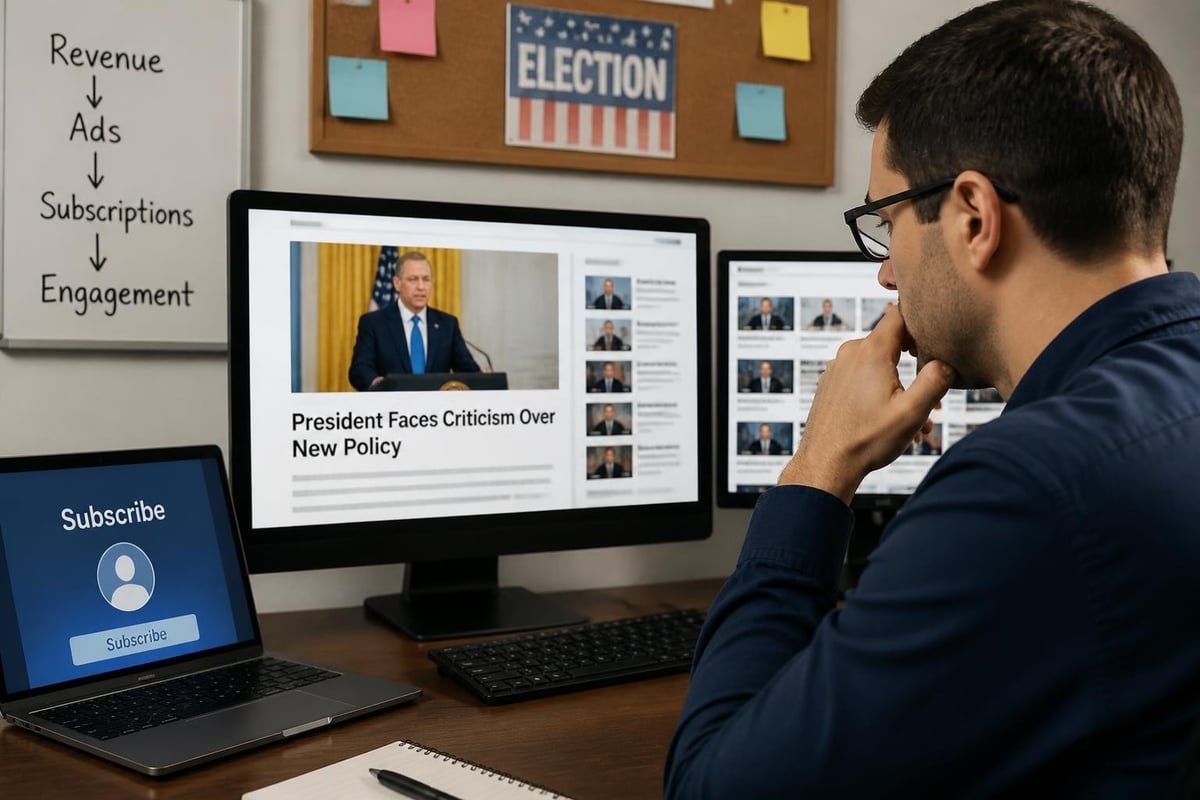
Media organizations face intense pressure to maintain audience engagement and advertising revenue. Research shows that partisan content generates higher viewer loyalty and social media sharing than neutral reporting.
Key financial drivers include:
- Subscription models that reward audience retention over balanced coverage
- Advertising rates tied to demographic targeting rather than total reach
- Social media algorithms that amplify emotionally charged content
- Competition for exclusive interviews with partisan sources
Networks have discovered that audiences increasingly prefer news that confirms existing beliefs. This preference creates a feedback loop where outlets tailor coverage to match viewer expectations, reinforcing political bias in news coverage across the media ecosystem.
Identifying Bias in Presidential Reporting
Recognizing political bias in news coverage requires understanding the specific techniques journalists and editors employ to shape narratives. These methods range from obvious opinion injection to subtle framing choices that influence reader interpretation.
Source Selection and Attribution
The sources journalists choose to quote significantly impact story framing. A report on presidential economic policy might quote primarily administration officials and supportive economists, or it might emphasize critics and opposition voices.
Balanced reporting typically includes:
- Administration representatives explaining policy rationale
- Independent experts providing technical analysis
- Opposition voices offering alternative perspectives
- Affected constituents sharing real-world impacts
- Historical context from academic researchers
When coverage consistently favors sources from one political perspective, it signals potential bias. The UCLA study on media bias found that source selection patterns often reveal outlet leanings more clearly than explicit editorial positions.
Language and Framing Choices
Word selection powerfully influences how readers perceive political events. Consider how different outlets might describe the same presidential action:
| Neutral Framing | Progressive Framing | Conservative Framing |
|---|---|---|
| "President signs executive order on immigration" | "President takes action to protect immigrant families" | "President bypasses Congress with immigration decree" |
| "Administration adjusts tax policy" | "White House delivers relief to working families" | "Government expands tax burden on businesses" |
| "President addresses climate regulations" | "Administration combats environmental crisis" | "White House imposes costly energy restrictions" |
These framing differences don't necessarily involve factual inaccuracies, but they guide reader interpretation toward specific conclusions. Political bias in news coverage often operates through these linguistic choices rather than outright falsehoods.
The Double Standard Phenomenon
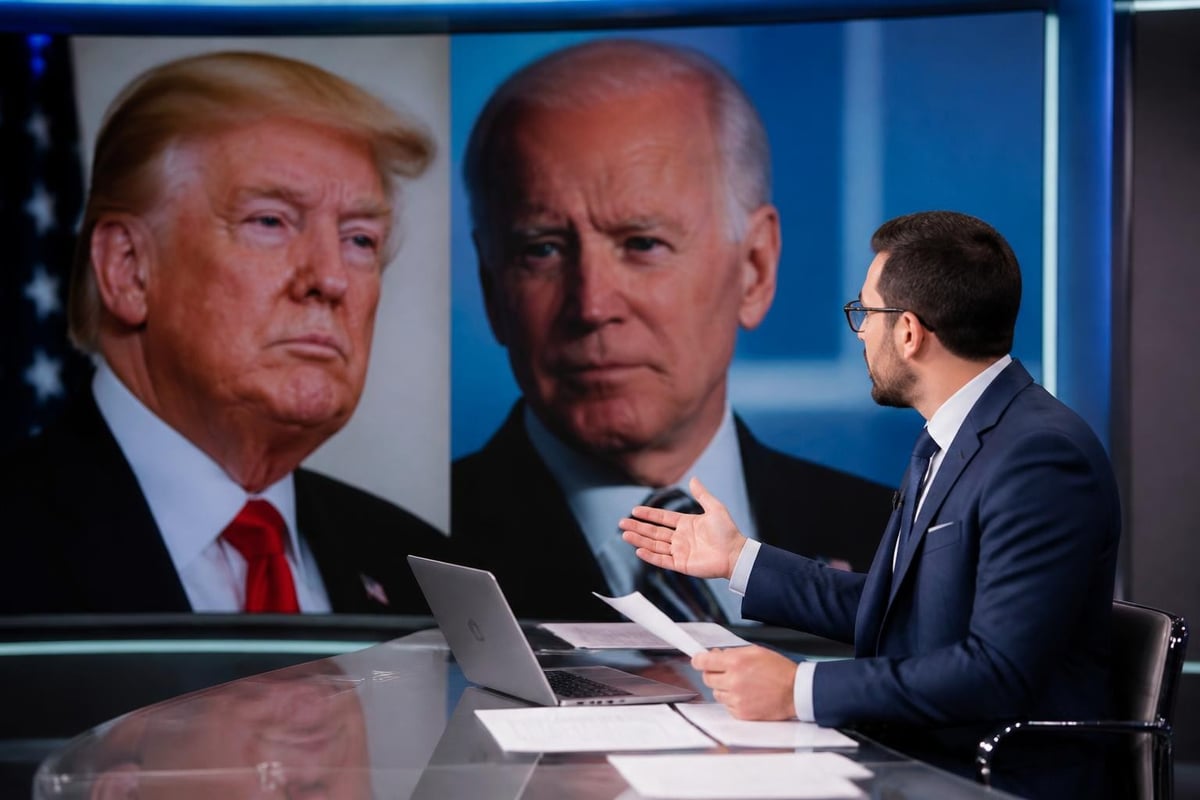
One particularly contentious aspect of political bias in news coverage involves perceived double standards in how media treats different presidential administrations. The Atlantic’s analysis of Trump-Biden coverage highlights how similar actions or statements receive dramatically different scrutiny depending on which party holds the White House.
Coverage Intensity Disparities
News organizations allocate limited resources and attention across countless potential stories. These allocation decisions reveal editorial priorities that can indicate bias.
Factors affecting coverage intensity:
- Hours of broadcast time devoted to specific controversies
- Placement and prominence of stories (front page versus buried)
- Follow-up investigation and sustained reporting versus brief mentions
- Expert panels assembled to discuss presidential actions
- Social media amplification by network personalities
When comparable situations receive vastly different coverage intensity based on presidential party affiliation, audiences reasonably question whether political bias in news coverage influences these editorial decisions. Tracking coverage patterns over multiple administrations provides clearer evidence than examining isolated incidents.
Accountability Standards
Media outlets establish implicit standards for presidential accountability through their coverage choices. Some administrations face intense scrutiny over minor policy details or personal conduct, while others receive more lenient treatment for comparable issues.
This inconsistency extends to coverage of economic policy decisions and democratic governance practices. Readers following presidential news closely often notice when similar actions trigger investigation demands for one administration but acceptance for another.
The Public-Journalist Perception Gap
Research from Pew shows significant differences between how journalists view bias in their profession and how audiences perceive media coverage. This perception gap complicates discussions about political bias in news coverage.
Professional Standards Versus Audience Experience
Journalists frequently defend their work by citing adherence to professional standards, verification processes, and editorial oversight. These institutional safeguards certainly exist and serve important functions in maintaining factual accuracy.
However, audiences evaluate coverage based on their lived experience of media consumption. When readers consistently notice pattern disparities in how outlets cover different political parties, professional assurances about objectivity may ring hollow.
The disconnect often centers on different definitions of bias:
- Journalists emphasize: Factual accuracy, source verification, correction policies
- Audiences emphasize: Story selection, framing choices, coverage intensity
- Both matter: Technical accuracy doesn't eliminate bias if story selection systematically favors one perspective
Digital Media and Algorithmic Amplification
The rise of social media platforms has fundamentally altered how political bias in news coverage reaches and influences audiences. Traditional gatekeepers like newspaper editors and television producers no longer exclusively control news distribution.
The Filter Bubble Effect
Personalization algorithms on platforms like Facebook, Twitter, and YouTube curate content based on user engagement patterns. This creates "filter bubbles" where users primarily encounter news that aligns with their existing political preferences.
Algorithmic amplification mechanisms:
- Engagement metrics prioritize emotionally provocative content
- Recommendation systems suggest similar viewpoints
- Social networks cluster around shared political identities
- Platform design rewards sharing over critical evaluation
- Advertising models target narrow demographic segments
Research on political bias in online news sharing across thousands of communities reveals how these dynamics accelerate partisan polarization. Presidential news coverage becomes increasingly fragmented as different audience segments consume entirely different narratives about the same events.
The Challenge of Automated Credibility Assessment
As audiences struggle to evaluate source reliability, various organizations have developed credibility rating systems for news outlets. However, research on large language models assessing news source bias demonstrates the complexity of automating these judgments.
Even sophisticated AI systems struggle with nuanced evaluations of political bias in news coverage. The challenge involves distinguishing between legitimate journalistic disagreement about newsworthiness and systematic partisan bias in reporting priorities.
| Assessment Approach | Strengths | Limitations |
|---|---|---|
| Crowdsourced ratings | Diverse perspectives | Vulnerability to brigading |
| Expert panels | Professional judgment | Potential expert bias |
| Algorithmic analysis | Scale and consistency | Difficulty detecting subtle bias |
| Cross-outlet comparison | Pattern identification | Requires baseline assumptions |
Strategies for Consuming Presidential News
Readers concerned about political bias in news coverage can adopt strategies to develop more balanced understanding of presidential actions and policies.
Diversify Your Information Diet
The single most effective approach involves deliberately consuming news from outlets across the political spectrum. This doesn't mean treating all sources as equally credible, but rather understanding how different editorial perspectives frame the same events.
Practical implementation:
- Follow both supportive and critical coverage of current administrations
- Read primary source documents like executive orders and policy statements
- Compare how outlets across the spectrum cover major presidential decisions
- Seek international news sources for outside perspectives on U.S. governance
- Monitor specialized policy publications for technical expertise
When following developments in areas like climate change policy or economic impact of presidential decisions, this diversified approach reveals how different outlets emphasize different aspects of complex policy debates.

Distinguish Facts from Analysis
Modern news presentation often blends factual reporting with interpretive analysis without clear demarcation. Developing the ability to separate these elements helps readers extract objective information regardless of publication bias.
Questions to ask while reading:
- What specific, verifiable facts does this article present?
- Which statements represent reporter interpretation or opinion?
- Are claims supported by documentary evidence or named sources?
- Does the headline accurately reflect the article content?
- What relevant context or counterarguments are omitted?
Political bias in news coverage frequently appears in analytical framing rather than factual misrepresentation. Training yourself to identify these distinctions improves your ability to extract accurate information from imperfect sources.
The Role of Non-Partisan Journalism
As partisan media proliferates, demand has grown for news organizations committed to non-partisan presidential coverage. These outlets face significant challenges in maintaining neutrality while still providing meaningful analysis.
Institutional Commitments to Balance
Non-partisan journalism requires more than simply avoiding explicit political endorsements. It demands systematic attention to balance in source selection, story prioritization, and analytical framing.
Effective non-partisan outlets implement:
- Editorial policies requiring diverse political perspectives
- Transparent correction procedures for factual errors
- Clear labeling distinguishing news reporting from opinion content
- Regular auditing of coverage patterns for systematic imbalances
- Reader feedback mechanisms to identify perceived bias
Organizations like U.S. Presidential Report focus specifically on providing balanced coverage of presidential administrations without partisan advocacy. This approach serves readers seeking to understand presidential actions and their implications without predetermined political conclusions.
The Limitations of Objectivity
Even the most committed non-partisan journalism cannot eliminate all subjective judgment. Story selection inherently involves editorial decisions about newsworthiness and public interest. Perfect objectivity remains an aspirational ideal rather than an achievable standard.
However, systematic commitment to balance, transparency about methodology, and responsiveness to audience concerns about political bias in news coverage can significantly improve media quality. Readers benefit when outlets acknowledge these limitations rather than claiming impossible neutrality.
Civic Implications of Media Bias
The cumulative effect of political bias in news coverage extends beyond individual reader experience to fundamental questions about democratic governance. When large population segments consume fundamentally different narratives about presidential actions, collective decision-making becomes increasingly difficult.
Polarization and Democratic Discourse
Shared factual understanding once provided common ground for political disagreement. Citizens could debate policy merits while agreeing on basic facts about presidential actions and their consequences.
That foundation has eroded as partisan media ecosystems present competing realities. Presidential speeches, policy initiatives, and international actions receive such divergent coverage that audiences watching different networks might doubt they witnessed the same events.
This fragmentation affects:
- Electoral accountability when voters evaluate presidential performance
- Congressional oversight function requiring bipartisan fact-finding
- Public trust in democratic institutions and processes
- Ability to build coalitions around shared policy goals
- International perceptions of American political stability
The Responsibility of News Consumers
While media organizations bear primary responsibility for coverage quality, audiences also influence media incentives through consumption choices. The business models driving political bias in news coverage respond to viewer preferences and engagement patterns.
Readers who reward balanced, fact-based journalism with attention and subscription support encourage media organizations to prioritize these values. Conversely, audiences who primarily consume confirmation bias-driven content signal market demand for partisan coverage.
Understanding political bias in news coverage empowers readers to navigate the complex media landscape surrounding presidential politics with greater discernment and critical awareness. As the media environment continues evolving, developing skills to identify bias patterns and seek balanced perspectives becomes increasingly essential for informed citizenship. U.S. Presidential Report provides non-partisan coverage of presidential news, helping readers stay informed about current and past administrations without predetermined political conclusions. Explore comprehensive presidential coverage that prioritizes factual accuracy and balanced perspectives across the full spectrum of governance issues.