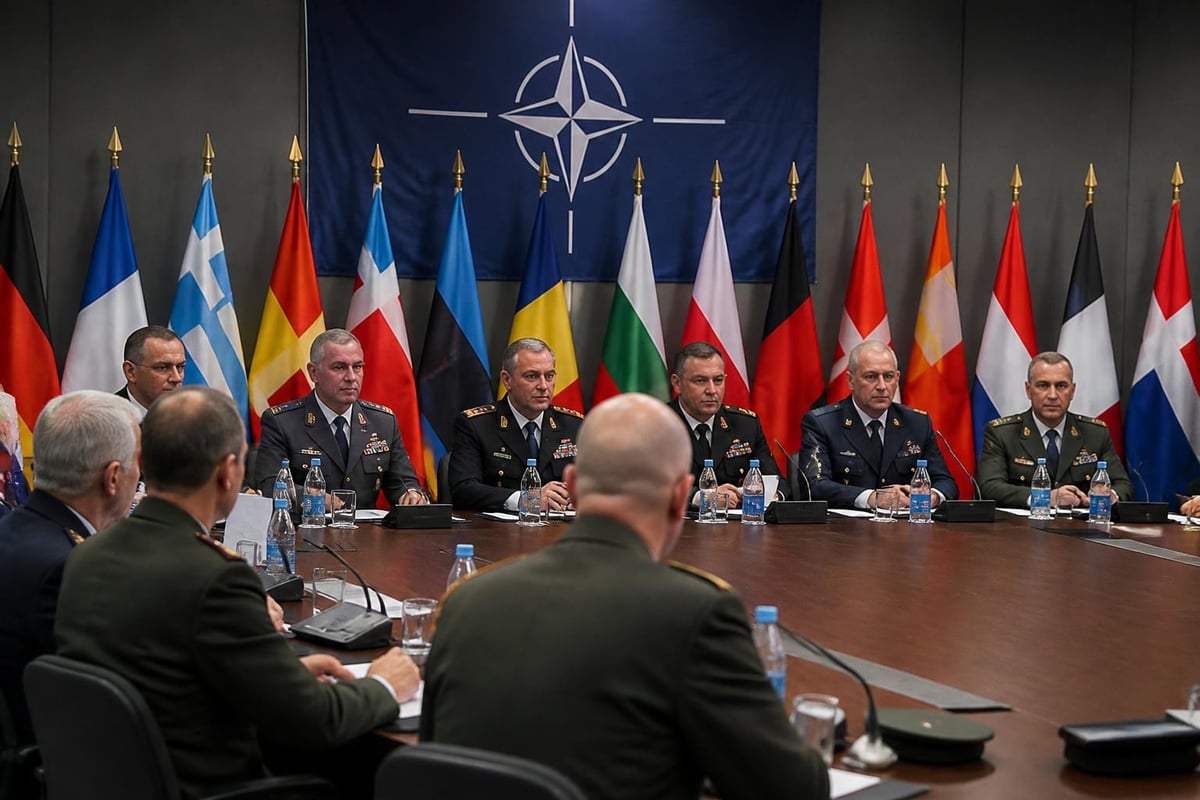
The ongoing conversation about nato funding debates vs military spending increases has become one of the defining foreign policy challenges for American presidents and European leaders alike. As 2026 unfolds, the tension between collective alliance commitments and individual national defense budgets continues to reshape transatlantic security architecture. This debate transcends simple arithmetic about who pays what, touching fundamental questions about burden-sharing, strategic autonomy, and the future of collective defense in an era of renewed great-power competition.
The Evolution of NATO Burden-Sharing Expectations
The North Atlantic Treaty Organization has operated since 1949 on principles of collective defense, but the question of equitable financial contribution has always generated friction. The 2014 Wales Summit established the landmark guideline that member states should spend at least 2% of GDP on defense, with 20% of that spending directed toward major equipment and research.
By 2026, the landscape has transformed dramatically. According to SIPRI’s latest data on global military expenditure trends, European NATO members have collectively increased defense spending by over 35% in real terms since Russia's full-scale invasion of Ukraine in 2022. This surge represents the most significant peacetime military investment increase in European history.
Meeting the 2% Threshold
The 2% guideline has become a political litmus test, yet it remains only a guideline rather than a binding obligation. As of early 2026, 23 of NATO's 32 members meet or exceed the 2% threshold, up from just six countries in 2021. Poland leads the alliance at 4.1% of GDP, while the United States maintains approximately 3.4%.
Several factors distinguish nato funding debates vs military spending increases:
- Direct NATO budget contributions cover shared infrastructure, headquarters operations, and collective capabilities
- National defense budgets fund each country's armed forces, equipment procurement, and military readiness
- Mission-specific costs for NATO operations are typically borne by participating nations
- Forward presence and deterrence deployments create additional bilateral and multilateral expenses
Presidential Perspectives on Alliance Financing
American presidents have approached nato funding debates vs military spending increases with varying degrees of pressure and diplomacy. Former presidents from both parties have emphasized the importance of equitable burden-sharing, though their tactics and rhetoric have differed substantially.
The debate gained particular intensity during previous administrations when presidents publicly questioned the value proposition of NATO membership. Those confrontations accelerated European defense investment but also created uncertainty about American commitment to Article 5's collective defense guarantee. Former President Obama’s stance on defending Ukraine foreshadowed later debates about allied contributions to regional security.
Current Presidential Approach
The current administration has pursued a strategy that balances pressure for increased allied spending with reassurance about American commitment. President Biden's team has emphasized three pillars:
- Sustained engagement with European counterparts on defense industrial base expansion
- Recognition of progress made since 2022 while maintaining pressure for further increases
- Focus on capability development rather than simply hitting percentage targets
This approach contrasts with more confrontational predecessors while maintaining accountability. The administration regularly highlights that European allies have added over $140 billion in annual defense spending since 2021, demonstrating tangible results from sustained diplomatic pressure.
| Administration | Primary Focus | Key Metric | Diplomatic Approach |
|---|---|---|---|
| Obama (2009-2017) | Burden-sharing equity | 2% guideline adoption | Multilateral persuasion |
| Trump (2017-2021) | Immediate spending increases | Bilateral pressure | Public confrontation |
| Biden (2021-present) | Capability development | Industrial base growth | Coalition management |
Economic Realities Behind Defense Budget Increases
Understanding nato funding debates vs military spending increases requires examining the economic constraints and opportunities facing member states. Defense spending competes with healthcare, education, infrastructure, and social programs for finite government resources, particularly in countries with substantial public debt.
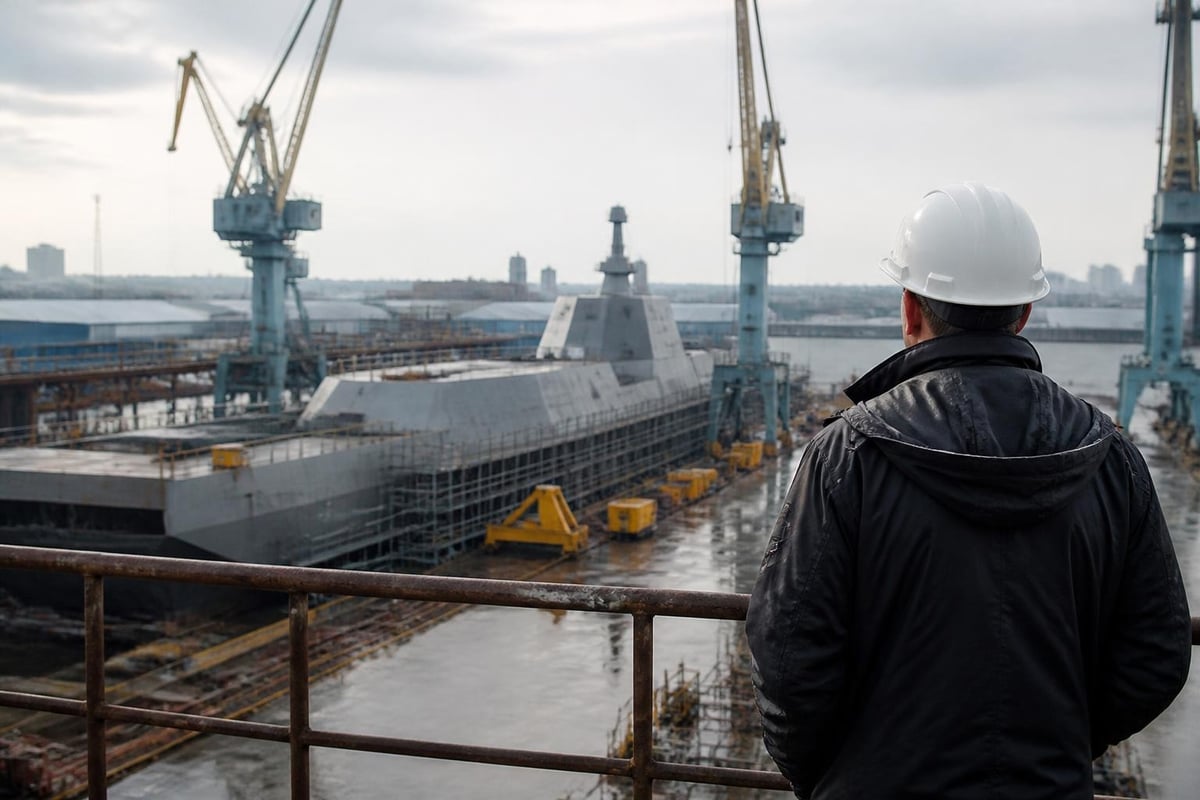
The CSIS assessment of U.S. and allied burden-sharing reveals significant progress but also persistent gaps. While headline budget figures have grown impressively, translating euros into combat power remains challenging. Procurement bottlenecks, workforce shortages in defense industries, and fragmented European markets limit how quickly increased budgets generate military capability.
Defense Industrial Base Constraints
Europe's defense industrial capacity cannot immediately absorb the surge in funding. Artillery ammunition production provides a stark example-European manufacturers took over two years to significantly scale output after Ukraine depleted stockpiles. The Kiel Institute’s analysis of smart defense spending demonstrates that procurement reform and industrial policy matter as much as budget toplines.
Key industrial challenges include:
- Skilled workforce shortages in specialized manufacturing sectors
- Long lead times for complex weapons systems (often 5-7 years)
- Fragmented European procurement markets creating inefficiency
- Regulatory barriers to cross-border defense trade within the EU
- Competition with commercial sectors for materials and talent
Germany's experience illustrates these tensions. The country committed €100 billion in supplemental defense funding in 2022, yet actual spending has lagged amid bureaucratic delays, procurement disputes, and infrastructure limitations.
Regional Variations in Spending Priorities
The debate over nato funding debates vs military spending increases plays out differently across alliance geography. Eastern flank countries like Poland, Estonia, Latvia, and Lithuania maintain the highest spending-to-GDP ratios, driven by immediate threat perceptions from Russian aggression. These nations argue they shoulder disproportionate risk and deserve greater allied support for forward defense.
Southern Europe's Distinct Calculus
Mediterranean members face different security challenges-migration pressures, instability in North Africa and the Sahel, and maritime security in the Mediterranean. Italy, Spain, and Greece have increased defense budgets but also argue for NATO resources to address southern security challenges, not just eastern deterrence.
France maintains Europe's most capable independent military, including nuclear weapons, a blue-water navy, and substantial power projection capacity. French leaders have advocated for "strategic autonomy" alongside transatlantic commitment, sometimes creating tension in debates about NATO versus EU defense initiatives.
The United Kingdom's position as Europe's leading military power (alongside France) gives London significant voice in alliance debates despite Brexit. British defense spending has remained consistently above 2%, and the UK provides critical capabilities including nuclear deterrence, carrier strike groups, and special operations forces.
The Direct NATO Budget Versus National Contributions
A common misunderstanding conflates nato funding debates vs military spending increases as if they were the same issue. NATO's common funding budget for 2026 totals approximately $3.9 billion, covering:
- Civil budget for headquarters and administrative functions
- Military budget for command structure and integrated capabilities
- NATO Security Investment Programme for infrastructure
This represents less than 0.3% of total alliance defense spending. The United States contributes roughly 16% of common funding, proportionate to GDP, while Germany and France each contribute about 14%.
The far larger question involves national defense budgets, which totaled approximately $1.3 trillion across the alliance in 2025. The United States accounts for roughly two-thirds of this total, though that proportion has decreased as European spending has risen.
Capability Contributions Beyond Dollars
Pure spending figures obscure qualitative contributions. The United States provides irreplaceable strategic capabilities:
- Nuclear deterrence extended to all NATO members
- Intelligence, surveillance, and reconnaissance (ISR) assets
- Strategic airlift and sealift for rapid reinforcement
- Space-based communications and early warning
- Missile defense systems protecting European territory
Several European allies contribute specialized capabilities that punch above their budget weight. Norway and Denmark provide Arctic expertise, the Netherlands operates sophisticated mine countermeasures, and Belgium hosts NATO headquarters and key command elements.
| Country | 2026 Defense Spending (% GDP) | Key Capabilities Contributed | Strategic Focus |
|---|---|---|---|
| United States | 3.4% | Nuclear deterrence, strategic mobility | Global power projection |
| Poland | 4.1% | Ground forces, host nation support | Eastern flank defense |
| United Kingdom | 2.3% | Nuclear deterrence, carriers, special forces | Expeditionary operations |
| France | 2.1% | Nuclear deterrence, carriers, interventions | Strategic autonomy |
| Germany | 2.0% | Heavy armor, logistics, sustainment | Territorial defense |

Political Dimensions of Defense Spending Debates
The interplay between nato funding debates vs military spending increases creates domestic political challenges across member states. Defense budget increases require legislative approval, competing against popular social programs and facing opposition from anti-military political movements in several countries.
In the United States, congressional debates about NATO often divide along partisan lines, though support for the alliance remains broadly bipartisan. Past presidential transitions have sometimes generated uncertainty about American commitment levels, affecting European planning assumptions.
Legislative Constraints and Public Opinion
European governments face constitutional, budgetary, and political constraints that limit defense spending flexibility. Germany's "debt brake" constitutional provision restricts deficit spending, complicating defense investment. Italian coalition politics make sustained multi-year procurement programs difficult to maintain across government transitions.
Public opinion surveys show European support for increased defense spending has risen dramatically since 2022, but substantial minorities in several countries still oppose major increases. Youth voters in particular express skepticism about military investment, preferring resources directed toward climate action and social programs.
The debate has intensified regarding defense spending efficiency. Critics argue that NATO members could achieve better results through:
- Consolidated procurement reducing unit costs through economies of scale
- Interoperability standards preventing wasteful duplication
- Joint logistics and support arrangements
- Shared research and development for next-generation systems
- Coordinated force planning eliminating capability gaps and redundancies
Future Trajectories and Emerging Pressures
Looking beyond 2026, nato funding debates vs military spending increases will likely intensify rather than diminish. Several factors will drive continued pressure for higher European defense investment:
First, the ongoing war in Ukraine has depleted stockpiles and revealed capability gaps across European militaries. Reconstituting ammunition reserves, air defense systems, and armored vehicles will require sustained investment beyond current budget projections.
Second, emerging technologies demand substantial research and development funding. Autonomous systems, artificial intelligence, hypersonic weapons, and cyber capabilities require expertise and resources that smaller NATO members struggle to develop independently.
Third, climate change will generate new security challenges requiring military responses-disaster relief, Arctic operations, competition for resources, and climate-driven migration pressures. These missions will strain already stretched forces.
The 3% Threshold Debate
Informal discussions have begun about whether 2% remains adequate or if NATO should adopt a 3% target. Poland and the Baltic states have informally advocated for this higher benchmark, arguing that the post-Ukraine security environment demands substantially greater investment. The United States has not formally endorsed 3%, but some congressional voices have supported the concept.
According to detailed analysis from SIPRI’s comprehensive military expenditure report, moving all NATO-Europe members to 3% would add approximately $280 billion in annual defense spending, nearly doubling current European NATO budgets. This would fundamentally reshape European fiscal policy and potentially require tax increases or spending cuts in other sectors.
Operational Readiness Versus Budget Headlines
An underappreciated dimension of nato funding debates vs military spending increases involves the gap between announced budgets and actual operational readiness. Personnel costs consume 40-50% of most European defense budgets, leaving limited funds for equipment, training, and operations.
Readiness challenges include:
- German tanks and aircraft with low operational availability rates
- Ammunition stockpiles insufficient for sustained high-intensity combat
- Logistics infrastructure inadequate for rapid reinforcement
- Training ranges and facilities in need of modernization
- Housing and quality-of-life issues affecting recruitment and retention
The Netherlands provides an instructive case study. Despite meeting the 2% target, the Dutch military faces equipment shortages and readiness gaps. Budget increases have gone toward catching up on deferred maintenance and personnel costs rather than expanding capabilities. This illustrates how years of underinvestment cannot be quickly reversed, even with budget increases.
Transatlantic Defense Industrial Cooperation
Resolving tensions around nato funding debates vs military spending increases increasingly depends on defense industrial cooperation. The Biden administration has encouraged European allies to "buy European" when appropriate, recognizing that developing sustainable European defense industries strengthens the alliance long-term.
This represents a shift from previous American pressure for European purchases of U.S. equipment. While American systems often provide superior capability, European governments face domestic political pressure to support local industries and employment. The compromise involves:
- Collaborative development programs like the Joint Strike Fighter (with multiple European partners)
- Licensed production of American designs in European facilities
- Specialization strategies where allies focus on specific capabilities rather than duplicating everything
- Transparent procurement that rewards capability and value rather than purely national preference
The controversy over European defense initiatives sometimes complicates NATO cohesion. The European Union's efforts to build common defense capabilities and industrial capacity generate American concern about duplication and potential discrimination against U.S. suppliers.
The ongoing tension between NATO's collective funding structure and individual member nations' military budget priorities reflects deeper questions about transatlantic burden-sharing and alliance cohesion in an era of renewed geopolitical competition. While European allies have made substantial progress since 2022, debates over equitable contribution and capability development will continue shaping Western security policy. For comprehensive, non-partisan coverage of how American presidents navigate these complex alliance dynamics and defense policy challenges, U.S. Presidential Report delivers timely analysis of presidential decision-making on NATO, military spending, and transatlantic relations.