Understanding asylum laws is essential for anyone following U.S. immigration policy and presidential decisions that shape how America protects those fleeing persecution. With asylum laws explained through both historical context and current regulations, we can better grasp how these protections work and why they remain a significant aspect of American governance. Presidential administrations have consistently influenced asylum policy, making this topic particularly relevant for those tracking executive actions and legislative changes. This comprehensive guide breaks down the fundamental principles, application processes, and legal standards that define asylum in the United States.
What Asylum Laws Mean in the United States
Asylum laws provide legal protection to individuals who flee their home countries due to persecution or a well-founded fear of persecution. These laws stem from both domestic legislation and international treaties, particularly the 1951 Refugee Convention and its 1967 Protocol. The United States codified these protections through the Refugee Act of 1980, which established the modern framework for asylum as a form of humanitarian protection.
The legal definition centers on five protected grounds:
- Race – Persecution based on racial or ethnic identity
- Religion – Persecution for religious beliefs or practices
- Nationality – Persecution due to national origin or citizenship
- Political opinion – Persecution for actual or perceived political views
- Membership in a particular social group – Persecution based on shared characteristics like gender, sexual orientation, or family ties
Presidential administrations have interpreted these grounds differently over time, with some expanding protections for certain groups while others have narrowed eligibility criteria. Understanding these policy shifts helps explain why asylum rates fluctuate between administrations.

The Legal Framework Behind Asylum Protection
The Immigration and Nationality Act (INA) Section 208 provides the statutory foundation for asylum in the United States. This legislation gives the Attorney General and, by delegation, the Department of Homeland Security authority to grant asylum to qualifying individuals. With asylum laws explained through this statutory lens, we see how executive branch agencies implement congressional intent.
Affirmative vs. Defensive Asylum
Two distinct pathways exist for seeking asylum, each with different procedures and timelines:
Affirmative asylum occurs when individuals proactively file Form I-589 with U.S. Citizenship and Immigration Services (USCIS) while not in removal proceedings. Applicants must file within one year of arriving in the United States, though exceptions exist for changed or extraordinary circumstances. This process involves an interview with an asylum officer who evaluates the claim based on credibility and evidence.
Defensive asylum happens when individuals request protection while in removal proceedings before an immigration judge. This pathway often begins after someone is apprehended at the border or found without proper documentation. The immigration court system handles these cases, with applicants presenting their claims as a defense against deportation.
The asylum process involves multiple stages of review, including potential appeals to the Board of Immigration Appeals and federal circuit courts. Presidential appointments to immigration judgeships and policy directives to asylum officers significantly impact how these processes function.
Eligibility Requirements and Standards of Proof
Proving asylum eligibility requires more than simply facing difficult circumstances. Applicants must demonstrate specific elements that meet legal thresholds established through decades of case law and administrative decisions.
Establishing Persecution
Persecution involves serious harm that rises above mere harassment or discrimination. Immigration judges evaluate whether harm reaches this threshold by considering:
- The severity and frequency of mistreatment
- The cumulative effect of multiple incidents
- The deliberate and sustained nature of harm
- Physical violence, threats, or severe psychological abuse
Economic hardship alone typically doesn't qualify as persecution, nor do generalized civil unrest or crime unless targeted at individuals based on protected grounds. The distinction matters because asylum law requires a nexus between the persecution and one of the five protected categories.
Well-Founded Fear Standard
Applicants who haven't experienced past persecution may still qualify based on a well-founded fear of future persecution. This standard combines both subjective fear (genuine personal concern) and objective reasonableness (credible basis for that fear). Country condition reports, expert testimony, and documentary evidence help establish whether fear meets this threshold.
| Evidence Type | Purpose | Examples |
|---|---|---|
| Personal testimony | Establishes subjective fear | Detailed account of experiences, threats received |
| Country conditions | Proves objective reasonableness | State Department reports, news articles, expert analyses |
| Supporting documents | Corroborates claims | Police reports, medical records, photographs |
| Witness statements | Validates persecution | Affidavits from family, community members, advocates |
Presidential administrations influence these standards through policy memoranda that guide adjudicators on how to evaluate claims, particularly for evolving categories like gender-based persecution or gang violence.
The Application Process Step by Step
Understanding how to apply for asylum helps clarify the practical implementation of these laws. Whether pursuing affirmative or defensive asylum, applicants navigate complex procedural requirements.
Initial Filing Requirements
The cornerstone document is Form I-589, Application for Asylum and for Withholding of Removal. This comprehensive form requires:
- Detailed personal and family information
- Complete travel history and immigration records
- Thorough narrative of persecution or feared persecution
- Identification of the protected ground(s)
- Supporting documentation and evidence
Applicants must file within one year of their last arrival in the United States unless they can prove changed circumstances materially affecting eligibility or extraordinary circumstances preventing timely filing. Late filing without valid exceptions can bar asylum eligibility entirely.
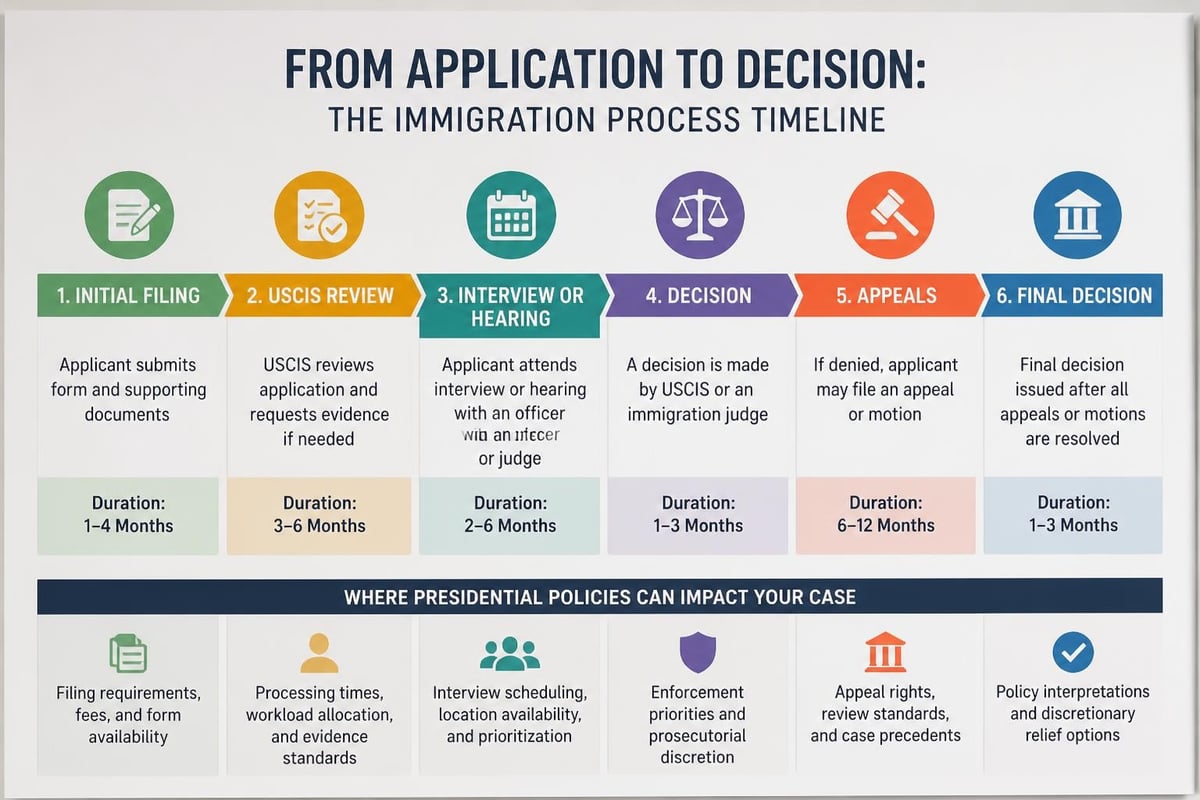
The Interview or Hearing Process
For affirmative cases, USCIS asylum officers conduct non-adversarial interviews. Officers ask questions to understand the claim, assess credibility, and determine eligibility. Applicants may bring attorneys, interpreters, and witnesses to support their case.
Defensive cases proceed through adversarial hearings before immigration judges. The Department of Homeland Security presents the government's position through attorneys who may challenge the applicant's credibility and evidence. These formal proceedings follow courtroom procedures with examination and cross-examination of witnesses.
Bars and Limitations to Asylum Eligibility
Not everyone fleeing persecution qualifies for asylum protection. Statutory bars disqualify certain applicants even when they meet the basic persecution standard. These restrictions reflect security concerns and policy priorities that have evolved through different presidential administrations.
Mandatory Bars to Asylum
Several factors permanently bar asylum eligibility:
- Persecution of others – Those who have persecuted others based on protected grounds cannot receive asylum
- Serious nonpolitical crimes – Conviction of particularly serious crimes, including aggravated felonies
- Security concerns – Individuals who pose dangers to U.S. security or have engaged in terrorist activities
- Firm resettlement – Those who firmly resettled in another country before arriving in the United States
Discretionary Denials
Even when applicants meet statutory requirements, adjudicators may exercise discretion to deny asylum based on:
- Criminal history that doesn't rise to mandatory bars
- Previous immigration violations
- Fraudulent document use
- Safe third country considerations
Presidential policies regarding safe third country agreements and transit through other nations have created additional practical barriers. Recent administrations have negotiated agreements requiring asylum seekers to apply in countries they passed through before reaching the United States, fundamentally changing access to American protection.
Protected Social Groups and Evolving Standards
The "particular social group" category has generated significant controversy and changing interpretations. With asylum laws explained through this flexible category, we see how adjudicators and policymakers adapt protection to emerging forms of persecution.
Defining Particular Social Groups
Groups must meet three criteria:
- Particularity – The group has clear boundaries and is not amorphous
- Social distinction – Society recognizes the group as distinct
- Immutability – Members share an unchangeable characteristic or a fundamental characteristic that shouldn't be required to change
These technical requirements allow protection for diverse groups including:
- Survivors of domestic violence
- LGBTQ individuals facing persecution
- Former gang members who renounced membership
- Women resisting forced marriage or female genital mutilation
- Families targeted for their members' political activities
Presidential administrations have issued contradictory guidance on these groups. Some have expanded recognition while others have restricted which social groups qualify, creating uncertainty for applicants and adjudicators alike. Understanding asylum rights requires tracking these policy shifts as they directly impact who receives protection.
Presidential Influence on Asylum Policy
Executive authority shapes asylum implementation through multiple mechanisms. Presidents appoint immigration judges, issue executive orders, direct agency rulemaking, and establish enforcement priorities that collectively determine how asylum laws function in practice.
Administrative Changes and Policy Memoranda
Department of Justice and Department of Homeland Security leaders, appointed by presidents, issue policy guidance that filters down to asylum officers and immigration judges. These memoranda can:
- Establish new credible fear screening standards
- Define or redefine particular social groups
- Set evidentiary requirements for specific claim types
- Create processing priorities or backlogs
The Attorney General's certification authority allows direct intervention in immigration court decisions, setting precedents that bind all immigration judges. Recent examples include decisions about domestic violence survivors, gang-related persecution, and family-based claims.
Border Policies and Access to Asylum
Presidential border policies significantly affect who can physically access the asylum process. Policies have included:
| Policy Type | Implementation | Impact on Asylum Access |
|---|---|---|
| Remain in Mexico | Required asylum seekers to wait in Mexico during proceedings | Reduced immediate entry, created safety concerns |
| Title 42 expulsions | Used public health authority to expel without asylum screening | Blocked access entirely during health emergency |
| Safe third country agreements | Required asylum applications in transit countries | Diverted claims away from U.S. system |
| Metering/turnbacks | Limited daily asylum processing at ports of entry | Created extended waiting periods |
These executive actions demonstrate how presidential priorities translate into practical barriers or facilitations for asylum seekers, making presidential policy decisions crucial to understanding asylum system functioning.

Rights and Benefits for Asylum Seekers and Asylees
Once granted asylum, individuals receive specific legal protections and pathways to permanent residence. Understanding these rights clarifies why asylum status carries such significance beyond temporary protection.
Immediate Rights Upon Grant
Asylees receive:
- Legal status to remain in the United States indefinitely
- Employment authorization to work without restrictions
- Ability to travel internationally with refugee travel documents
- Path to green card after one year as an asylee
- Family reunification options for spouses and unmarried children under 21
Pending Application Rights
Even before receiving asylum, applicants whose cases remain pending may access certain benefits. After 150 days from filing (not including delays caused by the applicant), individuals can apply for employment authorization. This allows them to support themselves while awaiting decisions that may take years due to substantial backlogs.
Pathway to Citizenship
Asylees may apply for lawful permanent residence (green card) one year after receiving asylum. Once they obtain green cards, they follow the standard naturalization timeline, becoming eligible for citizenship four years after receiving their green card (five years total from asylum grant). This pathway makes asylum not just temporary protection but potential permanent integration.
LGBTQ individuals seeking asylum based on sexual orientation face unique challenges in documenting persecution, but successful applicants access the same rights and pathways as other asylees.
Alternatives When Asylum Isn't Available
Several forms of relief exist for those who don't qualify for asylum or face statutory bars. These alternatives provide varying levels of protection based on different legal standards.
Withholding of Removal
This mandatory protection prevents deportation to countries where individuals face threats to life or freedom based on protected grounds. Unlike asylum, withholding of removal:
- Requires a higher burden of proof (more likely than not versus well-founded fear)
- Doesn't provide a path to permanent residence
- Prevents removal only to the specific country of feared persecution
- Applies even when asylum bars exist
Convention Against Torture Protection
The United Nations Convention Against Torture obligates the United States not to return individuals to countries where they face torture. This protection:
- Doesn't require persecution based on protected grounds
- Applies regardless of the applicant's past conduct
- Prevents removal to any country where torture is likely
- Provides no immigration status or work authorization
Temporary Protected Status
While not asylum, TPS provides temporary protection to nationals of countries experiencing armed conflict, natural disasters, or extraordinary conditions. Presidential administrations designate countries for TPS and determine whether to extend or terminate these designations, directly impacting hundreds of thousands of individuals.
Current Challenges and Future Considerations
The asylum system faces substantial challenges that require both legislative reform and administrative solutions. Understanding these challenges provides context for ongoing policy debates that presidential candidates and administrations must address.
Case Backlog Crisis
As of 2026, immigration courts face backlogs exceeding 2 million cases. This crisis means:
- Average wait times of three to five years for hearings
- Prolonged uncertainty for applicants and their families
- Resource strain on immigration courts and legal service providers
- Difficulty maintaining evidence and witness availability
Presidential funding priorities and hiring initiatives for immigration judges directly address or worsen these backlogs. Administrations that prioritize enforcement over adjudication infrastructure exacerbate delays.
Credible Fear Screening Standards
Initial screening at borders determines whether individuals can pursue asylum claims. Changes to credible fear standards under different administrations have resulted in:
- Pass rates varying from 25% to over 80% depending on policy
- Reduced procedural protections during screening
- Inconsistent application of legal standards
- Challenges accessing legal representation during initial screening
Legislative Reform Proposals
Congress has considered various asylum reform proposals, though partisan divisions have prevented major legislation. Proposed changes include:
- Increasing immigration judge positions
- Modifying asylum eligibility standards
- Creating additional bars or limitations
- Establishing new categories of protection
- Reforming appeal processes
Tracking these legislative efforts alongside presidential positions helps predict future policy directions.
Documentation and Evidence Standards
Successful asylum claims require substantial evidence beyond personal testimony. Understanding what evidence strengthens claims helps explain why some applications succeed while others fail despite seemingly similar circumstances.
Types of Supporting Evidence
Strong asylum applications typically include:
Personal documentation such as police reports, arrest warrants, medical records documenting injuries, photographs of harm, threatening letters or messages, and membership documents for targeted organizations.
Country condition evidence including State Department human rights reports, news articles documenting similar persecution, expert declarations about conditions, reports from international organizations like Human Rights Watch or Amnesty International, and academic studies on relevant issues.
Corroborating testimony from witnesses who observed persecution, family members who can confirm events, experts who can explain cultural or political context, and former officials or members of persecuting groups.
Understanding asylum eligibility requires recognizing that evidence quality often determines outcomes more than the severity of harm described.
Credibility Determinations
When physical evidence is limited, credibility becomes crucial. Adjudicators assess credibility through:
- Internal consistency of testimony
- Consistency with country conditions
- Demeanor during testimony
- Plausibility of claims
- Detailed, specific descriptions
Minor inconsistencies can undermine otherwise strong cases, making preparation and truthfulness essential. Presidential policies regarding credibility standards and the weight given to particular evidence types affect approval rates across the system.
Legal Representation and Its Impact
Access to legal counsel dramatically affects asylum outcomes, yet no right to government-appointed attorneys exists in immigration proceedings. This gap creates substantial disparities in case results.
Representation Statistics
Studies consistently show:
- Represented applicants receive asylum at rates 3-5 times higher than unrepresented applicants
- Children represented by attorneys succeed in 73% of cases versus 15% without counsel
- Detained individuals with attorneys receive positive outcomes in 21% of cases versus 2% without
Pro Bono and Nonprofit Assistance
Various organizations provide free or low-cost legal services:
- Law school clinics offering supervised representation
- Nonprofit legal service providers focusing on immigrants
- Pro bono programs through bar associations
- Remote representation through technology platforms
Presidential funding decisions regarding legal orientation programs and immigration court procedural rules affect whether applicants can access and benefit from legal assistance.
Myths and Misconceptions About Asylum
Public discourse about asylum often includes inaccurate information that shapes political debates and policy proposals. Clarifying these misconceptions provides essential context for understanding asylum laws explained accurately.
Common Misunderstandings
Myth: Asylum seekers are illegal immigrants – Reality: Seeking asylum is a legal right under U.S. and international law, regardless of how someone enters the country. The law explicitly allows asylum applications from individuals who entered without inspection.
Myth: Most asylum claims are fraudulent – Reality: Approval rates vary by nationality, claim type, and judge, but wholesale fraud is not supported by evidence. Many denied claims fail on technical grounds or insufficient evidence rather than dishonesty.
Myth: Asylum seekers receive extensive government benefits – Reality: Asylum seekers have limited access to federal benefits. Most support comes from community organizations and personal networks while they await work authorization.
Myth: Asylum is only for those with past persecution – Reality: Well-founded fear of future persecution suffices for asylum eligibility even without past harm.
Political Rhetoric Versus Legal Reality
Presidential campaigns often feature asylum policy prominently, but rhetoric doesn't always align with legal frameworks. Understanding the actual legal structure helps voters and citizens evaluate proposed policy changes for feasibility and impact.
International Comparisons and U.S. Obligations
The United States asylum system exists within a broader international framework of refugee protection. Comparing American approaches to those of other nations reveals policy choices rather than legal requirements.
Global Refugee Protection Standards
The 1951 Refugee Convention and 1967 Protocol establish international obligations that signatory nations, including the United States, must honor. These treaties:
- Define who qualifies as a refugee
- Prohibit return to countries where life or freedom is threatened (non-refoulement)
- Establish basic rights for refugees
- Create cooperation frameworks among nations
However, implementation varies substantially. Some countries process asylum claims within weeks, while others take years. Some maintain offshore processing, while others integrate applicants into communities during adjudication.
U.S. Distinctive Features
American asylum law includes unique elements:
- The one-year filing deadline (most countries lack strict time limits)
- Extensive bar provisions (broader than many comparable systems)
- Dual affirmative and defensive processes (many countries use single systems)
- Employment authorization for pending applicants (not universal)
Presidential positions on international cooperation, refugee admissions ceilings, and burden-sharing affect how the United States fulfills its international obligations while maintaining sovereign control over immigration policy.
Asylum laws represent a critical component of humanitarian protection that intersects with presidential authority, international obligations, and evolving interpretations of who deserves refuge. Understanding these complex regulations requires tracking both legal frameworks and the policy decisions that shape their implementation. For comprehensive, non-partisan coverage of how presidential administrations approach asylum and immigration policy, U.S. Presidential Report provides detailed analysis of executive actions, legislative proposals, and political debates shaping America's response to those seeking protection from persecution.