The ongoing debate over immigration enforcement has created one of the most significant constitutional conflicts in recent American history. The tension between texas border policies vs federal policies represents a fundamental question about federalism, state sovereignty, and the scope of federal authority. As border crossings continue to challenge existing frameworks, Texas has implemented its own enforcement measures, creating a complex legal and political landscape that affects millions of people and tests the boundaries of constitutional law. Understanding this conflict requires examining the legal foundations, practical implementations, and broader implications for governance at both state and federal levels.
Constitutional Framework and Jurisdiction
The United States Constitution establishes clear parameters for immigration enforcement, granting the federal government primary authority over naturalization and immigration matters. Article I, Section 8 provides Congress with the power to establish uniform rules of naturalization, creating the foundation for federal supremacy in immigration law.
This constitutional arrangement has remained relatively unchallenged for much of American history. The federal government, through agencies like Customs and Border Protection and Immigration and Customs Enforcement, has maintained operational control over border security and immigration enforcement. The Supremacy Clause in Article VI further reinforces federal authority, stating that federal law takes precedence when conflicts arise between state and federal statutes.
State Police Powers and Immigration
Despite federal primacy, states possess inherent police powers to protect public safety and welfare within their borders. Texas officials have argued that immigration enforcement falls within this domain when federal policies fail to adequately address security concerns. This argument forms the basis for many state-level initiatives.
The tension between these two spheres of authority creates the central dispute in texas border policies vs federal policies debates. States cannot enact laws that directly contradict federal immigration statutes, yet they maintain certain enforcement capabilities through traditional police powers. The boundaries of permissible state action remain contested and subject to ongoing litigation.

Recent Texas Legislative Actions
Texas lawmakers have pursued aggressive border security measures in recent years, citing concerns about unauthorized immigration, drug trafficking, and border security. These initiatives represent a departure from traditional cooperative federalism models where states support but do not supplant federal enforcement.
Senate Bill 4 and Criminal Enforcement
One of the most controversial measures, Senate Bill 4, authorizes state law enforcement officers to arrest individuals suspected of entering Texas illegally. The controversial immigration law empowers local police and judges to enforce immigration violations traditionally reserved for federal authorities.
Key provisions include:
- Authority for state police to arrest suspected unauthorized immigrants
- Criminal penalties for illegal entry into Texas
- Judicial authority to order deportation
- Enhanced penalties for repeat violations
- Mandatory cooperation with federal immigration authorities
The legislation represents a fundamental shift in the traditional division of immigration enforcement responsibilities. The Supreme Court’s handling of SB4 has created uncertainty about enforcement timelines and constitutional boundaries.
Operation Lone Star
Launched in 2021, Operation Lone Star coordinates state resources for border security operations. The initiative deploys National Guard troops, Department of Public Safety officers, and other state resources to border regions. Nearly two decades of taxpayer-funded operations have cost billions of dollars and involved thousands of personnel.
| Operation Aspect | Details | Federal Counterpart |
|---|---|---|
| Personnel | 10,000+ National Guard, DPS officers | 20,000+ Border Patrol agents |
| Annual Cost | $4+ billion state funds | $18+ billion federal budget |
| Legal Authority | State police powers | Federal immigration law |
| Geographic Scope | Texas-Mexico border | All U.S. borders |
| Arrest Powers | Criminal trespass, state crimes | Immigration violations |
The operation has resulted in thousands of arrests, primarily for state crimes like criminal trespass on private property near the border. Critics argue these prosecutions target immigration-related conduct under criminal pretenses, effectively creating parallel immigration enforcement.
Federal Immigration Enforcement Framework
The federal government maintains comprehensive immigration enforcement infrastructure spanning multiple agencies and legal authorities. This system operates under the Immigration and Nationality Act and subsequent amendments, creating detailed procedures for border security, visa processing, and deportation proceedings.
Department of Homeland Security Operations
Three primary agencies handle immigration enforcement responsibilities. Customs and Border Protection manages ports of entry and border patrol operations. Immigration and Customs Enforcement conducts interior enforcement and detention operations. United States Citizenship and Immigration Services processes applications and petitions for immigration benefits.
Border Patrol agents patrol areas between ports of entry, interdicting unauthorized crossings and smuggling operations. This function represents the most visible aspect of federal border security. The agency maintains stations throughout border regions, deploying technology and personnel to monitor remote areas.
Federal enforcement priorities have shifted between presidential administrations. Some presidents emphasize border security and removal operations, while others prioritize prosecutorial discretion and targeted enforcement. These policy variations create friction when state and federal priorities diverge.
Legal Processing and Removal Procedures
Federal law establishes specific procedures for processing individuals encountered at the border. These include credible fear screenings for asylum seekers, expedited removal proceedings, and formal immigration court hearings. The system involves immigration judges, asylum officers, and various legal protections.
The distinction between texas border policies vs federal policies becomes particularly stark in these procedural areas. Federal law provides due process protections, access to legal counsel, and appeals processes. State criminal proceedings operate under different standards and timelines, potentially conflicting with federal procedures.
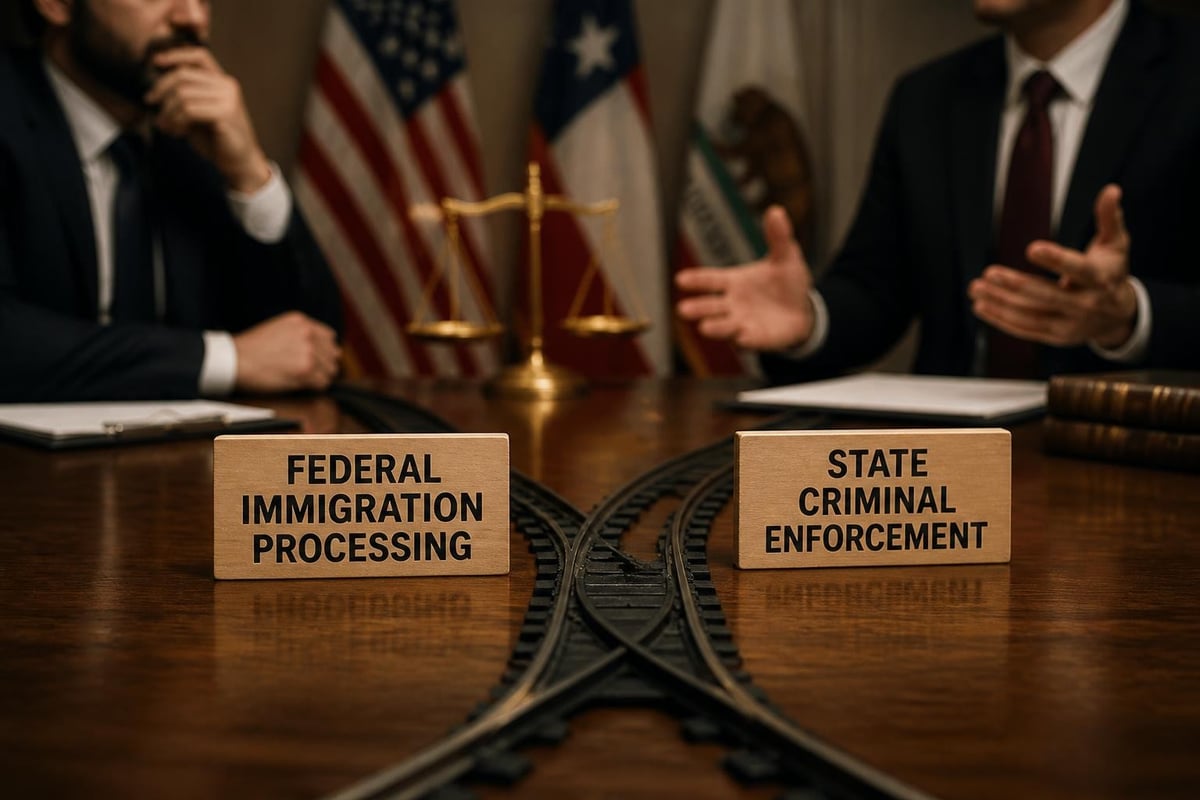
Constitutional Conflicts and Court Battles
Legal challenges have repeatedly tested the boundaries of state authority in immigration enforcement. Federal courts serve as the primary arena for resolving disputes between texas border policies vs federal policies, applying constitutional principles to specific state actions.
Supreme Court Intervention
The Supreme Court’s ruling on Texas border access addressed state interference with federal operations. The Court determined that Texas could not prevent federal agents from accessing border areas to perform their duties, reaffirming federal supremacy in this context.
This decision followed escalating tensions between Texas and federal authorities, including physical barriers preventing Border Patrol access. The standoff raised questions about enforcement mechanisms when states defy federal authority.
Lower federal courts have issued preliminary injunctions blocking various Texas enforcement measures. These rulings typically cite the Supremacy Clause and federal preemption doctrines. However, the legal landscape remains unsettled as cases proceed through appellate review.
Preemption Doctrine Application
Federal preemption occurs when federal law occupies a regulatory field, preventing state legislation in that area. Courts apply different preemption standards depending on congressional intent and the nature of the conflict.
Express preemption exists when Congress explicitly prohibits state regulation. Implied preemption occurs when federal regulation is so comprehensive that it leaves no room for state action, or when state law conflicts with federal objectives. Immigration law presents elements of both forms.
The practical application of preemption in texas border policies vs federal policies disputes depends on specific state actions. Courts examine whether state laws create operational conflicts with federal enforcement, impose additional burdens on immigrants, or undermine federal policy objectives.
Humanitarian and Human Rights Considerations
The policy conflict extends beyond legal technicalities to affect real people seeking safety, economic opportunity, or family reunification. Human rights organizations have documented concerns about treatment of migrants under various enforcement regimes.
State enforcement measures can create dangerous situations when individuals avoid law enforcement encounters. Policies that criminalize unauthorized presence may discourage people from seeking emergency services or reporting crimes. These consequences affect public health and safety beyond immigration enforcement.
Impact on Asylum Seekers
Asylum seekers face particular challenges navigating conflicting enforcement systems. Federal law provides specific protections for individuals fleeing persecution, including the right to apply for asylum regardless of entry method. State criminal prosecution for illegal entry can interfere with federal asylum procedures.
The intersection creates complex scenarios:
- Individuals detained by state authorities may miss federal immigration hearings
- Criminal convictions can affect asylum eligibility and immigration status
- State prosecution timelines may conflict with federal processing schedules
- Legal representation becomes fragmented across multiple proceedings
- Family separations may occur through different custody systems
These complications demonstrate how texas border policies vs federal policies conflicts extend beyond theoretical constitutional questions to practical enforcement challenges affecting vulnerable populations.
Economic and Budgetary Implications
Border enforcement represents a significant financial commitment at both state and federal levels. Texas has allocated billions of dollars to border security operations, while federal agencies maintain multi-billion dollar budgets for immigration enforcement and border protection.
| Fiscal Consideration | Texas State Investment | Federal Investment |
|---|---|---|
| Personnel Costs | National Guard deployment, overtime | Agent salaries, benefits |
| Infrastructure | Barriers, surveillance systems | Ports of entry, detention facilities |
| Legal Expenses | Prosecution, litigation defense | Immigration proceedings, appeals |
| Technology | State surveillance equipment | Biometric systems, databases |
| Annual Total | $4-5 billion | $25+ billion across agencies |
The financial burden extends to local governments and communities. Border counties face increased costs for jails, courts, and emergency services. Immigration enforcement infrastructure at borders requires substantial resources from all government levels.
Opportunity Costs and Resource Allocation
Resources directed toward enforcement represent opportunity costs for other priorities. State funds allocated to border operations cannot fund education, healthcare, or infrastructure improvements. Federal resources face similar trade-offs between immigration enforcement and other national security priorities.
Economic analyses suggest that enforcement spending produces diminishing returns beyond certain thresholds. Increased personnel and technology may not proportionally reduce unauthorized immigration when underlying economic and humanitarian factors drive migration patterns.
Resource allocation comparison showing state versus federal spending on border enforcement across personnel, technology, infrastructure, and legal costs with opportunity cost considerations
Political Dynamics and Presidential Authority
Presidential administrations exercise considerable discretion in immigration enforcement priorities and resource allocation. Executive branch policies shape how federal agencies interpret statutory mandates and deploy personnel. This authority creates variation in how texas border policies vs federal policies conflicts manifest under different presidents.
Conservative administrations typically emphasize border security, removal operations, and cooperation with state enforcement efforts. Progressive administrations often prioritize humanitarian considerations, prosecutorial discretion, and legal pathways for immigration. These philosophical differences affect everything from asylum processing to interior enforcement.
Executive Actions and State Responses
Presidents use executive orders, memoranda, and agency guidance to shape immigration policy within statutory boundaries. These actions can expand or contract enforcement priorities, affecting millions of people without congressional legislation. States may respond by aligning with or opposing these federal policy shifts.
Texas has challenged numerous federal immigration policies through litigation, arguing that executive actions exceed statutory authority or violate administrative law requirements. These legal battles reflect deeper disagreements about immigration policy substance beyond mere jurisdictional questions.
The political nature of immigration debates complicates efforts to resolve texas border policies vs federal policies conflicts through negotiation or compromise. Understanding democratic governance requires examining how federalism operates when partisan divisions align with federal-state tensions.
Cooperative Federalism Models
Despite conflicts, federal and state authorities successfully cooperate in many immigration contexts. Task forces combine federal and state resources for human trafficking investigations, drug interdiction, and criminal enforcement. Information sharing between agencies enhances security while respecting jurisdictional boundaries.
287(g) Agreements and Information Sharing
Section 287(g) of the Immigration and Nationality Act authorizes agreements between federal immigration authorities and state or local law enforcement. These partnerships allow designated state officers to perform certain immigration enforcement functions under federal supervision.
The program demonstrates how texas border policies vs federal policies can align when states work within federal frameworks rather than creating parallel systems. Participating agencies receive training, supervision, and legal authority from federal immigration officials.
Successful cooperation requires:
- Clear memoranda of understanding defining responsibilities
- Training for state officers in federal immigration law
- Federal supervision and oversight of state actions
- Information sharing protocols protecting civil liberties
- Regular evaluation of program effectiveness and compliance
These partnerships avoid constitutional conflicts by operating within federal authority rather than asserting independent state enforcement powers.
Interstate and Regional Implications
Border policies affect multiple states beyond Texas, creating regional considerations for immigration enforcement. California, Arizona, and New Mexico share border regions with different enforcement approaches. These variations create uneven application of immigration law and potential secondary migration effects.
Neighboring states without aggressive enforcement may experience increased immigration flows if Texas policies succeed in diverting migration patterns. This dynamic raises questions about whether individual states can effectively address immigration through unilateral action or whether comprehensive federal approaches remain necessary.
Interstate cooperation on immigration remains limited due to divergent political preferences and policy priorities. Regional compacts or coordinated enforcement strategies face challenges when states fundamentally disagree about immigration enforcement philosophy.
Future Legal and Policy Developments
The constitutional questions underlying texas border policies vs federal policies disputes will continue evolving through litigation, legislation, and political developments. Several scenarios may shape future enforcement landscapes.
Congressional legislation could clarify state authority in immigration enforcement, either expanding or restricting permissible state actions. Comprehensive immigration reform might address underlying policy disagreements while establishing clear jurisdictional boundaries. Alternatively, continued legislative gridlock may leave courts as the primary forum for resolving conflicts.
Potential Supreme Court Precedents
Future Supreme Court decisions will likely establish more definitive boundaries for state immigration enforcement. Cases challenging SB4 and similar statutes could produce precedents affecting state authority nationwide. The Court's composition and jurisprudential approach to federalism will significantly influence outcomes.
Legal doctrines surrounding preemption, state police powers, and federal supremacy remain subject to interpretation and evolution. The Court may adopt narrow rulings addressing specific state actions or issue broader pronouncements about state roles in immigration enforcement generally.
Monitoring these developments requires attention to multiple legal proceedings across various jurisdictions. The complexity of immigration law, combined with rapidly changing political contexts, creates an uncertain regulatory environment for enforcement agencies, immigrants, and border communities.
The ongoing tension between state and federal border enforcement authority represents a fundamental constitutional question with profound practical implications. As legal battles continue and policies evolve, staying informed about these developments becomes essential for understanding American governance and presidential authority. For comprehensive, non-partisan coverage of how presidential administrations navigate immigration policy and federal-state conflicts, U.S. Presidential Report provides detailed analysis and timely updates on these critical issues affecting the nation's future.