The 2024 primary season marked a pivotal moment in American political history, reshaping how presidential nominations unfold and revealing significant shifts in voter behavior and party dynamics. Unlike previous election cycles, the 2024 primary contests concluded with unprecedented speed, creating a compressed timeline that challenged traditional campaign strategies and forced candidates to adapt quickly. Understanding the mechanisms, outcomes, and implications of this primary season provides essential context for analyzing modern American democracy and the evolving landscape of presidential politics.
Historical Context of the 2024 Primary Season
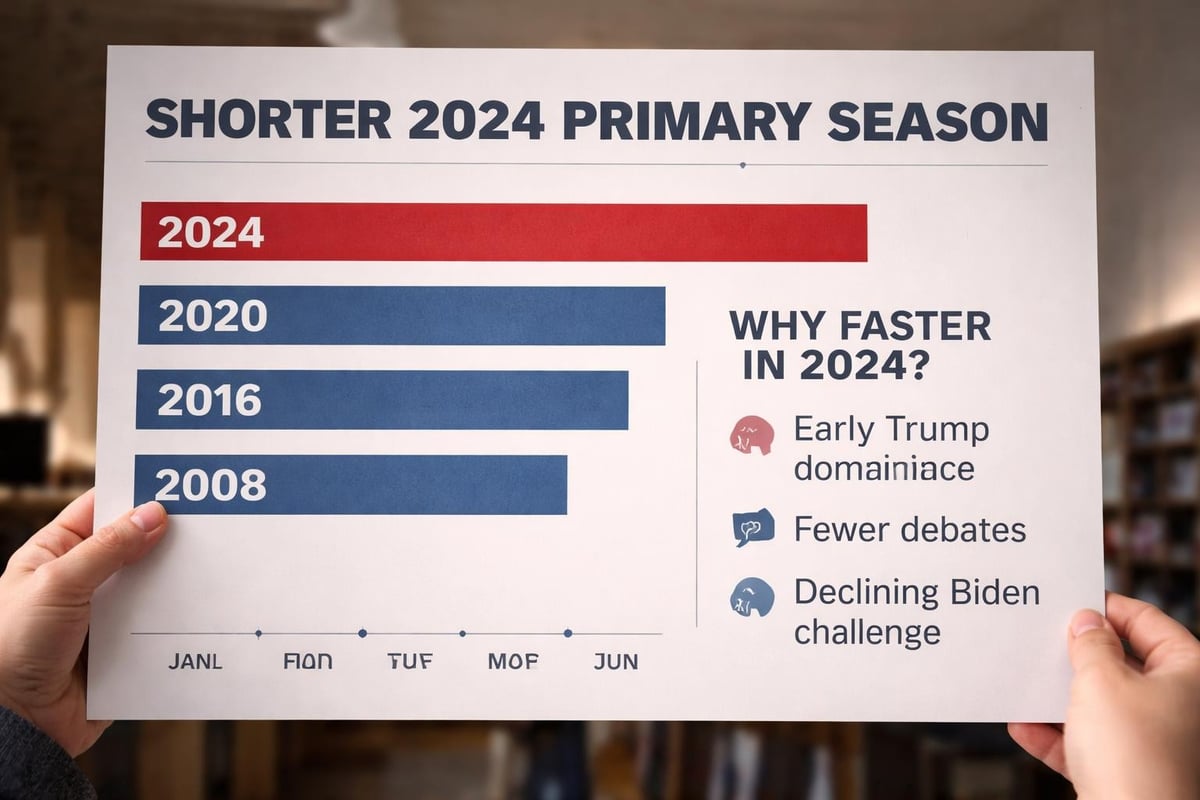
The 2024 primary represented a departure from established patterns in presidential nomination processes. According to Pew Research Center’s analysis of the 2024 presidential primary season, this cycle was one of the shortest in the modern political era. This compression fundamentally altered how candidates engaged with voters and allocated campaign resources.
Republican Primary Dynamics
The Republican 2024 primary field initially appeared crowded but quickly consolidated around a dominant frontrunner. Donald Trump emerged as the last major Republican candidate standing, effectively securing the nomination earlier than many political observers anticipated. His campaign strategy emphasized early state victories and leveraged existing name recognition to build insurmountable momentum.
Key factors in Republican primary consolidation:
- Strong performance in Iowa and New Hampshire caucuses
- Decisive Super Tuesday victories across multiple states
- Strategic withdrawal of competing candidates
- Unified conservative base support
- Effective fundraising infrastructure
The rapid consolidation created unique challenges for alternative candidates who struggled to gain traction against the established frontrunner. Traditional campaign phases, including extended debate seasons and prolonged state-by-state competition, compressed into a remarkably brief timeframe.
Democratic Primary Considerations
The Democratic side of the 2024 primary presented distinct dynamics that influenced overall electoral strategy. With an incumbent president seeking reelection, the traditional competitive primary environment transformed into a coordinated nomination process. This structure reflected historical patterns when sitting presidents pursue second terms.
Party leadership prioritized unity and resource conservation, directing attention toward general election preparation rather than extended primary battles. State-level contests proceeded on schedule, but the outcome remained largely predetermined by incumbent advantage and party organization.
Voter Turnout and Demographic Patterns
Analyzing voter participation during the 2024 primary offers crucial insights into civic engagement and demographic shifts. The U.S. Census Bureau’s comprehensive data on voter registration and turnout reveals important trends that shaped electoral outcomes.
| Demographic Category | 2024 Primary Turnout | Change from 2020 | Key Observations |
|---|---|---|---|
| Ages 18-29 | Moderate | Decreased slightly | Lower engagement in non-competitive races |
| Ages 30-44 | High | Increased | Strong participation among millennials |
| Ages 45-64 | Very High | Stable | Consistent engagement patterns |
| Ages 65+ | Very High | Increased | Highest participation rates |
The data indicates that older voters maintained their historical advantage in primary participation, while younger demographics showed mixed engagement levels depending on competitive intensity within each state's contest.
Geographic Variations in Primary Participation
State-level differences significantly influenced how the 2024 primary unfolded across different regions. Early voting states like Iowa, New Hampshire, South Carolina, and Nevada continued exercising disproportionate influence on candidate viability and momentum.
Minnesota’s 2024 presidential primary results exemplify how individual states processed their contests, providing detailed vote counts and percentages that contributed to the overall delegate allocation process. These state-specific outcomes collectively determined nomination results while revealing regional preferences and coalition strengths.
Regional participation patterns included:
- Midwest states showing strong turnout among traditional party bases
- Southern states demonstrating diverse coalition engagement
- Western states exhibiting varied participation based on competitiveness
- Northeastern states maintaining consistent historical turnout levels
Campaign Strategy Evolution During Primary Season

The condensed nature of the 2024 primary forced campaigns to reconsider traditional strategic approaches. Candidates needed to balance retail politics in early states with national media presence and digital engagement. This multi-platform requirement strained resources and favored well-funded operations with existing infrastructure.
Digital Campaign Infrastructure
Modern primary campaigns increasingly relied on sophisticated digital operations to reach voters efficiently. Social media platforms, targeted advertising, and data analytics became essential components of viable presidential campaigns. The 2024 primary accelerated this trend, with successful campaigns demonstrating mastery of online voter engagement.
Email lists, text messaging programs, and social media followings translated into fundraising capacity and volunteer mobilization. Campaigns that built robust digital infrastructure before the primary season gained significant advantages over competitors entering the race later or with less technological sophistication.
Debate Performance and Media Moments
Televised debates remained important, though their influence evolved in the 2024 primary context. With fewer debates scheduled and compressed timelines between contests, individual performances carried heightened significance. Candidates needed to make immediate impressions rather than relying on gradual momentum building across multiple debate appearances.
Media coverage concentrated on front-runner narratives, making it increasingly difficult for lower-polling candidates to break through with alternative messages. This dynamic reinforced existing advantages and contributed to the rapid primary consolidation observed throughout the 2024 cycle.
Delegate Allocation and Mathematical Realities
Understanding delegate mathematics proved crucial for analyzing how the 2024 primary concluded so quickly. Republican and Democratic parties employ different allocation rules, creating distinct pathways to nomination.
Republican delegate allocation features:
- Winner-take-all contests in certain states
- Proportional allocation with qualifying thresholds
- Bonus delegates for state party performance
- Unbound delegates in select jurisdictions
Democratic delegate allocation characteristics:
- Strict proportional representation requirements
- 15% viability threshold for delegate awards
- Superdelegate role in convention proceedings
- Bonus delegates for timing compliance
These mathematical frameworks shaped campaign strategy, determining where candidates invested resources and how they pursued delegate accumulation. Early victories created psychological momentum that often proved more valuable than the actual delegate totals secured.
Impact of Early State Results
The traditional early states exerted outsized influence during the 2024 primary despite ongoing debates about their representativeness. Iowa, New Hampshire, South Carolina, and Nevada served as crucial testing grounds where candidates demonstrated viability or faced campaign-ending defeats.
| Early State | Date | Primary Significance | 2024 Impact |
|---|---|---|---|
| Iowa | February | First contest momentum | Established frontrunner status |
| New Hampshire | February | Independent voter test | Confirmed early trends |
| South Carolina | February | Diverse electorate gauge | Validated coalition strength |
| Nevada | February | Western state indicator | Solidified nomination path |
Results from these states created narratives that influenced subsequent contests, donor confidence, and media coverage. Candidates who underperformed in early states faced immediate pressure to withdraw, contributing to the rapid field consolidation characteristic of the 2024 primary.
For readers interested in broader presidential policy implications, exploring U.S. presidential policy on domestic policy provides valuable context about how primary positions translate into governing priorities.
Super Tuesday's Decisive Role
Super Tuesday represented the single most consequential day of the 2024 primary calendar, with numerous states simultaneously holding contests. This concentration of delegate allocation opportunities created a make-or-break moment for campaigns seeking to demonstrate national viability.
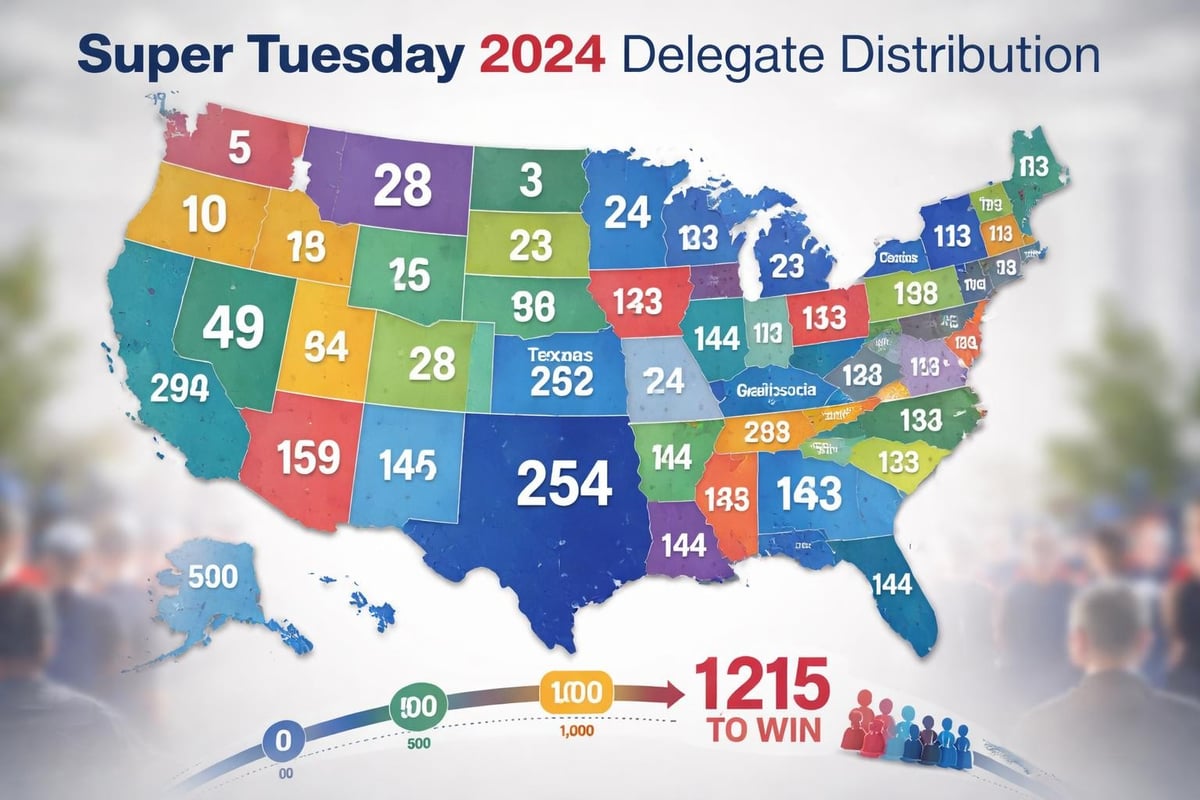
The states participating in Super Tuesday 2026 represented diverse geographic, demographic, and political characteristics. Successful campaigns needed to compete effectively across multiple battlegrounds simultaneously, requiring substantial financial resources and organizational capacity.
Super Tuesday State Diversity
California, Texas, North Carolina, Virginia, Massachusetts, Colorado, and numerous other states participated in this critical primary day. Each brought distinct voter coalitions, media markets, and political cultures that campaigns needed to navigate.
- Large delegate prizes in populous states
- Proportional allocation rules affecting strategy
- Regional clustering creating efficiency opportunities
- Media market overlap reducing advertising costs
- Early voting periods extending campaign timelines
The voting patterns observed in the 2024 election demonstrate how demographic groups aligned during this crucial period, providing insights into coalition building and electoral strategy.
Primary Reform Discussions
The 2024 primary experience reignited longstanding debates about presidential nomination processes. Critics questioned whether the current system adequately represents party diversity, provides sufficient voter engagement opportunities, and produces optimal general election candidates.
Common reform proposals included:
- Rotating regional primary system
- National primary day
- Ranked-choice voting in primary contests
- Extended calendar to increase participation
- Reduced influence of early states
These discussions reflected broader concerns about democratic participation, party responsiveness, and the balance between efficiency and representation in nomination processes. While the 2024 primary proceeded under existing rules, the compressed timeline intensified calls for structural changes.
Media Coverage and Information Ecosystems
The role of media in shaping primary outcomes continued evolving during the 2024 cycle. Traditional broadcast and print journalism competed with digital platforms, podcasts, and social media for audience attention and influence over voter perceptions.
Campaign coverage concentrated on horse-race narratives, polling data, and competitive dynamics rather than detailed policy comparisons. This focus reflected both audience preferences and the compressed timeline that limited opportunities for extended issue exploration.
Polling and Prediction Markets
Public opinion surveys guided campaign strategy and media coverage throughout the 2024 primary. Polling accuracy, methodology, and interpretation became subjects of intense scrutiny as campaigns and observers sought reliable information about voter preferences.
Prediction markets offered alternative forecasting mechanisms, aggregating information through financial incentives rather than traditional survey methods. The interplay between polling, prediction markets, and actual results created a complex information environment that campaigns navigated with varying degrees of success.
Fundraising Dynamics in Modern Primaries
Financial resources remained essential for competitive primary campaigns in 2026. The 2024 primary demonstrated how early fundraising success translated into organizational capacity, media presence, and sustained competitiveness.
Small-dollar online fundraising continued growing in importance, enabling campaigns to build grassroots financial support independent of traditional major donor networks. However, large contributions and super PAC spending still influenced competitive dynamics, particularly in expensive media markets.
| Fundraising Source | Advantages | Challenges | 2024 Primary Impact |
|---|---|---|---|
| Small donors | Grassroots enthusiasm | Time-intensive cultivation | Sustainable funding base |
| Major donors | Large sums quickly | Perception concerns | Early campaign viability |
| Super PACs | Independent spending | Coordination limits | Supplemental advertising |
| Personal wealth | Immediate availability | Limited relatability | Competitive entry |
The compressed 2024 primary timeline favored candidates who built fundraising infrastructure before official campaign launches. Late entrants struggled to match the financial resources accumulated by early movers.
Lessons for Future Primary Cycles
The 2024 primary offers numerous lessons for candidates, parties, and voters considering future nomination processes. The condensed timeline, rapid consolidation, and evolving campaign technologies established precedents that will likely influence subsequent election cycles.
Key takeaways for future campaigns:
- Early organization provides crucial advantages
- Digital infrastructure enables efficient voter contact
- Debate performance requires immediate impact
- Delegate mathematics determines strategic priorities
- Media narratives influence donor and voter confidence
Party leaders must balance desires for efficient nominations against concerns about adequate voter participation and candidate vetting. The 2024 primary succeeded in producing nominees quickly but raised questions about whether speed should override other democratic values.
Historical comparisons with earlier election cycles, such as those covered in discussions of Bill Clinton’s presidential campaigns, highlight how nomination processes continue evolving in response to technological, social, and political changes.
State-by-State Result Analysis
Examining individual state results from the 2024 primary reveals important details about coalition building and electoral strategy. Le Monde’s interactive map of state-by-state results provides comprehensive geographic analysis of how the general election ultimately unfolded following the primary season.
These geographic patterns reflected demographic distributions, economic conditions, and regional political cultures that shaped voter preferences. Campaigns that understood state-level dynamics positioned themselves more effectively for both primary success and general election competitiveness.
Rural, suburban, and urban voting patterns demonstrated distinct characteristics across the 2024 primary landscape. Successful campaigns built diverse coalitions capable of performing well across these different community types rather than relying on narrow geographic or demographic bases.
The Transition from Primary to General Election
As the 2024 primary concluded, attention shifted rapidly toward general election preparation. The compressed timeline meant nominees had extended periods for pivot strategies, coalition expansion, and opposition research before the November contest.
This transition period proved crucial for unifying party coalitions, addressing intra-party divisions exposed during primaries, and developing general election messaging that appealed beyond base voters. The speed of primary consolidation provided additional time for this essential preparation.
Vice presidential selection processes, platform development, and convention planning proceeded on accelerated timelines given the early nomination certainty. These activities traditionally occurred later in election years when primary contests extended deeper into the spring and early summer months.
The 2024 primary fundamentally shaped American presidential politics through its condensed timeline, rapid consolidation, and evolving campaign technologies. Understanding these dynamics provides essential context for analyzing democratic participation, party nomination processes, and electoral strategy. For comprehensive, non-partisan coverage of presidential elections, policy developments, and political analysis, U.S. Presidential Report delivers reliable information about current and past presidents to help citizens stay informed about American governance.