The Make America Healthy Again (MAHA) agenda has emerged as one of the most significant policy initiatives shaping federal governance in 2026. This comprehensive framework spans multiple government agencies and addresses critical issues from food safety and public health to environmental protection and chemical regulation. Understanding the maha agenda explained 2026 is essential for anyone following presidential policy decisions and their impact on American life. As this initiative continues to evolve under current leadership, its reach extends into nearly every aspect of federal health and environmental policy, making it a cornerstone of contemporary governance.
Origins and Core Principles of the MAHA Initiative
The MAHA movement represents a fundamental shift in how federal agencies approach public health and environmental protection. What began as a campaign promise has transformed into a multi-agency policy framework that prioritizes prevention, transparency, and regulatory reform.
At its foundation, the initiative seeks to address what proponents identify as systemic failures in protecting American health. This includes reforming dietary guidelines, strengthening chemical regulations, and improving environmental safeguards. The agenda operates on several key principles that guide implementation across federal departments.
Core Principles Include:
- Prevention-first approach to public health challenges
- Evidence-based policy making with transparent data
- Regulatory modernization to address emerging threats
- Cross-agency collaboration for comprehensive solutions
- Community engagement, particularly with vulnerable populations
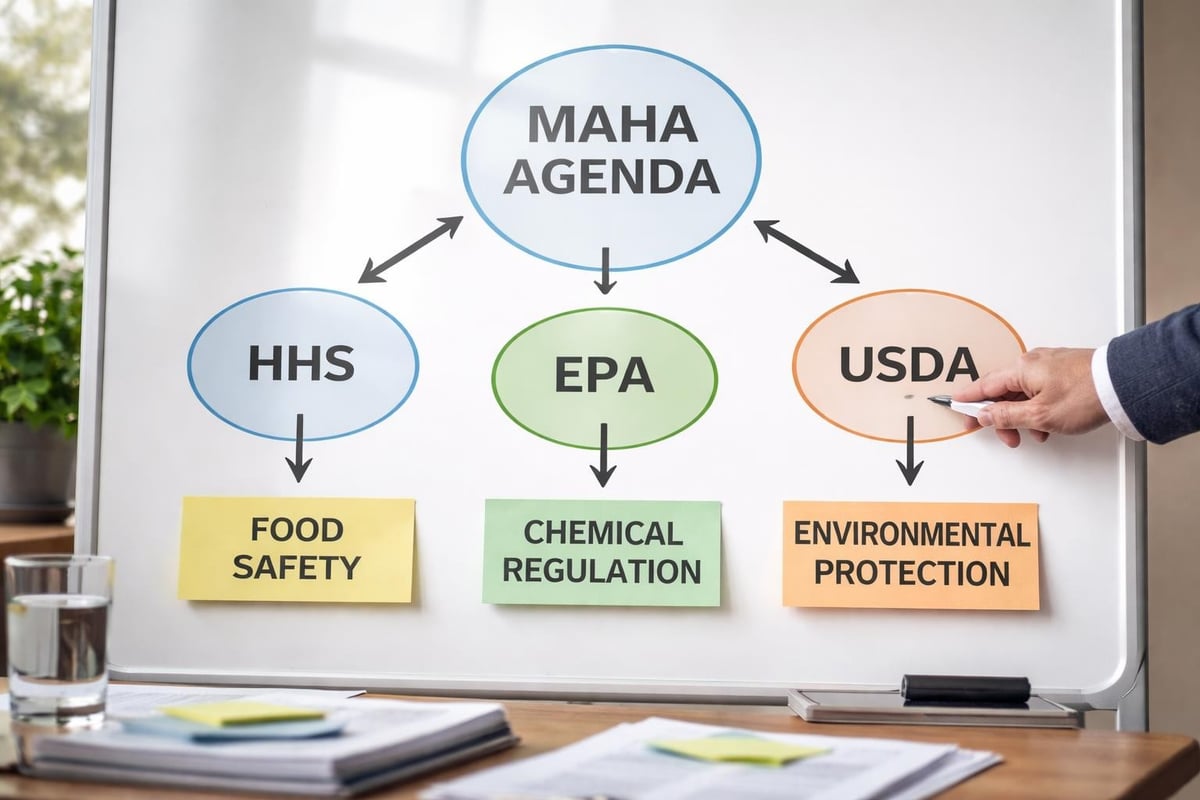
The framework emphasizes coordination between the Department of Health and Human Services, the Environmental Protection Agency, and the Department of Agriculture. This inter-agency approach ensures that health and environmental policies align with broader presidential priorities while maintaining scientific rigor.
Health Policy Reforms Under MAHA
Secretary Kennedy's leadership has positioned health policy at the center of the maha agenda explained 2026. His recent initiatives demonstrate how the administration plans to operationalize these principles across diverse communities and health challenges.
Dietary Guidelines and Food Program Changes
The USDA has announced new partnerships that fundamentally reshape how federal nutrition programs operate. These reforms target the Supplemental Nutrition Assistance Program (SNAP) and other food assistance initiatives, introducing stricter standards for what constitutes healthy food choices.
The revised dietary guidelines emphasize whole foods, reduced processed ingredients, and transparent labeling. These changes affect millions of Americans who rely on federal food assistance, making this one of the most impactful elements of the overall agenda.
| Program Area | Previous Standard | 2026 MAHA Standard | Population Impact |
|---|---|---|---|
| SNAP Eligible Foods | Broad category inclusion | Restricted processed foods | 42 million recipients |
| School Lunch Programs | Basic nutrition minimums | Enhanced whole food requirements | 30 million students |
| WIC Guidelines | Traditional supplements | Organic and whole food priority | 6.2 million participants |
Prevention and Recovery Initiatives
Secretary Kennedy’s Arizona visit highlighted the administration's commitment to prevention-based healthcare, particularly in underserved communities. This approach represents a significant departure from traditional reactive healthcare models.
The tribal health component addresses longstanding disparities in Native American communities. By focusing on prevention rather than treatment alone, the initiative aims to reduce chronic disease rates and improve overall health outcomes. These efforts include expanded screening programs, community health worker initiatives, and culturally appropriate intervention strategies.
Recovery programs for addiction and mental health have received increased funding and policy support under this framework. The integration of recovery services with primary care represents one of the most innovative aspects of current health policy reform.
Environmental Regulations and Chemical Safety
The environmental dimension of the maha agenda explained 2026 extends presidential authority into areas traditionally dominated by industry self-regulation. The EPA's role has expanded significantly as the administration seeks to address what it identifies as inadequate protections.
EPA's Expanded MAHA Mandate
The EPA’s upcoming initiatives encompass plastics regulation, food waste reduction, Superfund cleanup acceleration, and lead pipe replacement programs. Each area represents a significant policy shift with substantial economic and public health implications.
The plastics initiative targets both production and disposal, introducing new standards for recyclability and restrictions on certain chemical additives. This approach acknowledges the growing body of evidence linking plastic pollution to health problems and environmental degradation.
Key EPA Initiatives:
- Mandatory plastic recyclability standards for packaging
- Accelerated timeline for lead pipe replacement in municipal water systems
- Enhanced Superfund cleanup protocols with stricter contamination thresholds
- Food waste reduction targets for commercial operations
- Expanded monitoring of microplastics in drinking water
Chemical Regulation Overhaul
The administration’s overhaul of chemical regulations represents one of the most comprehensive reforms in decades. The Trump administration has prioritized stricter controls on food additives, cosmetic ingredients, and industrial chemicals that enter consumer products.

This regulatory approach applies precautionary principles, requiring manufacturers to demonstrate safety rather than government agencies proving harm. The reversal of burden of proof marks a fundamental shift in regulatory philosophy and has generated both support and opposition from various stakeholders.
Recent reporting indicates that the MAHA movement's influence now extends beyond health policy into comprehensive environmental regulations. This expansion reflects the administration's view that environmental quality and public health are inseparably linked.
Implementation Challenges and Political Dynamics
Understanding the maha agenda explained 2026 requires acknowledging the significant implementation challenges facing federal agencies. The scope of these reforms necessitates coordination across departments, substantial funding, and cooperation from state and local governments.
Budgetary Considerations
The financial requirements for full MAHA implementation remain a subject of ongoing congressional debate. Initial estimates suggest billions in additional funding for expanded inspections, research programs, and infrastructure improvements.
| Initiative Category | Estimated Annual Cost | Primary Funding Source | Implementation Status |
|---|---|---|---|
| Dietary Program Reforms | $2.3 billion | Farm Bill appropriations | Partially funded |
| Chemical Safety Testing | $890 million | EPA operating budget | Supplemental needed |
| Lead Pipe Replacement | $15 billion | Infrastructure bill | Ongoing |
| Tribal Health Programs | $450 million | HHS discretionary | Fully funded |
State and Local Coordination
Many MAHA initiatives require state-level implementation, creating potential friction between federal mandates and state priorities. Some governors have embraced these reforms, while others have expressed concerns about unfunded mandates and federal overreach.
The variation in state response reflects broader political divisions around federal authority in health and environmental matters. States with existing robust environmental protections generally find alignment easier, while those with less stringent regulations face more significant adjustment requirements.
Industry Response and Economic Impact
The business community's reaction to the maha agenda explained 2026 has been mixed, with clear divisions between sectors and company sizes. Food manufacturers, chemical producers, and packaging companies face the most significant compliance requirements and potential costs.
Food and Agriculture Sector
Major food companies have invested in reformulation efforts to meet new standards, while smaller producers express concerns about the financial burden of compliance. The processed food industry, in particular, faces substantial challenges as regulations restrict previously common ingredients and additives.
Agricultural producers selling to federal programs must now meet enhanced standards for pesticide use, organic certification, and production methods. These requirements create opportunities for some farms while potentially excluding others from lucrative government contracts.
Chemical and Manufacturing Industries
Chemical manufacturers confront a fundamentally altered regulatory landscape. The new approval process for food additives and consumer product ingredients requires extensive safety testing and documentation, increasing time-to-market and development costs.
Some companies view these changes as creating competitive advantages for early adopters of safer alternatives, while others characterize them as economically burdensome overregulation. This split often correlates with company size and existing investment in alternative formulations.

Public Health Outcomes and Metrics
The administration has established specific metrics to evaluate MAHA effectiveness, focusing on measurable health outcomes rather than simply tracking regulatory compliance. These benchmarks will shape policy adjustments and determine whether initiatives receive continued support.
Primary Health Metrics:
- Reduction in childhood obesity rates by 15% within five years
- Decrease in diet-related chronic diseases among SNAP recipients
- Lower exposure levels to priority chemicals in population testing
- Improved health outcomes in tribal communities
- Reduced contamination in drinking water systems
Early data collection has begun, though meaningful outcome assessment will require several years of implementation. Preliminary indicators suggest some positive trends, particularly in communities with robust program adoption and support services.
Long-term Policy Implications
The maha agenda explained 2026 extends beyond immediate regulatory changes to establish precedents that will shape federal policy for years. The expanded interpretation of federal authority in health and environmental protection represents a significant development in executive power.
Future administrations will inherit an altered regulatory framework and may choose to maintain, modify, or reverse these initiatives. The political sustainability of MAHA depends partly on demonstrable health improvements and public support, both of which remain under development.
The agenda also influences how presidential priorities intersect with economic policy, as health and environmental regulations carry substantial economic implications. This intersection makes the initiative relevant to multiple policy domains and political constituencies.
Monitoring and Transparency Mechanisms
The administration has committed to unprecedented transparency in MAHA implementation, establishing public dashboards and regular reporting requirements. These mechanisms aim to build public trust and enable informed debate about policy effectiveness.
Federal agencies must now publish detailed implementation timelines, spending reports, and outcome data. This information allows researchers, advocates, and critics to track progress and identify areas requiring adjustment. The transparency commitment represents an attempt to depoliticize health and environmental policy through data-driven evaluation.
Congressional oversight committees maintain regular hearings on MAHA implementation, providing another layer of accountability and public scrutiny. These proceedings often feature testimony from agency officials, scientific experts, and affected stakeholders.
For citizens seeking comprehensive coverage of how these policies develop and impact presidential governance, U.S. Presidential Report provides ongoing analysis of executive branch initiatives and their broader political context.
The MAHA agenda represents one of 2026's most significant policy initiatives, reshaping federal approaches to health and environmental protection through coordinated agency action and expanded regulatory authority. For non-partisan analysis and comprehensive coverage of presidential policies including MAHA developments, U.S. Presidential Report delivers the latest news on current and past U.S. Presidents, helping readers stay informed about the policies shaping American governance. Stay current with presidential decision-making and policy implementation through our dedicated coverage.