The process of a president running for office represents one of the most complex and scrutinized political undertakings in American democracy. Every four years, candidates emerge with aspirations to lead the nation, but the path to the White House requires navigating constitutional requirements, intense public scrutiny, substantial fundraising efforts, and a grueling campaign process that tests both personal resilience and political acumen. Understanding what it takes to pursue this highest office provides critical insight into American governance and the democratic principles that shape our electoral system.
Constitutional Requirements for Presidential Candidates
The foundation of any president running for office begins with meeting the explicit criteria outlined in the U.S. Constitution. These requirements were carefully crafted by the framers to ensure that only qualified individuals could assume the nation's highest office.
Age, Citizenship, and Residency Standards
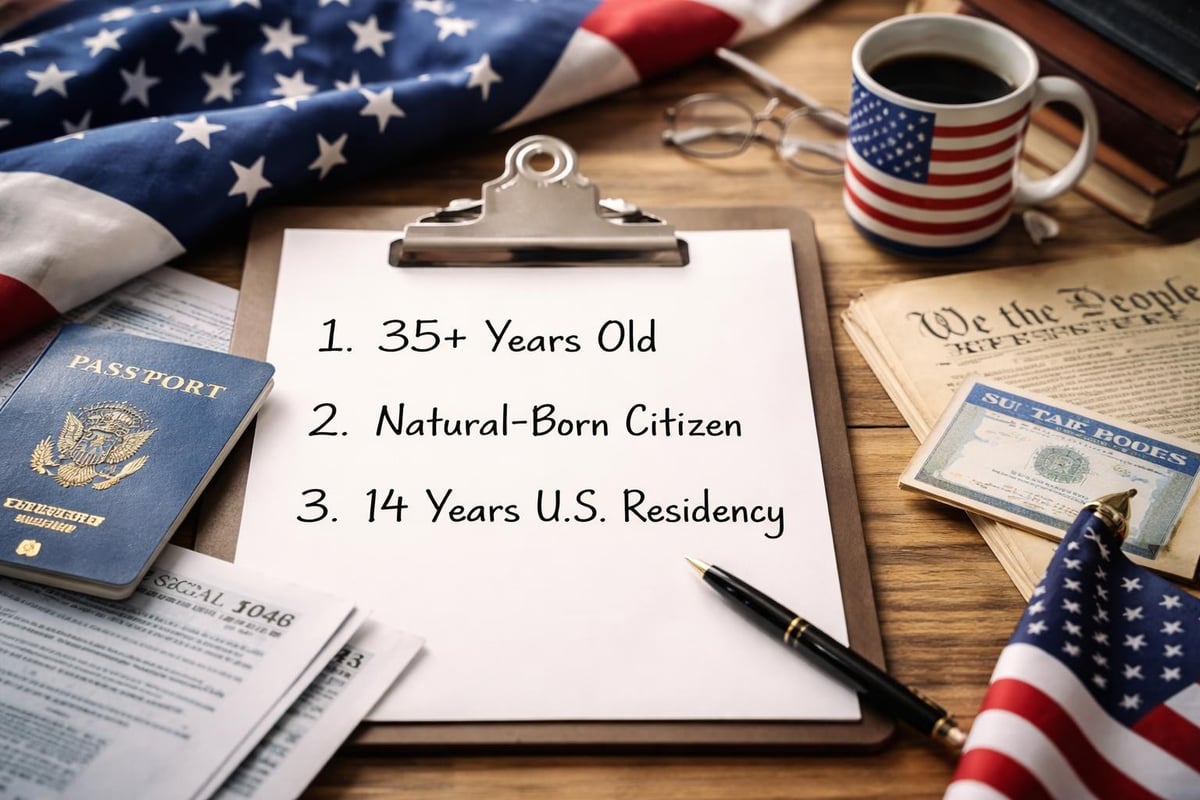
According to constitutional qualifications for the presidency, three fundamental requirements must be met. First, candidates must be at least 35 years old at the time of taking office. Second, they must be a natural-born citizen of the United States. Third, they must have resided in the United States for at least 14 years.
The natural-born citizen requirement has sparked considerable debate throughout American history. This clause excludes naturalized citizens from the presidency, meaning individuals must have acquired citizenship at birth, either by being born on U.S. soil or born abroad to at least one U.S. citizen parent.
The residency requirement ensures that any president running has substantial connection to and understanding of American life. The 14 years need not be consecutive, and the Constitution does not specify that these years must immediately precede the election.
Historical Context and Framers' Intent
The constitutional eligibility requirements reflect the framers' concerns about foreign influence and ensuring presidential maturity. By requiring natural-born citizenship, they sought to prevent foreign powers from placing sympathetic individuals in America's highest office. The age requirement was designed to ensure sufficient life experience and judgment.
These standards remain unchanged since 1787, demonstrating their enduring relevance. While various amendments have altered other aspects of presidential selection, including how electors vote and presidential term limits, the basic eligibility criteria have withstood the test of time.
The Presidential Campaign Process
Once constitutional requirements are satisfied, a president running must navigate the intricate campaign process that transforms candidates into viable contenders for the nation's highest office.
Exploratory Committees and Formal Announcements
Most candidates begin with exploratory committees that allow them to test the waters without triggering full campaign finance regulations. These committees gauge public support, build donor networks, and develop campaign infrastructure. When sufficient momentum exists, candidates make formal announcements declaring their presidential intentions.
The timing of these announcements has evolved significantly. Modern candidates often announce their candidacy 18-24 months before the general election, creating extended campaign seasons that demand extraordinary endurance and resources.
Primary and Caucus Season
The primary process represents the most grueling phase for any president running. States hold primaries or caucuses where party members select their preferred candidate. This system, which gained prominence in the 1970s, democratized presidential selection by shifting power from party insiders to voters.
Key primary season characteristics include:
- Front-loaded calendars with early states wielding disproportionate influence
- Delegate allocation systems varying by state and party
- Momentum-driven narratives where early victories propel fundraising
- Intense media scrutiny of candidate performance and viability
- Debates that showcase policy positions and personal qualities
Iowa and New Hampshire traditionally hold the first contests, though their positions have faced challenges. These early states force candidates to engage in retail politics, meeting voters personally in diners, town halls, and community centers.
| Primary Type | Description | States Using Method | Impact on Candidates |
|---|---|---|---|
| Closed Primary | Only registered party members vote | Approximately 14 states | Favors candidates appealing to party base |
| Open Primary | Any registered voter can participate | Approximately 15 states | Encourages broader appeal |
| Caucus | Community meetings with public voting | 3-5 states | Requires strong ground organization |
| Semi-Closed | Independents can choose which primary | Approximately 15 states | Balances party loyalty and crossover appeal |
Convention and General Election Campaign
After securing their party's nomination through the primary process, candidates face the general election campaign, which operates under fundamentally different dynamics. The focus shifts from appealing to party activists to persuading moderate and independent voters in battleground states.
National conventions formally nominate candidates and serve as massive media events introducing nominees to general election voters. Vice presidential selections, acceptance speeches, and party platforms all receive intensive coverage during these carefully choreographed gatherings.

Campaign Finance and Fundraising
Financial resources critically determine viability for any president running in the modern era. Presidential campaigns now regularly cost billions of dollars collectively, requiring sophisticated fundraising operations and strategic resource allocation.
Individual Contributions and Super PACs
Campaign finance laws limit individual contributions to $3,300 per election cycle (as of 2026), forcing campaigns to cultivate broad donor bases. Small-dollar fundraising through online platforms has democratized campaign finance somewhat, though major donors remain influential.
Super PACs and independent expenditure committees can raise unlimited funds but cannot coordinate directly with campaigns. These organizations have become powerful forces, sometimes outspending the official campaigns they support. Critics argue they undermine campaign finance limits, while defenders emphasize First Amendment protections.
Public Funding Options
The Federal Election Commission offers public financing for presidential campaigns, though most competitive candidates now decline these funds to avoid spending limits. The public funding system, established after Watergate, has become largely obsolete as modern fundraising potential far exceeds public grants.
Building Campaign Infrastructure
Success requires more than meeting requirements for presidential candidates. A president running must assemble massive organizations spanning field operations, digital outreach, policy development, communications, and legal compliance.
Ground Game and Field Operations
Campaign field operations organize volunteers, register voters, and ensure supporters cast ballots. These operations prove especially critical in battleground states where margins often measure in thousands rather than millions.
- Voter identification: Determining which voters support the candidate
- Persuasion: Convincing undecided voters through targeted messaging
- Get-out-the-vote: Ensuring identified supporters actually vote
- Volunteer recruitment: Building teams to execute campaign plans
- Data analysis: Using voter files to optimize resource deployment
Digital Strategy and Media Presence
Modern campaigns require sophisticated digital operations managing social media, online advertising, email fundraising, and rapid response to opponent attacks. The president running who masters these tools gains significant advantages in reaching voters where they increasingly consume information.
Traditional media remains important, with debates, news coverage, and advertising shaping voter perceptions. Managing this complex media environment demands experienced communications professionals who can craft messages resonating across diverse audiences.
Navigating Political Parties and Coalitions
Political parties and campaign organizations provide essential infrastructure for any president running. While the Constitution makes no mention of political parties, they have become indispensable to presidential campaigns.
Party Endorsements and Support
Securing party establishment support often proves crucial during primary campaigns. Endorsements from governors, senators, and local officials provide credibility, fundraising networks, and organizational support. However, recent elections have demonstrated that candidates can sometimes succeed despite lacking establishment backing.
The relationship between candidates and party infrastructure varies. Some presidents running align closely with party orthodoxy, while others position themselves as outsiders challenging party establishment. Both approaches can succeed depending on political circumstances and voter sentiment.
Building Diverse Coalitions
Winning requires assembling coalitions crossing demographic, geographic, and ideological lines. Successful candidates identify common concerns uniting disparate groups while managing inevitable tensions within their coalitions. Coverage on platforms like U.S. Presidential Report tracks how candidates navigate these complex alliance-building efforts.
The Electoral College System
Understanding the Electoral College proves essential for any president running, as campaigns must pursue electoral votes rather than simply maximizing popular vote totals. This system, established by the Constitution, awards each state electoral votes equal to its congressional representation.
Battleground State Strategy
The Electoral College system creates battleground states where campaigns concentrate resources. States reliably voting for one party receive minimal attention, while competitive states host endless rallies, advertising, and field operations.
2026 battleground states likely include:
- Pennsylvania (19 electoral votes)
- Michigan (15 electoral votes)
- Wisconsin (10 electoral votes)
- Arizona (11 electoral votes)
- Georgia (16 electoral votes)
- Nevada (6 electoral votes)
- North Carolina (16 electoral votes)
This geographic concentration raises concerns about whether presidents running adequately address concerns of voters in non-competitive states. Defenders argue the system protects interests of less populous states, while critics advocate for direct popular vote.
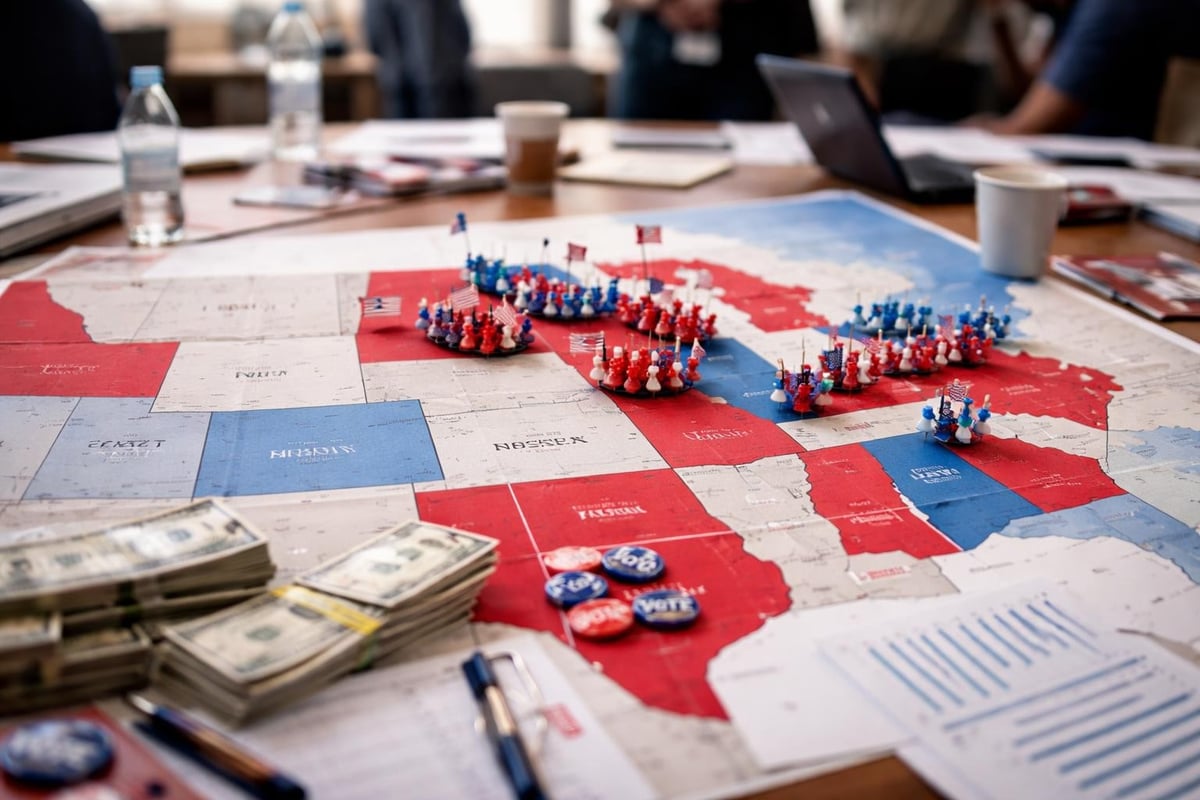
Path to 270 Electoral Votes
Winning requires securing 270 of 538 total electoral votes. Campaigns develop multiple pathways to this majority, identifying various combinations of states that could produce victory. This strategic complexity demands sophisticated data analysis and scenario planning.
Debates and Public Appearances
Presidential debates represent defining moments for any president running. These high-stakes events attract massive audiences and can significantly shift campaign momentum. Preparation involves extensive policy briefings, practice sessions, and strategic planning around anticipated attacks and opportunities.
Debate Performance Impact
Strong debate performances boost fundraising, volunteer enthusiasm, and poll numbers. Conversely, poor performances can derail campaigns. Memorable debate moments often define public perception more than detailed policy discussions, placing premium on communication skills and stage presence.
Beyond formal debates, candidates maintain exhausting schedules of rallies, town halls, fundraisers, and media appearances. Stamina becomes a legitimate qualification, as the physical demands of campaigning test candidates' ability to withstand presidential pressures.
Transition Planning and Election Day
The presidential election process extends beyond Election Day to include transition planning and certification. Serious candidates begin transition planning months before voting, preparing to assume office if victorious.
Pre-Election Transition Support
Eligible candidates receive government support for transition planning, including office space, technology, and security clearances for transition team members. This support ensures smooth governance continuity regardless of election outcomes.
Transition teams identify potential cabinet members, develop policy priorities, and prepare executive orders for immediate implementation. The compressed timeline between election and inauguration demands extensive preparation.
Certification and Inauguration
Following Election Day, states certify results and electors cast official votes in mid-December. Congress counts electoral votes in early January, with inauguration occurring January 20. This process, though typically ceremonial, gained attention following the 2020 election challenges and subsequent certification process reforms.
Special Considerations and Modern Challenges
Contemporary presidents running face challenges unknown to earlier generations. Social media scrutiny, cybersecurity threats, foreign interference concerns, and polarized electorates create unprecedented complexity.
Cybersecurity and Election Integrity
Modern campaigns must defend against hacking, disinformation, and foreign interference. These threats require sophisticated cybersecurity operations and careful vetting of communications and data systems. The integrity of American elections depends partly on campaigns' ability to protect themselves from digital attacks.
Media Fragmentation and Messaging
Reaching voters across fragmented media landscapes presents major challenges. Traditional broadcast television no longer dominates, as audiences scatter across cable news, social media, podcasts, and streaming platforms. Crafting consistent messages across these channels while adapting to each platform's unique characteristics demands exceptional communications sophistication.
Learning from Past Presidential Campaigns
Examining how various candidates approached president running provides valuable lessons. Successful campaigns typically combine clear messaging, strong organization, adequate resources, and candidates who connect authentically with voters. Many observers follow coverage on sites focused on past presidents in the news to understand historical patterns.
Innovation and Adaptation
Presidential campaigns continually evolve as candidates innovate and adapt to changing circumstances. Barack Obama's 2008 campaign revolutionized digital organizing and small-dollar fundraising. Donald Trump's 2016 campaign demonstrated social media's power to circumvent traditional media gatekeepers. Each cycle brings new tactics and strategies that reshape how presidents running pursue victory.
| Campaign Element | Traditional Approach | Modern Innovation | Impact |
|---|---|---|---|
| Fundraising | Major donor events | Online small-dollar appeals | Broader donor base, sustained revenue |
| Voter Contact | Door-knocking, phone banks | Microtargeted digital ads | More efficient resource allocation |
| Message Development | Focus groups, polling | Social media testing, real-time feedback | Faster adaptation to voter sentiment |
| Coalition Building | Party organizations | Online communities, influencers | Expanded reach beyond traditional structures |
Successfully navigating the complex journey of a president running requires constitutional eligibility, substantial resources, strategic acumen, and exceptional personal qualities. For readers seeking comprehensive, non-partisan coverage of presidential campaigns, elections, and governance, U.S. Presidential Report delivers timely analysis and detailed reporting on both current candidates and historical presidential matters. Stay informed about the evolving landscape of American presidential politics through trusted, balanced journalism dedicated to factual reporting on the nation's highest office.