The presidency of George HW Bush represents a pivotal period in American history, bridging the end of the Cold War with new global challenges. Serving as the 41st President from January 1989 to January 1993, Bush brought extensive foreign policy experience to the White House after serving as Vice President under Ronald Reagan for eight years. His administration witnessed extraordinary international changes, including the fall of the Berlin Wall and the collapse of the Soviet Union, while facing significant domestic economic challenges that would ultimately shape his legacy. Understanding this presidency offers valuable insights into how experience and diplomacy intersect with political realities.
Foreign Policy Achievements and Global Leadership
The presidency of George HW Bush earned its strongest marks in international relations and diplomatic strategy. Bush entered office with unparalleled foreign policy credentials, having previously served as Director of the CIA, Ambassador to the United Nations, and Chief of the U.S. Liaison Office in China. This background proved invaluable as the world order shifted dramatically during his tenure.
Managing the End of the Cold War
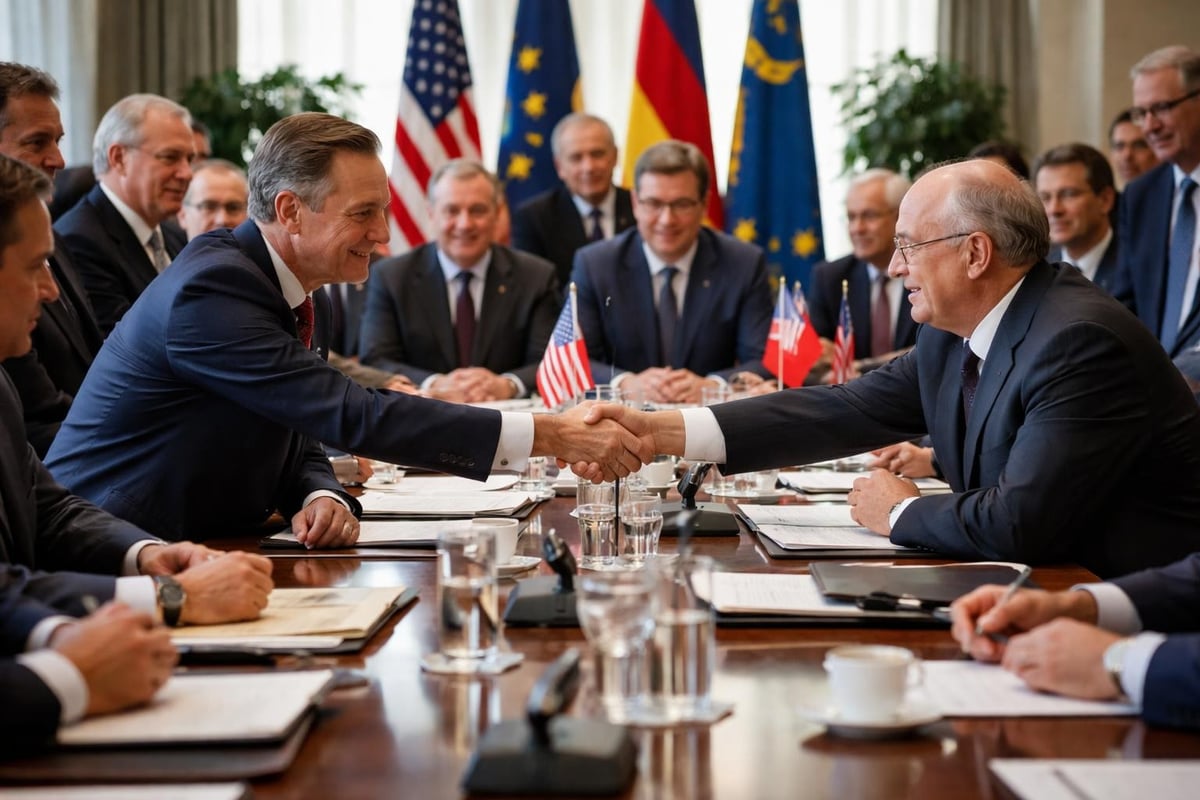
Bush's careful management of the Soviet Union's decline showcased his diplomatic skill and restraint. Rather than celebrating publicly or claiming victory in ways that might humiliate Soviet leaders, he worked quietly with Mikhail Gorbachev to ensure peaceful transitions across Eastern Europe. This approach, while criticized by some as insufficiently triumphant, prevented potential backlash and violence during one of history's most significant geopolitical shifts.
The comprehensive overview of foreign policy decisions during this period reveals the complexity of managing multiple simultaneous international crises while maintaining strategic alliances.
- German reunification negotiations
- Strategic Arms Reduction Treaty (START) discussions
- Support for democratic movements in Eastern Europe
- Coordination with NATO allies on Soviet policy
Operation Desert Storm and Middle East Policy
The 1991 Gulf War defined military aspects of the presidency of George HW Bush. When Iraqi forces invaded Kuwait in August 1990, Bush assembled an unprecedented international coalition of 35 nations to respond. His administration's ability to secure United Nations authorization and gain financial support from allies demonstrated masterful coalition-building.
The military campaign itself lasted just 42 days of combat operations, achieving its primary objective of liberating Kuwait with minimal coalition casualties. Bush's decision to halt operations rather than march to Baghdad and remove Saddam Hussein from power proved controversial, though he argued that exceeding the UN mandate would fracture the coalition and destabilize the region.
| Aspect | Details |
|---|---|
| Coalition Size | 35 nations including Arab states |
| Duration | August 1990 – February 1991 |
| Troop Deployment | Approximately 697,000 U.S. troops |
| Outcome | Kuwait liberated; Iraqi forces expelled |
Panama and Latin American Relations
The invasion of Panama in December 1989 marked the first major military action of the Bush presidency. Operation Just Cause aimed to depose Manuel Noriega, who faced drug trafficking charges in the United States. The operation succeeded militarily but raised questions about American intervention in Latin American affairs. Bush defended the action as necessary to protect American citizens and restore democracy to Panama.
Domestic Policy Challenges and Economic Issues
While foreign policy dominated headlines, domestic concerns ultimately shaped public perception of the presidency of George HW Bush. The administration faced mounting economic difficulties that contrasted sharply with its international successes.
The "Read My Lips" Tax Pledge
During the 1988 Republican National Convention, Bush famously declared, "Read my lips: no new taxes." This pledge became his most recognized campaign promise. However, facing growing budget deficits and pressure from congressional Democrats, Bush agreed to a deficit reduction package in 1990 that included tax increases.
The political consequences were severe:
- Conservative base felt betrayed
- Damaged credibility on fiscal issues
- Provided ammunition for primary challenger Pat Buchanan
- Weakened position heading into 1992 election
The decision, while arguably responsible from a fiscal standpoint, demonstrated the gap between campaign rhetoric and governing realities. Many historians view this as a principled but politically disastrous choice that undermined Bush's reelection prospects.
Economic Recession and Jobs Crisis
The economy entered recession in July 1990, lasting through March 1991. Although relatively brief compared to other downturns, the recession's timing proved politically devastating. The presidency of George HW Bush struggled to communicate effectively about economic issues, with Bush appearing out of touch with ordinary Americans' financial struggles.
Unemployment rose from 5.4% in 1989 to peak at 7.8% in mid-1992. The recovery proved sluggish, and many voters felt economic anxiety despite technical indicators showing improvement. Bush's patrician background and occasional gaffes, such as appearing amazed by a grocery scanner, reinforced perceptions that he lacked understanding of middle-class concerns.

Supreme Court Appointments and Judicial Legacy
The presidency of George HW Bush left a lasting mark on the federal judiciary through two Supreme Court appointments. These selections reflected both Bush's pragmatic approach to governance and the contentious nature of judicial politics.
David Souter Nomination
In 1990, Bush nominated David Souter to replace retiring Justice William Brennan. Souter, a relative unknown from the New Hampshire Supreme Court, sailed through confirmation with a 90-9 Senate vote. Bush selected Souter partly to avoid the confirmation battles that had plagued previous nominees. However, Souter's subsequent liberal voting record disappointed many conservatives who felt misled about his judicial philosophy.
Clarence Thomas Confirmation Battle
The 1991 nomination of Clarence Thomas to replace Thurgood Marshall sparked one of the most controversial confirmation processes in Supreme Court history. The hearings became explosive when law professor Anita Hill accused Thomas of sexual harassment. The nationally televised proceedings divided the country along gender, racial, and political lines.
- Initial nomination announcement in July 1991
- Judiciary Committee hearings begin in September
- Anita Hill allegations surface publicly in October
- Dramatic testimony from both Thomas and Hill
- Narrow Senate confirmation, 52-48, in October 1991
Thomas's confirmation represented a victory for the administration but highlighted deep societal divisions. The controversy energized women's political participation and influenced subsequent elections, demonstrating how judicial appointments can reshape political landscapes beyond their immediate legal impact.
The Americans with Disabilities Act
Among the most significant domestic achievements of the presidency of George HW Bush was signing the Americans with Disabilities Act (ADA) into law on July 26, 1990. This landmark civil rights legislation prohibited discrimination against individuals with disabilities in employment, public services, public accommodations, and telecommunications.
The ADA represented a rare area of bipartisan cooperation during an increasingly polarized political climate. Bush's personal connection to the issue, including having a daughter with learning disabilities, brought authentic passion to his advocacy. The law fundamentally changed American society, mandating physical accessibility improvements and expanding employment opportunities for millions of citizens.
Key provisions included:
- Employment discrimination protections
- Public accommodation accessibility requirements
- Transportation system modifications
- Telecommunications relay services
The legislation demonstrated that even amid partisan divisions, transformative policy achievements remained possible when leaders prioritized shared values over political advantage.
Environmental Policy and the Clean Air Act
The presidency of George HW Bush achieved another major legislative victory with the Clean Air Act Amendments of 1990. This comprehensive environmental legislation addressed acid rain, urban air pollution, toxic air emissions, and stratospheric ozone depletion. The market-based approach to reducing sulfur dioxide emissions through a cap-and-trade system represented innovative policy design that achieved environmental goals cost-effectively.
Bush's environmental record proved mixed overall. While supporting the Clean Air Act, he faced criticism from environmentalists for positions on wetlands protection, Arctic drilling proposals, and international climate negotiations. His refusal to sign certain provisions of the Rio Earth Summit agreements in 1992 disappointed those hoping for stronger climate leadership.
| Environmental Initiative | Status | Impact |
|---|---|---|
| Clean Air Act Amendments | Enacted | Reduced emissions significantly |
| Wetlands Protection | Modified | Controversial redefinition |
| Rio Earth Summit | Partially supported | Mixed international reception |
| Arctic Drilling | Proposed | Environmental opposition |
1992 Election and Political Legacy
The presidency of George HW Bush ended with defeat in the 1992 election to Democrat Bill Clinton. Multiple factors contributed to this loss, including the economy, Ross Perot's third-party candidacy, and Clinton's effective campaign messaging about change and economic focus.
Bush entered the election year with approval ratings above 80% following the Gulf War, yet lost by a significant margin in November. The dramatic reversal illustrated how quickly political fortunes can shift when economic concerns dominate voter priorities. Clinton's campaign mantra, "It's the economy, stupid," resonated with voters who felt Bush paid insufficient attention to domestic issues.
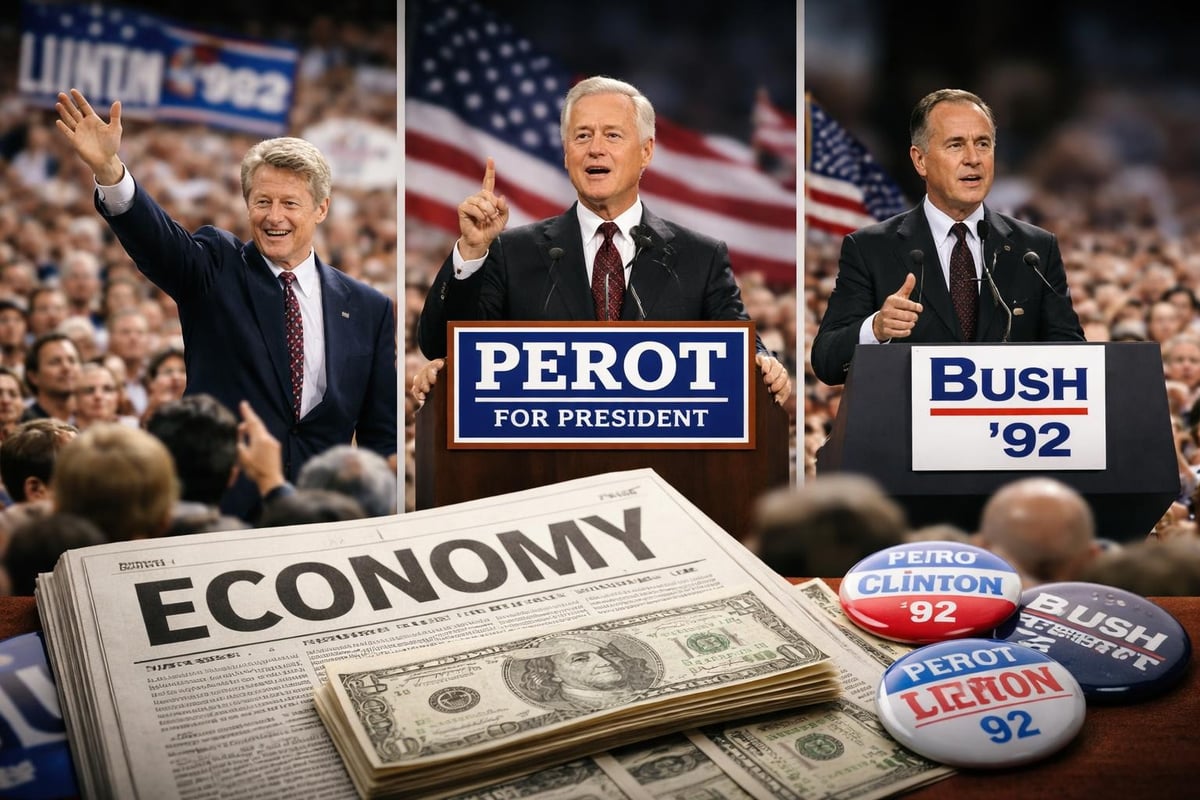
Perot's independent campaign, which ultimately captured 19% of the popular vote, complicated Bush's reelection effort. While debate continues about whether Perot drew more votes from Bush or Clinton, his presence certainly altered the campaign's dynamics and message focus. The election results showed Clinton winning 370 electoral votes to Bush's 168, despite Clinton receiving only 43% of the popular vote.
Post-Presidential Activities
Following his presidency, Bush maintained an active public life focused on humanitarian causes and mentoring relationships with subsequent presidents. His post-presidency activities included disaster relief fundraising partnerships with former President Bill Clinton, demonstrating bipartisan cooperation that transcended their electoral competition.
Bush's relationship with Clinton evolved from political rivalry to genuine friendship, symbolizing an older model of political civility. Their joint tsunami relief efforts in 2004 and Hurricane Katrina fundraising in 2005 showed Americans that political opponents could work together for common good.
Historical Reassessment and Contemporary Relevance
Recent years have witnessed significant reassessment of the presidency of George HW Bush, with historians and political analysts offering more favorable evaluations than prevailed during his administration. Scholarly analysis of Bush’s leadership style highlights his pragmatic approach to governance and willingness to prioritize long-term interests over short-term political gain.
The contrast between Bush's measured diplomatic approach and subsequent foreign policy adventures has led many to appreciate his caution and coalition-building skills. His management of German reunification and Soviet dissolution without violence or chaos appears increasingly remarkable given later destabilization in various regions.
His personal qualities, including decency, humility, and commitment to public service, have gained appreciation in an era of more combative political rhetoric. Even his famous dislike for broccoli, which became a memorable aspect of his public persona, humanized a president sometimes portrayed as distant or elitist.
For those interested in understanding presidential decision-making across administrations, analyzing patterns from historical presidencies through contemporary leadership provides valuable context for evaluating current political debates.
Lessons for Modern Presidential Leadership
The presidency of George HW Bush offers several lessons relevant to contemporary governance challenges. His experience demonstrates the importance of expertise in specialized areas like foreign policy, where deep knowledge of international relations and personal relationships with world leaders enabled effective crisis management.
However, his experience also illustrates the political dangers of appearing disconnected from domestic economic concerns. Technical competence in managing global affairs couldn't compensate for perceived indifference to middle-class economic anxiety. This dynamic remains relevant as modern presidents balance international responsibilities with domestic priorities.
Key leadership insights include:
- Experience matters in complex crisis situations
- Diplomatic relationships enable effective coalition-building
- Campaign promises create expectations difficult to modify
- Economic conditions heavily influence political success
- Bipartisan cooperation remains possible on shared priorities
The willingness to break his tax pledge, while politically costly, demonstrated a capacity to prioritize fiscal responsibility over political expediency. Whether this represented admirable principle or poor political judgment remains debated, but it certainly illustrated the tension between governing and campaigning.
Legacy in the Bush Political Dynasty
The presidency of George HW Bush established a political dynasty that extended through his son George W. Bush's presidency from 2001 to 2009. This family political prominence, spanning multiple generations and including governors, senators, and presidents, represents a unique phenomenon in American political history.
The elder Bush's influence shaped his son's political career, though the two presidents adopted different approaches to key issues. Comparing their respective presidencies reveals both continuities in values and significant differences in style, risk tolerance, and policy priorities. The legacy considerations for both presidential decisions and their long-term impacts continue to generate scholarly analysis and public discussion.
Family political legacies carry both advantages and burdens, as recognition provides platform and resources while creating expectations and comparison challenges. The Bush family's multi-generational political involvement offers insights into how American political dynasties function and evolve across changing political landscapes.
Media Relations and Communication Style
Communication challenges marked significant aspects of the presidency of George HW Bush. While privately warm and humorous, Bush often appeared stiff and uncomfortable in formal public settings. His speaking style, sometimes characterized by incomplete sentences and verbal tangents, contrasted unfavorably with Ronald Reagan's polished communication skills.
The administration struggled to articulate a compelling domestic vision, focusing heavily on foreign policy achievements that, while historically significant, didn't address voters' immediate economic concerns. Bush's difficulty defining "the vision thing," as he once called it, suggested discomfort with the inspirational rhetoric that modern presidential campaigns demand.
Public opinion research from the period provides data-driven insights into how Americans perceived Bush's handling of various issues throughout his presidency, revealing the gap between policy achievements and public perception.
Yet Bush excelled in personal diplomacy and one-on-one interactions. His extensive correspondence, including thousands of personal notes to friends, colleagues, and even political opponents, demonstrated genuine relationship-building that served him well in international negotiations. This personal touch, while less visible publicly, created networks of trust that facilitated diplomatic breakthroughs.
The Question of a Second Term
Speculation about what a second term presidency of George HW Bush might have achieved remains a fascinating historical counterfactual. With foreign policy expertise and international relationships established, Bush could have potentially addressed unfinished business in areas like Middle East peace processes, Russian democratic transition support, and NATO expansion planning.
Domestically, a second term might have produced different results on healthcare reform, economic policy, and budget negotiations. However, facing a Democratic Congress and conservative dissatisfaction within his own party, significant domestic achievements would have remained challenging regardless of electoral outcomes.
The 1992 defeat ensured Bush's presidency would be evaluated primarily through the lens of its foreign policy achievements rather than domestic transformation. This reality shapes historical assessments, as the presidency's strengths aligned more closely with international rather than domestic challenges.
The presidency of George HW Bush demonstrated how expertise, temperament, and historical circumstances combine to shape presidential legacies in complex ways. His foreign policy achievements during a pivotal global transition, balanced against domestic political challenges and economic difficulties, offer enduring lessons about presidential leadership and governance. For readers seeking comprehensive, non-partisan analysis of how past presidents navigated similar challenges and how those decisions continue influencing American governance, U.S. Presidential Report provides in-depth coverage of presidential history and contemporary political developments. Stay informed about the decisions, policies, and legacies that continue shaping our nation's political landscape.