Corruption in presidential leadership has shaped nations throughout history, damaging public trust and undermining democratic institutions. When examining claims about the most corrupt president figures across different countries and eras, scholars rely on documented evidence including financial records, judicial findings, and verified investigative reports. Understanding presidential corruption requires analyzing both the scale of financial malfeasance and the systemic impact on governance. This comprehensive examination explores how historians, journalists, and transparency organizations assess presidential corruption, comparing international cases with American examples to provide context for these critical evaluations.
Defining Presidential Corruption and Measurement Standards
Presidential corruption encompasses a range of illegal and unethical activities including embezzlement, bribery, cronyism, and abuse of power for personal gain. The challenge in identifying the most corrupt president lies in establishing consistent measurement criteria across different political systems and historical periods.
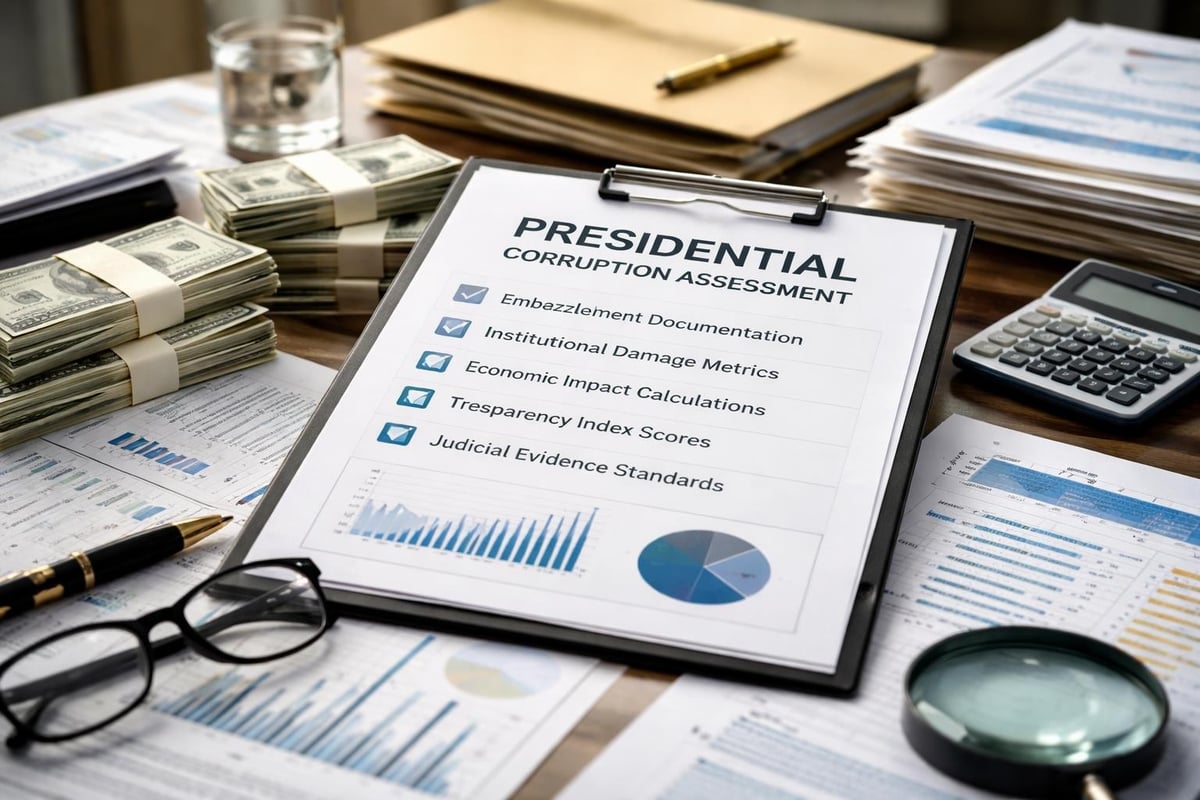
Transparency International and similar organizations use specific metrics to evaluate corruption levels:
- Financial embezzlement amounts adjusted for inflation and national GDP
- Duration and systematic nature of corrupt practices
- Impact on national institutions and economic development
- Documented evidence from judicial proceedings and investigations
- Institutional safeguards bypassed or dismantled
International Standards for Assessing Corruption
The measurement of presidential corruption has evolved significantly over the past three decades. Modern assessments consider both quantifiable financial damage and qualitative impacts on democratic governance. Organizations like the World Bank and United Nations Development Programme have developed frameworks that examine corruption's multifaceted nature.
These frameworks distinguish between petty corruption involving individual officials and grand corruption orchestrated at the presidential level. The latter often involves systematic looting of state resources, manipulation of procurement processes, and establishment of kleptocratic networks that extend throughout government institutions.
Global Examples of Presidential Corruption
International cases provide essential context when discussing the most corrupt president figures throughout history. Forbes documented some of the world’s most corrupt leaders, revealing staggering scales of embezzlement that dwarfed their nations' economies.
Former Indonesian President Suharto allegedly embezzled between $15 billion and $35 billion during his 32-year rule, making him frequently cited as among the most corrupt president figures globally. His inclusion among the world’s ten most corrupt leaders reflects both the magnitude of stolen funds and the systematic nature of the corruption network he established.
African Presidential Corruption Cases
Mobutu Sese Seko of Zaire epitomized kleptocratic rule, allegedly stealing $5 billion while his country descended into poverty. His regime gave rise to the term "kleptocracy" in academic discourse about governmental corruption.
Sani Abacha of Nigeria reportedly embezzled $2-5 billion during just five years in power. International efforts to recover these stolen assets continue decades later, demonstrating the lasting impact of presidential corruption.
| Leader | Country | Estimated Embezzlement | Years in Power |
|---|---|---|---|
| Suharto | Indonesia | $15-35 billion | 1967-1998 |
| Mobutu Sese Seko | Zaire/DRC | $5 billion | 1965-1997 |
| Sani Abacha | Nigeria | $2-5 billion | 1993-1998 |
| Ferdinand Marcos | Philippines | $5-10 billion | 1965-1986 |
Latin American Presidential Scandals
Recent decades have witnessed significant corruption scandals involving Latin American presidents. Enrique Peña Nieto’s presidency in Mexico faced multiple allegations involving campaign financing irregularities and the infamous "White House" scandal.
Pedro Pablo Kuczynski’s administration in Peru became entangled in the Odebrecht corruption scandal, which implicated numerous leaders across Latin America. This case demonstrated how corporate bribery networks can compromise presidential administrations across multiple countries simultaneously.
Hugo Chávez’s tenure in Venezuela has been scrutinized for lack of transparency and allegations that billions in oil revenue were diverted from public coffers. His successor faced even more severe accusations, though Chávez established the governmental structures that enabled subsequent corruption.
American Presidential Corruption in Historical Context
Examining corruption among U.S. presidents requires acknowledging that American democratic institutions and legal frameworks differ significantly from authoritarian regimes where the most corrupt president figures typically emerge. Nevertheless, several American administrations have faced serious corruption allegations.
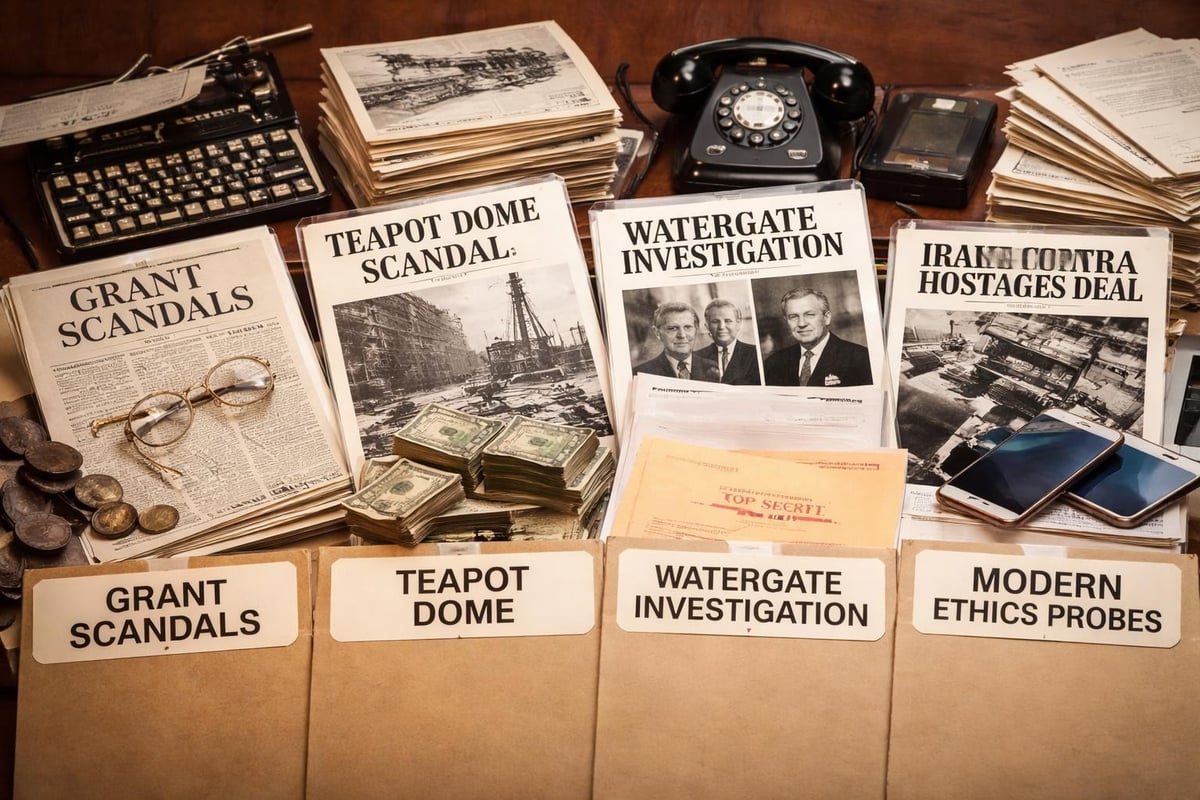
The presidency of Ulysses S. Grant remains synonymous with governmental corruption in American history. While Grant himself was not personally enriched, his administration was plagued by scandals including the Whiskey Ring, which defrauded the government of millions in tax revenue.
Major U.S. Presidential Scandals
The documentary examining “10 Most Corrupt US Presidents” provides historical perspective on American presidential corruption cases. These cases typically involved cabinet members or close associates rather than direct presidential embezzlement.
Warren G. Harding's administration faced the Teapot Dome scandal, where Interior Secretary Albert Fall accepted bribes to lease federal oil reserves to private companies. This represented one of the most significant corruption cases in early 20th-century American politics.
Richard Nixon's involvement in Watergate went beyond typical corruption, encompassing abuse of power, obstruction of justice, and systematic attempts to undermine democratic processes. While not primarily financial in nature, these actions represented profound corruption of presidential authority.
Distinguishing Between Corruption Types and Scales
Not all presidential misconduct rises to the level that characterizes discussions of the most corrupt president in global history. Scholars distinguish between several categories:
Financial Corruption:
- Direct embezzlement of state funds
- Acceptance of bribes for policy decisions
- Self-dealing in government contracts
- Illegal campaign finance activities
Political Corruption:
- Abuse of power for partisan advantage
- Obstruction of justice investigations
- Manipulation of electoral processes
- Appointment of unqualified loyalists to critical positions
Institutional Corruption:
- Systematic dismantling of oversight mechanisms
- Weakening of independent judiciary
- Suppression of free press and whistleblowers
- Erosion of civil service protections
The most severe cases involve all three categories simultaneously, creating kleptocratic systems that persist beyond individual presidencies.
The Role of Institutional Safeguards
Democratic institutions play a crucial role in preventing, exposing, and punishing presidential corruption. Countries with strong judicial independence, free press, and legislative oversight rarely produce candidates for the most corrupt president rankings.
The United States benefits from several institutional advantages including:
- Constitutionally mandated separation of powers
- Independent federal judiciary with lifetime appointments
- Free press protected by First Amendment
- Inspector general offices across executive agencies
- Congressional oversight and investigative authority
These mechanisms don't prevent all corruption but generally limit its scale and duration. U.S. Presidential Report regularly covers how these safeguards function in practice across different administrations.
International Comparisons of Accountability
| Institution | Authoritarian Systems | Established Democracies |
|---|---|---|
| Judicial Independence | Weak/Compromised | Strong/Protected |
| Press Freedom | Restricted/Censored | Protected/Active |
| Legislative Oversight | Minimal/Symbolic | Robust/Empowered |
| Civil Society | Suppressed | Active/Influential |
| Electoral Competition | Limited/Fraudulent | Open/Competitive |
Countries lacking these institutional protections create environments where presidential corruption can flourish unchecked for decades. The most corrupt president figures typically emerged in systems where accountability mechanisms were absent or had been systematically dismantled.
Modern Challenges in Detecting Presidential Corruption
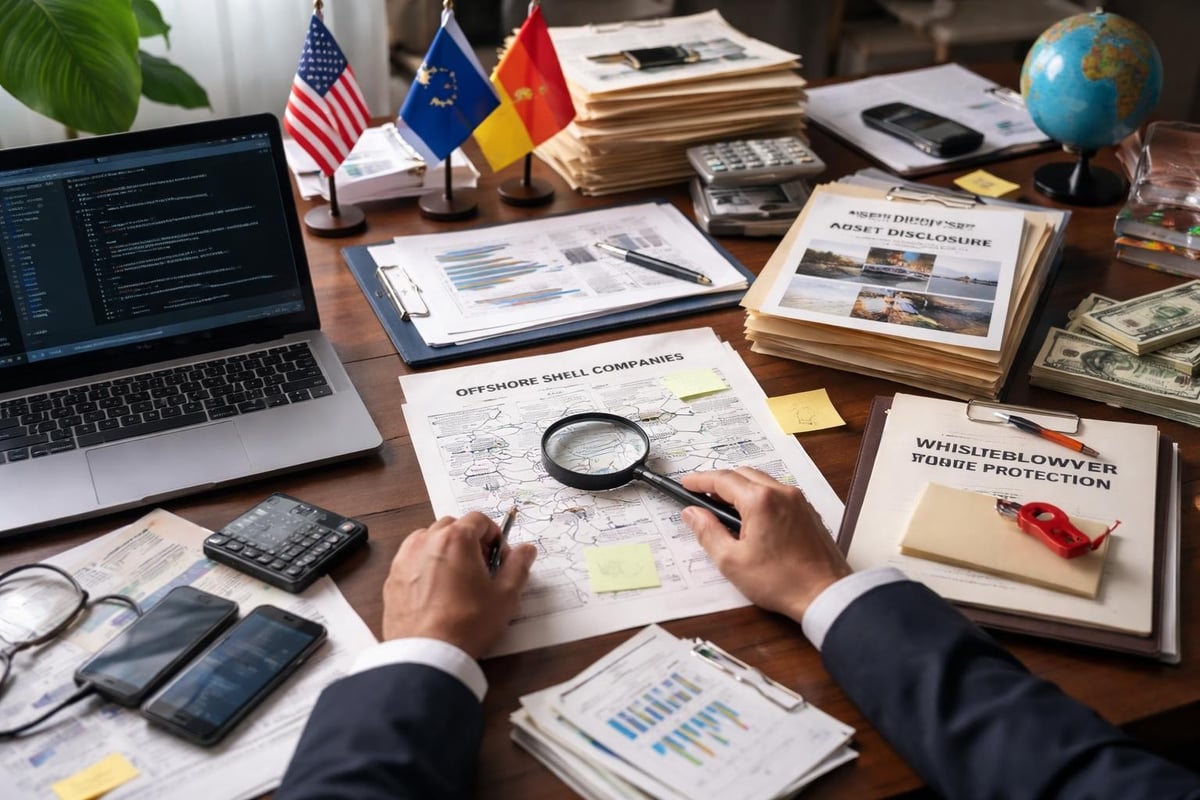
Twenty-first-century corruption has evolved beyond simple embezzlement into more sophisticated schemes involving shell companies, international tax havens, and complex financial instruments. This evolution complicates efforts to identify and prosecute the most corrupt president figures in contemporary politics.
Modern presidential corruption often involves:
- Offshore financial networks that obscure asset ownership
- Family members acting as intermediaries to maintain plausible deniability
- Influence peddling that operates in legal gray areas
- Cryptocurrency transactions that evade traditional banking oversight
- Real estate transactions at artificially inflated or deflated values
These methods require sophisticated forensic accounting and international cooperation to detect and prosecute effectively.
The Impact of Corruption on National Development
Presidential corruption inflicts damage far beyond stolen funds. Countries led by the most corrupt president figures often experience decades of developmental setbacks, institutional decay, and erosion of public trust that persist long after the corrupt leader leaves office.
Economic consequences include:
- Misallocation of resources away from public services and infrastructure
- Reduced foreign investment due to perceived risk
- Brain drain as talented citizens seek opportunities elsewhere
- Increased poverty and inequality
- Weakened tax collection systems
Social and political impacts prove equally devastating:
- Erosion of public trust in democratic institutions
- Normalization of corruption at all governmental levels
- Weakening of rule of law principles
- Increased political instability and conflict
- Damaged international reputation
Case Studies in Recovery
Countries recovering from periods led by the most corrupt president figures face lengthy rebuilding processes. Indonesia after Suharto, Nigeria following Abacha, and the Philippines post-Marcos all required years to strengthen institutions and restore public confidence.
Recovery typically requires comprehensive reforms including judicial system strengthening, civil service professionalization, transparency mechanisms implementation, and cultural shifts in expectations about governmental behavior.
Media and Public Scrutiny
Investigative journalism plays an essential role in exposing presidential corruption and holding leaders accountable. Major corruption revelations typically emerge from persistent investigative reporting rather than official oversight mechanisms.
The Panama Papers, Paradise Papers, and similar investigations have revealed how global elites, including some claiming to be the most corrupt president in their nations' histories, hide assets offshore. These exposés demonstrate journalism's continuing relevance in the digital age.
Coverage of domestic policy decisions often reveals patterns that suggest potential corruption or conflicts of interest. Careful analysis of policy beneficiaries can indicate whether presidential decisions serve public interests or private gain.
Comparing Historical and Contemporary Standards
What constitutes the most corrupt president has evolved as transparency expectations have increased. Activities considered acceptable in the 19th century would spark immediate scandal today, while modern corruption often involves sophisticated schemes that would have been impossible in earlier eras.
Historical context matters when evaluating past presidents. However, this doesn't excuse corruption but rather helps understand how institutional development and cultural norms have evolved.
Contemporary presidents face unprecedented scrutiny through:
- Real-time news coverage and social media analysis
- Financial disclosure requirements
- Ethics offices and conflict of interest regulations
- International transparency initiatives
- Digital records that make covering tracks more difficult
These factors should theoretically reduce presidential corruption, though determined leaders continue finding ways to enrich themselves and their associates.
Prevention and Reform Measures
Preventing presidential corruption requires multi-layered approaches that address both individual incentives and systemic vulnerabilities. No single reform eliminates corruption risk, but comprehensive strategies significantly reduce opportunities for malfeasance.
Effective prevention measures include:
Institutional Reforms:
- Strong asset disclosure requirements before, during, and after service
- Independent ethics offices with enforcement authority
- Transparent government procurement processes
- Protected whistleblower programs
- Mandatory financial audits of high-level officials
Cultural and Educational Initiatives:
- Public education about governmental transparency rights
- Professional ethics training for civil servants
- Media literacy to help citizens identify corruption
- Civil society organizations monitoring governmental activities
International Cooperation:
- Cross-border asset recovery agreements
- Shared intelligence about suspicious financial activities
- Coordinated sanctions against corrupt leaders
- Support for transparency initiatives in developing democracies
Countries implementing these measures comprehensively rarely produce candidates for most corrupt president lists, while those ignoring such safeguards remain vulnerable to kleptocratic leadership.
The Role of Electoral Accountability
Democratic elections serve as crucial accountability mechanisms, though their effectiveness depends on voter access to accurate information about candidate backgrounds and associations. In functioning democracies, revelations about corruption typically end political careers, while authoritarian systems allow the most corrupt president figures to manipulate electoral processes indefinitely.
Voter education and civic engagement prove essential for electoral accountability. Citizens must understand not just individual scandals but patterns of behavior that indicate corruption risk. Analysis of presidential policy positions can reveal whether candidates prioritize public interest or cater to special interests likely to demand favors later.
The 2026 electoral landscape reflects evolving standards for presidential accountability. Voters increasingly demand transparency about financial interests, business relationships, and potential conflicts of interest before candidates assume office.
Understanding presidential corruption requires examining both spectacular international cases and the institutional safeguards that prevent American democracy from producing similarly extreme outcomes. While no system completely eliminates corruption risk, strong institutions, free press, and engaged citizenry significantly limit the damage corrupt leaders can inflict. For comprehensive, non-partisan coverage of presidential governance, ethics, and accountability across current and historical administrations, U.S. Presidential Report provides essential context and analysis. Stay informed about the institutions and practices that protect democratic governance by following our ongoing coverage of presidential affairs.