The question of who will become America's first female president remains one of the most significant political milestones yet to be achieved in the United States. While numerous countries have already elected women to their highest executive offices, the U.S. continues to approach this historic moment with each election cycle. Understanding the global context of female presidential leadership, the historical attempts in American politics, and the barriers that remain provides crucial insight into when and how the United States might finally join the growing list of nations led by women at the presidential level.
Global Pioneers: The First Female Presidents Worldwide
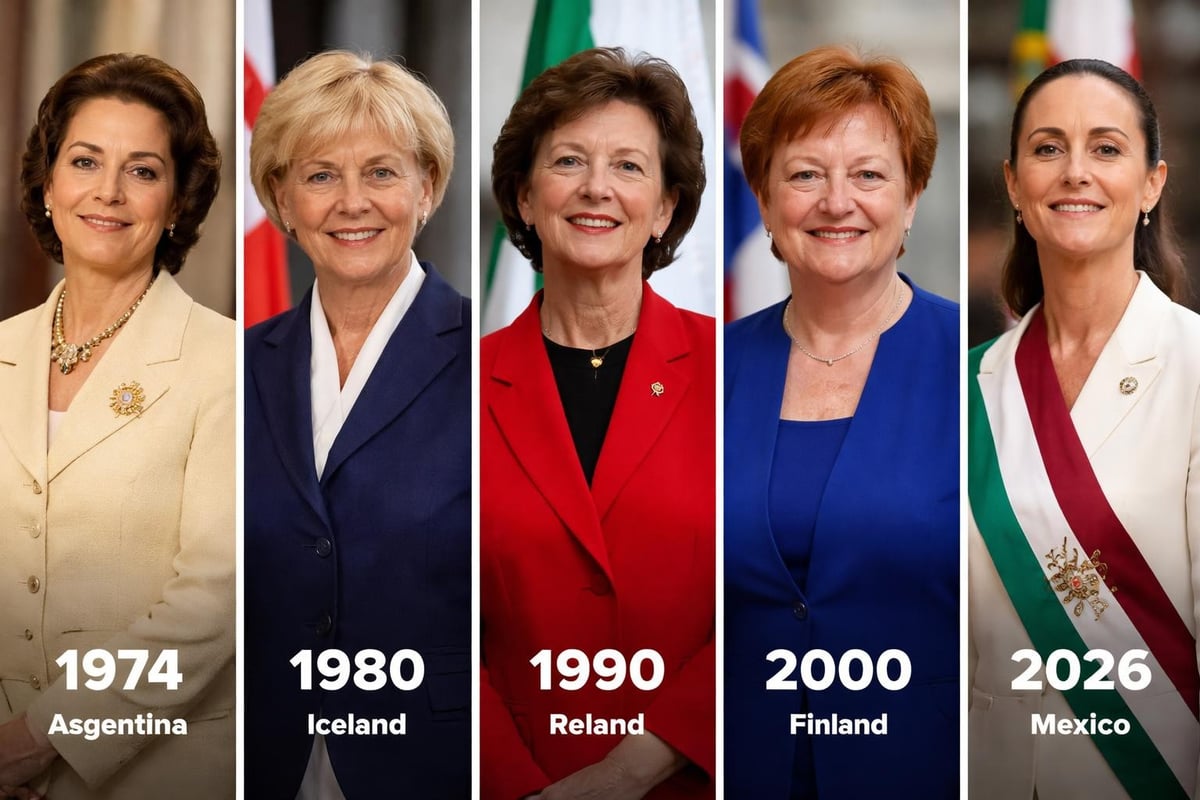
The history of women in presidential offices demonstrates that female leadership at the highest levels has been possible for decades. María Estela Martínez de Perón of Argentina became the world’s first female president in 1974, though she assumed the office following her husband's death rather than through direct election to the presidency. This distinction matters significantly when examining the evolution of women's political power.
The real breakthrough came in 1980 when Vigdís Finnbogadóttir won election as Iceland’s president, making her the first democratically elected female president in world history. Her victory followed Iceland’s groundbreaking 1975 women’s strike, which demonstrated women's essential contributions to society and catalyzed political change. Finnbogadóttir served four terms, leaving office in 1996 with widespread approval and having normalized the concept of female executive leadership in her nation.
Recent Milestones in Female Presidential Leadership
The trend toward electing women to presidential offices has accelerated in recent years. Claudia Sheinbaum made history as Mexico’s first female president when she won election in 2024, bringing scientific expertise and political experience to the role. Her victory marked a significant milestone not just for Mexico but for North America as a whole, as she became the first woman to lead any North American nation at the presidential level.
Countries across continents have now experienced female presidential leadership:
- Europe: Iceland, Ireland, Finland, Lithuania, Croatia, Slovakia, and others
- Latin America: Argentina, Brazil, Chile, Costa Rica, Panama, and Mexico
- Asia: Philippines, Taiwan, South Korea, Singapore
- Africa: Liberia, Ethiopia, Tanzania
This global pattern demonstrates that female presidential leadership transcends cultural, economic, and geographical boundaries. Each nation's experience has contributed to normalizing women in executive roles and dismantling traditional barriers.
America's Path Toward Its First Female President
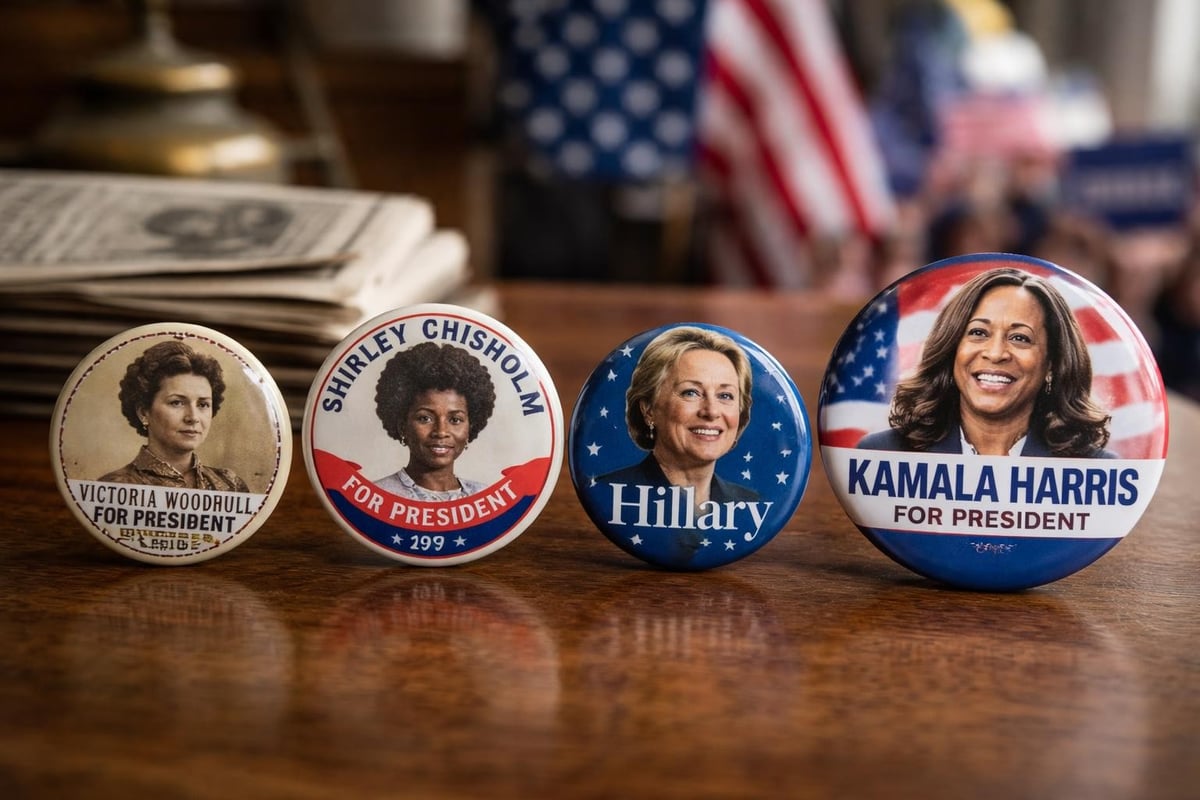
The United States has witnessed numerous attempts to break the presidential glass ceiling. Victoria Woodhull made history as the first woman to run for president in 1872, decades before women gained the constitutional right to vote. Her candidacy, though symbolic and legally questionable given age restrictions and women's voting rights, established a precedent that women could aspire to the nation's highest office.
The twentieth century saw gradual progress. Senator Margaret Chase Smith sought the Republican nomination in 1964. Representative Shirley Chisholm ran for the Democratic nomination in 1972, becoming the first Black woman to mount a major-party presidential campaign. These early efforts, while unsuccessful, challenged assumptions about who could seek the presidency.
Modern Presidential Campaigns
The twenty-first century has brought increasingly viable female presidential candidates. Hillary Clinton secured the Democratic nomination in 2016, winning the popular vote but losing the Electoral College. Her campaign represented the closest the nation had come to electing its first female president, garnering nearly 66 million votes and demonstrating substantial public support for female executive leadership.
| Election Year | Candidate | Party | Outcome |
|---|---|---|---|
| 2016 | Hillary Clinton | Democratic | Won popular vote, lost Electoral College |
| 2020 | Several candidates in primaries | Democratic | Biden secured nomination |
| 2024 | Multiple candidates | Both parties | Varied primary results |
The 2020 Democratic primaries featured several female candidates, including Senators Elizabeth Warren, Kamala Harris, and Amy Klobuchar. While none secured the nomination, Harris became the first female Vice President, positioning herself as a potential future presidential candidate. This progression from candidates to Vice President represents meaningful advancement toward the presidency itself.
Structural Barriers and Changing Dynamics
Understanding why the United States has not yet elected its first female president requires examining both historical and contemporary obstacles. Unlike parliamentary systems where the first female heads of government emerged earlier, the American presidential system concentrates executive power in a single elected individual, making the position uniquely visible and symbolically significant.
Institutional and Cultural Factors
Several interconnected factors have delayed this milestone:
Campaign Finance Challenges: Women candidates historically faced greater difficulties raising campaign funds, though this gap has narrowed in recent cycles. Female candidates often need to demonstrate more experience and credentials than male counterparts to be considered equally qualified by donors and voters.
Media Coverage Patterns: Research consistently shows that media coverage of female candidates differs from coverage of male candidates, with greater emphasis on appearance, likability, and family situations rather than policy positions and qualifications. This differential treatment affects public perception and candidate viability.
Double-Bind Dilemmas: Female candidates frequently encounter contradictory expectations regarding leadership style. Demonstrating strength risks being perceived as unlikable, while emphasizing warmth risks appearing weak or unsuitable for commander-in-chief responsibilities.
Electoral System Structure: The Electoral College system requires winning specific state coalitions rather than national popular vote majorities. This can disadvantage candidates who appeal broadly but lack concentrated support in crucial swing states.
The political landscape continues evolving in ways that affect prospects for the first female president. Generational shifts in attitudes toward gender and leadership, increasing numbers of women in lower political offices, and growing expectation that both parties will field competitive female candidates all contribute to changing dynamics.
The Vice Presidency as a Stepping Stone
Historical patterns suggest that serving as Vice President provides significant advantages for presidential candidates. The current Vice President's position represents the highest office ever held by a woman in American government, potentially creating a clearer path to the presidency than previous candidates enjoyed.
Vice presidential service offers several strategic advantages:
- National visibility and executive experience
- Established relationships with party infrastructure
- Demonstrated ability to handle presidential responsibilities
- Built-in campaign organization and donor networks
- Media familiarity and reduced need to introduce candidacy
However, history also shows that serving as Vice President does not guarantee presidential success. The role's advantages must be balanced against the challenges of defending an administration's record while establishing independent political identity.
Current Political Landscape
As of March 2026, the political environment presents both opportunities and challenges for potential female presidential candidates. Presidential polls and political trends indicate shifting voter priorities and evolving party coalitions that could affect candidate viability.
Both major parties now regularly include women among potential presidential candidates, representing normalization of female presidential ambitions. This stands in stark contrast to earlier eras when female candidates faced skepticism about their fundamental suitability for the office.

International Comparisons and Lessons
Examining how other nations achieved their first female president reveals instructive patterns. Countries often elected women to their highest offices during periods of political transition, economic challenge, or desire for change from established political patterns. Female candidates frequently positioned themselves as reformers or outsiders capable of addressing systemic problems.
| Country | First Female President | Year | Context |
|---|---|---|---|
| Iceland | Vigdís Finnbogadóttir | 1980 | Post-women's strike, desire for change |
| Ireland | Mary Robinson | 1990 | Political reform, modernization |
| Philippines | Corazon Aquino | 1986 | Post-dictatorship transition |
| Liberia | Ellen Johnson Sirleaf | 2006 | Post-conflict reconstruction |
These examples demonstrate that the first female president often emerges when voters prioritize change over continuity. Economic uncertainty, political scandals, or desire for fresh approaches can create opportunities for candidates who represent departures from traditional leadership.
The United States shares characteristics with countries that have elected female presidents, including developed democratic institutions, educated electorates, and established women's rights movements. However, American political culture's particular emphasis on presidential power and commander-in-chief authority creates unique challenges.
Demographic and Generational Shifts
Polling data consistently shows generational differences in attitudes toward female presidential leadership. Younger voters express greater comfort with female presidents and less concern about gender as a qualification factor. These demographic trends suggest that resistance to female presidential candidates may diminish as the electorate continues evolving.
Key demographic patterns include:
- Increased support among voters under 45
- Higher baseline assumption of women's qualification for office
- Greater focus on policy positions rather than gender
- Reduced emphasis on traditional leadership stereotypes
Educational attainment also correlates with support for female presidential candidates, and rising education levels nationally may contribute to changing attitudes. Urban and suburban areas demonstrate higher levels of support compared to rural regions, though these patterns vary significantly by individual candidate and political context.
The Role of Party Politics
Both major political parties have demonstrated willingness to consider female presidential candidates, though their approaches differ. The Democratic Party has nominated a female presidential candidate and elected a female Vice President, creating precedents and infrastructure for future campaigns. The Republican Party has featured female candidates in presidential primaries and elevated women to significant leadership positions, though not yet to the presidential ticket level.
Third parties have also nominated female presidential candidates, including the Green Party and Libertarian Party in recent cycles. While these candidates faced long odds in the general election, their campaigns contributed to normalizing female presidential ambitions across the political spectrum.
Understanding presidential election dynamics and historical patterns provides context for evaluating future prospects. Party nomination processes, primary election systems, and general election strategies all affect which candidates successfully navigate the path to the presidency.
Looking Forward: Timing and Probability
Predicting when the United States will elect its first female president involves analyzing current political trajectories, potential candidates, and electoral dynamics. The 2028 election cycle may feature multiple viable female candidates from both parties, given current political positioning and the increasing normalization of female presidential ambitions.
Several factors will influence timing:
Candidate emergence and viability: The presence of female candidates with strong qualifications, political experience, and campaign infrastructure
Political environment: Economic conditions, international situations, and domestic policy priorities that shape voter preferences
Party strategies: How major parties approach candidate selection and whether they prioritize diversity in leadership
Electoral competitiveness: Whether specific election cycles favor challengers, incumbents, or particular political messages
The global trend toward electing female presidents suggests that the United States will eventually join this pattern. Whether this occurs in 2028, 2032, or later depends on specific circumstances and candidate-voter alignments that remain uncertain.
Implications for American Democracy
The election of the first female president will carry symbolic and practical significance for American democracy. Symbolically, it would demonstrate that the nation's highest office is genuinely open to all qualified citizens regardless of gender. Practically, it may influence policy priorities, leadership styles, and the pipeline of future political leaders.
Research on female executive leadership globally indicates that women presidents often prioritize different policy areas than their male predecessors, though significant individual variation exists. Common patterns include:
- Greater emphasis on education and healthcare policy
- Different approaches to conflict resolution and diplomacy
- Increased attention to family and childcare issues
- Varied leadership and communication styles
These patterns are not universal, and any individual president's priorities reflect their specific background, party affiliation, and political circumstances rather than gender alone.
The broader impact on American political culture may prove equally significant. Normalizing female presidential leadership could accelerate women's advancement in other areas of government, business, and society. Conversely, a particularly challenging presidency could temporarily set back progress, as individual performance becomes attributed to gender rather than individual characteristics.
Media Coverage and Public Perception
Media treatment of female presidential candidates continues evolving, though challenges persist. Major news organizations have implemented guidelines to ensure equitable coverage, and journalists increasingly recognize how coverage patterns can advantage or disadvantage candidates based on gender. However, subtle biases remain in how candidates are described, questioned, and evaluated.
Social media has transformed presidential campaigns, creating opportunities and challenges for female candidates. Direct communication channels allow candidates to bypass traditional media filters and address voters directly. However, social media also amplifies harassment and enables coordinated attacks that disproportionately target female candidates.
Public perception research indicates that voters increasingly evaluate candidates based on qualifications, experience, and policy positions rather than gender stereotypes. This shift represents meaningful progress, though gender-based assumptions still influence some voters' evaluations. The key question remains whether enough voters in enough states will support a specific female candidate to secure Electoral College victory.
The journey toward electing the first female president reflects broader evolution in American political culture and society's understanding of leadership and qualification. While numerous countries worldwide have already achieved this milestone, the United States continues progressing toward this historic moment through increasingly viable candidates and changing voter attitudes. For comprehensive coverage of presidential elections, political developments, and analysis of candidates across the political spectrum, U.S. Presidential Report provides non-partisan news and insights to help citizens stay informed about the evolving dynamics shaping America's political future.