The president house of USA stands as one of the most recognizable buildings in the world, serving simultaneously as the official residence and workplace of the American president. Located at 1600 Pennsylvania Avenue in Washington, D.C., this iconic structure has witnessed more than two centuries of American history, hosting 46 presidents and countless world leaders. Understanding the history, architecture, and evolving role of the president house of USA provides critical insight into American governance and the changing nature of presidential power over time.
The Historical Origins of the President House of USA
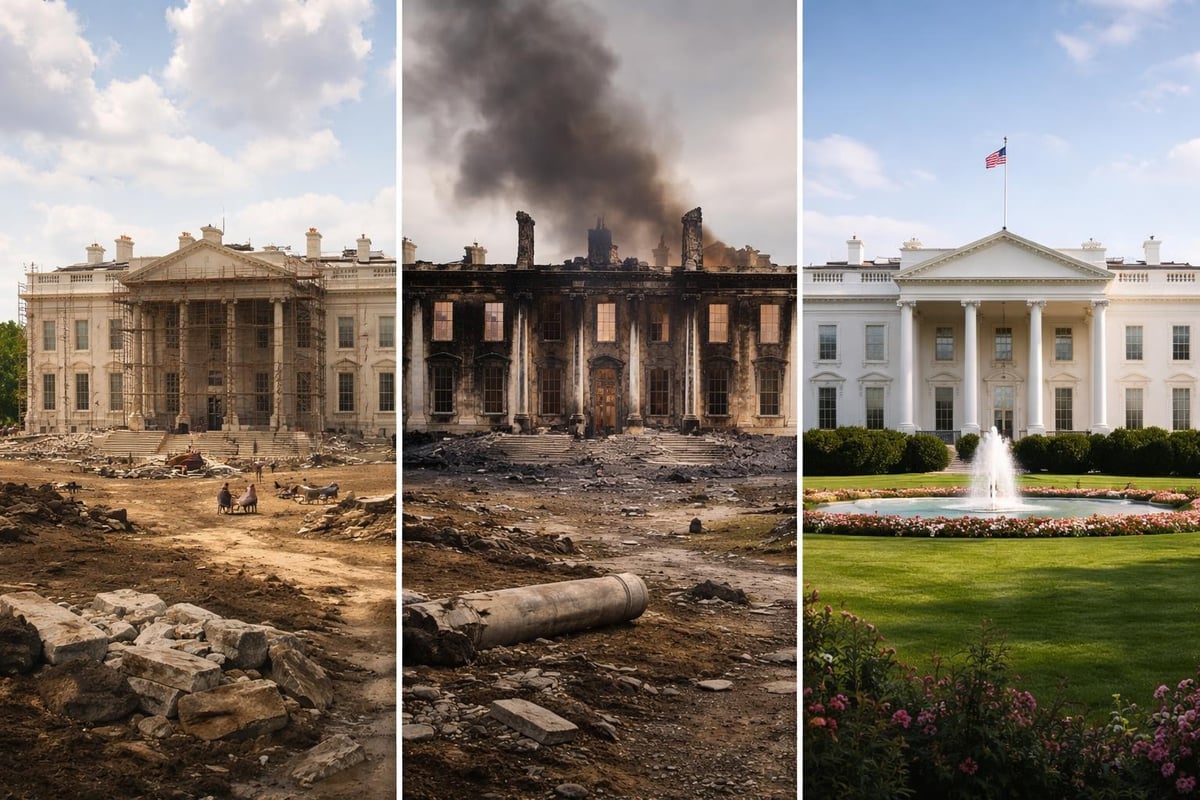
The story of the president house of USA begins in 1792, when Irish-born architect James Hoban won a design competition to create a residence worthy of the nation's chief executive. Construction began on October 13, 1792, with George Washington overseeing the project, though he would never actually live in the completed building.
The mansion was constructed using Aquia Creek sandstone painted white, giving rise to its eventual popular name. President John Adams became the first occupant in November 1800, moving in before construction was fully complete. The building contained just six completed rooms when the Adams family arrived, a stark contrast to the 132 rooms that exist today.
Early Challenges and the War of 1812
The president house of USA faced its greatest early test during the War of 1812. British forces set fire to the building on August 24, 1814, leaving only the exterior walls standing. First Lady Dolley Madison famously saved important documents and a portrait of George Washington before fleeing the advancing troops.
Reconstruction began almost immediately under James Hoban's direction. President James Monroe moved into the rebuilt structure in October 1817, and the restoration was completed by 1818. This period established a pattern of continuous renovation and modernization that would characterize the building throughout its history.
Architectural Evolution and Expansions
The architectural development of the president house of USA reflects changing needs of the presidency and advances in technology. The original six-room structure has been expanded, renovated, and modernized numerous times, creating the complex we recognize today.
Major Renovations Through History
President Theodore Roosevelt oversaw significant changes in 1902, including the construction of the West Wing to separate family living quarters from official business spaces. This renovation, detailed in the White House’s architectural history, fundamentally changed how the building functioned.
Key expansion periods include:
- 1902 Roosevelt Renovation: Created the West Wing and moved executive offices out of the residence
- 1927 Coolidge Addition: Added a third floor and expanded the roof structure
- 1934 East Wing Construction: Provided additional office space and public reception areas
- 1948-1952 Truman Reconstruction: Complete interior renovation due to structural concerns
- 2007 White House Situation Room Upgrade: Modernized command and communications center
The Truman renovation proved particularly extensive, as engineers discovered the building was structurally unsound. The interior was completely gutted, and a new steel frame was installed while preserving the historic exterior walls. This massive project cost approximately $5.7 million and took nearly four years to complete.
Architectural Features and Design Elements
The president house of USA showcases neoclassical architecture with influences from European palaces and country estates. The building's design emphasizes symmetry, proportion, and classical detailing that conveys stability and permanence.
| Architectural Feature | Description | Historical Significance |
|---|---|---|
| North Portico | Iconic entrance with columns | Added in 1829, primary public face |
| South Portico | Semi-circular portico | Added in 1824, overlooks South Lawn |
| East Room | Largest room in the residence | Used for receptions, ceremonies, press conferences |
| Blue Room | Oval-shaped formal parlor | Traditional location for presidential Christmas tree |
| Oval Office | President's primary workspace | Created in 1909, relocated in 1934 |
The comprehensive history of the building demonstrates how each presidential administration has left its mark while respecting the structure's historical integrity.
The President House of USA as a Working Office
Beyond its role as a residence, the president house of USA functions as the command center for the executive branch of government. The West Wing contains the offices where crucial domestic and foreign policy decisions are made daily, making it the operational heart of American governance.
The West Wing and Executive Operations
The West Wing houses approximately 50 staff members in cramped quarters, reflecting the building's adaptation to modern governmental needs. The Oval Office serves as the president's primary workspace, while surrounding offices accommodate the chief of staff, press secretary, national security advisor, and other key personnel.
Critical West Wing spaces include:
- The Oval Office: The president's ceremonial and working office
- The Cabinet Room: Meeting space for cabinet secretaries and senior advisors
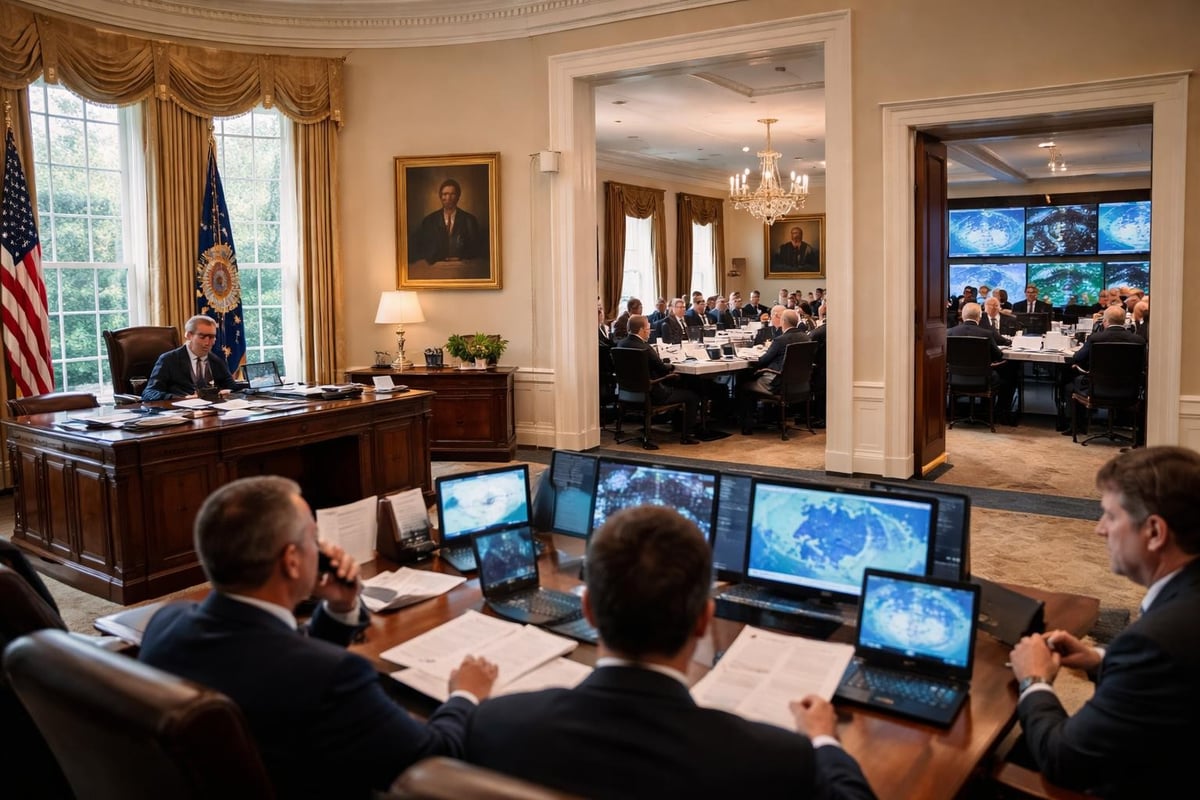
- The Situation Room: Secure command and communications center for national security
- The Roosevelt Room: Conference room for staff meetings and press briefings
- The Press Briefing Room: Daily interface with the media
The recently renovated Situation Room, featuring cutting-edge technology, exemplifies how the president house of USA continues adapting to contemporary security and communication requirements while maintaining its historic character.
Living Quarters and Private Spaces
The residential portion of the president house of USA occupies the second and third floors of the main building, providing privacy for the first family amidst constant public scrutiny. These spaces reflect the personal tastes of each administration while respecting the building's historic significance.
The First Family's Private Residence
The second floor contains the Lincoln Bedroom, Queens' Bedroom, and the president's private living quarters. First families have customized these spaces to suit their needs, from nurseries for young children to home offices and exercise rooms.
The third floor includes additional guest rooms, storage, and recreation spaces. President Harry Truman added a solarium in 1948, creating a sunroom that has been enjoyed by subsequent first families. These private areas allow presidents and their families some semblance of normal life despite living in one of the world's most famous buildings.
Balancing Public and Private Functions
Managing the dual nature of the president house of USA requires careful coordination. The building hosts approximately 30,000 visitors each week for tours, receptions, and official events, while simultaneously serving as a family home.
The division between public and private spaces creates logistical challenges that have shaped renovation decisions throughout history. The construction of the East and West Wings helped separate official functions from residential life, but the integration remains delicate.
Modern Security and Technology Integration
The security apparatus surrounding the president house of USA has evolved dramatically, particularly since the September 11, 2001 terrorist attacks. Visible and invisible security measures protect both the building and its occupants, creating what is effectively a fortress disguised as a gracious mansion.
Security Measures and Protocols
The United States Secret Service maintains responsibility for protecting the president house of USA and its grounds. Security features include reinforced walls, bulletproof windows, advanced surveillance systems, and underground tunnels connecting to nearby government buildings.
Pennsylvania Avenue in front of the building was closed to vehicle traffic in 1995, creating a pedestrian plaza that also serves as a security buffer. Additional measures remain classified, but the building represents one of the most secure locations in the world.
Technological Modernization
The president house of USA has been continuously updated to incorporate new technologies while maintaining its historic appearance. Modern communications systems, computer networks, and security infrastructure have been integrated into the 18th-century structure.
Recent upgrades include:
- Advanced telecommunications systems for secure global communication
- Comprehensive cybersecurity infrastructure protecting sensitive information
- Energy-efficient climate control and lighting systems
- State-of-the-art medical facilities for emergency care
- Underground command centers for continuity of government operations
These technological enhancements ensure that presidential policy decisions on domestic matters can be executed efficiently from the president house of USA regardless of external circumstances.
Cultural Significance and Symbolism
The president house of USA transcends its function as a building, serving as a powerful symbol of American democracy and executive authority. Its image appears in countless photographs, films, and media representations, making it instantly recognizable worldwide.
Representation in American Culture
The building symbolizes presidential power and the continuity of American government. When presidents address the nation from the Oval Office or the Briefing Room, the setting itself conveys authority and stability. The architecture communicates values of classical democracy, linking modern American governance to ancient democratic traditions.
Public tours of the president house of USA allow citizens to connect with their government and history. Approximately 1.5 million people tour the building annually, experiencing rooms where historic decisions were made and treaties were signed.
International Diplomatic Role
The president house of USA serves as the stage for international diplomacy, hosting state dinners, bilateral meetings, and treaty signings. The building's grandeur and history lend weight to diplomatic proceedings, reinforcing America's global position.
State dinners in the State Dining Room can accommodate up to 140 guests, providing a formal setting for strengthening international relationships. These events combine ceremonial tradition with substantive diplomatic discussions, utilizing the building's symbolic power.
Preservation and Historical Stewardship
Maintaining the president house of USA requires balancing preservation of historic elements with the practical needs of a modern presidential residence and office. The White House Historical Association, founded in 1961, plays a crucial role in preserving the building's historical integrity.
The Curator's Office and Historical Collections
The Curator's Office manages approximately 60,000 objects in the White House collection, including furniture, artwork, and decorative items spanning American history. Each administration can redecorate certain spaces, but changes must respect the building's historical character and significance.
Collection categories include:
- Fine art by American artists
- Historical furniture and decorative objects
- China and tableware from past administrations
- Presidential portraits and photographs
- Documents and manuscripts
These collections help tell the story of the presidency and American history, connecting current occupants with their predecessors.
Ongoing Conservation Challenges
The age and constant use of the president house of USA create continuous conservation challenges. Climate control protects delicate fabrics and artwork, while structural maintenance prevents deterioration of the historic building materials.
| Conservation Challenge | Solution Approach | Annual Investment |
|---|---|---|
| Structural integrity | Regular inspections and repairs | $750,000 |
| Climate control | Advanced HVAC systems | $500,000 |
| Artifact preservation | Specialized storage and display | $300,000 |
| Landscape maintenance | Professional groundskeeping | $200,000 |
| Paint and exterior work | Periodic restoration | $400,000 |
The evolution since 1900 demonstrates how preservation efforts have intensified as the building has aged and its historical significance has grown.
The Grounds and Surrounding Campus
The 18-acre grounds surrounding the president house of USA provide both functional and aesthetic value. The landscape design reflects the building's historical character while accommodating modern security and operational requirements.
Gardens and Outdoor Spaces
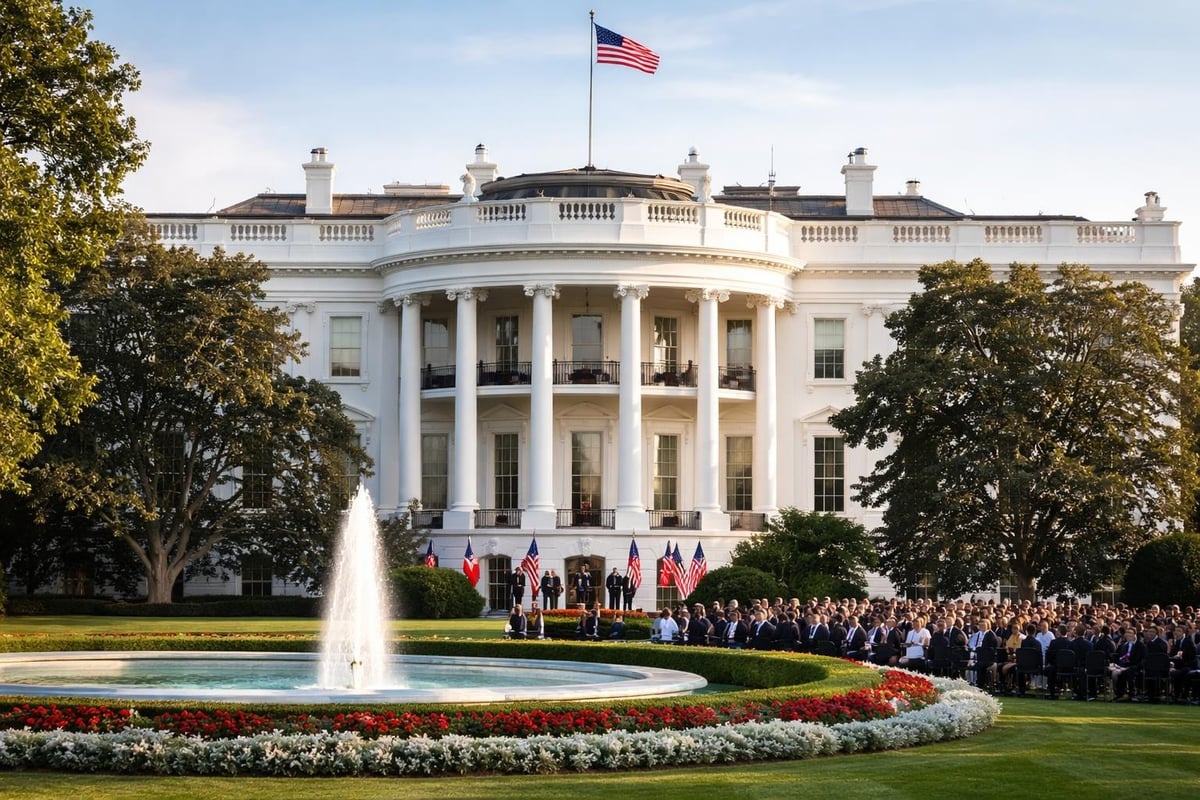
The South Lawn serves as a helicopter landing zone and venue for large public events, while also maintaining its appearance as a formal garden. The Rose Garden, established by Ellen Wilson in 1913 and redesigned by Jacqueline Kennedy in 1962, hosts press conferences and ceremonial events.
The White House Kitchen Garden, planted by Michelle Obama in 2009, brought attention to healthy eating and local food production. This garden continues the tradition of using the grounds for both practical purposes and symbolic messaging.
The Executive Office Building and Blair House
The Eisenhower Executive Office Building, located adjacent to the president house of USA, provides additional office space for executive staff. Originally built for the State, War, and Navy Departments, this Second Empire-style building now houses approximately 500 staff members.
Blair House, located across Pennsylvania Avenue, serves as the official state guest house. This historic townhouse accommodates foreign dignitaries visiting the president house of USA, providing lodging commensurate with the visitors' status.
Impact on Presidential Leadership and Governance
The physical environment of the president house of USA influences how presidents govern and interact with advisors, Congress, and the public. The building's layout encourages certain patterns of interaction while constraining others, shaping the presidency in subtle but significant ways.
Proximity and Access
The West Wing's compact layout forces close physical proximity among senior staff, encouraging frequent informal interactions that can enhance coordination. However, limited space also creates competition for access and influence, as proximity to the Oval Office often correlates with political power.
The ability to quickly convene meetings in the Cabinet Room or Situation Room enables rapid response to crises. This geographic concentration of executive power allows for faster decision-making than would be possible with a dispersed leadership structure, particularly relevant when addressing issues like economic inequality or immigration policy.
Historical Weight and Presidential Decision-Making
Presidents report that working in the president house of USA creates a profound sense of historical responsibility. The knowledge that Lincoln signed the Emancipation Proclamation and Kennedy managed the Cuban Missile Crisis from these rooms influences how current occupants approach their duties.
This historical awareness can inspire presidents to consider their legacy and place in history when making difficult decisions. The building itself serves as a constant reminder of the presidency's continuity and the weight of executive responsibility.
Public Access and Educational Programs
Democratizing access to the president house of USA remains an ongoing challenge and priority. Public tours, virtual experiences, and educational programs help citizens connect with their government and understand presidential history.
Tour Programs and Public Engagement
Public tours must be requested through congressional offices and are subject to security clearances. Self-guided tours include the East Room, Blue Room, Red Room, State Dining Room, and other historic spaces, providing citizens with direct access to their government's symbolic center.
Virtual tours and online resources have expanded access for those unable to visit in person. The presidential library system complements these efforts by preserving and presenting the records of individual presidents.
Educational Initiatives
The White House Historical Association produces educational materials, lectures, and publications that deepen public understanding of the president house of USA and its role in American governance. These programs connect architectural and decorative history with broader narratives of political and social change.
School groups receive special consideration for tours, recognizing the educational value of experiencing the building firsthand. These visits often inspire young people's interest in history, government, and public service.
Future Considerations and Challenges
The president house of USA faces ongoing challenges related to security, preservation, accessibility, and functionality. Balancing these competing demands while respecting the building's historical significance requires careful planning and substantial resources.
Modernization Versus Preservation
Future renovations must incorporate advancing technology and enhanced security measures without compromising historical integrity. This balance becomes increasingly difficult as the gap widens between 18th-century architecture and 21st-century operational requirements.
Climate change presents new preservation challenges, as more extreme weather events and changing temperature patterns threaten the building's structure and collections. Adaptation strategies must protect both the building and its contents while maintaining its historic character.
Enhancing Public Access
Expanding public access while maintaining security represents a persistent challenge. Digital technologies offer potential solutions, allowing virtual participation in events and expanded online educational resources. However, these innovations cannot fully replace the experience of visiting the actual building.
The ongoing tension between openness and security reflects broader questions about democracy and transparency in the modern era. The president house of USA must serve as a symbol of democratic accessibility while protecting the nation's chief executive.
The president house of USA embodies American history, serving as both a residence and the epicenter of executive power for over two centuries. Understanding this building's evolution, architecture, and ongoing significance provides essential context for comprehending presidential governance and American political culture. For comprehensive coverage of presidential news, elections, and policy developments, U.S. Presidential Report offers non-partisan analysis of current and historical presidential matters. Stay informed about how presidents govern from this iconic building and the decisions that shape our nation.